
Today’s Current Affairs: 10th December 2025 for UPSC IAS exams, State PSC exams, SSC CGL, State SSC, RRB, Railways, Banking Exam & IBPS, etc
Table of Contents
Monroe Doctrine:
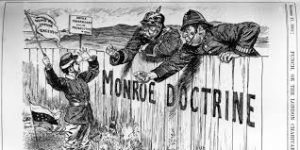
The US National Security Strategy, released recently, described Trump’s vision as one of “flexible realism” and argued that the U.S. should revive the 19th-century Monroe Doctrine, which declared the Western Hemisphere to be Washington’s zone of influence.
- The Monroe Doctrine, articulated by U.S. President James Monroe in 1823, is a significant S. foreign policy statement aimed at preventing European intervention in the Americas.
- Primarily the work of Secretary of State John Quincy Adams, the Monroe Doctrine forbade European interference in the American hemisphere but also asserted U.S. neutrality in regard to future European conflicts.
- The United States invoked the Monroe Doctrine to defend its increasingly imperialistic role in the Americas in the mid-19th century.
- The doctrine has had lasting impacts on U.S. relations with its southern neighbors, reflecting America’s desire to assert its influence while advocating for independence and self-determination in the region.
- It was also a cornerstone of U.S. foreign policy in the 19th century.
Bluetongue Virus:
More suspected cases of Bluetongue virus (BTV) have been recently detected in Northern Ireland.
- Bluetongue Virus (BTV) is responsible for causing the severe haemorrhagic disease, bluetongue (BT).
- It is an infectious, non-contagious, vector-borne
- It can infect domestic ruminants, including cattle, sheep, and goats, along with wild animals such as buffalo, deer, antelope, and camels.
- Of the domestic species, sheep are the most severely affected.
- BTV is predominantly spread between ruminants through the bites of infected Culicoides midges, tiny blood-feeding insects that can be found in large numbers on most farms.
- Some BTV strains can be transferred from a ruminant mother to her fetus during pregnancy.
- BTV does not infect humans.
- There are no food safety issues, and meat and dairy products are safe to consume.
- BT can result in high rates of morbidity and even mortality in flocks and herds and can affect production (e.g. milk yields) and trade.
- There is no effective treatment for bluetongue.
- Vaccines are available for certain types of the disease and are used in Africa, Asia, and parts of Europe.
Bankim Chandra Chattopadhyay: 150 years of the country’s national song
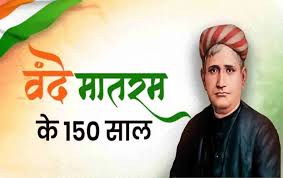
The family of Bankim Chandra Chattopadhyay, the writer and composer of ‘Vande Mataram’, recently hailed the Prime Minister’s gesture to mark the 150 years of the country’s national song.
- Bankim Chandra Chattopadhyay, also known as Bankim Chandra Chatterjee, was one of the greatest novelists and poets of India.
- He is famous as the author of Vande Mataram, the national song of India.
- His famous novels include Durgeshnandini, Kapalkundala (1866), Mrinalini (1869), Vishbriksha (1873), Chandrasekhar (1877), Rajani (1877), Rajsimha (1881), and Devi Chaudhurani (1884).
- Bankim Chandra Chatterjee’s most famous novel was Anand Math (1882).
- It was set in the background of the Sannyasi Rebellion in the late 18th century.
- Anand Math contained the song “Vande Mataram”, which was later adopted as the national song.
- The patriotic song was written in Sanskrit.
- In the year 1896, Rabindranath Tagore sang this melodic poem for the first time at the Calcutta session of the Indian National Congress.
- It was officially adopted as the national song by the Constituent Assembly of India on 24th January 1950.
- He is often regarded as the “Sahitya Samrat” (Emperor of Literature) in Bengali literature.
C-130J Super Hercules:
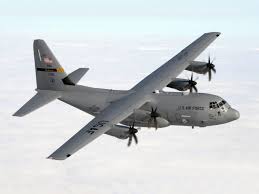
A new defence Maintenance, Repair, and Overhaul (MRO) facility to support the C-130J Super Hercules aircraft will be established in Bengaluru.
- It is a four-engine turboprop military transport aircraft.
- It was developed by Lockheed Martin, a US security and aerospace company.
- It is the US Air Force’s principal tactical cargo and personnel transport aircraft.
- It is the current variant of the C-130 Hercules.
- The largest operators are the US Air Force, US Marine Corps, Australia, Canada, India, Italy, and the United Kingdom.
- The Indian Air Force (IAF) currently operates 12 C-130J Super Hercules.
- The aircraft is capable of operating from rough, dirt strips and is the prime transport for airdropping troops and equipment into hostile areas.
- It can accommodate a wide variety of oversized cargo, including everything from utility helicopters and six-wheeled armored vehicles to standard palletized cargo and military personnel.
- Equipped with an Infrared Detection Set, the aircraft can perform precision low-level flying, airdrops, and landing in blackout conditions.
INS Gharial:
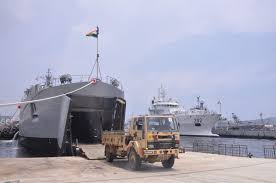
The Indian Navy recently deployed INS Gharial and three other vessels as part of the ongoing Operation Sagar Bandhu for offering humanitarian assistance and relief to the cyclone-affected regions of Sri Lanka.
- INS Gharial (L23) is a Magar-class amphibious warfare vessel of the Indian Navy.
- It is the second indigenously built Landing Ship Tank (Large).
- It was built by Hindustan Shipyard Limited and Garden Reach Shipbuilders and Engineers.
- It is one of the largest ships of the Indian Navy.
- It was commissioned as a part of the Eastern Fleet under the Eastern Naval Command.
- It is capable of carrying helicopters and Landing Craft Assault (LCA).
- It is also armed with guns and rocket launchers.
Sudden Stratospheric Warming (SSW) event:
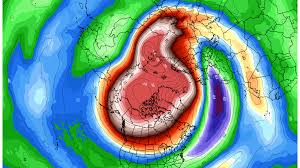
A meteorologist warned of another Sudden Stratospheric Warming (SSW) event that could plunge temperatures below average across parts of the U.S. later this month.
- It refers to a rapid rise in stratospheric temperatures that weakens or distorts the polar vortex (a cold-air mass typically stabilized over the Arctic).
- It begins with large-scale atmosphere waves (called Rossby waves) getting pushed higher into the atmosphere.
- These waves can “break” (like waves in the ocean) on top of the polar vortex and weaken it.
- If waves are strong enough, the winds of the polar vortex can weaken so much that they can reverse from being westerly to easterly.
- This leads to cold air descending and warming rapidly.
- It can lead to a displacement or splitting of the polar vortex, so instead of cold air being locked above the polar region, it can push further south into the mid-latitudes.
- Polar Vortex is a large area of low pressure and cold air surrounding both of the Earth’s poles.
- It extends from the tropopause (the dividing line between the stratosphere and troposphere) through the stratosphere and into the mesosphere.
- It always exists near the poles, but weakens in summer and strengthens in winter.
- Many times, during winter in the northern hemisphere, the polar vortex will expand, sending cold air southward with the jet stream.
- Jet streams are relatively narrow bands of strong wind in the upper levels of the atmosphere.
- This occurs fairly regularly during wintertime and is often associated with large outbreaks of Arctic air in the United States.
India International Science Festival: 11th edition
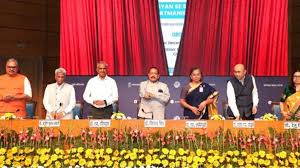
The 11th edition of India International Science Festival is being held in Panchkula, Haryana.
- India International Science Festival was launched in 2015.
- IISF aims to bring together people and the scientific community both nationally and internationally to collaborate, interact, and experience the joy of doing science for the wellbeing of India and humanity, guided by the spirit of swadeshi.
- Mission of IISF is Bridging traditional knowledge systems with modern scientific research thereby strengthening the link between India’s indigenous knowledge heritage and contemporary scientific inquiry.
India International Science Festival 2025:
- It is organised by the Ministry of Earth Sciences (MoES) and coordinated by Indian Institute of Tropical Meteorology (IITM) Pune.
- The theme of India International Science Festival (IISF) 2025: “Vigyan Se Samruddhi: for Aatmanirbhar Bharat.”
- The event will feature technical and thematic sessions across science, technology and innovation.
- IISF 2025 will focus on five broad themes:
- Science, Technology and Ecology of North-West India and the Himalayan Region;
- Science for Society and Education;
- Atmanirbhar Bharat through Science and Technology;
- Biotechnology and Bio-economy; and
- Integration of Traditional Knowledge with Modern Science.
2nd WHO Global Summit on Traditional Medicine:
India has officially begun the countdown to the 2nd WHO Global Summit on Traditional Medicine, to be held from 17–19 December 2025 at Bharat Mandapam, New Delhi.
- A high-level global health summit convened by the WHO to advance traditional, complementary, and integrative medicine through scientific validation and policy collaboration.
- Co-hosted by WHO and the Ministry of Ayush, Government of India.
- Supported by the WHO Global Traditional Medicine Centre (GTMC), Jamnagar, established in partnership with India.
- Theme (2025): “Restoring balance: The science and practice of health and well-being.”
- Key Features of the 2025 Summit:
- Evidence-Based Integration: Pushes scientific validation of traditional medicine through research, clinical trials, regulatory frameworks, and quality benchmarks.
- Global Participation: Delegations from 100+ countries, including Ministers, policymakers, industry leaders, scientists, and Indigenous medicine practitioners.
- Digital Health & Innovation: Showcases digital repositories, AI-driven pharmacopeias, and biodiversity mapping for medicinal plants.
- Biodiversity & Sustainability: Examines sustainable sourcing of medicinal plants and conservation of knowledge systems, including Ayurveda, Siddha, Unani, Sowa-Rigpa, and Homeopathy.
- Policy Harmonisation: Aims to create a decade-long roadmap for integrating safe, equitable, evidence-based traditional medicine into national healthcare systems
Curbing Hate Speech in India:
Karnataka has become the first Indian state to introduce a dedicated legislation to curb hate speech and hate crimes — the Karnataka Hate Speech and Hate Crimes (Prevention) Bill, 2025.The Bill aims to plug a legislative gap in Indian criminal law where “hate speech” remains undefined, despite its frequent invocation in political and social discourse.According to the 267th Law Commission Report (2017), hate speech means words or actions meant to stir hatred against groups based on race, ethnicity, gender, religion, sexual orientation, etc. Thus, it includes spoken or written words, signs, or visuals intended to create fear, provoke violence, or incite hatred.Article 19(1)(a) ensures free speech, while Article 19(2) permits reasonable limits to protect sovereignty, security, public order, morality, dignity, foreign relations, and to prevent defamation, contempt of court, or incitement of offences.
Impeachment and In-House Inquiry for Judges:
INDIA bloc Members of Parliament (MPs) intend to submit an impeachment motion in Parliament against Justice G.R. Swaminathan of the Madurai Bench of the Madras High Court.The move follows his order directing the Subramaniya Swamy Temple authorities to ensure the lighting of a lamp at the deepathoon (pillar) near a dargah during the Karthigai Deepam festival.Though the term “impeachment” is not explicitly used in the Constitution, it refers to the formal process of removing a Supreme Court or High Court judge for proved misbehaviour or incapacity, aimed at ensuring judicial accountability without political interference.Articles 124(4) of the Constitution of India, along with the Judges (Inquiry) Act, 1968, provide the framework for removing judges of the Supreme Court. Article 218 extends these provisions to High Court judges. Judges can only be removed for Proved misbehaviour (serious ethical or professional misconduct) and incapacity (Inability to discharge duties due to physical or mental reasons).
Crypto Transactions Surge in India:
Cryptocurrency transactions in India crossed Rs 51,180 crore in 2024–25, marking a 41% rise from the previous year. This is based on Rs 511 crore collected as 1% Tax Deducted at Source (TDS), as reported by the Finance Ministry in the Rajya Sabha.The Finance Act, 2022 introduced a 1% TDS on all transfers of Virtual Digital Assets (VDAs) under the Income Tax Act, 1961, and this provision has been retained in the Income Tax Act, 2025. Cryptocurrency is a type of digital currency that enables direct, peer-to-peer online payments without the need for a central authority. It functions as a digital medium of exchange built on a public digital ledger known as blockchain, where transactions are verified using cryptographic techniques. The first decentralised cryptocurrency was Bitcoin, introduced in 2009.
Goa nightclub fire tragedy:
The Goa nightclub fire tragedy, which killed 25 people most of them migrant workers — has exposed serious gaps in governance, unsafe working conditions, and weak enforcement of licensing and safety norms. India records approximately 1.6 lakh fire incidents annually, resulting in over 27,000 deaths (NCRB Accidental Deaths & Suicides in India Report).While 57% of deaths occur in residential settings, casualties in commercial hubs (hospitals, factories, markets) are rising due to mixed-land use violations.Casualties are highest in industrialized, high-density states like Maharashtra, Gujarat, Delhi, and Madhya Pradesh, which account for over 50% of fire-related deaths. High-fatality incidents increasingly occur at night/early morning when occupants are asleep and reaction times are slow.
India’s STEM Future:
A national debate has emerged after concerns were raised about the government’s proposal to restrict PhD research topics to “emerging national priorities,” highlighting deeper structural issues in India’s STEM ecosystem. India produces 25–30 lakh STEM graduates annually, ranking second globally after China (AISHE 2021-22).While women comprise 43% of STEM graduates (one of the highest globally), they hold only 14% of research positions due to societal and structural barriers.India has just ~260 researchers per million people, significantly lower than China (~1,500), the USA (~4,500), and South Korea (~8,000).The workforce is heavily skewed toward IT services and software engineering, with a severe shortage of talent in core research areas like biotechnology, material sciences, and physics.



