
Today’s Current Affairs: 12th December 2025 for UPSC IAS exams, State PSC exams, SSC CGL, State SSC, RRB, Railways, Banking Exam & IBPS, etc
Table of Contents
Swasthya Portal:
In Rajya Sabha, in reply to a starred question the Minister of Tribal Affairs recently stated that there are no plans to expand the Swasthya Portal to integrate national health databases, district dashboards or AI-enabled analytics.
- It is a one-stop solution presenting the health and nutrition status of the tribal population of India.
- It was developed under the central sector scheme “Tribal Research Information Education Communication and Events (TRI ECE)” of the Ministry of Tribal Affairs.
- The portal is hosted on the National Informatics Centre (NIC) Server and is maintained by the Centre of Excellence for Knowledge Management for Health and Nutrition, established by the Ministry of Tribal Affairs.
- It provides information and data as well as curates innovative practices, research briefs, case studies, and best practices collected from different parts of India to facilitate the exchange of evidence, expertise, and experiences.
- It has a dashboard, knowledge repository, partner segment, Sickle Cell Diseases (SCD) support corner.
- The dashboard presents data curated from multiple sources for the high-priority tribal districts.
- Information available on Swasthya will provide insights to all stakeholders working with the tribal population of India in the areas of health and nutrition.
- Tribal Research Information Education Communication and Events (TRI ECE) is a Central Sector Scheme of the Ministry of Tribal Affairs.
- Under the scheme, financial support is provided to the research organizations, reputed organizations, research institutes, and universities where expertise exists and which have already made a mark by carrying out pioneering research in their respective field.
- The purpose of the scheme is to create replicable models in areas of education, health, livelihood, digital governance, etc.
SAMPANN Portal:

Controller General of Communication Accounts (CGCA) recently inaugurated the onboarding of all MTNL employees retiring in November 2025 onto the SAMPANN portal at the Office of Principal CCA, Delhi.
- System for Accounting and Management of Pension (SAMPANN), is a Comprehensive Pension Management System (CPMS).
- It is an initiative undertaken by the Controller General of Communication Accounts (CGCA), Department of Telecommunications, Ministry of Communications.
- It is an online pension processing and payment system for Department of Telecommunications pensioners.
- It brings the pension processing, sanctioning, authorisation, and payment units under a common platform.
- It provides direct credit of pension into the bank accounts of pensioners.
- The system has helped the Department in faster settlement of pension cases, improved reconciliation/auditing, and ease of accounting.
- Features:
- Direct disbursement of pension on a timely basis without intermediaries.
- Single window system for complete pension process.
- Online grievance management for the pensioners, reducing paperwork.
- Tracking of pension status from home encourages transparency and accountability.
- Faster processing of arrears and revision of pension.
‘Your Money, Your Right’ Movement:

The Prime Minister recently called upon citizens to take part in the ‘Your Money, Your Right’ movement.
- It was launched by the central government in 2025.
- It is an initiative aimed at enabling people to reclaim their unclaimed deposits, insurance proceeds, dividends, and other financial assets.
- The effort brings together government agencies, regulators, banks, and financial institutions to identify and return long-forgotten funds.
- The deposits in accounts which are not operated for a period of 10 years are classified as unclaimed deposits.
- Under the initiative, individuals need to verify if their close family members or relatives have unclaimed deposits, insurance proceeds, mutual-fund payouts, or dividends.
- To facilitate this, the government has created dedicated portals as follows:
- Reserve Bank of India (RBI): UDGAM Portal for unclaimed bank deposits & balances.
- Insurance Regulatory and Development Authority of India (IRDAI): Bima Bharosa Portal for unclaimed insurance policy proceeds.
- Securities and Exchange Board of India (SEBI): MITRA Portal for unclaimed amounts in mutual funds.
- Ministry of Corporate Affairs: IEPFA Portal for unpaid dividends and unclaimed shares.
- Facilitation camps are being organised in districts across both rural and urban regions of the country.
- On the national level, the campaign is coordinated by the Department of Financial Services (DFS), Ministry of Finance.
Rhinophis siruvaniensis:
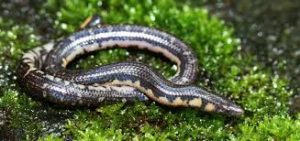
A new shieldtail species, Rhinophis siruvaniensis, has been described with the help of citizen scientists after it was found recently in the Siruvani Hills which fall in both Kerala and Tamil Nadu.
- It is a new species of shieldtail snake.
- It was discovered in Siruvani Hills, located in the Western Ghats in Kerala and Tamil Nadu.
- The tip of its tail is dome-shaped.
- Shieldtails are a group of small-sized, non-venomous snakes that burrow in the soil and mostly live underground.
- They belong to the Uropeltidae family of snakes and are also called uropeltids.
- They’ve been named shieldtails because the tip of their tails looks like a disc-shaped shield.
- They are endemic to India & Sri Lanka.
- In India, they are found in the Western Ghats and some parts of Peninsular India.
NewSpace India Limited:
As on date, M/s. NewSpace India Limited (NSIL) has signed 70 Technology Transfer Agreements to transfer technologies developed at ISRO to Industry.
- NSIL is a wholly owned Government of India company, under the administrative control of Department of Space (DOS).
- It is the commercial arm of Indian Space Research Organisation (ISRO).
- Primary Responsibility:
- Enabling Indian industries to take up high technology space related activities.
- Promotion and commercial exploitation of the products and services emanating from the Indian space programme.
- The major business areas of NSIL include:
- Production of Polar Satellite Launch Vehicle (PSLV) and Small Satellite Launch Vehicle (SSLV) through industry.
- Production and marketing of space-based services, including launch services and space-based applications like transponder leasing, remote sensing and mission support services.
- Building of Satellites (both Communication and Earth Observation) as per user requirements.
- Transfer of technology developed by ISRO centres/units and constituent institutions of the Dept. of Space.
- Marketing spinoff technologies and products/services emanating out of ISRO activities.
Charaichung Royal Bird Sanctuary:
‘Charaichung Festival’ was hosted in Assam’s Majuli island to revive Asia’s first protected royal bird sanctuary.
- It is Asia’s first protected bird sanctuary.
- It was established in 1633 AD by Ahom king Swargadeu Pratap Singha.
- It is located at Majuli – the world’s largest river island.
- It hosts varieties of indigenous and migratory birds.
- Charaichung Festival is the second edition of the festival held in Majuli, Assam.
- This festival, organised with the support of Majuli Sahitya and local residents
- It aims to urge the government to further promote Charaichung as a tourism destination.
- Majuli Island is the world’s largest river island located in Assam.
- The island is formed by the Brahmaputra River and its tributaries the Kherkutia Xuti and Subansiri
- Rice cultivation is the primary livelihood for the residents of Majuli, with several unique varieties of rice, such as Komal Saul and Bao Dhan, grown in the region.
- Most of the islanders belong to three tribes-Mishing, Deori, and Sonowal Kachari.
GlowCas9 Protein:
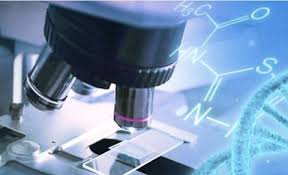
Scientists from Kolkata based Bose institute has created GlowCas9 which can track gene editing.
- It is a CRISPR protein that lights up while performing gene editing.
- It is a bioluminescent version of Cas9 that glows inside cells.
- GlowCas9 is created by fusing Cas9 with a split nano-luciferase enzyme derived from deep-sea shrimp proteins.
- Properties of GlowCas9 Protein:
- The GlowCas9 is very stable and maintains its structure and activity at higher temperatures compared to the conventional enzyme.
- It glows inside cells, allowing for real-time monitoring of CRISPR operations
- Working of GlowCas9 Protein:
- The split nano-luciferase enzyme pieces reconnect when Cas9 folds correctly, producing light.
- This glowing activity allows scientists to monitor CRISPR operations in living cells, tissues, and even plant leaves—without harming them.
- Benefits of GlowCas9 Protein
- It can also increase the precision of Homology-Directed Repair (HDR).
- Homology-Directed Repair (HDR) is a DNA repair process crucial for fixing hereditary mutations that are linked to genetic diseases like sickle cell anaemia, muscular dystrophy and so on.
- GlowCas9 pioneers the emerging field of visualizing molecular gene therapy in motion.
PM Dhan-Dhaanya Krishi Yojana:
The PM Dhan-Dhaanya Krishi Yojana (PM-DDKY) – FPO Sangam was successfully hosted by the Ministry of Agriculture & Farmers’ Welfare, with over 72 Farmers Producer Organisation (FPO)s from 15 states participating.
- FPO (Farmer Producer Organizations) Sangam is a platform connecting FPOs with buyers, processors, and retail chains for long-term sourcing partnerships and market expansion.
Prime Minister Dhan-Dhaanya Krishi Yojana:
- PMDDKY (2025–26 to 2030–31) is a comprehensive farm programme designed to enhance productivity, promote sustainable practices, and improve livelihoods.
- It converges 36 existing schemes from 11 departments.
- The fund is allocated with 40% for subsidies, 30% for infrastructure, 20% for loans, and 10% for training and market support.
- It Boost agricultural productivity, promote crop diversification, enhance post-harvest storage and value addition, support women and youth in allied sectors, and achieve self-sufficiency in foodgrains, pulses, and oilseeds.
- Districts are selected based on low crop productivity (below national averages), moderate cropping intensity (under 1.55 crop cycles per year), and low credit access (typically below 30% farmer coverage).
- Each selected district will establish a District DDKY Samiti, chaired by the District Collector, to implement the District Agriculture Development Plan (DADP), with oversight provided by 100 Central Nodal Officers (primarily Joint Secretaries).
Planetary-Defense Exercise on 3I/ATLAS:
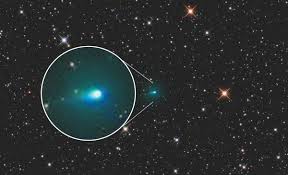
Europe has launched the world’s largest planetary-defence drill, centred on tracking the fast-approaching object 3I/ATLAS.
- The 3I/ATLAS planetary-defense drill is the largest global simulation ever conducted to test how nations detect, track and respond to near-Earth threats.
- Led jointly by ESA, NASA, UN-IAWN (International Asteroid Warning Network).
- Aim:
- To evaluate Earth’s readiness for high-velocity objects by testing early-warning systems, tracking networks, emergency coordination and citizen communication.
- Also aims to identify gaps in international cooperation, data-sharing and psychological preparedness.
- Key Features:
- Real object (3I/ATLAS) travelling at ~60 km/s provides real-world complexity.
- Involves planetary-defense modelling, orbital prediction drills and anomaly-response protocols.
- Includes public-communication modules, addressing misinformation and psychological preparedness.
- Uses multi-agency coordination, including defense space commands.
- Parallel geopolitical coordination amid ESA’s record budget and U.S.–China–India moves in space security.
Shilp Didi Programme:
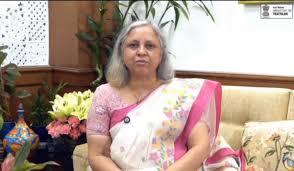
The Union Textiles Secretary announced that the Shilp Didi Programme has significantly boosted women artisans’ income, with some earning over ₹5 lakh.
- It is a government initiative to economically empower women artisans (“Shilp Didis”) by providing training, digital skills, and market access, including e-commerce platforms and physical exhibitions.
- Launched In: 2024 (100-day pilot phase began in June 2024).
- Implemented By Ministry of Textiles, through the Office of the Development Commissioner (Handicrafts).
- Aim is to make women artisans financially independent, improve design and business skills, and help them leverage modern marketing and entrepreneurship tools.
Q-day:
Google’s new Quantum Echoes experiment using the 65-qubit Willow processor has sparked global debate on whether it accelerates the arrival of Q-day.
- Q-day refers to the moment when a cryptographically relevant quantum computer becomes powerful enough to break widely used encryption systems such as RSA-2048, threatening global digital security.
- The fear stems from Shor’s algorithm (1994), which showed that a sufficiently large quantum computer could factor large numbers exponentially faster, breaking the mathematics behind today’s public-key cryptography.
- Key Features of Q-Day Risk:
- Breaks RSA & ECC: Quantum computers could factor keys and compromise global internet security.
- Harvest Now, Decrypt Later: Hackers/governments may store encrypted data today and decrypt it later.
- Requires millions of logical qubits: Current machines have only hundreds of noisy qubits — far from attack capability.
- Triggers Post-Quantum Cryptography (PQC): Push for quantum-safe algorithms like CRYSTALS-Kyber & Dilithium (standardised by NIST).
Western Tragopan:
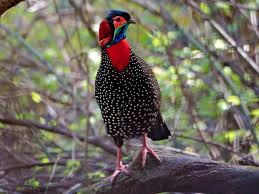
A captive-breeding programme at Sarahan Pheasantry, Himachal Pradesh, has successfully stabilised the Western Tragopan population, giving conservationists fresh hope.
- The Western Tragopan (Tragopan melanocephalus) — also called Jujurana or “king of birds” — is one of the world’s rarest pheasants and the state bird of Himachal Pradesh.
- It is a flagship species of the Western Himalayas, known for its striking plumage and ecological sensitivity.
- Found between 2,400–3,600 m in moist temperate Himalayan forests.
- Prefers dense undergrowth, ringal bamboo, rhododendron thickets, and conifer forests.
- Key strongholds include : Great Himalayan National Park (GHNP), Kazinag, Limber (J&K), and pockets in Uttarakhand and northern Pakistan.
- IUCN Status: Listed as Vulnerable on the IUCN Red List.
- Only 3,000–9,500 mature individuals remain, all forming a single fragile sub-population.
Goniopora Coral:
Scientists have reported that a combination of extreme heat stress and a rare Black band disease has wiped out 75 per cent of Goniopora coral colonies at a site on the Great Barrier Reef.It is also known as flowerpot or daisy corals, is a type of hard, soft coral belonging to the Poritidae family. It is appreciated for its beautiful appearance as it possesses unique polyps that resemble flower petals. It typically inhabits lagoons and turbid reefs and considered thermally tolerant. Goniopora are a photosynthetic coral and derive some of their nutritional requirements from light. It can thrive in a wide range of lighting.They have a symbiotic relationship with dinoflagellates called zooxanthellae that live in the tissues of the coral. It is a predatory coral, meaning it obtains some of its nutrients by capturing small organisms in the water. Black band disease is a bacterial necrotic infection that invades living coral. It forms a black band that crosses the infected coral, usually killing the colony.
Sujalam Bharat App:
The Ministry of Jal Shakti has launched the Sujalam Bharat App, a key digital initiative under Jal Jeevan Mission (JJM), aimed at efficient management of rural drinking water supply systems. Sujalam Bharat App Objective is to create a unified, digital identity (Sujal Gaon ID) for every rural water scheme, enabling real-time monitoring and management of infrastructure from source to household under JJM. It has been developed with the support of Bhaskaracharya National Institute for Space Applications and Geo-informatics (BISAG-N). It is integrated with PM Gati Shakti GIS for precise geospatial mapping of water networks, asset inventory, water quality data, and community feedback. Aims to shift governance by placing comprehensive information in the hands of citizens and Gram Panchayats, promoting community ownership and accountability of water service providers.The app is envisioned as the “Aadhaar for rural water systems,” forming the backbone of a transparent, accountable, and citizen-centric water delivery ecosystem.
Hybrid Mutual Funds:
As equity markets touch new highs, hybrid mutual fund schemes are gaining popularity among investors. Wealth managers are increasingly recommending these funds, especially for investors who find it difficult to rebalance investments on their own. Hybrid mutual funds are mutual fund schemes that invest in more than one asset class, mainly equity (stocks) and debt (bonds), and in some cases gold, REITs (Real Estate Investment Trusts) and InvITs (Infrastructure Investment Trusts). Their primary objective is to provide a balanced mix of growth and stability by distributing investments across different assets.They are also known as asset allocation funds because they follow a pre-decided investment pattern. Hybrid funds follow a fixed or flexible mix of investments. A part of the money is put into equity for growth, while the rest goes into debt or other assets for safety. The fund manager regularly rebalances the portfolio to keep this mix intact, so the risk stays under control without any effort from the investor.
Deodar Tree:
Deodar trees in Himachal Pradesh’s Sangla Valley have revealed the process of climatic shifts from wetter spring conditions that prevailed during pre-historic times to drier conditions from the year 1757 onwards.It is also known as the Himalayan Cedar. The name Deodar is derived from the Sanskrit word Devadāru, meaning “wood of the gods,” highlighting the tree’s cultural and spiritual importance. It is native to high-altitude forests, this majestic conifer plays a critical ecological and cultural role. It thrives in well-drained soils and moist temperate climates. It is a large evergreen tree and has needle-like bluish-green leaves. It is mainly found in the western Himalayan region.Traditionally, its wood has been used in temple construction, religious ceremonies, and Ayurvedic medicine. It faced threats from logging, habitat loss, and climate change.
Deepavali has been inscribed on UNESCO’s List of the Intangible Cultural Heritage of Humanity.:
Deepavali, also known as Diwali, is the festival of lights celebrated across India.‘Deepa’ means lamp or light and ‘Vali’ means string or row, and Deepavali means rows of lights.It is celebrated on Kartik Amaavasya, which typically falls in October or November.The fundamental philosophy of Deepavali encompasses the celebration of prosperity, renewal, and abundance for all individuals.It is the 16th Indian element on UNESCO’s List of the Intangible Cultural Heritage of Humanity.



