
Today’s Current Affairs: 20th December 2025 for UPSC IAS exams, State PSC exams, SSC CGL, State SSC, RRB, Railways, Banking Exam & IBPS, etc
Table of Contents
Bura Chapori Wildlife Sanctuary:

A team of government officials recently visited the encroached areas of land earmarked for compensatory afforestation at Bura Chapori Wildlife Sanctuary.
- It is located on the southern bank of the river Brahmaputra in the Sonitpur district, Assam.
- It is located on the north side of Laokhowa Wildlife Sanctuary and shares an integral transboundary landscape of the Laokhowa-Burachapori Wildlife Sanctuary ecosystem.
- It sanctuary was notified as a buffer zone of the Kaziranga Tiger Reserve in 2007.
- Most of the low-lying areas of the sanctuary are vulnerable to flooding during summer.
- It is enveloped and adorned by wet alluvial grasslands, riparian, and semi-evergreen forests.
- Most of the plant species found here are of great commercial and medicinal value.
- It is a habitat of a wide range of wild animals, including tigers, elephants, wild buffalos, one-horned rhinoceros, hog deer, and wild boar.
- The avian inhabitants feature species like the Bengal florican, black-necked stork, open-billed stork, white-eyed pochard, mallard, spotbill, large whistling teal, and numerous others.
Antariksh Prayogshala (Space Labs):

The Indian National Space Promotion and Authorisation Centre (IN-SPACe) recently rolled out a Request for Proposal (RfP) to establish Antariksh Prayogshala (Space Labs) at select academic institutions across India.
- It is an initiative of the Indian National Space Promotion and Authorisation Centre (IN-SPACe).
- It is a first-of-its-kind initiative aimed at creating state-of-the-art space laboratories within Indian academic institutions.
- These labs will provide hands-on training to students pursuing space tech courses in academic institutes spread across the country.
- This initiative is intended to enable meaningful industry–academia collaboration and support India’s long-term vision of becoming a leading global space economy.
- Under the scheme, up to seven academic institutions will be selected in a phased manner from different zones across the country.
- To ensure balanced regional representation, one lab is proposed in each zone.
- These labs will also be available to Non-Governmental Entities (NGEs) for utilization in that zone.
- IN-SPACe will provide financial support to the institutions.
- The selection process will be carried out in two stages:
- Institutions will first be screened based on eligibility criteria.
- Shortlisted applicants will then be evaluated and ranked by an Empowered Committee (EC), following which final selections will be made on a zone-wise basis.
- IN-SPACe is a single-window, independent, nodal agency that functions as an autonomous agency in the Department of Space (DOS).
- It is formed following the Space sector reforms to enable and facilitate the participation of private players.
Doppler Weather Radar:
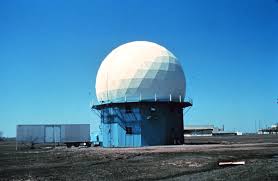
The Minister of State for Earth Science informed that there are currently 47 Doppler Weather Radars (DWRs) across the country to survey weather patterns and forecast.
- A Doppler radar is a specialized radar that uses the Doppler effect to produce velocity data about objects at a distance.
- These radar systems can provide information regarding the movement of targets as well as their position.
- In radars, a beam of energy, called radio waves, is emitted from an antenna.
- When this beam strikes an object in the atmosphere, the energy scatters in all directions, with some reflecting directly back to the radar.
- The larger the object deflecting the beam, the greater is the amount of energy that the radar receives in return.
- Observing the time required for the beam to be transmitted and returned to the radar allows weather forecasting departments to “see” raindrops in the atmosphere, and measure their distance from the radar.
- Types of weather Radar Bands: Varying frequencies like S-band, C-band and X-band — are commonly used by the IMD in India.
- It is used to track the movement of weather systems and cloud bands, and gauge rainfall over its coverage area of about 500 km.
- An X-band radar is used to detect thunderstorms and lightning, whereas a C-band radar helps in cyclone tracking.
TIDE 2.0 Scheme:

The Union Minister for Electronics and Information Technology informed the Rajya Sabha about the TIDE 2.0 Scheme.
- The “Technology Incubation and Development of Entrepreneurs 2.0 (TIDE 2.0)” Scheme was launched in the year 2019.
- It promotes technology-based entrepreneurship by providing financial & technical support to incubators engaged in supporting ICT startups primarily engaged in using emerging technologies such as IoT, AI, Block-chain, Robotics etc.
- It is implemented through empowering incubators in India and handholding close to tech start-ups over a period of 5 years.
- These selected incubators are located in the Institutes of Higher Learning and premier R&D organizations across the country.
- These incubators provide startups with requisite expertise, industry linkages and ecosystem partnerships etc.
- Under TIDE 2.0, Centres of Excellence in Intellectual Property Rights (CoE-IP) are also established to encourage or support Startups/SMEs/academia/inventors in Electronics and IT domain.
- These CoE provide various IP related services, awareness creation and training.
- It complements other Government initiatives such as GENESIS, SAMRIDH, Startup India and sector-specific innovation programmes.
Erivan Anomalous Blue:
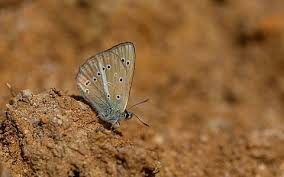
Armenia has unveiled the logo for the 17th Conference of the Parties (COP17) to the Convention on Biological Diversity which includes Erivan Anomalous Blue at its center.
- The Polyommatus eriwanens is also known as Erivan Anomalous Blue is a blue butterfly.
- It is found only in and around Yerevan (Armenia).
- The species inhabits calcareous grasslands in Armenia but the host plant of the species is still not known.
- The species is endemic of Southern Transcaucasia.
- Conservation Status: The species is not included in the Global and European Red Lists.
- Convention on Biological Diversity is the most comprehensive binding international agreement in the field of nature conservation and the sustainable use of natural resources.
- It was opened for signing at the UN Conference on Environment and Development in Rio de Janeiro in 1992.
- Objectives of Convention on Biological Diversity
- Conservation of biological diversity
- Sustainable use of biological diversity
- Fair and equitable sharing of the benefits arising out of the utilisation of genetic resources
- The CBD’s governing body is the Conference of the Parties (COP).
- This ultimate authority of all governments (or Parties) that have ratified the treaty meets every two years to review progress, set priorities, and commit to work plans.
- It has currently 196 contracting parties.
- Secretariat: Montreal, Canada.
Winter Solstice 2025:
The Winter Solstice 2025 occurs on Sunday, December 21 marking the shortest day and longest night of the year in the Northern Hemisphere. On this day many regions experience only eight to nine hours of daylight. While it often goes unnoticed amid holiday celebrations, the winter solstice is a key astronomical event that explains why seasons change and why daylight begins to increase after December.The reason for the winter solstice lies in the tilt of the Earth.Earth rotates on an axis tilted by about 23.5 degrees.This tilt causes different parts of the planet to receive varying amounts of sunlight throughout the year.
Operation Hawkeye:
The United States and Jordan have carried out a major military operation in Syria called Operation Hawkeye Strike. This action came after an ISIS attack that killed two US soldiers and wounded three others in the Syrian city of Palmyra. The operation aimed to weaken ISIS by targeting its fighters, weapons, and bases.Operation Hawkeye Strike is a joint military mission by the US and Jordanian forces. It involved heavy airstrikes against ISIS positions across Syria.
Jammu & Kashmir Gets Its First Gen Z Post Office:
Jammu & Kashmir has achieved an important milestone in the modernization of public services with the launch of its first Gen Z Post Office at the AIIMS Vijaypur campus. This initiative reflects the changing approach of Department of Posts towards making postal services more digital, accessible and aligned with the expectations of younger citizens. With this inauguration AIIMS Vijaypur has become the first AIIMS in India to host a Gen Z Post Office.The Gen Z Post Office was inaugurated on 17 December 2025 at AIIMS Vijaypur.The facility was formally opened by Prof. (Dr.) Shakti Kumar Gupta, Executive Director and CEO of AIIMS Vijaypur, in the presence of senior postal officials including the Chief Postmaster General of the Jammu & Kashmir Circle.The event witnessed participation from faculty members, students, healthcare professionals, and postal officials highlighting strong collaboration between India Post and a premier medical institution.