
Today’s Current Affairs: 3rd January 2026 for UPSC IAS exams, State PSC exams, SSC CGL, State SSC, RRB, Railways, Banking Exam & IBPS, etc
Table of Contents
President Of India Graced SOAR Programme:

The President of India graced a special programme under SOAR initiative.
- Skilling for AI Readiness (SOAR) Programme is an initiative of the Ministry of Skill Development and Entrepreneurship (MSDE).
- It aims to integrate artificial intelligence learning into India’s school education and training ecosystem, preparing both students and teachers for a rapidly evolving digital world.
- It has a vision to position India as a global leader in AI by preparing its youth for AI-driven careers and entrepreneurial ventures
- Features of Skilling for AI Readiness (SOAR) Programme:
- It focuses on school students from classes 6 to 12 and educators across India.
- It offers three targeted 15-hour modules for students and a 45-hour module for teachers.
- These courses introduce foundational AI and machine learning concepts, along with data literacy and the ethical use of technology.
- Funding: To this, government provided ₹500 crore to establish a Centre of Excellence in Artificial Intelligence for Education.
- The centre will focus on developing AI-based learning tools, promoting multilingual AI resources for Indian languages, and fostering innovative classroom practices.
- It will also strengthen AI curriculum development across technical institutions and complement existing efforts by IITs and AICTE-approved colleges that already offer advanced courses in machine learning, deep learning, and data analytics.
Cellulitis:

An observational study about Cellulitis was published in the International Journal of Lower Extremity Wounds.
- Cellulitis is a common skin infection caused mostly by streptococcus and staphylococcus bacteria.
- It usually affects the legs, feet and toes.
- It can affect the tissues beneath the skin and can affect any part of the body such as the face, arms, hands and fingers.
- Anyone can contract cellulitis, but persons with skin wounds, or compromised immune systems, which allows the bacteria to enter easily, are at higher risk.
- Cellulitis is not contagious but in rare cases if you have an open wound and have skin-to-skin contact with an infected person’s open wound.
- Infected skin may appear slightly discoloured, and warm to touch. As the infection spreads, the discolouration darkens and the skin swells and becomes tender.
- Person could have fever, feel fatigued, experience chills, develop spots on the skin, blisters filled with fluid and dimpling of the skin.
- It usually consists of a course of oral antibiotics. Severe cases may need hospitalisation and IV antibiotics.
Land Stack:
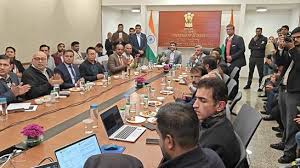
The Minister of State for Rural Development and Communications launched the ‘Land Stack’ in the Pilot Locations of Chandigarh and Tamil Nadu and release the ‘Glossary of Revenue Terms’ (GoRT).
- It is an integrated, GIS-based digital platform designed to consolidate all land records into a singular, accessible platform.
- It is inspired by successful models in nations such as Singapore, the UK and Finland.
- It was launched under the Digital India Land Record Modernisation Programme (DILRMP).
- The Land Stack portal enables informed decision-making by citizens through integrated access to land-related information.
- It enhances citizen convenience, transparency and trust.
- It reduces the risk of inadvertent purchase of unauthorised or non-compliant properties.
- It improves inter-departmental coordination and supports data-driven governance.
- It represents a significant e-Governance reform in land administration.
- Glossary of Revenue Terms provides meanings of various land-related revenue terms in Vernacular, Hindi, English, and Roman scripts.
- The objective is to harmonize terminology to make land data comparable and interoperable nationally, without replacing State-specific terminology.
- It serves as an authoritative reference for revenue officials, policymakers, judicial authorities, and citizens.
Galaxy Frog:
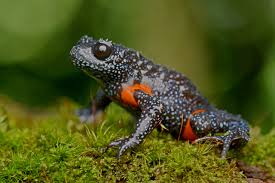
According to the study, a group of seven galaxy frogs vanished, all likely to be dead, after multiple photographers descended on their habitat.
- Galaxy frogs (Melanobatrachus indicus) are one of the rarest and most dazzling amphibians in the world.
- Its dorsal region is warty and speckled with bluish-white spots that resemble stars in the night sky, hence the name ‘Galaxy frog’.
- The frog belongs to the family Microhylidae and sub-family Melanobatrachinae.
- It has been declared the flagship species of Mathikettan Shola National Park in Idukki , Kerala.
- It is endemic to wet evergreen forests of southern Western Ghats in Kerala and Tamil Nadu.
- Characteristics of Galaxy Frog:
- Unlike other frogs, the Galaxy Frog doesn’t have a vocal sac and hence it can’t be identified through its calls.
- The bright-coloured spots are being inferred to aid the frog in communication.
- It is a nocturnal species and extremely sensitive to light.
- It absorbs water and oxygen through the skin, so moist air is a must for this species.
- It keeps the skin moist by secreting mucus.
- Threats: Major threats to these creatures are the conversion of forest areas to farm land, firewood collection and landslides.
- Photo tourism has emerged as a new danger to galaxy frogs.
- Conservation Status:IUCN Red List: Vulnerable
District Mineral Foundations:

The Allahabad High Court recently held that the formation of District Mineral Foundations is beneficial legislation and must be construed liberally for those who are affected negatively by mining operations.
- DMFs are statutory bodies in India established by the state governments by notification.
- They derive their legal status from the Mines and Minerals (Development and Regulation) Act, 1957, as amended as the Mines and Minerals (Development and Regulation) Amendment Act, 2015.
- In any district affected by mining-related operations, the State Government shall, by notification, establish a trust, as a non-profit body, to be called the DMF.
- It is used To work in the interest and benefit of persons and areas affected by mining-related operations in a manner as may be prescribed by the respective State Government.
- The operation of DMFs falls under the jurisdiction of the relevant State Government.
- Composition and functions of the DMF are prescribed by the State Governments.
- It is funded through the contributions from the holders of major or minor mineral concessions in the district, as may be prescribed by the Central or State Government.
- The Central Government has notified the rates of contribution payable by miners to the DMFs.
- The Fund available with the Trust shall be used for:
- The overall development of the area affected by mining-related operations in the District in accordance with the Annual Action Plan prepared by the Trustees of the Foundation for the purpose.
- Creation of local infrastructure for socio-economic purposes.
- Providing, maintaining, or upgrading community assets and services for the local population in the area affected by mining-related operations.
- Organising or conducting training programmes to skill development and capacity building for creating employment and self-employment capabilities.
- Pradhan Mantri Khanij Kshetra Kalyan Yojana (PMKKKY):
- The Ministry of Mines launched PMKKKY in 2015 for the welfare of areas and people affected by mining-related operations, using the funds generated by DMFs.
- Objectives is To implement various developmental and welfare projects in mining-affected areas, complementing the existing ongoing schemes of the State and Central Government , To minimize/mitigate the adverse impacts, during and after mining, on the environment, health, and socio-economics of people in mining districts,to ensure long-term sustainable livelihoods for the affected people in mining areas.
Car Nicobar Island:
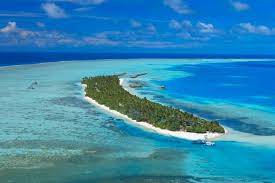
The Chief of Defence Staff recently inaugurated a major runway upgrade at the Indian Air Force’s Car Nicobar air base.
- It is part of the Nicobar district in the Andaman and Nicobar Islands Union Territory.
- It is the northernmost island of the Nicobar group.
- It lies south of Little Andaman and north of Nancowry Island.
- The ten-degree channel lies on the northern side of the island and separates the Andaman Islands and Nicobar Islands.
- Despite being a small island – under 127 sq.km. – it holds nearly half of Nicobar’s population (over 17,800 in 2011) and serves as the district headquarters.
- It is remarkably flat except for some cliffs in the north and small hilly areas in the interior.
- It is bordered by a silvery beach and areas of flat ground consisting of coraline diluvium.
- It is inhabited primarily by the Nicobarese tribal community (Scheduled Tribe).
- The climate of Car Nicobar Island is a tropical monsoon climate, as it is just 9 degrees from the equator, with an annual rainfall of 400 mm.
- The Car Nicobar islands do not have any evergreen forests, which dominate the central and southern islands of the Nicobars.
- Most of the island is covered with coconut plantations, and natural flora is present only in the interior areas.
- The island has been designated an Important Bird Area (IBA) by BirdLife International.
- The island was severely affected by the tsunami that was caused by the 2004 Indian Ocean earthquake, which led to many deaths and damaged infrastructure.
- Car Nicobar lies 750 km (470 mi) from the epicenter of the 2004 Indian Ocean earthquake, and the ensuing tsunamis struck it with great force.
Vishnugad Pipalkoti Hydro Electric Project:
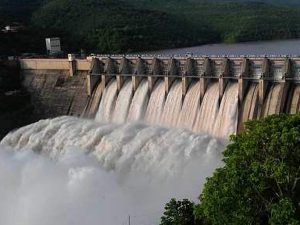
Around 60 people were injured after a loco train carrying workers and officials hit a goods train inside the Pipalkoti tunnel of the Vishnugad–Pipalkoti Hydroelectric Project recently.
- It is a run-of-river hydropower scheme being developed on the Alaknanda River (a major tributary of the Ganga River) in the Chamoli district of Uttarakhand.
- It is designed to provide peaking power to India’s Northern Grid.
- The project, when completed, will generate an estimated 1,665 gigawatt-hours (or million kilowatt-hours) of electricity in a typical year.
- All water diverted from the river will be returned to the river.
- It is being developed by THDC India Ltd (formerly Tehri Hydro Development Corporation Limited) and financed by the World Bank.
- THDC is a joint venture between the government of India and the government of Uttar Pradesh.
Mount Bur Ni Telong:
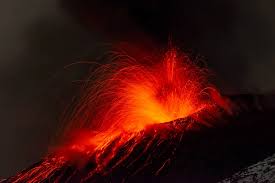
Indonesian authorities recently raised the alert for Mount Bur Ni Telong volcano due to increased activity, including numerous earthquakes
- It is an active stratovolcano.
- It is located in Indonesia’s westernmost province of Aceh.
- It is one of the best climbing spots in Aceh.
- The conical Bur ni Telong volcano was constructed at the southern base of the massive Bur ni Geureudong volcanic complex, one of the largest in northern Sumatra.
- It is formed by multiple layers of lava and eruptive materials, making it prone to explosive eruptions and highly hazardous.
- Stratovolcano is a tall, steep, and cone-shaped type of volcano.
- Unlike flat shield volcanoes, they have higher peaks.
- They are typically found above subduction zones, and they are often part of large volcanically active regions, such as the Ring of Fire that frames much of the Pacific Ocean.
Eastern Imperial Eagle:
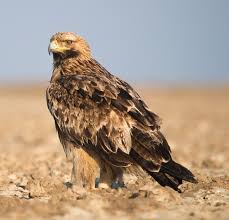
Wildlife enthusiasts recently confirmed the presence of an Eastern Imperial Eagle visiting the Mudumalai Tiger Reserve (MTR) during the winter migratory season
- Eastern Imperial Eagle is a large bird of prey.
- Scientific Name: Aquila heliaca
- It breeds in southeastern Europe and extensively through West and Central Asia.
- Most populations are migratory and winter in northeastern Africa, the Middle East and South and East Asia.
- Like all eagles, the eastern imperial eagle is a member of the family Accipitridae. Furthermore, its well feathered legs mark it as a member of the subfamily Aquilinae.
- The species displays reverse sexual dimorphism, as do most birds of prey, in which males are usually smaller than the females.
- Conservation Status: IUCN Red List: Vulnerable
- Mudumalai Tiger Reserve (MTR) is located in the Nilgiris District of Tamil Nadu, at the tri-junction of three states, viz., Karnataka, Kerala, and Tamil Nadu.
- It lies on the northeastern and northwestern slopes of the Nilgiri hills, which is a part of the Western Ghats.
- It is part of the Nilgiris Biosphere Reserve, the first biosphere reserve in India.
- The name Mudumalai means ”the ancient hill range”.
NATGRID–NPR Integration:

National Intelligence Grid (NATGRID) has been linked to the National Population Register (NPR), allowing authorised agencies real-time access to family-level demographic data of nearly 119 crore residents, significantly expanding India’s intelligence and investigation architecture.
- National Intelligence Grid (NATGRID) is a secure, integrated intelligence-sharing platform designed to help law enforcement and security agencies access multiple databases in real time for counter-terrorism and criminal investigations.
- NATGRID was conceived in 2009, in the aftermath of the 26/11 Mumbai terror attacks (2008), to overcome information silos among security agencies and enable faster, intelligence-led responses.
- It became operational in 2023 and currently processes around 45,000 data access requests per month from authorised agencies.
- Initially limited to 10 central agencies (IB, RAW, NIA, ED, FIU, NCB, DRI, etc.) had access. It has now been expanded to SP-rank officers of State police, strengthening Centre–State coordination.
- Advanced analytics tools like Gandiva support facial recognition, entity resolution, and multi-source data analysis, allowing investigators to identify suspects using images and family-linked NPR data.
- An Organised Crime Network Database is being developed on NATGRID to enable secure data-sharing between the NIA and State Anti-Terror Squads.
- NATGRID allows access to Aadhaar, banking, tax, FASTag, passport, travel, Financial Intelligence Unit and social media data. The information is categorised as non-sensitive, sensitive, and highly sensitive (bank statements, financial and tax data, export-import details).
- Each query is logged, purpose-based, and subject to senior officer oversight, but data access without a First Information Report (FIR) raises concerns over privacy, proportionality, and due process.
- States have been encouraged to actively use NATGRID, strengthening Centre–State intelligence coordination.
- NATGRID’s architecture is designed to integrate databases connected to nearly 14,000 police stations across the country.
National Population Register (NPR):
- The NPR is a nationwide database containing demographic and family-wise details of residents in India, including name, age, gender, address, and family relationships.
- NPR is the first step for the creation of a countrywide National Register of Citizens (NRC).
- The NPR is prepared under the provisions of the Citizenship Act 1955 and the Citizenship (Registration of Citizens and Issue of National Identity Cards) Rules, 2003. It is mandatory for every “usual resident of India” to register in the NPR.
- A usual resident is a person who has lived in a local area for six months or more, or intends to reside there for the next six months or more.
- NPR data was collected during the 2010–11 Census and last updated in 2015. no decision has been taken to update it during the upcoming Census 2027.
Savitribai Phule:
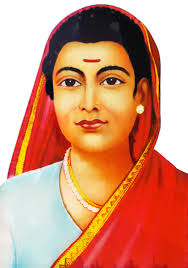
Prime Minister paid tributes to Savitribai Phule on her birth anniversary, recalling her lifelong commitment to education, equality, and social transformation.
- Savitribai Phule (1831–1897) was a pioneering social reformer, poet, and educator, widely regarded as the first female teacher of modern India and a foundational figure of Indian feminism.
- Born in Naigaon (present-day Maharashtra), she was married in childhood to Jyotirao Phule and later moved to Pune.
- Her early exposure to learning ignited a lifelong mission to reform society through education.
- Encouraged by Jyotirao Phule, she learned to read and write and undertook teacher training at institutions in Ahmednagar and Pune, becoming a qualified teacher in 1847—an extraordinary achievement for women of that era.
- Key contributions:
- Pioneer of girls’ education: In 1848, she co-founded India’s first girls’ school at Bhidewada, Pune, and went on to help establish 18 schools for girls and marginalized communities.
- Social reform for the oppressed: Opened shelters for widows, destitute women, and child brides (1854; expanded in 1864); campaigned against child marriage, caste discrimination, and untouchability.
- Institution building: Played a central role in nurturing the Satyashodhak Samaj, which fought caste hierarchy and promoted equality; popularized Satyashodhak marriages without priests or dowry.
- Public service with courage: Defied social hostility—often facing abuse on her way to school—and served plague victims during the 1897 epidemic, sacrificing her life in the process.
Pro-Active Governance and Timely Implementation (PRAGATI):
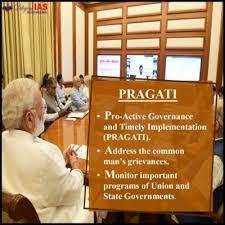
Land acquisition has emerged as the single largest bottleneck in infrastructure development, accounting for 35% of project delays, the Cabinet Secretary said after the 50th PRAGATI meeting.
- PRAGATI is a centralised, ICT-enabled governance platform for grievance redressal, programme implementation, and project monitoring, enabling real-time review of projects of national importance.
- Launched on 25 March 2015 by the Government of India, under the Prime Minister’s leadership.
- Aim:
- Ensure timely implementation of infrastructure and development projects.
- Resolve inter-ministerial and Centre–State coordination issues.
- Promote e-transparency, accountability, and outcome-based governance.
- Key features:
- Three-tier architecture: Links PMO, Union Secretaries, and State Chief Secretaries on one platform, enabling direct coordination, faster decisions, and clear accountability across governance levels.
- Monthly PM-chaired reviews: Provides high-level political oversight through regular video-conference meetings, ensuring time-bound resolution of critical project delays.
- Digital–GIS integration: Uses real-time data, geo-spatial mapping, and live visuals to objectively track project progress and identify ground-level bottlenecks.
WHO Pharmacovigilance:
Union Health Minister announced that India has risen to 8th position globally in contributions to the WHO pharmacovigilance database, from 123rd a decade ago.WHO pharmacovigilance refers to the global system for monitoring, detecting, assessing, and preventing adverse effects of medicines and vaccines, coordinated through international data-sharing mechanisms.It Ensure patient safety by early identification of medicine- and vaccine-related risks.Strengthen regulatory decision-making through real-world safety data.Promote safe, rational, and effective use of medicines worldwide.
Know Your Survey: A User Guide to ASUSE
The Ministry of Statistics and Programme Implementation has released the first-ever reader-friendly guide titled Know Your Survey to transparently explain survey processes to data users.A first-of-its-kind, reader-friendly publication released by the National Statistics Office under the Ministry of Statistics and Programme Implementation.It explains the concepts, coverage, methodology, and quality assurance framework of ASUSE in simple, non-technical language.
Transforming a Waste-Ridden Urban India:
Urban waste management has gained renewed global focus after COP30 (Belém, 2025) placed waste and circularity at the core of climate action, committing funds to cut methane emissions through initiatives like No Organic Waste (NOW).It refers to India’s shift from a linear “collect–dump” model of urban waste management to a circular economy framework, where waste is minimised, segregated, recycled, and reused as a resource to reduce pollution, emissions, and health risks in rapidly expanding cities.Urban India is projected to generate 165 million tonnes of municipal solid waste annually by 2030, reflecting rapid urbanisation.By 2050, waste generation could rise to 436 million tonnes as the urban population approaches 814 million.Urban waste is estimated to emit over 41 million tonnes of greenhouse gases, mainly methane from organic waste.Cities generate about 12 million tonnes of construction and demolition (C&D) waste annually, a major contributor to urban pollution.
Birth Anniversary of Mannathu Padmanabhan:
The Prime Minister paid tribute to Mannathu Padmanabhan (2nd January 1878 – 25th February 1970) on his birth anniversary, remembering him as a towering social reformer who dedicated his life to dignity, equality, and nation-building. Mannathu Padmanabhan was a leading social reformer from Kerala, known for challenging caste discrimination and social exclusion.Founded the Nair Service Society (NSS) in 1914, he institutionalised social reform, education, and community upliftment, ensuring his ideals endured well beyond his lifetime.Deeply inspired by Mahatma Gandhi, he embraced Satyagraha as a moral and political tool for social justice.He led the Savarnajatha Satyagraha, advocating temple access for oppressed communities, which contributed to the historic Temple Entry Proclamation.His participation in the Vaikom (1924) and Guruvayoor (1931) Satyagraha placed him at the forefront of India’s struggle against caste discrimination.He consistently promoted peace, unity, and inter-community harmony, strengthening Kerala’s pluralistic ethos.He was awarded the Padma Bhushan (1966) and honoured with the title Bharata Kesari by the President of India for his contributions to social reform.He Actively involved in the Indian national movement especially in Travancore, he faced imprisonment, reflecting his commitment to both political freedom and social reform.He revitalised an entire community by teaching the philosophy of action, unity, and self-change. His influence continues across generations, firmly embedded in Kerala’s social, political, and cultural history.
Adult Skill Assessment Survey, 2026:
India is set to conduct its first nationwide assessment of adult skill competencies in 2026 to generate crucial data for tackling workforce challenges and harnessing the demographic dividend.The Ministry of Statistics and Programme Implementation (MoSPI) will conduct the survey using the Comprehensive Modular Survey (CMS) framework, at the request of the Ministry of Skill Development and Entrepreneurship (MSDE).
CMS enables the conduct of targeted, short-duration household surveys on specific topics (narrower in scope and shorter in duration) to address immediate policy needs of ministries and departments.



