
Today’s Current Affairs: 20th January 2026 for UPSC IAS exams, State PSC exams, SSC CGL, State SSC, RRB, Railways, Banking Exam & IBPS, etc
Table of Contents
Umbilo Shree Ambalavaanar Alayam:

The 151-year-old Umbilo Shree Ambalavaanar Alayam temple in Durban, a national monument, faces potential discontinuation of civic services due to a pending bill amid fraud allegations.
- It is a Hindu temple located in Durban, South Africa.
- Built in 1875, it was established by indentured labourers who arrived in Durban from India.
- It is the oldest Hindu temple on the African continent.
- It was declared a National Heritage Site in 1980 by the apartheid-era National Monuments Council.
Bor Tiger Reserve: Two New Safari Gates
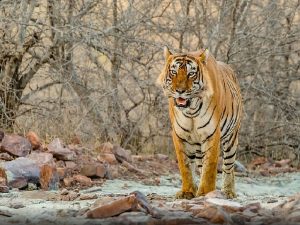
Two new safari gates at the Bor Tiger Project were inaugurated recently.
- It is located in the Wardha District of Maharashtra.
- It is the smallest tiger reserve in India by area.
- It is centrally located among several other Bengal tiger habitats.
- Towards the northeast lies the Pench Tiger Reserve, towards the east is the Nagzira Navegaon Tiger Reserve, and to the southeast is the Karhandla Wildlife Sanctuary.
- The Tadoba Andhari Tiger Reserve is located to the southeast, the Melghat Tiger Reserve stands to the west, and the Satpura Tiger Reserve lies to the northwest.
- The area is populated by the Dry Deciduous Forest type.
- Apart from tigers, the reserve is home to several other mammals like leopards, sloth bears, sambar deer, Indian bison (gaur), chital, wild boars, and more.
- It has recorded diversity of just under 200 avian species, with migratory waterfowl such as the tufted duck, northern shovelers, as well as the elegant fish specialist, the osprey.
- Commonly seen resident species include the Indian peafowl, black-hooded oriole, and Indian paradise flycatcher.
Brandt’s Hedgehog:

A new species of hedgehog, Brandt’s hedgehog, not so far found in India, has been recently discovered in Jammu and Kashmir, DNA analysis and morphological studies reveal.
- It is a species of desert hedgehog.
- Scientific Name: Paraechinus hypomela
- It is native to parts of the Middle East and Central Asia, with a range that includes Iran, Afghanistan, Pakistan, and parts of Turkmenistan.
- It inhabits arid and semi-arid regions, including rocky deserts, scrublands, and dry mountain slopes.
- The species is adapted to environments with sparse vegetation, loose or stony soils, and extreme temperature fluctuations between day and night.
- It is often associated with areas that provide natural shelter, such as rock crevices, abandoned burrows, or dense shrubs.
- It is still capable of digging dens when absolutely needed. It hibernates during colder weather.
- It has a black brownish face with a few white hairs interspersed on the forehead.
- They have large ears with a narrow base.
- Both the dorsal and ventral surfaces as well as the limbs are usually blackish brown.
- It has five short-nailed toes on each of its two front paws.
- Its back paws have four toes each with nails that constantly grow long.
- It is a faster runner due to lighter needle protection.
- It is predominantly nocturnal.
- Conservation Status: IUCN Red List: Least concern.
Soft Matter:

Every morning, as you use either your toothpaste or shampoo, you engage with soft matter, materials that flow like liquids under force but hold their shape at rest.
- Soft matter, or soft materials, is a sub-field of “condensed matter”, referring to a variety of materials that can be easily deformed or structurally altered by thermal fluctuations or nominal external stress.
- Soft materials include colloids, polymers, foams, gels, liquid crystals, and many biomaterials.
- They exhibit many useful and appealing properties, which account for their ubiquity in everyday life, finding use in a diverse range of applications in industry including, food, medical, automotive, construction, transportation, electronics, and manufacturing.
- Everyday examples include curd, toothpaste, shampoo, soap bubbles, and living cells.
- One of the important characteristics of soft matter is their physical structures in the mesoscopic scale.
- It is the properties and interactions of these structures that determine the overall behavior of the material.
- Unlike “hard materials” such as metals, ceramics, or glass, the building blocks of soft matter are held together by weak forces.
- As a result, soft material properties can be markedly affected as a result of small changes in temperature, applied force, time, and environment.
Guillain-Barré Syndrome: Outbreak

A Guillain-Barré Syndrome (GBS) outbreak has hit Madhya Pradesh’s Neemuch district recently, with two deaths reported in Manasa town.
- It is a rare neurological disorder in which a person’s immune system mistakenly attacks part of their peripheral nervous system.
- This is the part of the nervous system outside the brain and spinal cord.
- It controls muscle movement, pain signals, and temperature and touch sensations.
- Since the body’s own immune system does the damage, GBS is called an autoimmune disease.
- GBS is also called acute inflammatory demyelinating polyradiculoneuropathy (AIDP).
- It can occur at any age, but it most commonly affects people between 30 and 50.
- The exact cause of the disease remains unclear, but it is often observed following a viral or bacterial infection, vaccination, or major surgery.
- At such times, the immune system becomes hyperactive, leading to this rare condition.
- Patients often begin with an unknown fever, followed by weakness and other nervous system-related symptoms.
- It can increase in intensity over a period of hours, days, or weeks until certain muscles cannot be used at all.
- Some cases of GBS are very mild and only marked by brief weakness. Others cause nearly devastating paralysis, leaving the person unable to breathe on their own.
- It is potentially life-threatening. People with GBS should be treated and monitored as quickly as possible
- There’s no known cure for GBS.
- Several treatment options can ease symptoms and help speed recovery.
- Most people recover completely from GBS, but some serious illnesses can be fatal.
- While recovery may take up to several years, most people are able to walk again six months after symptoms first began.
- Some people may have lasting effects, such as weakness, numbness, or fatigue.
Indian Bison : Study
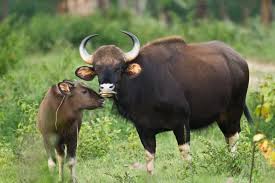
The Indian bison population in Debrigarh wildlife sanctuary has recorded a robust jump of 189 individuals within a year, taking the total head count to 848.
- It is the largest species among the wild cattle and the Bovidae.
- These are indigenous to the South and Southeast parts of Asia.
- They are primarily found in evergreen and semi-evergreen forests along with moist deciduous forests with open grasslands.
- They prefer hilly-terrains with large and undisturbed forest tracts and abundant water.
- Conservation Status of Indian Bison:
- IUCN Red List: Vulnerable
- CITES: Appendix I
- Wild Life Protection Act, 1972: Schedule I
- It plays a vital role in maintaining ecological balance in forests besides serving as important prey species for tigers.
- They also help shape vegetation dynamics and contribute to seed dispersal.
- Threats: Loss of habitat throughout most of their range. It is susceptibility to domestic cattle diseases like rinderpest, hoof, or mouth disease.
- Debrigarh wildlife sanctuary is situated in the Bargarh district of Odisha.
- It is located near Hirakud Dam (the longest dam in India and the longest earthen dam in the world) on the Mahanadi River.
- Most of the plant sanctuary is covered with mixed and dry deciduous forest.
- Major trees found here are Sal, Asana, Bija, Aanla, Dhaura, etc..
- Indian leopards, sloth bears, chousingha (four-horned antelope), sambar deer, gaurs (Indian bison).
ICGS Sankalp:

Indian Coast Guard Ship (ICGS) Sankalp visited Port Louis in Mauritius as part of overseas deployment in Indian Ocean Region.
- ICGS Sankalp is the 5th Advanced Offshore Patrol Vessel (AOPV) of Indian Coast Guard which was commissioned in 2008.
- The vessel is indigenously built by the Goa Shipyard Limited.
- It is designed primarily for extended maritime surveillance, exclusive economic zone (EEZ) protection, search and rescue operations, and enforcement of maritime laws within India’s vast oceanic domains.
- It is equipped with state of the art navigational and communication sensors and other equipment.
- It is capable of embarking Advanced Light Helicopters (ALH) and Chetak helicopters.
- It is equipped with primary armament consisting of two 30 mm CRN-91 twin-barrel naval guns, designed for surface engagement and controlled by an integrated fire control system.
- It also fitted with davits to deploy up to five high-speed interceptor boats.
Indiaphonte bijoyi:
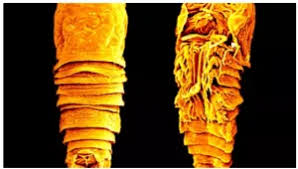
A microscopic crustacean was discovered in Kavaratti which has been named Indiaphonte bijoyi, with the generic name Indiaphonte.
- It is a tiny crustacean discovered from the Kavaratti lagoon in the Lakshadweep islands.
- It belongs to the family Laophontidae within the Copepoda class.
- It lives in sediments in aquatic environments.
- It is most diverse family within the order Harpacticoida.
- It is microscopic in size and plays a vital role in maintaining the health of marine and freshwater ecosystems.
- They are sensitive to pollution, oil spills, heavy metals, and climate change and are considered reliable bio-indicators of environmental change.
- They are widely used in aquaculture and fisheries, especially as live feed for fish larvae.
- They produce and convert omega-3 fatty acids such as Eicosapentaenoic Acid (EPA) and Docosahexaenoic Acid (DHA) that are essential for the growth of fish and shellfish and contribute significantly to human nutritional security.
India’s First State-Funded BSL- 4 Lab:

Union Home Minister laid the foundation stone of India’s first state-funded Bio-Safety Level-4 (BSL-4) laboratory in Gandhinagar, Gujarat, marking a major milestone in strengthening the country’s health security, biotechnology research, and preparedness against deadly pathogens.
- BSL-4 Laboratory: BSL-4 represents the highest level of biological containment, designed to study highly infectious and deadly pathogens that often lack effective vaccines or treatments, under strict international safety protocols.
- The facility will enable research on Ebola, Nipah, Marburg, Crimean-Congo Hemorrhagic Fever (CCHF), and Kyasanur Forest Disease (KFD), strengthening India’s outbreak preparedness and bio-defence capacity.
- India’s First State-Funded BSL-4 Facility: It will be the second civilian Bio-Safety Level-4 (BSL-4) laboratory in India.
- Developed under the Gujarat State Biotechnology Mission (GSBTM) and operated by the Gujarat Biotechnology Research Centre (GBRC), which earlier decoded the SARS-CoV-2 genome.
- The complex will include BSL-4, BSL-3, BSL-2, ABSL-4, and ABSL-3 modules, along with high-end utilities and containment systems.
- The ABSL-4 unit will allow in-state testing and vaccine research on zoonotic diseases.
- The Department of Biotechnology (DBT) has signed an MoU declaring it a national facility, enabling access to experts and institutions across India.
Export Preparedness Index (EPI) 2024:
NITI Aayog has released the Export Preparedness Index (EPI) 2024, assessing the export readiness of States and Union Territories, highlighting their critical role in achieving India’s USD 1 trillion merchandise export target by 2030 and the vision of Viksit Bharat @2047.
- Export Preparedness Index (EPI) launched in 2020, the EPI assesses State and district-level export readiness through an evidence-based framework.
- It highlights the role of States and districts in driving exports, jobs, and global value chain integration, with emphasis on infrastructure, competitiveness, and cluster-led strategies.
- The Index links federalism with economic performance and highlights district-led export growth, supporting Make in India, Atmanirbhar Bharat, MSMEs, and trade competitiveness.
- It is structured around 4 pillars, 13 sub-pillars, and 70 indicators.
- The four core pillars are Export Infrastructure, Business Ecosystem, Policy & Governance, and Export Performance.
- Among these, the Business Ecosystem carries the highest weightage (40%), while the other three pillars have 20% each, highlighting the growing importance of cost efficiency, MSMEs, access to finance, and innovation in strengthening export competitiveness.
- For comparative assessment, States and UTs are grouped into Large States, Small States, North-Eastern States, and Union Territories, and classified as Leaders (High export preparedness), Challengers (Moderate preparedness with scope for improvement), and Aspirers (Early-stage export ecosystems) promoting peer learning, cooperative federalism, and focused reforms.
- The top-performing Large States are Maharashtra, Tamil Nadu, Gujarat, Uttar Pradesh, and Andhra Pradesh, while the leading Small States, North-Eastern States, and Union Territories include Uttarakhand, Jammu and Kashmir, Nagaland, Dadra & Nagar Haveli and Daman & Diu, and Goa.
Kaziranga Elevated Corridor and Bagurumba Dwhou:
During the recent visit to Assam, the Prime Minister participated in the Bagurumba Dwhou 2026 cultural programme in Guwahati, laid the foundation stone of the Kaziranga Elevated Corridor Project, and virtually flagged off two Amrit Bharat Express trains.Bagurumba Dwhou is a major cultural festival in Guwahati celebrating the heritage of the Bodo community. Bagurumba dance is a classical Bodo folk form inspired by nature, symbolising harmony between humans and the environment.Performed mainly by women with male musicians, the dance imitates butterflies, birds and flowers through circular and linear formations and represents peace, fertility, and collective joy, closely associated with festivals such as Bwisagu (Bodo New Year). Kaziranga Elevated Corridor aims to ensure safe wildlife movement across Kaziranga National Park and Tiger Reserve, which hosts the world’s largest population of one-horned rhinoceroses and nearly 500 bird species, while reducing animal–vehicle collisions, improving road safety, easing congestion, and strengthening connectivity to Upper Assam.It is part of the four-laning of the 86.675 km Kaliabor–Numaligarh stretch of NH-715 along the Brahmaputra floodplains, includes about 34.5 km of elevated wildlife-friendly corridor with bypasses at Jakhalabandha and Bokakhat.Rail Connectivity Boost To enhance regional connectivity, the Prime Minister also flagged off two Amrit Bharat Express trains, Kamakhya–Rohtak and Dibrugarh–Gomti Nagar (Lucknow), which will significantly improve long-distance rail links between the Northeast and northern India, reduce travel time, and provide modern passenger amenities.
1.03 Crore New Workers Added to ESIC:
The Union Labour Ministry announced that reforms in Employees’ State Insurance Corporation (ESIC) and Employees’ Provident Fund Organisation (EPFO), particularly the Scheme to Promote Registration of Employers/Employees (SPREE), have extended social security coverage to over one crore workers.Under SPREE, a one-time, penalty-free window enabled unregistered employers and employees to enter the ESIC system without retrospective liabilities, resulting in the registration of 1.17 lakh employers and 1.03 crore employees(as of 11 January 2026).The Employees’ State Insurance Corporation (ESIC) administers the Employees’ State Insurance Scheme (ESI) under the Employees’ State Insurance Act, 1948, providing socio-economic protection against sickness, maternity, disablement, employment injury, and ensuring medical care for insured workers and their dependent families.
Parallel EPFO reforms have eased access to provident fund benefits by allowing withdrawal of up to 75% of the balance while retaining 25% for retirement, alongside expanded auto-settlement of claims through simplified processes.The Employees’ Provident Fund Organisation (EPFO) is a statutory body under the Ministry of Labour & Employment, administering provident fund and pension schemes under the Employees’ Provident Fund & Miscellaneous Provisions Act, 1952, and is among the world’s largest social security organisations.
India Emerges as a Global Cooperative Powerhouse:
The United Nations has declared 2025 as the International Year of Cooperatives (IYC), highlighting India’s emergence as a global leader with over 8.5 lakh registered cooperatives and a renewed policy focus under the vision of “Sahkar Se Samriddhi.” India accounts for approximately 27% of all cooperatives worldwide, making it one of the largest organized economic networks globally. As of late 2025, there are nearly 32 crore members, covering roughly 98% of rural India across 30 different sectors.Out of 8.5 lakh registered societies, approximately 6.6 lakh are fully operational, including nearly 80,000 Primary Agricultural Credit Societies (PACS).The sector includes 1,457 urban cooperative banks holding assets worth ₹7.38 trillion and deposits of roughly ₹5.84 trillion as of March 2025.Through links with Self-Help Groups (SHGs), the cooperative framework has integrated nearly 10 crore women into the organized economy.
Agri Subsidy and Need for Reform:
In the 2026 Union Budget cycle focus on rationalizing food and fertilizer subsidies—which account for roughly 8.5% of the total budget—by potentially merging them into an augmented PM-Kisan scheme.Agricultural subsidies are financial aids provided by the government to farmers to reduce input costs (fertilizers, power, seeds) or ensure price stability (MSP).Reform is needed because the current “blanket” approach leads to environmental degradation, soil toxicity from urea overuse, and skewed crop choices that favor cereals over nutritious pulses and oilseeds.For FY 2025-26, the combined food and fertilizer subsidy is pegged at approximately ₹3.71 lakh crore.Expected to touch ₹2.03 lakh crore, covering nearly 56% of the population (813 million people).Allocated at ₹1.67 lakh crore, making it the second-largest subsidy component in the Union budget. MSP payouts have more than tripled over the last decade, reaching ₹3.33 lakh crore by June 2025. India’s import dependency for raw materials like potash and phosphate remains high at 90% and 60% respectively, driving up the subsidy burden.
Second range-wide Dolphin Survey:
The second range-wide Dolphin Survey has been launched from Bijnor, Uttar Pradesh under Project Dolphin to update population estimates, assess habitats and threats.Project Dolphin is a national conservation initiative of the Government of India aimed at protecting riverine and oceanic dolphins through habitat protection, scientific monitoring, and stakeholder participation.Launched in: 15 August 2020.Nodal ministry: Ministry of Environment, Forest and Climate Change (MoEFCC).Aim is to safeguard India’s dolphin diversity by addressing threats such as habitat degradation, pollution, by-catch, and flow alteration, while empowering local communities in conservation.
BRICS Plus naval exercise:
India’s decision to skip the BRICS Plus naval exercise “Will for Peace 2026” has drawn attention as New Delhi clarified that such drills are not institutionalised BRICS activities and reflected a considered political choice amid evolving geopolitics.The BRICS Plus naval exercise is a host-led, non-institutionalised maritime drill involving selected BRICS members and invited partner countries, conducted outside the formal BRICS framework.Host nation: South Africa, Conducted off the coast of Simon’s Town, near Cape Town.Theme: “Joint Actions to Ensure the Safety of Key Shipping Lanes and Maritime Economic Activities”
Member participants:
- Participating navies: China, Russia, Iran, United Arab Emirates, South Africa
- Observers: Brazil, Egypt, Ethiopia, Indonesia
- Non-participants: India, Brazil (opted out of active participation)
UN Biodiversity Beyond National Jurisdiction (BBNJ) Treaty:
The UN Biodiversity Beyond National Jurisdiction (BBNJ) Treaty, also known as the High Seas Treaty, has entered into force after crossing the required 60 ratifications, creating the first legally binding global framework to protect biodiversity in international waters.The BBNJ Agreement is a legally binding international treaty under the United Nations Convention on the Law of the Sea (UNCLOS) to conserve and sustainably use marine biodiversity in areas beyond national jurisdiction (the High Seas).
First open-sea Marine Fish Farming Project in Andaman Sea:
India has launched its first open-sea marine fish farming project in the Andaman Sea, marking a major step in advancing the Blue Economy through science-led, livelihood-oriented utilisation of ocean resources.India’s first pilot open-sea aquaculture initiative involving marine finfish and seaweed farming in natural oceanic conditions using indigenously developed open-sea cages and marine technologies.Located in North Bay, near Sri Vijaya Puram, Andaman Sea.Union Territory of Andaman & Nicobar Islands.



