
Today’s Current Affairs: 21st January 2026 for UPSC IAS exams, State PSC exams, SSC CGL, State SSC, RRB, Railways, Banking Exam & IBPS, etc
Table of Contents
Sela Lake:

Two tourists from Kerala drowned after the frozen surface of Sela Lake in Arunachal Pradesh’s Tawang district gave way recently.
- Sela Lake, also known as Paradise Lake, is a glacial lake located near Sela Pass in Tawang district, Arunachal Pradesh.
- Sela Pass is a crucial mountain pass connecting the Tawang region with the rest of Arunachal Pradesh.
- Its crystal-clear waters reflect the peaks around it, offering a stunning view.
- The lake is usually frozen all winter because of its very cold temperatures (below zero).
- The lake and its surroundings have limited vegetation because of the altitude.
- Locals and Buddhist monks consider Sela Lake a sacred site.
Type 096 Tang-Class Submarine:
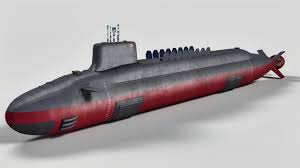
China has unveiled the most significant upgrade to its undersea nuclear capability with the unveiling of the Type 096 Tang-Class ballistic missile submarine recently.
- The Type 096 (NATO reporting name of Tang-class) submarine is China’s next-generation nuclear-powered ballistic missile submarine (SSBN).
- It is bigger, stealthier, and armed with longer-range missiles than its predecessors.
- It is said to have raft-mounted machinery, hull isolation systems, and a propulsion design that minimizes acoustic signatures during patrols.
- These features are aimed at making the sub harder to detect in contested waters.
- The vessel’s pressurized water-cooled nuclear reactor powers a single shaft via a steam turbine arrangement.
- Modern power plant elements and improved vibration dampening technologies are said to enhance submerged speed and stealth performance.
- The submarine is expected to carry between 16 and 24 JL-3 submarine-launched ballistic missiles (SLBMs), each capable of ranges exceeding 10,000 to 12,000 kilometers and equipped with multiple independently targetable reentry vehicles (MIRVs).
- It can also launch wire-guided, high-speed Yu-6 torpedoes with a range of over 29 km.
Parakaempferia alba:
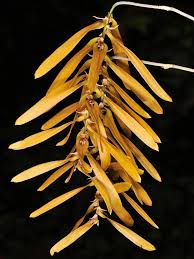
A new species of ginger, Parakaempferia alba, has been discovered in the Siang Valley of Arunachal Pradesh.
- It is a new species of Zingiberaceae (ginger family).
- It was discovered in the Siang Valley of Arunachal Pradesh
- Zingiberaceae, the ginger family of flowering plants, is the largest family of the order Zingiberales.
- These aromatic herbs grow in moist areas of the tropics and subtropics, including some regions that are seasonably dry.
- Members of the family are perennials that frequently have sympodial (forked) fleshy rhizomes (underground stems).
- A few species are epiphytic—i.e., supported by other plants and having aerial roots exposed to the humid atmosphere.
- Many species are economically valuable for their spices and perfume.
- The dried thick rhizome of turmeric (Curcuma longa) is commonly ground for culinary, medicinal, and cosmetic uses.
- The seeds of Elettaria cardamomum are the source of cardamom.
- Ginger is obtained from the fresh or dried rhizomes of Zingiber officinale, and a number of ornamental gingers are grown for their attractive flowers and foliage.
- Several species of shellflower (Alpinia) are cultivated as ornamentals.
Vadhavan Port : Protest
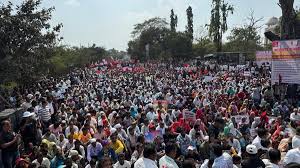
Around 20,000 residents of Palghar district recently took out a protest march on Monday against the proposed Vadhavan port and a slew of other infrastructure projects, citing environmental damage.
- It is a proposed new port on the coast of Maharashtra.
- It is being developed as an all-weather greenfield deep-draft major port.
- It is ideal for large container and bulk vessels.
- The project will be constructed by Vadhavan Port Project Limited (VPPL), a special purpose vehicle (SPV) formed by Jawaharlal Nehru Port Authority (JNPA) and Maharashtra Maritime Board (MMB).
- The strategic location of Vadhavan Port provides it with a unique edge. It will connect seamlessly to industrial centers across Maharashtra, Gujarat, and beyond.
- The capacities created will also aid EXIM trade flow through IMEEC (India Middle East Europe Economic Corridor) and INSTC (International North South Transportation Corridor).
INS Sudarshini:
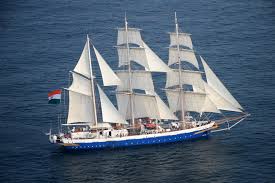
The Indian Navy’s Sail Training Ship INS Sudarshini will embark on the flagship voyage of Lokayan 26, a 10-month transoceanic expedition.
- It is an indigenously built Sail Training Ship (STS).
- It was built by Goa Shipyard Limited and based at Kochi, Kerala under the Southern Naval Command of the Indian Navy.
- The aim of using such ships is to make sailors sea-friendly, as they are taught how to survive alone at sea, understand rough weather conditions and train themselves to become good sailors.
- Sudarshini is a three-masted barque.
- It is capable of operations under sail or power.
- It has got a very high endurance and can be deployed at sea continuously for a period of twenty days.
- Lokayan 26 is a 10-month transoceanic expedition where the ship will visit 18 foreign ports across 13 countries.
Saltwater Crocodile:
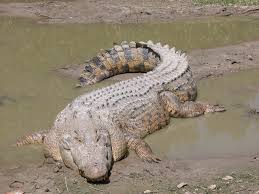
According to the Odisha state forest and environment department pilot drone-based survey, the saltwater crocodile population has increased in the state.
- It is the largest and heaviest of all living reptiles in the world.
- Other Names: Estuarine crocodile, Indo-Pacific crocodile, marine crocodile, sea crocodile, or informally as saltie.
- It is an opportunistic hypercarnivorous apex predator.
- It inhibits in saltwater habitats and brackish wetlands, rivers and mangroves
- It is found in India’s east coast, Southeast Asia and the Sundaic region and northern Australia and Micronesia.
- In India, these are distributed in Odisha and West Bengal and the coastal areas of the Andaman and Nicobar Islands.
- Odisha has India’s largest population of saltwater crocodile in natural habitat.
- They are solitary creatures, especially when it comes to adult males.
- They are highly territorial, with large male saltwater crocodiles often controlling extensive stretches of rivers, estuaries, or coastlines.
- Conservation Status is categorized as ‘Least Concern’ under the IUCN Red List.
C-DOT’s Cell Broadcast Solution:
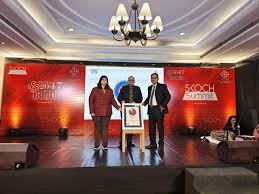
The Centre for Development of Telematics (C-DOT) has been conferred the “SKOCH Award-2025” for its Cell Broadcast Solution (CBS).
- It is an indigenous disaster and emergency alert platform.
- It is designed to enable near real-time dissemination of life-saving information to citizens in affected areas through cellular networks.
- It is developed by the Centre for Development of Telematics (C-DOT).
- It provides an automated integration between government emergency alert dissemination platforms and the telecom networks of the country for information delivery.
- It is designed to support varied geographic & demographic scenarios.
- It integrates multiple disaster alert generation agencies, including the India Meteorological Department, the Central Water Commission for floods, Indian National Centre for Ocean Information Services, and Forest Survey of India.
- It also brings together mobile service providers for message delivery, State Disaster Management Authorities and the National Disaster Management Authority for alert approval and disaster response.
- It enables geo-targeted, multi-hazard alerts with support for 21 Indian languages.
- It significantly enhances the efficiency of disaster risk reduction and management efforts.
- It aligns with the United Nations’ Early Warnings for All programme, the International Telecommunication Union’s Common Alerting Protocol.
United Nations Economic and Social Council : 80th anniversary
The Economic and Social Council (ECOSOC) will commemorate its 80th anniversary by holding a special event on 23 January 2026.
- It was established by the Charter of the United Nations in 1945 as one of the six principal organs of the United Nations.
- It is responsible for the direction and coordination of the economic, social, humanitarian, and cultural activities carried out by the UN.
- Decisions are taken by a simple majority vote. The presidency of ECOSOC changes annually.
- It has 54 members, which are elected for three-year terms by the General Assembly.
- Headquarter: New York (USA).
- It is responsible for coordinating the social and economic fields of the organization, specifically in regards to the 14 specialized agencies, the five regional commissions under its jurisdiction and eight functional commissions.
- It also serves as a central forum to discuss international social and economic issue.
- It formulates policy recommendations addressed to the member states and the United States system.
- It has been at the centre of global progress, advancing the principles of the United Nations Charter and promoting international cooperation on economic, social, cultural, educational, health and related issues.
Employment and Social Trends 2026 Report:
The International Labour Organization (ILO) has released the Employment and Social Trends 2026 report, estimating the global unemployment rate at 4.9% in 2025.
Key Highlights of the Employment and Social Trends 2026 Report:
- Between 2015–2025, the decline in extreme working poverty was only 3.1 percentage points (to 7.9% or 284 million workers), far less than the previous decade’s 15-point drop.
- In low-income countries, 68% of workers lived in extreme or moderate poverty in 2025.
- Extreme working poverty refers to the situation in which employed persons live in households with a per capita income or consumption level below the international extreme poverty line (less than USD 3 a day).
- The global informality rate increased by 0.3 percentage points (2015–2025), with 2.1 billion workers projected to be informally employed by 2026.
- The pace of workers moving across economic sectors has halved globally over the last two decades. This slowing transition to formal, productive sectors is a major driver of weak job quality and productivity growth.
- The global unemployment rate remained at 4.9% in 2025 (forecast 186 million unemployed in 2026), with a jobs gap of 408 million. Employment growth is uneven, i.e., declining in high-income countries (2026), slow in upper-middle-income countries (0.5%), but faster in low-income countries (3.1%).
- Women represent only two-fifths of global employment, with a 24.2 percentage point lower labour force participation than men.
- The global youth unemployment rate rose to 12.4% in 2025, with 257 million young people as NEET (Not in Employment, Education, or Training).
- Labour productivity growth remains low, especially in low-income countries. The global labour income share (52.6% in 2025) is below its 2019 level, showing real wage growth lags productivity growth.
- AI adoption poses a heightened risk to educated youth in high-skilled entry-level jobs. Trade policy uncertainty threatens real wages and job creation, particularly in regions like South-Eastern Asia and Europe.
- While 465 million jobs depended on foreign demand in 2024, low-income countries are largely excluded from trade and investment flows, limiting their access to better-quality, trade-linked jobs.
Board of Peace for Gaza:
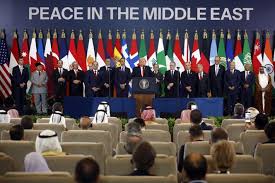
India has received an invitation from the United States to join the Board of Peace for Gaza, but it has not yet communicated its final decision on participation.
- Board of Peace for Gaza is a US-led intergovernmental body, established under UN Security Council (UNSC) Resolution 2803 (2025), to enact a comprehensive US peace plan for the reconstruction of Gaza.
- The initiative is not under UN command, but the “Comprehensive Plan to End the Gaza Conflict” it supports has UNSC endorsement, providing it international legitimacy.
- It is proposed to be chaired by US President Donald J. Trump.
- Comprising high-level figures with expertise in diplomacy, development, and economics, including former UK Prime Minister Tony Blair, US Secretary of State Marco Rubio, and others.
- A supporting operational body that coordinates on-the-ground activities.
- Bulgarian diplomat Nickolay Mladenov, serving as the primary on-the-ground liaison.
- A 15-member committee of politically independent Palestinian technocrats, chaired by Ali Shaath (a former Palestinian Authority deputy minister), responsible for day-to-day civil administration.
- To provide strategic oversight and mobilize resources for Gaza’s demilitarization, reconstruction, economic recovery, and transitional governance until a stable administration is in place.
- Its initial authorization lasts until 31st December 2027.
- Invitations have been extended to many countries, including Greece, Pakistan, and India.
- A unique funding model allows for non-contributing three-year memberships (can be renewed), while a USD 1 billion payment grants permanent status, with funds allocated for Gaza’s reconstruction.
Polar Silk Road:
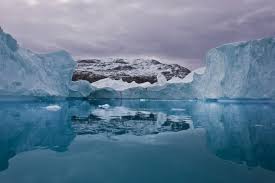
Recent US remarks on Greenland have revived debate on China’s Arctic ambitions, though expert assessments indicate China’s direct military presence in the region remains limited.
- Polar Silk Road Initiative is an extension of China’s Belt and Road Initiative (BRI) into the Arctic, aiming to develop shipping routes, access resources, and enhance its geopolitical influence by capitalizing on climate change-driven melting arctic ice.
- BRI is a global infrastructure and connectivity programme launched by China in 2013, aiming to build roads, railways, ports, energy pipelines, and digital links across Asia, Europe, and Africa to boost trade and investment.
- It was jointly announced by China and Russia in 2017. China’s 2018 Arctic Policy labelled China a “near-Arctic state” and promoted cooperation on Arctic shipping, resources, and science.
- China’s 2030 goal is to be a “polar great power”, recognizing the Arctic’s rising strategic and economic value.
- The PSR primarily focuses on the Northern Sea Route along Russia’s Arctic coast, offering significantly shorter Asia–Europe distance (upto 40%), with the Northwest Passage (along Canada’s coast) as a secondary option.
- China aims to enhance energy security, reduce dependency on traditional chokepoints like the Suez Canal, and expand geopolitical influence through partnerships, notably with Russia.
India–Germany Joint Declaration of Intent(JDI):
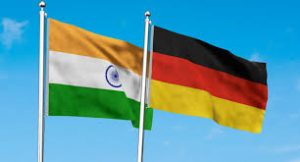
India and Germany signed a Joint Declaration of Intent (JDI) on Telecommunications Cooperation during the visit of the German Chancellor to India, strengthening collaboration in digital technologies and IT sectors.
- Joint Declaration on Telecommunications establishes a structured framework for bilateral cooperation in telecommunications and Information & Communication Technologies (ICTs).
- The Declaration emphasises collaboration in emerging and future digital technologies, exchange of best practices on policy and regulatory frameworks, promotion of manufacturing and ease of doing business, and facilitation of innovation through engagement of government, industry, academia and research institutions.
- To ensure effective and outcome-oriented cooperation, the Declaration provides for regular consultations, annual high-level meetings, and the creation of dedicated working groups, supported by the development of a joint work plan to align shared priorities.
- The Indo-German Digital Dialogue Work Plan (2026–27) has been finalised, covering cooperation in AI, data governance, telecommunications and Industry 4.0.
- Both sides have also agreed to coordinate in relevant international fora to promote common understanding and advance shared perspectives on telecommunications governance and digital development, thereby strengthening multilateral cooperation.
India International Conference on Democracy and Election Management (IICDEM) 2026:
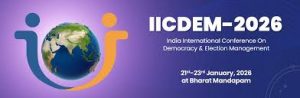
The Election Commission of India (ECI) will host the inaugural India International Conference on Democracy and Election Management (IICDEM) 2026 at Bharat Mandapam in the national capital.
- The 3-day conference, starting on the 21st of January, will be held at Bharat Mandapam, New Delhi.
- It is being organised by the India International Institute of Democracy and Election Management (IIIDEM) under the aegis of the Election Commission of India (ECI).
- IICDEM 2026 is poised to be the largest global conference of its kind hosted by India in the field of democracy and election management.
- Nearly 100 international delegates, representing over 70 countries from across the world, are expected to participate.
- Representatives of international organisations, foreign missions in India, and academic and practicing experts in the electoral domain will also take part.
- The programme will feature a mix of general and plenary sessions of Election Management Bodies (EMBs).
- These discussions will focus on global electoral challenges, international electoral standards, and innovations and best practices in election processes.
- As part of the conference, 36 thematic groups will conduct detailed deliberations.
- These groups will be led by Chief Electoral Officers of States and Union Territories and supported by national and international academic experts.
- During the event, the ECI will also formally launch ECINET, ECI’s one-stop digital platform for all election-related information and services.
- An exhibition highlighting the scale and complexity of conducting elections in India will run alongside the conference.
- The exhibition will also showcase recent initiatives undertaken by the ECI to strengthen electoral roll preparation and the conduct of elections.
- Additionally, the docuseries “India Decides”, which documents the conduct of the Lok Sabha 2024 elections, will be screened on the opening day of IICDEM 2026.
India International Institute of Democracy & Election Management (IIIDEM):
- IIIDEM is the dedicated training, academic & resource arm of the Election Commission of India (ECI).
- Established in 2011, the Institute was conceived to train, prepare, and equip election officials and other stakeholders for delivery of free, fair, credible, and error-free elections.
- It is a global knowledge and capacity-building centre dedicated to advancing democratic governance and strengthening electoral integrity.
- IIIDEM is one of the few institutions in the world which is not only involved in the training and capacity building of its electoral officials, but also caters to the requirements of Election Management Bodies (EMBs) the world over.
- IIIDEM has a team of senior experts and professionals to run its academic and research programmes.
- It holds domestic and international courses and training programmes that are residential and non-residential.
- Earlier, the IIIDEM was housed in the premises of the ECI. Now, the Institute is functioning from a full-fledged campus at Dwarka (Delhi).
Special Intensive Revision (SIR) 2.0:
The ongoing Special Intensive Revision (SIR) 2.0 has sparked nationwide concern due to widespread voter distress, manual procedural delays, and the summoning of eminent citizens to prove residency despite the availability of advanced digital infrastructure.It highlights a critical mismatch between the Election Commission’s (EC) digital capabilities (ECINet) and the ground-level reliance on error-prone paper-based hearings.Digitizing SIR verification refers to the transition from manual, paper-based field inquiries and physical hearings to an automated, audit-ready digital workflow.It involves using the ECINet platform for backend cross-verification of identity documents, real-time status updates via SMS/Email, and online document uploading to eliminate the need for voters to appear physically before electoral officers.
India Launches Responsible Nations Index (RNI):
India has launched the Responsible Nations Index (RNI) 2026 to introduce a new global benchmark for evaluating countries on ethical governance and responsibility, with India ranked 16th globally.The Responsible Nations Index (RNI) is a global composite index designed to assess countries based on ethical governance, social well-being, environmental stewardship, and global responsibility, moving beyond traditional power- and GDP-centric metrics.Launched by: Under the aegis of the World Intellectual Foundation (WIF).Aim is to redefine national success by embedding ethical responsibility, inclusiveness, sustainability, and global cooperation into the assessment of nationhood.
Export Promotion Mission (EPM):
The Reserve Bank of India (RBI) has issued operational guidelines for extending interest subvention on export credit under Niryat Protsahan, bringing exporters under the Export Promotion Mission (EPM).The Export Promotion Mission (EPM) is a mission-mode, unified national framework to strengthen India’s export competitiveness by integrating financial support, market access, compliance readiness, and digital governance for exporters.Established in: Union Budget 2025–26, Mission period: FY 2025–26 to FY 2030–31, Implemented by: Directorate General of Foreign Trade (DGFT) as the nodal implementing agency.
Parbati Giri:
Prime Minister of India paid tribute to Parbati Giri on her birth centenary, highlighting her role in the freedom struggle and her lifelong dedication to social service.Parbati Giri (1926–1995) was an Indian freedom fighter and social reformer from Odisha, widely known as the “Mother Teresa of Western Odisha” for her humanitarian work among the poor, tribals, and marginalised communities.Actively participated in Individual Satyagraha (1940) and mobilised villagers for the Khadi and Charkha movement.Joined the Quit India Movement (1942) at the age of 16, leading rallies and openly defying British authority.Known for bold acts of resistance, including urging Indians to boycott British institutions; arrested and imprisoned for two years. Earned the epithet “Banhi Kanya” for her fearless nationalism and mass mobilisation.



