
Today’s Current Affairs: 28th January 2026 for UPSC IAS exams, State PSC exams, SSC CGL, State SSC, RRB, Railways, Banking Exam & IBPS, etc
Table of Contents
Mahakaleshwar Temple : VIP darshan
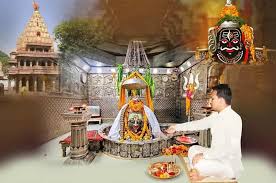
The Supreme Court recently did not entertain a petition challenging the practice of ‘VIP darshan’ at the famed Shri Mahakaleshwar temple in Ujjain, observing that the court is not meant to play the role of a gatekeeper on who enters a temple and when.
- Mahakaleshwar Temple is a Hindu temple located on the banks of the River Shipra at Ujjain in Madhya Pradesh.
- It is dedicated to Lord Shiva. It is one of the 12 Jyotirlingas in India.
- The history of Mahakaleshwar Temple dates back to ancient times, with references to the temple found in various Hindu scriptures and texts.
- The temple finds mention in the Puranas.
- The renowned poet Kalidas also mentioned this temple in his creations.
- The current structure of the temple was built in the 18th century by the Maratha ruler Ranoji Shinde.
- However, the temple has been destroyed and rebuilt several times throughout history.
- The architecture of the temple shows the influence of Maratha, Bhumija, and Chalukya styles of structural design.
- The temple complex is spread over five levels, one of which is underground.
- The Sabha Mandap (assembly hall) and Garbha Griha (sanctum sanctorum) are adorned with elaborate sculptures depicting various Hindu deities and mythological scenes.
- The sanctum houses the Jyotirlinga, which is the focal point of devotion and rituals.
- The grand spire (shikhara), intricately carved pillars, and ornate ceilings are proof of the exquisite craftsmanship.
India-Euratom agreement:
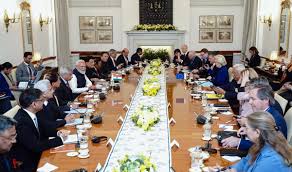
The European Union (EU) and India recently committed to promoting collaboration on the peaceful uses of nuclear energy under the India-Euratom agreement.
- The European Atomic Energy Community (Euratom) is an international organization established under the Treaty of Rome in 1957.
- Objective is to form a common market for the development of the peaceful uses of atomic energy.
- The original members were Belgium, France, West Germany, Italy, Luxembourg, and the Netherlands.
- It subsequently came to include all members of the European Union (EU).
- Euratom regulates the European civil nuclear industry, which produces almost 30% of energy in the EU.
- Euratom’s work safeguards nuclear materials and technology, facilitates investment, research, and development, and ensures equal access to nuclear supplies, as well as the correct disposal of nuclear waste and the safety of operations.
- It is governed by the Commission and Council, operating under the jurisdiction of the European Court of Justice.
- Its main instruments are the Euratom Supply Agency and its research and nuclear safeguard activities.
- The EU has its own Joint Research Centre (JRC) in the nuclear field.
- Euratom is involved in developing atomic fusion technology, which has the potential of delivering abundant sustainable energy in the future.
Doomsday Clock:
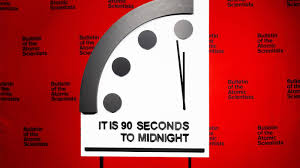
The Bulletin of the Atomic Scientists recently moved the hands of the Doomsday Clock to 85 seconds to midnight, the closest the world has ever been to global catastrophe in its estimation.
- It is a symbolic clock adopted by atomic scientists to show how close human beings are considered to be to a global catastrophe, with midnight standing for annihilation, or “doomsday.”
- Metaphorically, the clock’s minute hand moves closer to or farther from midnight, depending on the level of threat thought to be posed by nuclear weapons, climate change, or disruptive technologies.
- The clock was created in 1947 by the Bulletin of the Atomic Scientists (BAS), which was founded two years earlier.
- Bulletin of the Atomic Scientists (BAS) is a nonprofit organization that sought to warn the public about the danger of nuclear weapons.
- The Bulletin was founded by a group called the Atomic Scientists of Chicago in September 1945 at the University of Chicago.
- Its founding members and sponsors were scientists who had contributed to the development of the first atomic bombs as part of the Manhattan Project, including physicists Albert Einstein, J. Robert Oppenheimer, and Eugene Rabinowitch.
- Concerned about the devastating consequences of this new technology, the group published their first newsletter, the Bulletin of the Atomic Scientists, in December 1945.
Lepidagathis konkanensis:
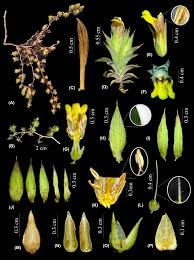
A team of researchers recently discovered a new species of wildflower named Lepidagathis konkanensis, tucked away on the sun-drenched, rocky plateaus of Maharashtra’s Konkan region.
- It is a new species of flowering plant.
- It was discovered in the Ratnagiri district in Maharashtra’s Konkan region.
- It was first encountered during a floristic survey of the region’s lateritic plateaus, harsh, iron-rich environments that often host specialised life forms.
- It is unique with its striking appearance and compact size.
- The plant’s name, konkanensis, serves as a tribute to the Konkan region of Maharashtra where it was found.
- It has been classified as Data Deficient by the IUCN.
Hoya Nagaensis: New plant species
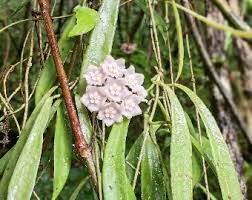
A new plant species has been discovered in Nagaland and it’s named as Hoya Nagaensis.
- Hoya Nagaensis is a new plant species.
- It is a member of the ‘wax plant family’ was discovered in the Kavunhou Community Reserved Forest in Phek district.
- It is currently known from only a single location, making it highly vulnerable.
- The plant displays unique leaf shapes and floral
- It belongs to Hoya genus, a group known for its ornamental value.
- It was found growing in a temperate forest ecosystem that remains largely unexplored by science.
- It produces distinctive star-shaped flowers and exudes milk-like latex, a characteristic of many species in the Apocynaceae or milkweed family.
- Hoyas, commonly known as wax plants, are a captivating genus cherished by indoor gardeners for their unique flowers and diverse growth forms.
- Native Range: Southeast Asia, Australia, and Polynesia
PANCHAM:
The Union Minister of State for Panchayati Raj launched the PANCHAM – Panchayat Assistance and Messaging Chatbot
- It is a digital tool developed in collaboration with UNICEF.
- It is a flagship digital initiative aimed at empowering Panchayat Elected Representatives and Functionaries.
- It is designed as a digital companion for Panchayats, providing timely and contextual guidance, simplified workflows, and easy access to information to support day-to-day governance and service delivery functions.
- It enables, for the first time, a direct digital connect between the Government of India and Elected Representatives and Panchayat Functionaries across the country.
- It is integrated with BHASHINI and will support 22 Indian languages, enabling Panchayat representatives to interact with the platform in their preferred local language.
- Citizens would be able to access PANCHAM through a QR-code-based entry mechanism.
- It will facilitate quicker decision-making, faster resolution of field-level issues, and stronger feedback loops between the grassroots and decision-making centers.
- PANCHAM facilitates two way communication and officials can send feedback, ask questions, and flag local problems directly to the ministry.
- The Ministry would be able to directly disseminate circulars, advisories, key messages, and updates to Panchayat Elected Representatives and Functionaries.
Achanakmar Tiger Reserve:
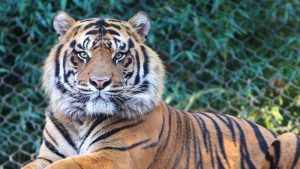
A young male tiger was found dead inside due to territorial infighting in the Achanakmar Tiger Reserve in Chhattisgarh
- It is situated in Chhattisgarh.
- It is part of the huge Achanakmar – Amarkantak Biosphere Reserve.
- It is one of three tiger reserves in Chhattisgarh.
- It has a corridor connecting Kanha and Bandhavgarh Tiger Reserve and plays a critical role in the dispersal of tigers among these reserves.
- The Maniyari River flows right from the centre of this reserve, which is the forest’s lifeline.
- It is home to the Baigas, (Particularly Vulnerable Tribal Group), Gond and Yadav communities residing inside of this tiger reserve.
- Tropical moist deciduous vegetation covers the majority of the area.
- Sal, bija, saja, haldu, teak, tinsa, dhawara, lendia, khamar, and bamboo bloom here, along with over 600 species of medicinal plants.
- It includes the tiger, leopard, bison, flying squirrel, Indian giant squirrel, chinkara, wild dog, hyena, sambar, chital, and many species of birds.
State of Finance for Nature 2026:
The United Nations Environment Programme (UNEP) released its flagship report titled “State of Finance for Nature 2026,” which highlights a stark imbalance in global financial flows, revealing that for every USD 1 invested in protecting nature, nearly USD 30 is spent on activities that destroy it.
Key Highlights of the State of Finance for Nature 2026:
- Global financial flows to activities harming nature (e.g., fossil fuel extraction, unsustainable agriculture, deforestation) reached USD 7.3 trillion in 2023. This is approximately 7% of global GDP.
- The private sector accounts for USD 4.9 trillion of nature-negative flows, concentrated in sectors like energy, utilities, and basic materials.
Governments provide about USD 2.4 trillion annually in Environmentally Harmful Subsidies (EHS), dominated by fossil fuel support, followed by unsustainable agriculture and water subsidies. - These subsidies distort market prices, making environmental destruction cheaper than conservation.
- Investments in Nature-based Solutions (NbS) stood at only USD 220 billion.
- This creates a massive disparity, with harmful investments outpacing protective spending by a 30:1 ratio, resulting in a stark and unsustainable imbalance.
- However, spending on biodiversity and landscape protection is rising, increasing by 11% between 2022 and 2023, while international public finance for nature-based solutions in 2023 was 22% higher than in 2022 and 55% above 2015 levels.
- The NbS finance is overwhelmingly driven by public funds (90% of total NbS finance comes from governments).
- Private investment in NbS is negligible, accounting for just 10% of the total.
- To meet the Rio Convention targets, NbS investment must increase 2.5 times to reach USD 571 billion annually by 2030.
- The Rio Conventions from the 1992 Earth Summit target climate stability, biodiversity conservation, and land restoration.
- The UN Framework Convention on Climate Change (UNFCCC) aims to limit warming to below 2°C, preferably 1.5°C.
- The Convention on Biological Diversity (CBD) seeks to conserve 30% of land, waters, and seas and restore 30% of degraded ecosystems by 2030.
- The UN Convention to Combat Desertification (UNCCD) targets restoring 1.5 billion hectares of degraded land by 2030.
Arbitration Council of India:

The Supreme Court has asked the Union government to respond to a petition seeking the establishment of the Arbitration Council of India (ACI) and the formulation of uniform guidelines for the regulation, conduct, and accreditation of arbitral institutions and arbitrators.
- The Arbitration and Conciliation (Amendment) Act, 2019 envisaged the ACI as the central regulator for institutional arbitration, however, the Council has still not been constituted nearly six years later.
- Arbitration Council of India is a statutory body under Part IA (Sections 43A–43M) of the Arbitration and Conciliation Act, 1996, introduced by the Arbitration and Conciliation (Amendment) Act, 2019. It is based on the recommendations of Justice B.N. Srikrishna Committee (2017).
- Composition and Appointment:
- Chairperson: To be appointed by the Union Government in consultation with the Chief Justice of India. Eligible persons include a former Supreme Court Judge, a former High Court Chief Justice/Judge, or an eminent arbitration practitioner.
- Other Members: Includes eminent arbitration practitioners, academicians, and ex officio government representatives.
- Mandate & Functions: Acts as the central regulatory body to grade arbitral institutions, accredit arbitrators, maintain an arbitral awards depository, promote Alternative Dispute Resolution (ADR) mechanisms (e.g., mediation, conciliation), and frame policies for uniform professional standards.
Union Solidarity and Development Part won the election in Myanmar:
Myanmar is the northernmost country of Southeast Asia.It is bordered by India, Bangladesh, China, Laos and Thailand. It is bounded by the Andaman Sea in the south and by the Bay of Bengal in the southwest.Capital City: Naypyidaw.It consists of Bago Yoma, Rakhine Yoma, and Shan Hills.
Highest Point: Hkakabo Razi.It is drained by Mekong, Irrawaddy, Salween and Chindwin.Natural resources: Petroleum, timber, tin, copper, tungsten, lead, coal, marble, limestone, natural gas, hydropower etc.
Indian Navy’s First Training Squadron Visits Thailand:
Indian Navy’s First Training Squadron (1TS) (INS Tir, INS Shardul, INS Sujata, and ICGS Sarathi) docked at Phuket Deep Sea Port, marking a training deployment to Southeast Asia and underscoring the growing maritime partnership between India and Thailand aimed at regional security and stability.The visit gained added importance as 2026 marked the ASEAN–India Year of Maritime Cooperation, reinforcing India’s Act East and maritime diplomacy, and coincided with India assuming the Chair of the Indian Ocean Naval Symposium (IONS) from Thailand in February 2026.The training deployment includes professional exchanges and a Passage Exercise (PASSEX).This builds on established bilateral initiatives like Ex Ayutthaya and the Indo–Thai Coordinated Patrol (CORPAT), as well as the trilateral maritime exercise SITMEX (India–Thailand–Singapore).The deployment aligns with India’s MAHASAGAR (Mutual and Holistic Advancement for Security and Growth Across Regions) vision.It reaffirms India’s role as a responsible maritime partner committed to security, stability, and cooperation in the Indian Ocean Region (IOR).
Sonamarg Avalanche:
Massive avalanches struck the Sonamarg tourist resort in Jammu and Kashmir, engulfing buildings and vehicles following heavy snowfall that disrupted the Jammu-Srinagar National Highway and forced the cancellation of all flights.An avalanche is a rapid downslope movement of a large detached mass of snow, ice, and associated debris, such as rocks and vegetation.It occurs when the force of gravity on the snow cover exceeds its mechanical strength, causing the snowpack to fracture and descend rapidly down a mountainside.
Types of Avalanches:
- Slab Avalanches: The most dangerous type, where a cohesive layer of snow reacts as a single entity and breaks free along a distinct fracture line.
- Loose Snow Avalanches (Sluffs): Formed in snow with little internal cohesion; they originate at a point and grow wider as they descend (inverted-V shape).
- Powder Snow Avalanches: Composed of dry snow that generates a turbulent dust cloud (aerosol) capable of reaching speeds up to 300 km/h.
- Wet Snow Avalanches: Triggered by melting or rain, these move more slowly but possess enormous destructive force due to high snow density.
- Ice/Rock/Debris Avalanches: Involve the sliding of massive chunks of ice (often from glaciers), rocks, or a mix of soil and loose stones.
Maharashtra launches country’s first menopause clinics:
Maharashtra has launched the country’s first dedicated menopause clinics across government hospitals and urban health facilities to address women’s physical and mental health needs.Dedicated menopause clinics within the public healthcare system that provide integrated medical and psychological care for women undergoing menopause, recognising it as a natural but health-sensitive life stage.Aim is to provide holistic, dignified, and accessible healthcare to women during menopause,to address physical, hormonal, and mental health challenges associated with menopause.to mainstream menopause-related care into public health policy.
Buddhist Diamond Triangle : UNESCO World Heritage Tentative List
The UNESCO World Heritage Centre has officially added Odisha’s famed Buddhist Diamond Triangle—comprising Lalitgiri, Udayagiri, and Ratnagiri—to India’s Tentative List for World Heritage Sites.The Diamond Triangle is a serial cultural nomination of three interconnected monastic complexes located in the Jajpur and Cuttack districts of Odisha. These sites are unique because they document 1,500 years of continuous history, showcasing the transition of Buddhism through three major schools:Theravada (Hinayana),Mahayana,Vajrayana (Esoteric Buddhism),Lalitgiri: The Ancient Spiritual Hub.Located in the Cuttack district, Lalitgiri is the oldest site in the triangle, dating back to the 2nd–3rd Century BCE.
First National Coordinators Meeting in Beijing & SCO:
The first meeting of the SCO Council of National Coordinators (CNC) for 2026 opened in Beijing, under the chairmanship of the Kyrgyz Republic, to finalize the agenda for high-level summits later this year.The Council of National Coordinators (CNC) is the primary coordination and management mechanism of the SCO. It serves as the vital link between the standing bodies of the organization and the member states.
Core functions:
- To synchronize the multilateral cooperation of member states in accordance with the SCO Charter.
- To conduct all necessary groundwork for the meetings of the Council of Heads of State (CHS) and Council of Heads of Government (CHG).
- To oversee the execution of decisions and agreements reached during previous summits
The Economic Survey of India 2026:
Chief Economic Advisor V. Anantha Nageswaran will present the Economic Survey 2026 on January 29, 2026, providing a comprehensive report card of the nation’s economy ahead of the Union Budget on February 1.The Economic Survey is the flagship annual document of the Ministry of Finance. It serves as an official review of the Indian economy over the previous 12 months, detailing performance across various sectors and providing a roadmap for future reforms.The document is prepared by the Economics Division of the Department of Economic Affairs (DEA). It is authored under the overall guidance of the Chief Economic Advisor (CEA) and released only after the approval of the Union Finance Minister.
Smart Fishing Harbour at Mayabunder:
In a major boost to India’s maritime infrastructure, the Union Department of Fisheries has sanctioned the development of a Smart and Integrated Fishing Harbour at Mayabunder, Andaman & Nicobar Islands.Mayabunder is a town and tehsil and the administrative headquarters of the North and Middle Andaman district, serving as a key economic, fisheries, and tourism hub in northern Andaman.Located in:Northern part of Middle Andaman Island, within the Andaman and Nicobar Islands.About 242 km from Port Blair by road (Andaman Trunk Road) and 136 km by sea.



