
Today’s Current Affairs: 29th January 2026 for UPSC IAS exams, State PSC exams, SSC CGL, State SSC, RRB, Railways, Banking Exam & IBPS, etc
Table of Contents
UK Defends Chagos Deal:
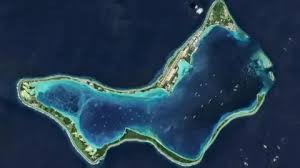
The United Kingdom (UK) defended an agreement to transfer the Chagos archipelago to Mauritius while leasing back a strategic military base (Diego Garcia), after facing criticism from the US President over its handling of the deal.
- Chagos Archipelago is a group of 58 islands in the Indian Ocean, located about 500 km south of the Maldives. Diego Garcia is the largest island and a coral atoll, lying at 7° south of the equator.
- France colonised Mauritius and the Chagos Islands in 1715, and under the 1814 Treaty of Paris, France ceded both to Britain.
- In 1965, Britain detached Chagos from Mauritius to form the British Indian Ocean Territory (BIOT), giving Mauritius a £3 million grant for the detachment.
- Under the 1966 agreement, Britain allowed the US to use BIOT for military purposes, and Diego Garcia (a joint UK–US military base) became fully operational in 1986.
- It played a crucial role in the Gulf War, Iraq and Afghanistan wars, and post-9/11 operations, underscoring its Indo-Pacific strategic value.
- The International Court of Justice (ICJ) in 2019 issued an advisory opinion stating the UK’s detachment of Chagos was unlawful. Following this, in 2024, the UK agreed to transfer sovereignty to Mauritius while securing a 99-year lease to retain control of the Diego Garcia base.
Early 8th Century Telugu Inscription:

A rare early 8th-century CE Telugu inscription has been discovered at Pitikayagulla, Andhra Pradesh, offering crucial insights into the early evolution of the Telugu language and epigraphy.
- Written in early Telugu script and language, the inscription is vital for tracing the transition of Telugu from Prakrit influence to an independent administrative and literary language.
- The inscription contains the text “Svastisri Nandelu Vari, Chensinavanthu Prani, Milli Achari” and “Padasina Nava Katta”, which epigraphists interpret as recording the construction of a new embankment (nava katta).
- It attributes the work to Pranimilli Achari, a sculptor or craftsman.
- It is believed to belong to the Renadu region under royal administration, though the ruling king is not named in the record.
- It is one of the most widely spoken languages of the Dravidian family, with over 130 million speakers across Andhra Pradesh, Telangana, other parts of India, and abroad.
- It is believed that Proto-Dravidian split into sub-families around 5000 years ago, with Telugu emerging as an independent language by about the 10th century BCE.
- While Telugu shares strong cultural links with Tamil and Kannada, it is genetically closer to the Central Dravidian languages.
- The earliest known Telugu inscriptions, dating to about 575 CE, are attributed to the Renati Cholas and were discovered at Kalamalla and Erragudipadu of Andhra Pradesh, marking an important milestone in the evolution of the Telugu language.
- The recorded history of Telugu begins around 200 BCE, with its antiquity traced through place names and personal names found in Prakrit and Sanskrit inscriptions.
- Telugu is included in the Eighth Schedule of the Indian Constitution and was accorded the status of a Classical Language by the Government of India in 2008.
Long Range Anti-Ship Hypersonic Missile(LR-AShM):
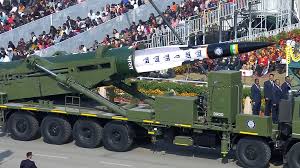
At the 77th Republic Day Parade, the Defence Research and Development Organisation (DRDO) showcased the Long Range Anti-Ship Hypersonic Missile (LR-AShM) for the first time, marking a major milestone in India’s missile capabilities.
- LR-AShM is a hypersonic glide missile that follows a quasi-ballistic trajectory, combining ballistic launch with low-altitude, manoeuvrable flight.
- It reaches Mach 10 initially and maintains an average Mach 5, performing multiple atmospheric “skips” that enhance range and unpredictability.
- The missile can engage both static and moving targets and has a range of about 1,500 km, with future variants planned up to 3,500 km.
Stealth and Survivability: Flying at low altitude with extreme speed and manoeuvrability, the missile is difficult for enemy ground-based and ship-based radars to detect or intercept. - The missile uses a two-stage solid rocket motor—Stage-1 separates after burnout, while Stage-2 boosts the missile before it enters an unpowered hypersonic glide phase.
- High aerodynamic efficiency allows the missile to minimise drag while maintaining lift and control, enabling greater speed, range, and accuracy with optimal energy use.
- It is designed for the Indian Navy’s coastal defence needs and serves as a potent sea-denial weapon capable of neutralising all classes of warships, particularly in the strategically important Indian Ocean Region (IOR).
- Variants of the LR-AShM for the Army, Air Force, and ship-launched naval use are under development, following a successful test in November 2024, with warhead and sensor integration underway and induction into service expected within the next 2–3 years.
SAMPANN–UMANG Integration:
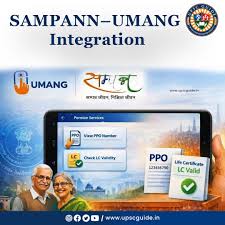
The SAMPANN (System for Accounting and Management of Pension) pension management system has been integrated with the UMANG(Unified Mobile Application for New-age Governance) platform to provide digital access to key pension services for telecom pensioners.
- UMANG operates as a single unified platform under the Digital India initiative, offering Central, State, and Local government services via Android, iOS, and web.
- SAMPANN is a flagship digital pension platform developed and operated by the Office of the Controller General of Communication Accounts, dedicated to pension administration and financial management.
- Launched nationally in December 2018, SAMPANN represents a shift from system-centric to pensioner-centric governance by eliminating the need for physical visits.
- The platform digitises the entire pension lifecycle, including case processing, e-Pension Payment Order (PPO) issuance, payment disbursal, accounting, grievance redressal, and reporting.
- The initiative aims to enhance ease of access, transparency, and seamless delivery of pension-related information through a unified digital platform.
- This integration ensures round-the-clock availability of essential pension information, reducing dependency on physical offices.
- Pensioners can now retrieve their Pension Payment Order (PPO) number and check Life Certificate (LC) validity status through the UMANG mobile app or web portal.
- The integration is supported by DigiLocker connectivity, strengthening secure digital access to pension records and official documents.
India–EU Free Trade Agreement:
India and the European Union (EU) made history by announcing the conclusion of their long-awaited Free Trade Agreement (FTA) at the 16th India–EU Summit in New Delhi.
- Dubbed the “mother of all deals,” this breakthrough ends nearly two decades of stop-start negotiations and establishes a strategic economic corridor.
- The India–EU FTA is a comprehensive and modern trade pact designed to eliminate or significantly reduce tariffs on goods, liberalize trade in services, and enhance investment flows.
- Together, these two regions represent 25% of global GDP and nearly one-third of world trade. The agreement aims to double bilateral trade by 2032, providing a stable, rules-based framework that reduces dependence on volatile supply chains.
Key Features of the Agreement:
- The EU will provide duty-free access to over 99% of Indian exports by trade value. India will eliminate tariffs on roughly 92-97% of EU goods over a phased period.
- Zero duties on USD 33 billion worth of Indian exports including textiles, apparel, leather, gems, jewellery, and marine products.
- A quota-based system allows EU luxury carmakers (e.g., Mercedes, BMW) access to the Indian market at reduced duties (dropping from 110% to as low as 10%) while protecting domestic manufacturing.
- India gains access to 144 EU sub-sectors (IT, finance, education). A new mobility framework facilitates visas for skilled professionals, intra-corporate transferees, and even practitioners of Indian Traditional Medicine (AYUSH).
- Forward-looking provisions on the EU’s Carbon Border Adjustment Mechanism (CBAM) ensure technical support and dialogue to help Indian MSMEs comply with green standards.
- India has successfully safeguarded sensitive sectors like dairy, cereals, and poultry, which are excluded from the deal to protect local farmers.
4B Movement:
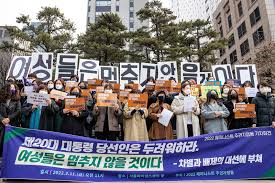
The 4B movement, a radical feminist current originating in South Korea, has resurfaced in public debate amid renewed discussions on patriarchy, gender violence, and women’s autonomy.
- The 4B movement is a feminist resistance framework where women refuse participation in four core institutions associated with patriarchy: No marriage,No childbirth,No dating,No sex
- It represents a political and social rejection, not merely a lifestyle choice, of traditional heterosexual norms.
- Emerged in South Korea in the late 2010s
- Rooted in long-standing gender inequality, online misogyny, and institutional indifference
- Gained visibility through social media during South Korea’s #MeToo movement
France Moves Bill to Ban Social Media for Under-15s to Protect Mental Health:
France has taken a decisive step to regulate children’s digital exposure. The country’s National Assembly has approved legislation to ban children under the age of 15 from accessing social media platforms. The move reflects growing concerns over online bullying, mental health issues and the impact of excessive screen time on young people.France’s National Assembly has voted to approve a bill banning children below 15 years from social media platforms, with the government aiming to implement the law before the next academic year.The legislation introduces strict limits on minors access to social networking platforms.Bans under-15s from social media and embedded social networking features.Applies to platforms such as Meta Platforms Inc (Facebook, Instagram), Alphabet Inc (YouTube), TikTok and Snapchat.Requires age-verification systems compliant with EU laws.Extends existing smartphone bans in schools to include high schools.The bill was passed by 116 votes to 23 and now moves to the Senate.
Uttarakhand Implements Uniform Civil Code (Amendment) Ordinance, 2026:
Uttarakhand has implemented the Uniform Civil Code (Amendment) Ordinance, 2026, bringing procedural, administrative and penal reforms to strengthen digital registration, transparency, women’s empowerment and effective implementation of the UCC.The Uniform Civil Code (UCC) was implemented in Uttarakhand on January 27, 2025, marking a landmark moment in India’s legal history.It simplified and digitised procedures related to marriage, divorce and live-in relationships, ensuring uniform civil laws across communities.On completion of one year, the state is observing “UCC Day”, highlighting the social and administrative impact of the reform.The UCC (Amendment) Ordinance, 2026 has been promulgated by the Governor under Article 213 of the Constitution of India, giving it immediate legal effect.The ordinance introduces procedural, administrative and penal reforms to the existing UCC Act, 2024.Its objective is to remove ambiguities, align penal provisions with new criminal laws and ensure smoother implementation.The amendments also strengthen registration-related powers and improve the appellate mechanism.
Indian public health expert Dr. Chandrakant Lahariya has won the Wiley Research Heroes Prize 2025:
India’s contribution to global health research has received international recognition with a prestigious award in 2025. An Indian doctor and public health expert has been honored for ensuring that research goes beyond academic boundaries and directly influences public policy and healthcare outcomes. The recognition highlights India’s growing role in evidence-based global health governance.Dr. Chandrakant Lahariya has won the Wiley Research Heroes Prize 2025, becoming the first Indian to receive this global honour for impactful research beyond academia.The Wiley Research Heroes Prize recognizes researchers worldwide who ensure that research is inclusive, innovative, and impactful.The 2025 edition received over 2,000 nominations globally, from which only five researchers were selected.The awards focus on research that bridges the gap between academic knowledge and real-world policy implementation, ensuring societal benefit rather than remaining limited to scholarly publications.
Sikkim Police Receives President’s Police Colour Award:
The Sikkim Police has been conferred with the President’s Police Colour Award for its outstanding service, professionalism, and dedication to duty. The honour, regarded as one of the highest distinctions for police forces in India, recognises sustained excellence and commitment to public service.The Sikkim Police was awarded the President’s Police Colour (Nishaan), making Sikkim the 15th state in India and the 3rd state in the North-East to receive this prestigious recognition since Independence.The President’s Police Colour Award, popularly known as the Nishaan, is a ceremonial honour granted to police forces for exceptional service, bravery, discipline, and professionalism.The award is symbolised by a flag and insignia, which is worn with pride on the left sleeve of the uniform.It reflects not individual acts, but the collective performance and legacy of a police force over the years.
Meghalaya will host its first state-led Spice Festival:
Meghalaya is making a fresh push to expand its agriculture-based economy by directly entering India’s biggest commercial market. The state government will organise its first-ever Meghalaya Spice Festival in Mumbai from January 30 to February 1, 2026. The event is aimed at promoting Meghalaya’s premium spices, building strong buyer linkages, and opening new national and export markets for farmers, cooperatives and small enterprises from the state.The Meghalaya Spice Festival is a three-day, business-focused trade event being held at Jio World Drive in Bandra Kurla Complex, Mumbai.It is designed to take Meghalaya’s farm produce directly to India’s commercial capital.The festival will bring together farmer producer organizations, self-help groups, cooperatives and MSMEs from Meghalaya with buyers, exporters, retail chains and hospitality players.The main goal is to position Meghalaya as a reliable source of high-quality, traceable and sustainably produced spices in the national market.



