
Today’s Current Affairs: 31st January 2026 for UPSC IAS exams, State PSC exams, SSC CGL, State SSC, RRB, Railways, Banking Exam & IBPS, etc
Table of Contents
Diplocentrum papillosum: New orchid species
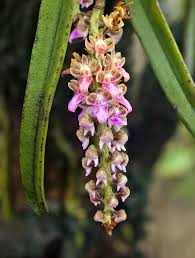
A new orchid species named Diplocentrum papillosum has been recently discovered in Kanthalloor, Marayoor, in the Idukki district, Kerala.
- It is a new species of orchid.
- It was discovered in the Idukki district, Kerala.
- Belonging to the Diplocentrum genus, which is found only in the southern ranges of the Western Ghats, the plant has been scientifically named Diplocentrum papillosum, distinguished by the unique characteristics of its flower
- This orchid thrives on rocks and tree branches, with strong roots that help it withstand powerful winds.
- The specific epithet ‘papillosum’ refers to the papillose character of the flower, which is unique to the Diplocentrum species.
Exercise Agni Pariksha:

The Indian Army and Indo-Tibetan Border Police recently conducted Agni Pariksha in Arunachal Pradesh to enhance joint combat capabilities.
- It is a joint training exercise involving personnel from the Indian Army and the Indo-Tibetan Border Police (ITBP).
- Location: Arunachal Pradesh
- This first-of-its-kind initiative aimed to enhance inter-force combat synergy and operational integration.
- The primary objective of the exercise was to familiarise non-artillery personnel with artillery procedures, coordination mechanisms, and the execution of firing missions, thereby improving their understanding of firepower integration in dynamic combat scenarios.
Zapotec Civilization:
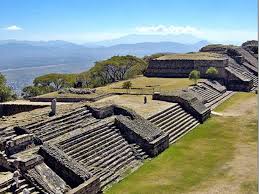
Archaeologists in Mexico recently discovered a 1,400-year-old tomb from the Zapotec culture that features well-preserved details, including a sculpture of a wide-eyed owl with a man in its beak, multicolored murals and calendrical carvings.
- The Zapotec civilization thrived in the Valley of Oaxaca, Mexico, characterized by its high elevation and reliance on irrigation from the Atoyac River and its tributaries.
- Emerging from hunter-gatherer societies, the Zapotecs transitioned to agriculture, developing skills in weaving, pottery, and stone masonry.
- By the Classic period (200 BCE-100 CE), they established a highly centralized state, with Monte Albán as their capital, featuring impressive public architecture and a distinct social hierarchy separating nobles from commoners.
- This society was marked by a professional priesthood and a state religion, where rituals included human sacrifice and complex ceremonies.
- The Zapotecs also innovated in calendar systems and writing, contributing to Mesoamerican culture.
- The Zapotec state was one of the earliest examples of centralized government in Mesoamerica.
Punjabi Folk Orchestra:

The rich musical and spiritual heritage of Punjab will be presented at Bharat Parv 2026 at the historic Red Fort with captivating performances by the Punjabi Folk Orchestra and Qalandri Dhamal.
- It is a unique ensemble developed using a wide range of traditional Punjabi folk instruments such as Dhol, Dholki, Taal-Koze, Tansari, Flute, Nagara, Chimta, Sap, Kara, and Vanjli.
- It brings together rhythmic, melodic, and percussive folk instruments into a single, structured musical presentation.
- Traditional Punjabi folk melodies have been thoughtfully composed and arranged for orchestral performance, preserving their authentic folk essence while presenting them in a collective and harmonious form.
- The orchestra is performed by a group of twelve students, each playing a specific instrumental role.
- Their performance highlights teamwork, coordination, and a deep understanding of Punjabi folk music traditions.
- Qalandri Dhamal is a traditional Sufi folk dance of Sindh and Punjab.
- Qalandri Dhamal is a devotional dance expressing love and surrender to God and Sufi saints, most notably associated with the shrine of Lal Shahbaz Qalandar in Sehwan Sharif.
Hanle Dark Sky Reserve:

A rare blood-red auroral activity was captured by the all-sky camera at the Indian Astronomical Observatory in Ladakh’s Hanle Dark Sky Reserve.
- Hanle Dark Sky Reserve is located in the remote Changthang region of Ladakh.
- It is part of the Changthang Wildlife Sanctuary, offering Bortle-1 dark skies (the darkest category).
- It is India’s first International Dark Sky Reserve, centred around the Indian Astronomical Observatory (IAO) at Hanle.
- It is managed by the Indian Institute of Astrophysics (IIA) under the Department of Science and Technology (DST), Ministry of Science & Technology
- The reserve aims to curb light pollution and promote astro-tourism benefiting local communities.
- The reserve is a science-driven socio-economic development project, built on two pillars:
- Curtailing light pollution in the region
- Promoting astro-tourism for local livelihood generation
- Hanle’s pristine dark skies and transparent atmosphere allow observing and photographing faint celestial objects that are often impossible from other locations in India.
Coking Coal:

The Government of India has notified Coking Coal as a Critical and Strategic Mineral under the Mines and Minerals (Development and Regulation) Act, 1957 (MMDR Act).
- Coking Coal is a naturally occurring sedimentary rock found within the earth’s crust.
- It is also known as Metallurgical coal.
- It is a type of coal that softens and swells when heated, forming lightweight, porous coke particles, and is characterized by a free swelling index of 1 or greater.
- It typically contains more carbon, less ash, and less moisture than thermal coal, which is used for electricity generation.
- Coke is the main product of the high-temperature carbonisation of coking coal.
- Coking coal is divided into 3 sub-categories namely,
- Primary Coking Coal (Low ash , low Volatile, High Coking property)
- Medium Coking Coal (low ash, medium volatile, low caking index)
- Blendable/ Semi/Weak Coking Coal (low ash, high volatile, very low caking index).
- The largest producers of coking coal were China, Australia, Russia, USA and Canada.
- In India coking coal resources are largely located in Jharkhand, with additional reserves in Madhya Pradesh, West Bengal and Chhattisgarh.
- It is essential for metallurgical processes, as it exhibits caking properties that allow it to fuse into a solid mass during heating.
- It is an essential ingredient in the production of steel, making it one of the most widely used building materials on earth.
Living Root Bridges:

India submitted Meghalaya’s living root bridges to UNESCO for World Heritage status.
- The living root bridges are locally known as Jingkieng Jri or Lyu Chrai.
- These are nestled across the lush southern slopes of the Khasi and Jaintia Hills in Meghalaya.
- These are masterpieces of bioengineering created by indigenous Khasi and Jaintia tribes over a time period of 15 to 30 years.
NPS Swasthya Pension Scheme:

The Pension Fund Regulatory and Development Authority (PFRDA) recently rolled out the NPS Swasthya Pension Scheme (NSPS) on a pilot basis.
- NPS Swasthya Pension Scheme (NSPS) is a new initiative launched by the Pension Fund Regulatory and Development Authority (PFRDA) as a Proof of Concept (PoC) under its Regulatory Sandbox Framework.
- The initiative aims to integrate health-related financial benefits with the existing National Pension System (NPS) framework.
- The scheme is designed to provide financial support for out-patient and in-patient medical expenses.
- The scheme will function as a sector-specific contributory pension scheme within the Multiple Scheme Framework (MSF) of NPS and will be offered to Indian citizens on a voluntary basis.
- It will be launched by Pension Funds after obtaining prior approval from PFRDA.
- As it is being implemented as a pilot project, only a restricted number of subscribers will be enrolled during the PoC phase.
- To facilitate the pilot, certain provisions of the PFRDA (Exits and Withdrawals under NPS) Regulations, 2015, have been relaxed.
- Pension Funds may also collaborate with FinTech firms and health service administrators to implement the scheme.
- Any Indian citizen is eligible to join the scheme, but a Common Scheme Account under NPS is mandatory.
- Subscribers can contribute any amount, in line with existing NPS guidelines applicable to the non-government sector.
- Subscribers aged above 40 years (excluding government sector subscribers) may transfer up to 30% of their contributions from the Common Scheme Account to the Swasthya Pension Scheme.
- Partial withdrawals are permitted for medical expenses up to 25% of the subscriber’s own contributions, with no limit on the number of withdrawals, subject to a minimum accumulated corpus of ₹50,000.
- In cases of critical inpatient treatment, where medical expenses exceed 70% of the available corpus, subscribers may opt for 100% premature withdrawal solely to meet such medical costs.
Pechora Missile System:

Bengaluru-based defence equipment manufacturer Alpha Design Technologies Ltd (ADTL) has completed a major upgrade of the ’s (IAF) Pechora, a surface-toair missile (SAM) system, in line with the Centre’s push for modernising ageing military hardware through indigenous capability.
- The Pechora, officially known as the S-125 Neva/Pechora, is a Soviet-origin, medium-range surface-to-air missile (SAM) system designed to intercept low- to medium-altitude targets.
- The system consists of a radar-guided missile launcher and a fire control unit, typically employing the V-600 missile.
- It uses the 4R90 Yatagan radar, equipped with five parabolic antennas, to detect, track, and lock onto targets.
- It is particularly effective against slow-moving or low-flying targets, making it well-suited for countering drones and cruise missiles.
- It can operate independently or as part of a larger, integrated air defence network, and is capable of functioning even in environments with heavy electronic jamming.
- The Pechora system has an operational firing range of up to 30–35.4 km.
- It can engage targets flying at altitudes from as low as 20 meters up to 20–25 km, making it versatile for both low and medium-altitude threats.
- The system’s radar can detect targets up to 100 km away, providing early warning and engagement capability.
PAIMANA Portal:
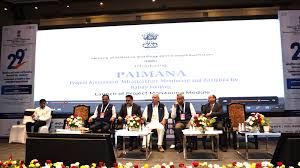
The Ministry of Statistics and Programme Implementation (MoSPI) has operationalised a new web-based portal, PAIMANA portal for the mandated monitoring of Central Sector Infrastructure Projects worth ₹150 crore and above.
- The Project Assessment, Infrastructure Monitoring & Analytics for Nation-building (PAIMANA) is a flagship initiative of the Ministry of Statistics and Programme Implementation (MoSPI).
- It functions as a centralised national repository of infrastructure projects, enabling web-generated analytical reports and enhancing data accuracy, and operational efficiency.
- It is integrated with DPIIT’s Integrated Project Monitoring Portal (IPMP/IIG-PMG) through APIs.
- It serves as a centralized project monitoring system, providing a single-window interface for ministries, departments, and implementing agencies to upload, track, and review project information.
- It features real-time dashboards with drill-down capabilities, enabling users to monitor progress across sectors, states, and timelines.
- It includes advanced data analytics, role-based user access, interactive dashboards.
- It is mandated to monitoring of Central Sector Infrastructure Projects worth ₹150 crore and above.
IIT-Kanpur team developed a new way to predict solar cycles:
The solar cycle describes an approximately 11-year cycle of solar activity driven by the sun’s magnetic field.It is indicated by the frequency and intensity of sunspots visible on the surface.Every 11 years or so, the Sun’s magnetic field completely flips.This means that the Sun’s north and south poles switch places.The solar cycle affects activity on the surface of the Sun, such as sunspots, which are caused by the Sun’s magnetic fields.As the magnetic fields change, so does the amount of activity on the Sun’s surface.It can be tracked by counting the number of sunspots.
Paathara Practice:
It is observed that the ancient grain storage tradition named Paathara practice or Khoni is fading fast in Srikakulam district.Paathara Practice is an ancestral practice of underground grain storage.In the storage pit freshly harvested grains, mostly paddy, are stored.It is observed by farmers along the banks of the Mahendratanaya River in the Uddanam region of Srikakulam district, near the Andhra Pradesh–Odisha border.This tradition thrived in the inland, hilly terrain, where underground grain storage was effective.The pit is dug in a rectangular shape, plastered with straw and clay, and sealed with a layer of cow dung on top.The Paathara was built in front of thatched houses and was an integral part of rural architecture, symbolising a thriving joint family system.Every paddy-growing family stored enough grain for its annual needs.
Kyasanur Forest Disease : In News
A 29-year-old man in Karnataka has tragically lost his life recently after contracting Kyasanur Forest Disease (KFD), commonly known as monkey fever, bringing fresh attention to a disease that often goes unnoticed until it turns fatal.It is a tick-borne viral haemorrhagic disease mostly found in southern India.The disease was first reported from the Kyasanur Forest of Karnataka in India in 1957; hence, it is known as KFD.The causal agent, KFD Virus (family Flaviviridae, genus Flavivirus), is a member of the tick-borne encephalitis (TBE) complex.It is also known as “monkey disease/monkey fever” because of its association with monkey deaths.Hard ticks (Hemaphysalis spinigera) spread the KFD virus to people and to animals, like monkeys and rodents.Transmission to humans may occur after a tick bite or contact with an infected animal, most importantly a sick or recently dead monkey.
KFD does not spread between people.



