
Today’s Current Affairs: 12th February 2026 for UPSC IAS exams, State PSC exams, SSC CGL, State SSC, RRB, Railways, Banking Exam & IBPS, etc
Table of Contents
PM-SURAJ Portal:
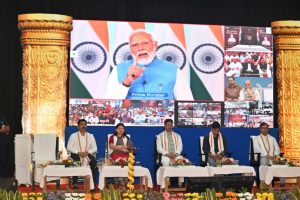
The PM-SURAJ portal disbursed Rs 1,389.61 crore in loans to 1.39 lakh entrepreneurs in the 2024-25 fiscal year, surpassing its target.
- Pradhan Mantri Samajik Utthan evam Rozgar Adharit Jankalyan (PM-SURAJ) portal was launched by the Ministry of Social Justice and Empowerment in 2024.
- Objective is to provide credit support to entrepreneurs from disadvantaged sections of society virtually.
- It is a centralised platform where individuals from underprivileged backgrounds can apply for and track the progress of all available loans and credit schemes.
- Only those intending to establish a new business can apply on this portal, as this platform provides loans exclusively for business startups.
- Business loans up to Rs 15 lakh are available at low interest rateS through this portal, which are transferred directly to your bank account through banks, NBFC-MFIs, and other financial institutions.
- It is run by government bodies like the National Scheduled Castes Finance and Development Corporation (NSFDC), the National Safai Karamcharis Finance & Development Corporation (NSKFDC), and the National Backward Classes Finance and Development Corporation (NBCFDC).
- It is designed to uplift the most marginalized segments of society, such as the backward classes, scheduled castes, tribes, and other disadvantaged sections, and extend credit assistance to one lakh entrepreneurs from disadvantaged communities.
Wajid Ali Shah:
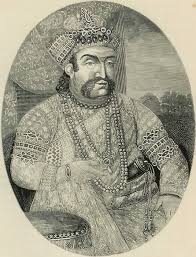
Nawab Wajid Ali Shah was not exiled to Calcutta but he came to the city because he wanted to take a ship to London to submit a petition but that departure was restricted and he stayed on, according to a biography by his great-grandson, recently translated from Urdu to English.
- Nawab Wajid Ali Shah (1822-1887) belonged to the princely kingdom of Awadh (Oudh) in Uttar Pradesh.
- He succeeded his father, Nawab Amjad Ali Shah, to become the province’s tenth and last nawab.
- His deposition and the annexation of Awadh became one of the major causes of the Revolt of 1857.
- He was a poet, playwright, dancer, and profound patron of arts.
- His works included numerous poems, prose, ragas, playwrights, and ghazals under his pen name of ‘Qaisar’.
- The Ishqnamah (Book of Love) is a youthful autobiography written in Urdu verse by Wajid Ali Shah.
- He is also credited for contributing to the revival of the Indian dance form Kathak.
- He was also greatly interested in architecture. He started building the Qaiser bagh palace complex as soon as he came to the throne.
- Besides the Nawab’s immense contributions to India, one of his wives, Begum Hazrat Mahal, was known to be a great Indian freedom fighter who played a major role during India’s First War of Independence (1857-58) against the British.
Wet Dress Rehearsal:
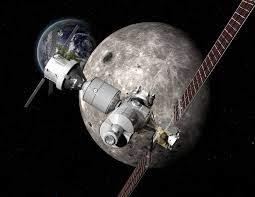
NASA found a hydrogen leak during a wet dress rehearsal of its Artemis II mission.
- It is the final practice run for a high-stakes rocket launch.
- The “wet” in the name refers to the loading of cryogenic fuel (typically liquid oxygen and liquid hydrogen for large rockets) into the rocket’s massive tanks.
- It is a rigorous demonstration of ground team preparedness.
- Wet rehearsals are important because only they can reveal events that happen in cryogenic conditions, e.g., leaks in seals or in the connections between the rocket and ground equipment.
- Dry Dress Rehearsal practices the countdown and important operations without loading cryogenic propellants into the rocket.
- Instead, the team power up vehicle and ground systems, verify its communications equipment, simulate critical events, and validate decision-making and handoffs between launch control, engineering, range safety, and, if applicable, crew operations.
- Many of the testing steps use simulated sensor inputs.
- These rehearsals are useful to reveal logical problems in the flow of events without risking fuel leaks.
- Artemis II Mission is the second scheduled flight of NASA’s Artemis program and the first crewed Artemis mission.
- It will be the first mission to carry humans to the moon’s vicinity since 1972.
- It is the first to fly astronauts aboard the Space Launch System (SLS) rocket and Orion spacecraft.
- While Artemis 1 successfully flew Orion around the moon without astronauts in 2022, Artemis 2 will be the first time that humans will travel aboard the spacecraft and venture beyond Low Earth Orbit.
- The astronauts and mission controllers will collect data on Orion and the crew’s performance to assess how ready the Artemis program is to send people to the moon’s surface.
Gilbert Hill:
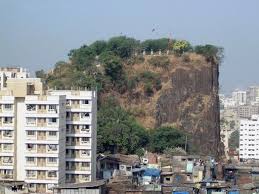
After Anand Mahindra highlighted Gilbert Hill in a recent post, curiosity around the Mumbai landmark has surged.
- It is located in Maharashtra.
- The hill has a sheer vertical face and is one of the oldest basalt rock formations in the world.
- According to geological records, only three such columnar basalt formations exist in the world. The other two are:
- Devil’s Tower (USA)
- Giant’s Causeway (Northern Ireland)
- It was declared a National Park and is categorized by the BrihanMumbai Municipal Corporation as a Grade II heritage structure.
Public Financial Management System:

The Minister of State for finance informed the Rajya Sabha about the Public Financial Management System (PFMS).
- It is a web-based online transaction system for fund management and e-payment to implementing agencies and other beneficiaries.
- It is a Centralized Transaction System & Platform, providing end to end financial management services to all stakeholders.
- It is developed and implemented by the Controller General of Accounts (CGA), Department of Expenditure, Ministry of Finance, Government of India.
- Function is to facilitate sound Public Financial Management System for Government of India by establishing an efficient fund flow system as well as a payment cum accounting network.
- Key Features of Public Financial Management System:
- It tracks funds released under all plan schemes of Government of India, and real time reporting of expenditure at all levels of Programme implementation.
- Government has mandated PFMS as a single platform for payment, accounting & reconciliation of government transactions and DBT.
- Cash management modules: It has been introduced on PFMS for better fund management like Single Nodal Agency (SNA), Treasury Single Account (TSA), Central Nodal Agency (CNA) and Single Nodal Agency Samyochit Pranali Ekikrit Shighra Hastantaran (SNA SPARSH).
- Grievance Redressal System: PFMS has introduced the Customer Relationship Management (CRM) system, to strengthen the grievance redressal mechanism for PFMS users/ beneficiaries.
National Large Solar Telescope:

In this year’s Union Budget, the government sanctioned the establishment of two new telescopes namely National Large Solar Telescope and National Large Optical-Near Infrared Telescope to study the sun and the origins of the universe.
- It will be established in the Merak region near the Pangong Tso Lake.
- It is meant to study the sun
- It will operate in the visible and near-infrared wavelengths of the electromagnetic spectrum.
- It will help to study the fundamental solar dynamics and magnetism, energetic solar events, and map various space-weather processes having a direct bearing on the Earth and national space assets, like satellites and space launches.
- It will serve as India’s third ground-based solar observatory.
- Currently, the Kodaikanal Solar Observatory (in Tamil Nadu, established 1899) and the Udaipur Solar Observatory (in Rajasthan, established 1975) are operational.
- National Large Optical-Near Infrared Telescope will be built in Hanle.
- In a segmented-mirror telescope, a larger primary mirror comprises highly complex, smaller hexagonal mirror segments.
- It will be one of the world’s largest telescopes operating in the electromagnetic spectrum’s optical-infrared wavelengths.
- Frontier research on exoplanets, stellar and galactic evolution, and supernovae will be possible, besides looking for clues to trace the origins of the universe.
Hollongapar Gibbon Wildlife Sanctuary:
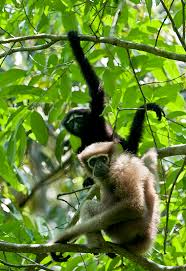
A male gibbon was found electrocuted to death on Hollongapar Gibbon Wildlife Sanctuary (HGWS) in Jorhat.
- Hollongapar Gibbon Wildlife Sanctuary is located in Assam.
- It is the only sanctuary in India named after a gibbon due to its distinction for containing the densest gibbon populations in Assam.
- The Bhogdoi River creates a waterlogged region dominated by semi-hydrophytic plants along the border of the sanctuary.
- The upper canopy of the forest is dominated by the Hollong tree, while the Nahar dominates the middle canopy.
- The lower canopy consists of evergreen shrubs and herbs.
- It hosts gibbons; the hoolock gibbons, and Northeastern India’s only nocturnal primate–the Bengal slow loris.
- It also has Indian elephants, tigers, leopards, jungle cats, wild boar, three types of civet, four types of squirrels, stump-tailed macaque, northern pig-tailed macaque, etc.
Lymphatic Filariasis:
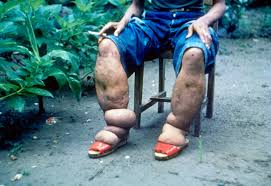
The Union Health Minister launched the Annual Nationwide Mass Drug Administration (MDA) Campaign for the Elimination of Lymphatic Filariasis.
- Lymphatic Filariasis is commonly known as elephantiasis (Haatipaon) which is a neglected tropical disease.
- It is a vector-borne disease transmitted by the female Culex mosquito.
- It is caused by infection with parasites classified as nematodes (roundworms) of the family Filariodidea. There are 3 types of these thread-like filarial worms:
- Wuchereria bancrofti, which is responsible for 90% of the cases
- Brugia malayi, which causes most of the remainder of the cases
- Brugia timori, which also causes the disease
- Transmission Cycle: Adult worms nest in the lymphatic vessels and disrupt the normal function of the lymphatic system where they produce millions of microfilariae (immature larvae) that circulate in the blood.
- Infection occurs when filarial parasites are transmitted to humans through mosquitoes.
- The majority of infections are asymptomatic but in chronic conditions it leads to lymphoedema (tissue swelling) or elephantiasis (skin/tissue thickening) of limbs and hydrocele (scrotal swelling).
- Elimination of lymphatic filariasis is possible by stopping the spread of the infection through preventive chemotherapy.
- WHO-recommended preventive chemotherapy strategy for lymphatic filariasis elimination is mass drug administration (MDA).
- MDA involves administering an annual dose of medicines to the entire at-risk population.
Sarvam Vision and Bulbul V3:
India’s Artificial Intelligence (AI) ambitions, Bengaluru-based startup Sarvam AI’s latest models Sarvam Vision and Bulbul V3 have reportedly outperformed Google Gemini and OpenAI’s ChatGPT on India-specific AI benchmarks, marking a significant step toward building sovereign AI ecosystems tailored to Indian needs.
Sarvam Vision:
- It is a 3 billion-parameter vision-language model capable of a range of visual understanding tasks, including image captioning, scene text recognition, chart interpretation, and complex table parsing.
- It focuses on digitizing physical Indian records—including manuscripts, financial tables, and historical texts.
- While traditional Optical Character Recognition (OCR) only extracts text, Sarvam Vision performs “Knowledge Extraction.”
- It understands the structure of a document, interpreting complex tables, charts, and reading orders (e.g., distinguishing between a caption and a headline).
- It is trained on datasets covering all 22 official Indian languages, making it capable of handling documents with mixed scripts (e.g., a government form in Hindi and English).
- Under olmOCR-Bench, which evaluates how accurately AI converts PDFs and complex document images into structured text, Sarvam Vision scored 84.3%, outperforming Google Gemini 3 Pro and DeepSeek OCR v2.
- On OmniDocBench v1.5, which tests document parsing across diverse real-world formats, it achieved 93.28% accuracy, demonstrating strong capability in handling complex layouts.
Bulbul V3:
- It is Sarvam’s upgraded text-to-speech (TTS) AI model designed to generate natural, region-sensitive speech across India’s diverse linguistic landscape.
- It supports over 35 professional-quality voices across 11 Indian languages, with plans to expand to all 22 Scheduled Languages.
- Bulbul V3 captures prosody (pauses, tone, and emphasis )for natural speech and is optimized for Indian accents and linguistic nuances.
- It handles code-switching, regional variations, abbreviations, and emotional tone, making it well-suited for India’s multilingual environment.
- It is part of India’s broader push for sovereign AI models under the Rs 10,300-crore India AI Mission.
Corruption Perceptions Index 2025:
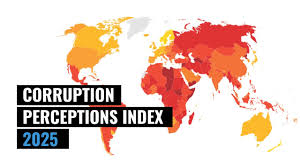
India has climbed to the 91st position on the global Corruption Perceptions Index (CPI), reflecting a slight improvement from its 96th rank in the previous year.
- The Corruption Perceptions Index (CPI), released annually by Transparency International, ranks 182 countries and territories based on perceived levels of public sector corruption.
- It uses a scale from 0 (highly corrupt) to 100 (very clean). India’s rank of 91st with a score of 39 indicates that while digitalization and reforms have prevented a decline, the country still struggles with bureaucratic opacity and weak enforcement.
- Top and Bottom Performers: Denmark remains the cleanest country (score: 89), while Somalia and South Sudan remain at the bottom (score: 9).
B-READY Assessment:
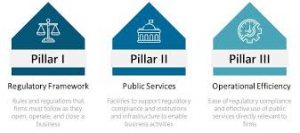
The inclusion of India in the Business Ready (B-READY) 2026 assessment has renewed attention on India’s business reform trajectory.
- World Bank Group’s Business Ready (B-READY) is a global benchmarking exercise designed to assess the business and investment climate across economies. It replaces the earlier Doing Business Report with a more transparent, comprehensive, and modern methodology.
- Following the discontinuation of the World Bank’s Doing Business Report (DBR) Report in 2020, the World Bank launched the B-Ready Assessment in 2024.
- Developed and administered by the World Bank Group (WBG)
- Data collected through expert consultations and firm-level surveys (World Bank Enterprise Surveys – WBES)
- Aim of B-READY:
- To provide a quantitative and evidence-based assessment of the business environment.
- To evaluate how regulations and public services support private sector development.
- To promote inclusive, sustainable, and digitally enabled economic growth.
- Three Pillars of B-READY
- Pillar I – Regulatory Framework
- Assesses rules and regulations governing business entry, operation, and closure.
- Focuses on statutory laws (de jure framework).
- Pillar II – Public Services
- Evaluates government-provided infrastructure and institutional support.
- Includes digital systems, licensing authorities, dispute resolution bodies, etc.
- Pillar III – Operational Efficiency
- Measures ease of compliance and real-world implementation (de facto).
- Captures nationwide firm-level experiences through surveys.
- Pillar I – Regulatory Framework
Almatti Dam:
The Andhra Pradesh Chief Minister recently objected to Karnataka’s move to increase the height of the Almatti Dam on the Upper Krishna.Almatti Dam, situated on the Krishna River in Karnataka. It is a multipurpose dam primarily used for irrigation, hydroelectric power generation, and flood control.It is also known as Lal Bahadur Shastri Dam.It is the main reservoir of the Upper Krishna Irrigation Project.
P-8I Anti-Submarine Warfare:
The Defence Procurement Board (DPB) has cleared the proposal to acquire six additional Boeing P-8I Poseidon from the US to bolster the Indian Navy’s surveillance and combat capabilities in the Indian Ocean Region.The deal is being pursued through an India–US Inter-Governmental Agreement (IGA) framework.The procurement is being processed under the Defence Acquisition Procedure (DAP) 2020, which removed offset requirements for Inter-Governmental Agreements. As a result, this deal will not include technology transfer or co-production provisions.Unlike several acquisitions aligned with Make in India, this purchase prioritizes strategic and operational urgency over domestic industrial participation.Boeing P-8I: A multi-mission, long-range maritime patrol aircraft designed for Anti-Submarine Warfare (ASW), Anti-Surface Warfare, Intelligence, Surveillance and Reconnaissance (ISR), Maritime Domain Awareness, and Search and Rescue operations.The Indian Navy currently operates 12 P-8I aircraft stationed at INS Rajali (INAS 312) and INS Hansa (INAS 316).
India, UK Sign Social Security Agreement for Temporary Employees:
India and the United Kingdom have signed a Social Security Agreement (SSA) to prevent double social security contributions for employees on short-term assignments.India and the United Kingdom have signed a reciprocal Social Security Agreement, also referred to as a Double Contributions Convention (DCC), to eliminate the burden of dual social security payments for employees temporarily working in each other’s territory.
The agreement allows employees on assignments of up to 36 months to continue contributing to their home country’s social security system, thereby avoiding double payments.



