
Guillotine Procedure:
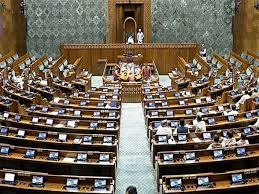
The Lok Sabha approved Demands for Grants worth over Rs 53 lakh crore for 2026–27 using the Guillotine procedure, passing most ministry-wise expenditures without detailed parliamentary discussion.
- In parliamentary practice, the Guillotine refers to clubbing and fast-tracking financial business, where all pending Demands for Grants are put to vote together without discussion due to time constraints.
- After the Budget is presented, Parliament goes into a recess of about three weeks, during which Department-related Standing Committees examine Demands for Grants.
- Once reassembled, the Business Advisory Committee (BAC) schedules discussions on selected key Ministries.
- Due to limited time or continuous disruptions, the Speaker applies the Guillotine on the last day of discussion, putting all remaining Demands for Grants to vote at once, regardless of whether they were debated.
- While the Guillotine ensures timely passage of the Budget and prevents a funding crisis, it reduces parliamentary scrutiny over large public expenditure, raising concerns about accountability.
- After the Guillotine is applied, the Finance Bill and Appropriation Bill are passed, authorizing expenditure from the Consolidated Fund of India.
- The process is exclusive to the Lok Sabha, which holds the power of the purse, while the Rajya Sabha can only discuss and recommend on Demands for Grants.



