
Today’s Current Affairs: 21st March 2026 for UPSC IAS exams, State PSC exams, SSC CGL, State SSC, RRB, Railways, Banking Exam & IBPS, etc
Table of Contents
Irul Tribe:
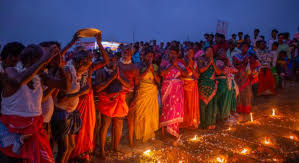
Masi Magam, an auspicious day in the Tamil calendar holds significance for the Irular community which is deeply tied to their culture and collective identity.
- They are a Dravidian ethnic group; reside in the Nilgiri Mountains of the Western Ghats, spread across Tamil Nadu and Kerala.
- They are one of India’s oldest indigenous communities.
- They are classified under the “Particularly Vulnerable Tribal Groups” category in Tamil Nadu.
- They also call themselves Erlar or Poosari, while their neighbours refer to them as Eralollu, Irulas, Shikari and Pujari.
- They speak Irula, which is related to Dravidian languages like Tamil and Kannada.
- The Irula people don’t have a definite god for them. They are pantheists who make provision for the presence of spirits in humans and objects.
- Their main deity is a virgin goddess called Kanniamma, who is deeply associated with the cobra.
- Irula houses are built together in small settlements or villages called mottas.
- The mottas are usually situated on the edges of steep hills and are surrounded by a few dry fields, gardens, and forests or plantations.
- Cattle production is another source of income. In the forests they collect wild resources like honey, frankincense, firewood and the like.
- The Irula community is traditionally associated with healing, traditional medicine, and catching poisonous snakes.
RELIEF Initiative:
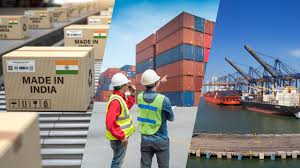
The Government of India has approved the RELIEF (Resilience & Logistics Intervention for Export Facilitation) scheme to support exporters facing severe maritime disruptions in West Asia.
- It is aimed at supporting Indian exporters affected by extraordinary freight escalation, heightened insurance premia and war-related export risks arising from disruptions in the Gulf and wider West Asia maritime corridor.
- It is a time-bound and targeted intervention launched under the Export Promotion Mission (EPM).
- Features of RELIEF Initiative:
- Exporters with existing ECGC cover for shipments between 14 February and 15 March 2026 receive up to 100% risk coverage for additional conflict-linked losses.
- For shipments planned between 16 March and 15 June 2026, the government supports up to 95% risk coverage to maintain exporter confidence.
- Non-insured MSME exporters can claim up to 50% reimbursement (capped at ₹50 lakh per exporter) for extraordinary freight and insurance surcharges incurred during the initial disruption month.
- Applies to all consignments destined for or transshipped through the UAE, Saudi Arabia, Kuwait, Israel, Qatar, Oman, Bahrain, Iraq, Iran, and Yemen.
- Includes waivers of storage and dwell time charges at ports and procedural relaxations for stranded cargo coordinated by the IMG.
- ECGC will maintain a dashboard-based system for tracking claims and fund utilization, with periodic reviews by the EPM Steering Committee.
- Implementation: By ECGC Ltd
Indian wolf : Gave Birth To Seven Pups
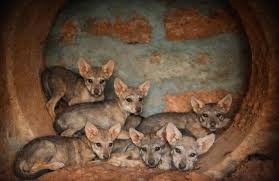
An Indian wolf named Geeta at Pilikula Biological Park gave birth to seven pups.
- Indian wolf is a subspecies of the Grey Wolf found in the Indian subcontinent and Southwest Asia.
- It prefers scrublands, semi-arid grasslands, and pastoral agro-ecosystems.
- Indian wolves generally live in smaller packs rarely exceeding 6-8 individuals.
- They are also relatively less vocal and have rarely been known to howl and are territorial and hunt during the night.
- Intermediate in size between the Tibetan and Arabian wolves, but lacks a thick winter coat due to adaptation to warmer climates.
- Indian wolves are found in India, Pakistan, Afghanistan, Nepal, Bhutan, Israel, Turkey, Iran, and Syria.
- It faces a steady decline driven by habitat loss, shrinking prey base, and human persecution.
- Conservation Status of Indian Wolf
- IUCN: Vulnerable
- CITES: Appendix I
- Wildlife (Protection) Act, 1972: Schedule I.
Vietnam : In News
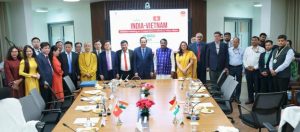
A high-level bilateral meeting between the Ministry of Tribal Affairs, Government of India, and the Ministry of Ethnic and Religious Affairs, Government of the Socialist Republic of Vietnam, was convened.
- It is located in the eastern portion of mainland Southeast Asia.
- It is bordered by China to the north, and Cambodia and Laos to the west.
- It shares a border with South China Sea (East and South), Gulf of Thailand (Southwest).
- It is a country of tropical lowlands, rolling green hills, and densely forested mountains.
- Red River and Mekong River both drain into the South China Sea.
- Vietnam’s principal physiographic features are the Annamese Cordillera which extends generally from northwest to southeast in central Vietnam.
- Highest Point: Vietnam’s highest point is Phan Xi Pang
- It is located in the tropical zone. Its climate is characterized by high temperature and humidity all year round.
- It is mainly abundant in antimony, phosphates, coal, manganese, rare earth elements, bauxite, chromate, offshore oil and gas deposits.
Cotton Corporation of India:
The Cabinet Committee on Economic Affairs has approved Minimum Support Price (MSP) funding to the Cotton Corporation of India (CCI) for the cotton season 2023–24.
- It was established in 1970.
- It is a Public Sector Undertaking under the Companies Act 1956.
- Nodal Ministry: It works under the administrative control of Ministry of Textiles, Government of India.
- The major role of the CCI is to undertake price support operations, whenever the market prices of kapas fall below the minimum support prices (MSP) announced by Govt. of India, without any quantitative limit.
- Besides MSP operations, to fulfil the raw material requirement of the domestic textile industry particularly for lean season, CCI undertakes commercial purchase operations.
- It is having PAN India presence through headquarters at Navi Mumbai (Maharashtra), 19 branches in all major cotton growing States.
Cotton cultivation:
- Cotton is a tropical and subtropical crop that requires warm conditions.
- ideal temperature ranges in between 21°C to 30°C. It needs 210 frost-free days annually, as frost is highly damaging.
- The crop requires 50–100 cm of rainfall, ideally well-distributed.
- Cotton grows best in deep black soils (regur) of the Deccan Plateau, Malwa Plateau, and Gujarat. It also grows well in the alluvial soils of North India and red and lateritic soils in the South.
- Major Cotton Growing states: Gujarat is the leading producer Telangana ranks second, followed by Maharashtra.
Stockholm Water Prize:
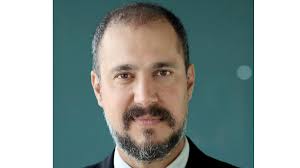
Kaveh Madani has been named the 2026 recipient of the Stockholm Water Prize.
- It is regarded as the world’s most prestigious award for water-related work.
- It has been presented annually since 1991.
- It is awarded by the Stockholm Water Foundation in collaboration with the Royal Swedish Academy of Sciences.
- The Prize is awarded to a person or organization who contributes to the conservation and protection of water resources, and to the well-being of the planet and its inhabitants.
- Everyone who has made extraordinary water-related achievements is eligible.
- The prize is presented by M. King Carl XVI Gustaf of Sweden, who is the official patron of the prize, at the awarding ceremony during World Water Week in August.
- Anyone can submit a nomination for the Stockholm Water Prize, however, self-nominations or nominations by persons with direct professional or family ties to the candidate are not permitted.
IOS SAGAR : Second Edition
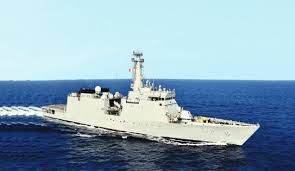
The second edition of Indian Ocean Ship (IOS) SAGAR commenced.
- Indian Ocean Ship (IOS) Sagar is a maritime security cooperation initiative in the Southwest Indian Ocean Region (IOR).
- It is the second edition of Indian Ocean Ship (IOS) SAGAR initiative.
- It is designed as a unique operational engagement programme that enables naval personnel from Friendly Foreign Countries to train and sail together onboard an Indian Naval Ship.
- This Edition includes participation from 16 nations of the Indian Ocean Naval Symposium (IONS) of the Indian Ocean Region(IOR).
- The initiative reflects the Government of India’s vision of Security and Growth for All in the Region (SAGAR) and framework of MAHASAGAR – Mutual and Holistic Advancement for Security Across the Regions.
- It involves professional training interactions at Indian Naval training establishments in Kochi.
- This phase will be followed by deployment onboard an Indian Naval Ship, where international participants will sail together with Indian Navy personnel and take part in operational activities at sea.
Coconut Cultivation:
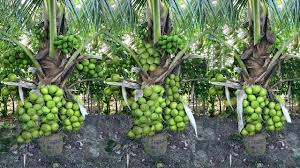
The Minister of State for Agriculture and Farmers Welfare informed the Lok Sabha that India is the world’s largest producer of coconuts contributing to 30.37% of the Global coconut production.
- Coconut (Cocos nucifera) is a large palm of the family Arecaceae.
- It grows in the subtropical coastal regions of Asia (India, Philippines, Sri Lanka, Thailand, Indonesia) and Oceania.
- It was originated in Southeast Asia, and was transported throughout the Pacific either by migrating Indonesians and Polynesians.
- Required Climatic Conditions for Coconut
- Rainfall: 1000-3000 mm per year. Prefers evenly distributed rainfall
- Temperature: Optimum 27°C with a diurnal variation of 6-7 0C Cold spells are more limiting than high temperatures. Light- Coconut palm requires maximum sunlight.
- Altitude: Up to 600 m above mean sea level.
- If temperature remains favourable, the palm grows well up to an altitude of 800 m.
- Humidity: Needs warm and humid conditions
- It is particularly adapted to the coastal light sandy and sandy loam type soils. Coconuts also thrive well in laterite soils.
- Distribution in India: It is majorly grown in Kerala, Tamil Nadu, Karnataka, Andhra Pradesh, Odisha, Goa, and West Bengal.
- Uses: Coconuts are used as whole fruits or, conversely, by their parts: mesocarp fibers, milk, kernel (or flesh), husk.
Bharat Audyogik Vikas Yojna:
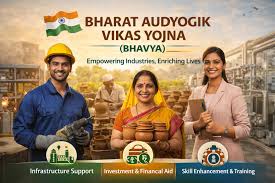
The Union Cabinet has approved the Bharat Audyogik Vikas Yojna (BHAVYA).
- It aims to develop world-class industrial infrastructure, unlocking manufacturing potential and driving India’s growth story.
- Developing 100 plug-and-play industrial parks across the country.
- BHAVYA will be implemented in partnership with states and private sector players.
- Features of Bharat Audyogik Vikas Yojna
- Plug-and-Play Ecosystem: Provides ready-built factory sheds, testing labs, and underground utilities to enable industries to move from “intent to production” with speed.
- Infrastructure Scope: Covers core utilities, value-added facilities (warehousing), and social infrastructure such as worker housing.
- Connectivity & Logistics: Aligned with PM GatiShakti principles for seamless multimodal connectivity; external infrastructure support is provided up to 25% of the project cost.
- Sustainability Focus: Features green energy integration and a “no-dig” environment through integrated underground utility corridors for uninterrupted operations.
- Selection Process: Projects are selected via a challenge mode, prioritizing states that implement investor-friendly reforms and effective single-window systems.
- Plug-and-play infrastructure refers to industrial parks that are fully equipped with all necessary utilities and regulatory clearances before an investor arrives.
Small Hydro Power Scheme:
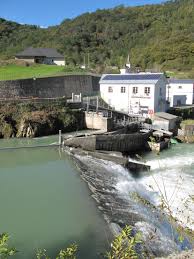
Union cabinet approved the ‘Small Hydro Power (SHP) Development Scheme for the period FY 2026-27 to FY 2030-31’
- It supports the installation of small hydro projects (1-25 MW capacity each) with a total capacity 1,500 MW across the country.
- Its special focus is on hilly and North-Eastern states that hold high untapped potential.
- Time Period: FY 2026-27 to FY 2030-31
- Key Features of Small Hydro Power Development Scheme
- North East & Border Incentives: Higher central financial assistance (CFA) of 30% of cost, capped at ₹30 crore per project for North Eastern states and international border districts.
- General State Support: CFA of 20% of cost, capped at ₹20 crore per project for other states.
- DPR Pipeline: Allocation of ₹30 crore to support government agencies in preparing Detailed Project Reports (DPRs) for about 200 future projects.
- Employment Generation: Expected to create employment during construction, plus long-term roles in operations and maintenance.
- Indigenous Sourcing: Mandates 100% sourcing of plant and machinery from domestic manufacturers to boost the local industrial base.
- The initiative emphasises environment-friendly “run-of-the-river” technology that generates power directly from the natural flow of rivers without large dams, minimising displacement, deforestation and ecological disruption.
- SHP projects are environmentally sustainable, as they avoid large-scale land acquisition, deforestation, and displacement of communities.
Transgender Persons Amendment Bill 2026:
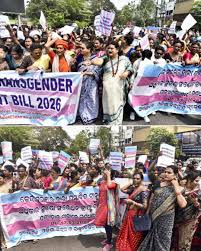
The Ministry of Social Justice and Empowerment has introduced the Transgender Persons (Protection of Rights) Amendment Bill, 2026, that proposes major changes to the Transgender Persons (Protection of Rights) Act, 2019.
- Transgender activists fear the amendments aim to rewrite the legal framework for transgender rights in India, overriding the Supreme Court’s landmark National Legal Services Authority v. Union of India, 2014 judgment.
Key Changes Proposed in the Transgender Persons (Protection of Rights) Amendment Bill, 2026:
- The 2026 Bill removes Section 4(2) of the 2019 Act, which enshrined the right to self-identify as a transgender person. The government argues the original definition was “vague” and made it difficult to identify the “genuinely oppressed” beneficiaries.
- The government is also of the view that the existing definition renders numerous criminal, civil, and personal laws “unworkable” and is “not compatible” with various statutory provisions. The legislation’s intended purpose was never to protect every class of persons with diverse gender identities, self-perceived sex/gender identities, or gender fluidities.
- The definition of a ‘transgender person’ is significantly narrowed. It primarily recognizes those with specific socio-cultural identities (like kinner, hijra, aravani and jogta) or persons with a specified, medicalised list of congenital biological variations (chromosomal patterns, gonadal development, etc).
- It proposes that transgender persons can change their first names on birth certificates and ID documents. However, for this, individuals must meet the newly proposed statutory definition of a “transgender person”.
- It replaces the administrative process for identity cards with a Medical Board (headed by a Chief Medical Officer). This board’s recommendation is now mandatory for the District Magistrate to consider before issuing a certificate of identity.
- Representatives on the National Council for Transgender Persons from States/UTs must now hold a minimum rank of Director in the relevant Ministry or Department, indicating a push for higher-level bureaucratic oversight.
- The Bill introduces a distinct category to address the “coerced” assumption of transgender identity. It penalizes the act of compelling a person (through force, deceit, or allurement) to undergo procedures like emasculation or hormonal changes to assume a transgender identity.
- The bill introduces stringent penalties:
- Kidnapping an adult to force a transgender identity can lead to minimum 10 years of rigorous imprisonment (RI), extendable to life.
- The same offence against a child mandates RI for life and a minimum fine of Rs 5 lakh.
- Forcing an adult into begging or bonded labour as a transgender person invites 5-10 years RI. The same offence against a child attracts 10-14 years RI.
Guillotine Procedure:
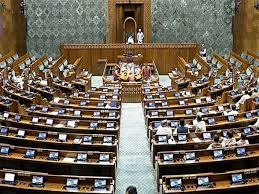
The Lok Sabha approved Demands for Grants worth over Rs 53 lakh crore for 2026–27 using the Guillotine procedure, passing most ministry-wise expenditures without detailed parliamentary discussion.
- In parliamentary practice, the Guillotine refers to clubbing and fast-tracking financial business, where all pending Demands for Grants are put to vote together without discussion due to time constraints.
- After the Budget is presented, Parliament goes into a recess of about three weeks, during which Department-related Standing Committees examine Demands for Grants.
- Once reassembled, the Business Advisory Committee (BAC) schedules discussions on selected key Ministries.
- Due to limited time or continuous disruptions, the Speaker applies the Guillotine on the last day of discussion, putting all remaining Demands for Grants to vote at once, regardless of whether they were debated.
- While the Guillotine ensures timely passage of the Budget and prevents a funding crisis, it reduces parliamentary scrutiny over large public expenditure, raising concerns about accountability.
- After the Guillotine is applied, the Finance Bill and Appropriation Bill are passed, authorizing expenditure from the Consolidated Fund of India.
- The process is exclusive to the Lok Sabha, which holds the power of the purse, while the Rajya Sabha can only discuss and recommend on Demands for Grants.
Discovery of the Xi-cc-plus Baryon at CERN:
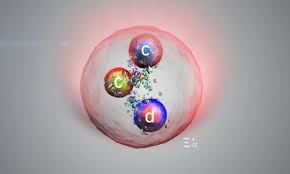
The Large Hadron Collider beauty (LHCb) experiment at CERN’s Large Hadron Collider (LHC) has announced the discovery of a new particle, the Xi-cc-plus, a heavy baryon that will help physicists better understand how the strong force binds protons, neutrons and other composite particles together.
- The Xi-cc-plus consists of two charm quarks and one down quark, making it a heavy sibling of the proton (which has two up quarks and one down quark).
- It was produced by smashing high-energy protons in the Large Hadron Collider (LHC). Like most hadrons, it is unstable and decays rapidly.
- This is the first new particle found since the 2023 LHCb detector upgrades, bringing the total number of hadrons discovered by LHC experiments to 80.
- Due to the presence of two heavy charm quarks, the particle is approximately 4 times heavier than a proton and has a significantly shorter lifetime than its counterparts.
- This marks only the 2nd time a baryon containing two heavy quarks has ever been observed. The first, a similar particle with two charm quarks and an up quark, was discovered by LHCb in 2017.
- The discovery helps theorists test models of Quantum Chromodynamics (QCD), the theory describing the strong force that binds quarks into hadrons (mesons and baryons).
- It opens doors for studying exotic hadrons like tetraquarks and pentaquarks, setting the stage for future research at the High-Luminosity LHC.
- QCD is the theoretical framework in particle physics that describes the strong nuclear force, one of the four fundamental forces of nature.
- It explains how quarks and gluons interact to form composite particles like protons, neutrons, and mesons.
- Large Hadron Collider (LHC)
- LHC is the world’s largest and most powerful particle accelerator located at CERN near Geneva. It boosts particles, such as protons, to nearly the speed of light in two high-energy beams traveling in opposite directions.
- These beams are then made to collide at four specific points around the ring, where massive detectors (like ATLAS, CMS, and LHCb) record the resulting “subatomic debris.
Dark Fleet:
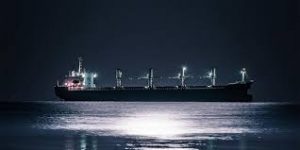
A China-bound sanctioned Russian tanker (Aqua Titan), part of the ‘dark fleet’, was diverted mid-route to India.
- The ‘Dark Fleet’ or ‘shadow fleet’ refers to a growing armada of aging, often uninsured commercial vessels utilized specifically to transport petroleum products subject to international sanctions, primarily from Russia, Iran, and Venezuela.
- These ships routinely turn off their Automatic Identification System (AIS) transponders to “go dark” and evade satellite tracking.
- They engage in risky mid-ocean transfers (Bunkering) to mix sanctioned crude with non-sanctioned oil, thereby masking its true origin.
- They register under countries with lax maritime oversight (e.g., Panama, Liberia) and frequently use shell companies to obscure ownership.
- All vessels must fly a flag indicating their legal jurisdiction, as per the United Nations Convention on the Law of the Sea (UNCLOS), which determines a ship’s nationality. However, limited enforcement in international waters (high seas) allows shadow fleets to exploit regulatory grey zones and evade oversight.
- The use of the dark fleet raises concerns of low transparency, regulatory gaps, environmental risks, weakening of global sanctions enforcement mechanisms, and exposes India to geopolitical risks and compliance challenges despite cost advantages from discounted crude.
- Tracking by S&P Global and Ukrainian intelligence shows that Russia relied heavily on its shadow tanker fleet in 2025, with India as the main destination importing about 5.4 million tonnes (or 55% of Russian crude oil sales via shadow tankers).
The India BioEconomy Report (IBER) 2026:
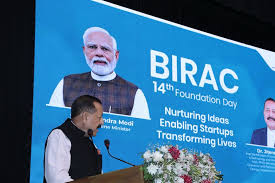
Union Minister unveiled the India BioEconomy Report (IBER) 2026 during the 14th Foundation Day of BIRAC in New Delhi.
- The report highlights that India’s bioeconomy reached a record $195.3 billion in 2025, now contributing nearly 5% to the national GDP.
- The IBER 2026 is a comprehensive annual document developed by the Association of Biotechnology Led Enterprises (ABLE).
- It serves as the primary benchmark for measuring the growth, sectoral contributions, and startup ecosystem of India’s biotechnology sector, tracking the country’s progress toward its long-term economic goals.
Key Summary Points of the Report:
- Record Market Size: India’s BioEconomy grew by $29.6 billion in 2025 to reach a total of $195.3 billion.
- Highest Growth Rate: The sector witnessed an 18% growth in 2025, the highest rate recorded in recent years.
- GDP Contribution: The BioEconomy’s share of the national GDP rose to 4.8%, up from 4.2–4.3% in previous years.
- Sectoral Leader: The BioIndustrial segment was the largest contributor, valued at $90.2 billion.
- BioPharma Strength: This segment reached $64.5 billion, with significant growth expected in biosimilars and peptide manufacturing as global patents expire.
- BioServices and Agri: BioServices contributed $26 billion, while BioAgri accounted for $14.6 billion of the total economy.
- GCC Expansion: India now hosts over 150 healthcare and life sciences Global Capability Centres (GCCs), employing 300,000+ professionals.
- Startup Surge: The number of registered biotech startups rose to 11,855, with 1,780 new startups established in 2025 alone.
RELIEF (Resilience & Logistics Intervention for Export Facilitation):
The Government has approved RELIEF (Resilience & Logistics Intervention for Export Facilitation) under the Export Promotion Mission to support exporters affected by West Asia maritime disruptions.
- RELIEF is a time-bound financial and risk mitigation intervention under the Export Promotion Mission (EPM) aimed at supporting Indian exporters facing logistics disruptions, cost escalation, and geopolitical risks in West Asia.
- Approved in March 2026 under the Export Promotion Mission framework
- Nodal Ministry: Ministry of Commerce & Industry
- Implementing Agency: Export Credit Guarantee Corporation of India (ECGC Ltd.)
- Aim:
- To mitigate logistics and financial risks faced by exporters
- To ensure continuity of export flows amid geopolitical disruptions
- To protect MSME exporters and employment in export sectors
- To strengthen India’s trade resilience and competitiveness
Ras Laffan and South Pars:
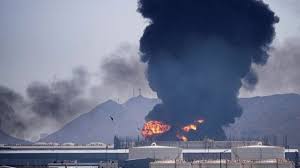
The West Asian conflict has escalated significantly following Israeli strikes on Iran’s South Pars gas field and retaliatory Iranian missile attacks on Qatar’s Ras Laffan LNG facilities.
Ras Laffan:
- It is the world’s largest Liquefied Natural Gas (LNG) export hub, housing major liquefaction plants and export terminals.
- Located in Northeastern Qatar, along the Persian Gulf coast
- Ras in Arabic means headland or cape, indicating its coastal geographic position
- Developed as a strategic LNG export hub by QatarEnergy
- Key Features:
- Global LNG hub: Accounts for nearly 20% of global LNG supply.
- Integrated infrastructure: Houses liquefaction plants, storage tanks, export terminals.
- QatarEnergy base: Core operational center for Qatar’s LNG exports.
- High export capacity: Over 77–80 million tonnes per annum LNG production.
- Importance:
- Critical supplier of LNG to countries like India, Japan, Europe.
- Key node in global gas supply chains.
- Supplies ~40% of India’s LNG imports.
South Pars Gas Field:
- It is The world’s largest natural gas field, shared between Iran (South Pars) and Qatar (North Field).
- Located Beneath the Persian Gulf, shared by:
- Iran (South Pars)
- Qatar (North Field)
- South Pars refers to the southern portion of the larger gas reservoir located in Iranian territory
- Pars is derived from Persia (ancient Iran)
- Key Features:
- Largest gas reserve: Holds one of the world’s biggest proven natural gas reserves.
- Shared resource: Divided between Iran (South Pars) and Qatar (North Field).
- Offshore extraction: Consists of multiple offshore platforms and processing units.
- Energy backbone: Central to Qatar’s LNG dominance and Iran’s gas economy.
India and Malawi High-level bilateral meeting:
India and Malawi held a high-level bilateral meeting during the Bharat Electricity Summit 2026 in New Delhi to strengthen cooperation in the energy sector.A multiparty republic in Southeastern Africa, often referred to as the Warm Heart of Africa due to the friendliness of its people. Malawi is a resilient, landlocked nation in Southeastern Africa known for its extraordinary topography and agricultural potential. Located in Southeastern Africa, occupying a narrow strip of land along the East African Rift Valley. Capital: Lilongwe.It is bordered by Zambia to the west, Tanzania to the north and northeast, and Mozambique to the east, south, and southwest.
The UN Commission on the Status of Women:

The UN Commission on the Status of Women (CSW) concluded its 70th session on March 19, 2026, where 190 member states adopted historic Agreed Conclusions.
- A functional commission of the Economic and Social Council (ECOSOC) and the primary organ for global policy-making on women’s rights.
- The CSW is the principal global intergovernmental body exclusively dedicated to the promotion of gender equality and the empowerment of women.
- Established In: June 1946, shortly after the founding of the United Nations.
- Aim is To promote women’s rights in political, economic, civil, social, and educational fields and to ensure that gender equality is integrated into all UN activities and national policies.
- Key Functions:
- Setting Global Standards: It formulates policies, standards, and norms that define the rights of women and girls globally, such as the landmark Beijing Declaration (1995).
- Monitoring Progress: It reviews the implementation of international agreements by member states and monitors the progress of the 2030 Agenda for Sustainable Development (specifically SDG 5).
- Thematic Policy Development: Each year, the commission focuses on a priority theme to create actionable strategies for member states.
- Advocacy and Awareness: It provides a high-level platform for heads of state, NGOs, and civil society to highlight emerging issues affecting women, such as digital exclusion or climate impact.
- Addressing Crisis Contexts: The commission brings global attention to the highest price paid by women in conflict zones, from Afghanistan and Gaza to Ukraine and Sudan.
- Coordination and Accountability: It supports the work of UN Women in coordinating the UN system’s gender-related activities and ensuring institutional accountability.



