
Today’s Current Affairs: 27th March 2026 for UPSC IAS exams, State PSC exams, SSC CGL, State SSC, RRB, Railways, Banking Exam & IBPS, etc
Table of Contents
Euthalia zubeengargi :A New Butterfly Species
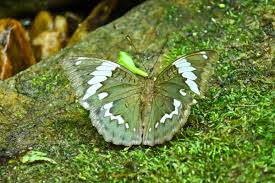
A new butterfly species was recorded in Arunachal Pradesh and named it as Euthalia zubeengargi.
- It is a butterfly species that was discovered in Arunachal Pradesh
- It is found in semi-evergreen forests.
- It belongs to the genus Euthalia, a group commonly found across South and Southeast Asia.
- Members of this group are typically seen in forested habitats and are known for their earthy brown wings marked with pale spots.
- It prefers cool, shaded forest interiors.
- The butterfly rests on low vegetation, feeding on tree sap and occasionally gathering minerals from damp surfaces near streams.
- It appears to be active mainly from late morning to early afternoon, making short, slow flights between nearby plants
- Euthalia zubeengargi is one of more than 80 species from this group recorded in India’s northeastern region.
- These are valuable indicators of the environment, whose health can influence their presence, abundance, and diversity.
Keelback Snake:
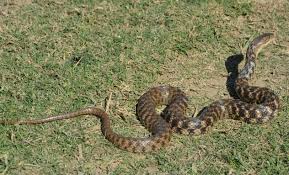
Scientists from the Wildlife Institute of India (WII), Dehradun documented the Rakhine Keelback (Herpetoreas davidi) in Ngengpui Wildlife Sanctuary, and the Kachin Hills Keelback (Hebius gilhodesi) in Namdapha National Park and Kamlang Tiger Reserve.
- Keelback snakes are typically non-venomous.
- These are often found near water bodies such as streams and wetlands.
- They are found in moist localities within wet and dry forest environments.
- Diet: Frogs, lizards and occasionally fish and tadpoles
- One of the most distinctive features of keelback snakes is their “keeled” scales.
- Each scale has a raised ridge running down its center, giving the snake’s skin a noticeably rough and textured feel.
- The keeled surface not only gives keelbacks a more rugged appearance but also helps with camouflage,
- As the texture can break up light reflections and allow them to blend more effectively into natural surroundings like leaf litter, mud, and wetland vegetation.
- Their presence is considered an indicator of healthy ecosystems, particularly in forested and riparian habitats.
Coffee:

India’s coffee exports to West Asian markets are now stranded at ports or slowly moving via the Strait of Hormuz which is impacting coffee exports.
- Coffee is a tropical plant generally grown under shady trees.
- Types of Coffee: Robusta and Arabica
- It is largely cultivated in Karnataka, Kerala, Tamil Nadu, Andhra Pradesh and Odisha, among which, Karnataka produces the most with over 70% of the total output.
- Europe is the top destination for India’s coffee exports.
- The major countries which import the commodity from India include Italy, Germany, Belgium, Middle East nations, Korea, and Japan.
- It is grown on hill slopes at elevations from 600 to 1,600 metres above sea level.
- It requires a hot and humid climate for its growth.
- Temperature: 15°C and 28 °C
- It requires 150 to 250 cm of rainfall.
- Soil: Well-drained, loamy soil containing a good deal of humus and minerals like iron and calcium are ideal for coffee cultivation.
- Dry weather is necessary at the time of ripening of the berries.
Waste Foundry Sand:
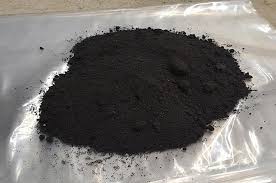
The Institute of Indian Foundrymen (IIF) and CSIR-Central Road Research Institute (CSIR-CRRI) entered into an agreement to develop and facilitate solutions for the utilisation of waste foundry sand in road construction.
- Waste Foundry Sand is a byproduct from the production of both ferrous and nonferrous metal castings.
- It is high quality silica sand.
- The physical and chemical characteristics of foundry sand depend upon the type of casting process and the type of industries.
- Classification of foundry sands depends upon the type of binder systems used in metal casting.
- Two types of binder systems are generally used, and on the basis of that foundry sands are categorized as: clay-bonded sands (green sand) and chemically bonded sands.
- Waste Foundry Sand poses environmental challenges due to its large-scale generation and disposal requirements.
- Its reuse aligns with national priorities on resource efficiency, waste minimization, and sustainable development.
Steppe Eagle:
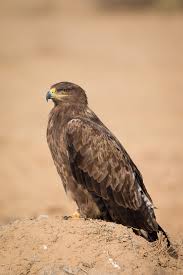
Western part of Rajastan has been recognised as a stronghold of the Steppe Eagle, a magnificent raptor that winters in the state.
- Steppe Eagle is a member of the subfamily Aquilinae, also known as the “booted eagles”.
- The Steppe eagle is a large, bulky, and robust-looking eagle. It is mainly dark brown in color with a longish but very thick neck and a relatively small head.
- It is found in steppe, desert, semi-desert, open savanna, pastures, agricultural fields, paddy fields, grassland, and open woodland.
- It is mainly found in Europe, Asia, and Africa.
- It is a specialized predator of ground squirrels on the breeding ground.
- It is the only eagle to nest primarily on the ground.
- It mainly breeds in central Asian countries, including Kazakhstan, Russia, and Mongolia, it undertakes an annual southward migration as temperatures drop.
- Steppe eagles are carnivores and prey mainly on small-sized mammals, with some birds (such as queleas) and reptiles and
- The major threats to the Steppe eagle include habitat loss, persecution, wildfires, predation (and trampling by cattle) of chicks.
- Conservation Status:
- IUCN Red List: Endangered
Rural Self Employment Training Institutes:
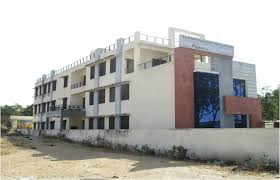
The Minister of State, Ministry of Rural Development, informed the Rajya Sabha, highlighted the significant role of Rural Self Employment Training Institutes (RSETIs).
- The Rural Self Employment Training Institutes (RSETIs) are empowering rural youth through skill development and entrepreneurship promotion.
RSETIs have emerged as key institutions with a wide national outreach, providing free residential training and facilitating sustainable livelihoods for rural youth. - These are functioning through a unique partnership between banks and government,
- One RSETI is established in every district in the country. Concerned bank is the lead bank in the district takes responsibility for creating and managing it.
- RSETIs provide short-duration, practical, and residential training programs for unemployed rural youth aged 18–50 years.
- The institutes offer 73 NSQF-aligned courses across sectors such as: Agriculture, Manufacturing, Services and Entrepreneurship Development Programs (EDPs)
- These institutes not only impart skills but also ensure post-training support through handholding and credit linkage.
- Certificates issued by an RSETI will be recognised by all banks for purposes of extending credit to the trainees.
P8I Aircraft:
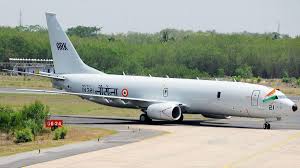
The Ministry of Defence has signed contracts for the procurement of Tunguska Air Defence Missile System and Inspection (Depot Level) of P8I Long-Range Maritime Reconnaissance Aircraft.
- P-8I Poseidon is a long-range, multi-mission maritime patrol aircraft.
- It is manufactured by Boeing (a U.S. aerospace company) for the Indian Navy.
- It replaced the ageing fleet of the Indian Navy’s Tupolev Tu-142 aircraft.
- The P-8I Poseidon flown by the Indian Navy is a variant of the P-8A Poseidon used by the United States Navy.
- It has advanced sensors, weapons systems, and long-range capabilities enable it to detect and respond to a wide range of threats, from submarines and surface vessels to environmental challenges.
- It can conduct anti-submarine warfare (ASW), anti-surface warfare (AsuW), intelligence, maritime patrol, and surveillance and reconnaissance missions.
- The maximum take-off gross weight of the P-8I is 85,139 kg.
- It can fly at a maximum speed of 789 km/h.
- It has a maximum range of over 2,222 kilometres with a time on station of four hours.
SWOT Satellite:
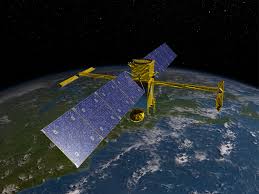
NASA has developed a new map of the ocean floor by using satellite data from SWOT Satellite.
- The Surface Water and Ocean Topography (SWOT) satellite was launched in 2022.
- It is a joint mission of NASA and CNES (French Space Agency).
- Satellite will collect detailed measurements of how water bodies on Earth change over time.
- It uses a specialised instrument called the Ka-band Radar Interferometer (KaRIn) to measure the height, width, and elevation of surface water bodies such as rivers, lakes, reservoirs, and oceans.
- SWOT offers high spatial resolution by bouncing microwaves off water surfaces and calculating return time, allowing dynamic water movement tracking.
- The satellite covers over 55% of large-scale global floods during their lifecycle through frequent Earth orbits.
- The satellite circles Earth and can scan about 90 per cent of the planet every 21 days
- It is equipped to observe the entire length of nearly all rivers wider than 330 feet and more than 1 million lakes and reservoirs larger than 5 acres.
- It will precisely measure fine differences in surface elevations around smaller currents and eddies, where much the oceans’ drawdown of heat and carbon is believed to occur.
SRY Gene Screening:
The International Olympic Committee (IOC) announced a seismic policy change mandating SRY gene screening for all female athletes in international elite sports.This decision effectively bans transgender women and many DSD (Differences in Sex Development) athletes from female categories.SRY stands for ‘Sex-determining Region Y’. It is a specific segment of DNA usually found on the Y chromosome. This gene acts as a biological master switch that triggers the development of testes and the production of male levels of testosterone, leading to male physical development.Developed By: The SRY gene was first discovered in 1990 by Professor Andrew Sinclair.The primary objective is to protect the female category in elite sports.The IOC aims to ensure that athletes competing in the female category do not have the physiological advantages associated with male puberty and male chromosomal development, such as increased bone density and explosive muscle power.
Central Consumer Protection Authority:

The Central Consumer Protection Authority directed hotels and restaurants not to levy additional charges, such as LPG charges and fuel cost recovery, on consumers.
- Central Consumer Protection Authority was established under the Consumer Protection Act, 2019.
- The Consumer Protection Act, 2019 replaced the 1986 Act.
- Nodal Ministry: Ministry of Consumer Affairs, Food & Public Distribution.
- The CCPA protects, promotes, and enforces the rights of consumers as a class under the Act.
- It prevents unfair trade practices and curbs false or misleading advertisements.
- It ensures that no one publishes or disseminates false or misleading advertisements.
- It can initiate class-action suits, including recall, refunds, and cancellation of licenses, when necessary.
- The CCPA can conduct inquiries and investigations through its Investigation Wing, headed by a Director-General.
- It can order the discontinuation of unfair practices, impose penalties on errant businesses, and enforce consumer welfare measures
- A Chief Commissioner heads the CCPA and has two other commissioners:
- One commissioner deals with goods-related issues.
- The other commissioner handles service-related complaints.
The Fuel Excise Duty Cut:
The Indian government has reduced excise duty on petrol and diesel by ₹10 per litre to shield consumers and Oil Marketing Companies (OMCs) from rising global crude prices.An excise duty is an indirect tax levied by the Central Government on the manufacture or sale of specific goods within the country.In this recent move, the government slashed the duty to ease the financial burden on OMCs, bringing the excise on petrol down to approximately ₹3 per litre and effectively reducing the diesel excise to zero.This is the raw material price. Since India imports approximately 85% of its oil, this cost is highly sensitive to global benchmarks (like Brent Crude) and the USD-INR exchange rate.A weaker Rupee automatically makes fuel more expensive, even if global oil prices remain flat.
RBI Payments Vision 2028:
The Reserve Bank of India (RBI) has released its ‘Payments Vision 2028’ document, titled Shaping India’s Payment Frontier.This strategic roadmap succeeds the 4Es (Everyone, Everywhere, Every time) vision of 2025, shifting the focus toward deepening consumer trust.It is a comprehensive policy framework and roadmap designed to guide the evolution of India’s payment systems. It marks a transition from just expanding reach to scaling global dominance and ensuring the digital ecosystem is secure, interoperable, and resilient against emerging cyber threats.
Tunguska Air Defence Missile System :
The Ministry of Defence signed a Rs 445 crore contract with Russia’s JSC Rosoboronexport, to procure the Tunguska Air Defence Missile System for the Indian Army.The Tunguska (NATO reporting name: SA-19 Grison) is a Soviet-origin, tracked, self-propelled anti-aircraft weapon system. It is a unique hybrid platform that combines both surface-to-air missiles and high-speed anti-aircraft guns on a single chassis to provide comprehensive protection to ground forces.Originally developed by the KBP Instrument Design Bureau in the Soviet Union, the system is currently managed and exported by JSC Rosoboronexport, Russia.
EV Charging Infrastructure:
The Government informed Parliament about the status and expansion of EV charging infrastructure across India under schemes like FAME-II and PM E-DRIVE.EV Charging Infrastructure refers to a network of charging stations (EVPCS) that supply electricity to recharge electric vehicles.It includes public, private, and highway-based charging systems, with participation from both government and private players.
Data / Key Statistics:
- Total EV Public Charging Stations (till March 2026): 27,737 installed; 22,753 operational.
- Highest installations in: Uttar Pradesh, Karnataka, Maharashtra, Tamil Nadu.
- FAME-II Scheme: ₹912.5 crore sanctioned; ₹655.43 crore utilized.
- PM E-DRIVE Scheme: ₹2,000 crore allocated (no funds released yet).
- EV charging setup is de-licensed, enabling private sector participation.



