
Today’s Current Affairs: 28th March 2026 for UPSC IAS exams, State PSC exams, SSC CGL, State SSC, RRB, Railways, Banking Exam & IBPS, etc
Table of Contents
Organisation for Economic Cooperation and Development:
The Organisation for Economic Cooperation and Development (OECD) projected India’s economy to grow at 6.1% in 2026-27.
- The OECD was established in 1960, by 18 European nations, plus the United States and Canada.
- OECD members are typically democratic countries that support free-market economies.
- It is an international organisation of 38 countries committed to democracy and the market economy.
- The stated goal of the OECD is to shape policies that foster prosperity, equality, opportunity and well-being for all.
- The OECD publishes economic reports, statistical databases, analyses, and forecasts on the outlook for economic growth worldwide.
- The organization also seeks to eliminate bribery and other financial crime worldwide.
- The OECD maintains a so-called “black list” of nations that are considered uncooperative tax havens.
- India is one of the many non-member economies with which the OECD has working relationships in addition to its member countries.
- India has been an OECD Key Partner since 2007
- Headquarters: Paris, France.
Qader Cruise Missile:
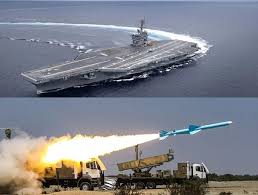
Iran fired Qader Cruise missiles at the USS Abraham Lincoln aircraft carrier.
- It is a medium-range shore-based anti-ship cruise missile developed by Iran and deployed by its naval forces.
- It is used by naval forces to target ships.
- It is an upgraded version of the Noor missile, which is based on Chinese missile design.
- The missile has a reported range between 120 and 300 kilometres.
- It is designed for sea targets such as warships and tankers.
- It uses a turbojet engine.
- It flies at low altitude over the sea. This is called sea-skimming.
- This flight path helps the missile avoid radar detection.
- It flies only a few metres above the sea surface.
- This reduces the reaction time for defence systems.
- A cruise missile is a guided missile that flies at low altitudes, often following the contours of the terrain to avoid radar detection.
- It flies at low altitude, powered by jet engines, can maneuver around obstacles
- Guidance System: GPS, terrain contour matching, inertial navigation
- Speed: Subsonic to supersonic (Mach 0.8-3);
- Range Short to medium (50-2,500 km)
- Launch Platforms: Air, sea, and land platforms.
- Examples: BrahMos, Nirbhay, Tomahawk
CALM Brain:

Researchers at the Rohini Nilekani Centre for Brain and Mind (CBM), a partnership between the National Institute of Mental Health and Neuro Sciences (NIMHANS) and the National Centre for Biological Sciences (NCBS) – TIFR, have developed CALM-Brain
- CALM Brain is a first-of-its-kind digital repository of data in India on brain structure and function from a range of psychiatric disorders.
- It was initiated in 2016 as part of the Accelerator program for Discovery in Brain disorders using Stem cells (ADBS project).
- It was jointly funded by the Department of Biotechnology and the Pratiksha Trust.
- Goal is to better understand neuropsychiatric disorders, disease onset, progression, and underlying biological changes.
- It will be made open source, thereby opening it up for clinicians and researchers aiming to study neuropsychiatric disorders and to better understand disease onset, progression and underlying biological changes leading to disease symptoms.
- It collects clinical, neuro-imaging, behavioural, genetic and other datasets on five disorders – addiction, bipolar disorder, dementia, obsessive compulsive disorder (OCD) and CALM-Brain will help clinicians and researchers
- To understand the onset of neuropsychiatric disease
- Check progression
- Decode underlying biological changes
- Provide better diagnosis
- Plan personalized treatments for patients.
Gruha Sugam Portal:
The National Housing Bank (NHB) launched the Gruha Sugam Portal.
- It enables Defence / Government personnel to avail home loans with ease from the location of their posting.
- It will accelerate digital lending adoption and financial inclusion.
- It will facilitate increased home ownership through improved access to housing loans, strengthening the mission of promoting affordable and sustainable housing finance.
- Salient features of the portal:
- Defence Personnel, Members of Paramilitary Forces, Government Employees (State and Central) can apply for housing loans digitally through their respective administrative units.
- No need to visit the banks and financial institutions for loan approvals and processing.
- Unified Digital Marketplace which enables market transparency and discovery of best suited offer
- Seamless digital integration with NHB and lending institutions to ensure ease of operations
- Enhanced Loan Processing Efficiency
- Grievance Redressal and Consumer Protection
- Online Chat facility for quick query resolution
- National Housing Bank
- It is an apex agency established to promote housing finance companies (HFCs) in India.
- It is an All-India Financial Institution (AIFl) wholly owned by the Government of India (GoI).
- NHB supervises HFCs, while regulation of HFCs is with the Reserve Bank of India (RBI).
- NHB is wholly owned by the Government of India, post the 2019 notification of RBI i.e. the entire paid-up capital of NHB is held by the government.
- Functions of NHB
- Supervision and grievance redressal regarding HFCs
- Financing
- Promotion and Development
- Head Office: New Delhi.
Shaurya Squadrons:
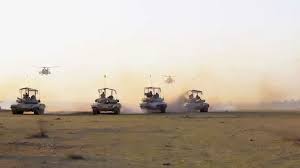
The Indian Army recently began fielding Shaurya Squadrons, dedicated drone sub-units embedded within armoured regiments.
- Shaurya Squadrons are dedicated drone sub-units being inducted into the Indian Army’s armoured regiments.
- They give tank commanders real-time surveillance and precision-strike capability at the unit level.
- Each squadron comprises 20 to 30 personnel trained in drone and counter-drone operations.
- They operate a mix of surveillance drones, attack drones, swarm drones, first-person view (FPV) drones, and loitering munitions.
- The FPV drones can strike enemy armour and logistics nodes, allowing commanders to act without routing requests up the chain of command.
- The aim is to compress the sensor-to-shooter cycle and push drone capability down to the unit level for faster targeting and engagement.
- The sensor-to-shooter cycle refers to the time between detecting a target and destroying it, which is the problem Shaurya Squadrons directly address.
- The Army intends to compress this gap from minutes to seconds.
- The Shaurya Squadron draws from the Army’s prior deployment of Ashni Platoons within infantry battalions.
- Ashni units are also 25 to 30 personnel strong and carry the same blend of surveillance drones, attack drones, and loitering munitions, and are now an integral part of all infantry battalions.
Sonowal Kacharis:

A new study has identified 39 plants used by the Sonowal Kachari community to treat ailments ranging from fever and cough to kidney stones and skin diseases.
- They are an indigenous people who live in northeast India.
- The vast majority of the Sonwal live in Assam. They are the third-largest plain tribe in Assam and one of the oldest tribes of Assam.
- Smaller groups live in Arunachal Pradesh and Meghalaya.
- They are recognized as a Scheduled Tribe (Plains) in Assam.
- They are of Mongoloid origin, and linguistically, the Sonowal Kachari people belong to the Tibetan language family.
- The name ‘’Sonowal’’ comes from the word for gold. The traditional occupation of the Sonwal was panning for gold during the Ahom kingdom.
- Today the Sonowal are primarily engaged in agriculture. They grow rice, betel nut, sweet potatoes, and cotton.
- The Sonowal are believed to have a very rich traditional knowledge of indigenous medicine.
- The primary language of the Sonowal is Assamese. Many also speak Hindi so they can communicate with outsiders.
- The Sonowal practices Hinduism strongly influenced by folk religion.
- They have their own village shrines and generally do not visit Hindu temples.
- Sonowal considers Shiva, the destroyer god, to be their primary deity.
Honshu Island:
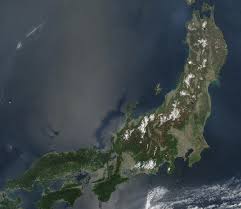
An earthquake measuring magnitude 6.2 struck off the east coast of Japan’s largest island, Honshu, recently.
- Honshu, historically known as Akitsushima, is the largest of the four main islands of Japan.
- It lies between the Pacific Ocean (east) and the Sea of Japan (west).
- It is the second-most populous island in the world after the Indonesian island of Java.
- It contains the main cities of Japan, including the capital Tokyo, Osaka, Hiroshima, Nagoya, Kyoto, and Yokohama.
- It contains Japan’s highest mountain, Mount Fuji (an active stratovolcano), and its largest lake, Lake Biwa.
Neoloboptera peninsularis:
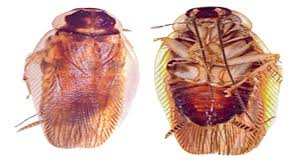
Researchers from the Zoological Survey of India (ZSI) recently uncovered a new cockroach species, Neoloboptera peninsularis, in the Deccan Peninsula.
- It is a new species of cockroach.
- It marks the first use of modern DNA technology in India to identify a cockroach
- It is only the third known member of the genus Neoloboptera recorded from India.
- The other two, Neoloboptera indica (described in 1865) and Neoloboptera chakrabortyi (described in 1995), had been recorded earlier, with no new specimen-based records reported since then.
- It is characterised by its glossy, yellowish-brown body and fully developed wings.
QS World University Rankings:

The Indian Institute of Management-Kozhikode (IIM-K) has achieved a global milestone by breaking into the Top 100 of the prestigious QS World University Rankings by Subject 2026 for the first time.
- It is published annually by global higher education consultancy Quacquarelli Symonds.
- The QS rankings evaluate universities on several parameters, including academic reputation, overall score, employer reputation, and employment outcomes.
- India recorded 120 new entries this year, placing it fourth globally for fresh appearances, behind only the US (287), China (181), and the UK (159).
- The country now holds the fourth-largest presence in these rankings by institution count, after the US, China, and the UK.
- Six Indian institutions now feature in the global top 100 for computer science, all improving from last year.
- The Indian Institute of Technology (ISM) Dhanbad and the Indian Institute of Management Ahmedabad, both securing the country’s highest global rank of 21.
- IIT-ISM Dhanbad has retained its stronghold in mineral and mining engineering.
- IIM Ahmedabad has broken into the top 25 globally in business and management studies as well as marketing.
PRISM-SG Portal:

The Minister for Road Transport and Highways launched the PRISM-SG (Portal for Rail-Road Inspection & Stages Management – Steel Girders) Portal in New Delhi.
- PRISM-SG (Portal for Rail-Road Inspection & Stages Management – Steel Girders) Portal aimed at enhancing efficiency, transparency, and inter-agency coordination in infrastructure development.
- It has been developed to digitise key approval and inspection processes related to the construction of
- Road Over Bridges (ROBs) and also includes Quality Assurance Plan (QAP), Welding Procedure Specification Sheet (WPSS) and fabrication stage inspection of steel girders.
- It enables end-to-end online submission of documents, scrutiny, raising and resolution of queries, approvals, scheduling of inspections, and uploading of inspection reports, supported by a complete audit trail and real-time monitoring capabilities.
- It provides an integrated digital platform that brings together all key stakeholders, including Road Owning Departments, Indian Railways, contractors, fabricators, and inspection agencies.
- It will help to reduce the approval and inspection timeline from approximately 12 months to about 3 to 4 months.
- It will play a critical role in ensuring timely completion of RoBs and Railway Bridges, strengthening infrastructure delivery and enhancing connectivity across the country.
Immigration, Visa, Foreigners Registration & Tracking (lVFRT) Scheme:
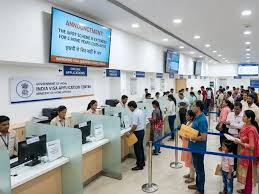
The Union cabinet approved the continuation of the Immigration, Visa, Foreigners Registration & Tracking (lVFRT) Scheme.
- The IVFRT platform is aimed at integrating and streamlining immigration, visa issuance, and foreigner registration processes in India through a secure, technology-driven framework.
- It was approved for a period of five year from 2026 to 2031.
- It was originally approved in 2010; the project has undergone multiple phases of expansion and extension.
- The latest approval comes in the backdrop of the recently enacted Immigration and Foreigners Act, 2025,
- The scheme will concentrate on three broad areas:
- Emerging technology innovations, transformation of core infrastructure and optimisation of technology-enabled service delivery
- The scheme will modernize the immigration and visa ecosystem through adoption of emerging technologies, including mobile-based services and self-service kiosks for seamless and secure passenger movement.
- It will upgrade and expand core infrastructure across Immigration Posts, FRROs, and Data Centres to build a resilient and scalable system nationwide.
- It will optimize technology and service delivery by introducing unified digital platforms, revamping core application architecture, and strengthening network and deployment frameworks for improved efficiency and user experience.
Modified UDAN Scheme:

The Union Cabinet has approved the Regional Connectivity Scheme – Modified UDAN with a Rs 28,840 crore outlay for 2026–2036, aiming to strengthen regional aviation and address viability issues in earlier phases.
- The Modified UDAN scheme, introduced in the Union Budget 2025–26, is a revamped version of the UDAN (Ude Desh ka Aam Nagrik) initiative, aimed at ensuring affordable air travel, improving connectivity to Tier-2 and Tier-3 cities, and promoting both infrastructure development and long-term operational sustainability.
- While the original UDAN scheme, launched in October 2016, successfully operationalized 663 routes and carried over 162.47 lakh passengers, it faced significant sustainability challenges:
- According to a Comptroller and Auditor General of India report, only 7% to 10% of routes remained financially viable after their initial subsidy period ended.
- The original three-year cap on subsidies was not long enough for airlines to develop self-sustaining markets on Tier-2 and Tier-3 routes.
- Out of the 663 routes launched since 2017, 327 had fallen into disuse by February 2026.
- 15 of the 95 airports revived under the scheme had ceased operations.
- Core Pillars of the Modified UDAN:
- Extended Subsidies (Viability Gap Funding): To keep airfares affordable (historically capped at Rs 2,500 per hour of flight for half the seats), the government subsidizes airline operators.
- The modified scheme extends this subsidy window from three to five years, giving airlines a longer runway to establish profitable routes.
- Direct Government Funding: Instead of funding these subsidies through an extra levy added to passenger tickets on major routes, the financial support will now come directly from the government exchequer.
- Operations & Maintenance (O&M) Support: Moving beyond just building airports, the government will now actively subsidize the day-to-day running costs of low-traffic aerodromes to prevent them from shutting down.
- Massive Infrastructure Expansion: The scheme targets the development of 100 airports from currently unserved airstrips and the construction of 200 modern helipads specifically designed for remote, hilly, and island regions.
- Focus on Indigenous Aviation: Aligning with the Atmanirbhar Bharat initiative, the program includes provisions to procure locally manufactured aircraft, such as HAL Dhruv helicopters and HAL Dornier planes, to navigate difficult terrains.
Periodic Labour Force Survey (PLFS) Annual Report, 2025:

The Ministry of Statistics and Programme Implementation (MoSPI) released the Periodic Labour Force Survey (PLFS) Annual Report for 2025.
- The PLFS was launched by the National Statistical Office (NSO) in 2017 to estimate key employment and unemployment indicators. It provides data in two formats: Usual Status (ps+ss), which maps activity over the preceding 365 days, and Current Weekly Status (CWS), which maps the preceding 7 days.
PLFS Annual Report 2025:
- Stable Participation: The Labour Force Participation Rate (LFPR) for ages 15+ remained stable at 59.3%, with male participation at 79.1% and female at 40.0%.
- Steady Employment: The Worker Population Ratio (WPR) stood at 57.4%. Notably, rural female WPR held steady at 44.9%, sustaining gains made since 2022.
- Declining Unemployment: The overall Unemployment Rate (UR) was 3.1%. Youth unemployment (ages 15-29) saw a drop to 9.9% from 10.3% in the previous year.
- Shift to Regular Wage: There is a positive shift in employment quality, with regular wage/salaried employees increasing to 23.6%, while self-employment declined to 56.2%.
- Sectoral Recomposition: Agriculture’s share of employment decreased from 44.8% to 43.0%, while manufacturing saw an improvement to 12.1%.
- Education & Unemployment: The unemployment rate among educated persons (secondary and above) reduced to 6.5%, reflecting better absorption of the skilled workforce.
- Gender Wage Growth: Nominal wages for women grew across all sectors, with the highest growth of 8.8% observed in the self-employed category.
- Education Attainment: At the all-India level, the average number of years in formal education for those aged 15+ reached 10.0 years.
India Retains 4% Inflation Target for RBI:
The Government of India has retained the 4% retail inflation target (with +/- 2% band) for the next 5-year period (1st April, 2026, to 31st March, 2031), reinforcing the flexible inflation targeting (FIT) framework adopted in 2016. This marks the 2nd such extension since March 2021, ensuring long-term macroeconomic stability.Flexible Inflation Targeting (FIT) is a monetary policy framework where the central bank uses its tools—primarily interest rates—to keep the inflation rate within a specific, publicly announced target range while also considering other economic factors like growth and employment.
Unlike “strict” inflation targeting, which focuses solely on price stability, the “flexible” aspect allows the central bank to tolerate short-term deviations from the target to avoid causing excessive volatility in the real economy (like a sudden spike in unemployment or a crash in GDP).Section 45-ZA of the amended RBI Act, 1934 mandates that the primary objective of monetary policy is to maintain price stability while keeping in mind the objective of growth.While New Zealand was the first to adopt inflation targeting globally in 1990, India formally shifted to FIT in 2016 following the recommendations of the Urjit Patel Committee.
Fall in Gold Prices:
Despite the escalation of the West Asian conflict, global and domestic gold prices have witnessed a sharp and anomalous decline. Traditionally, gold acts as a safe-haven asset during geopolitical or financial crises, but current macroeconomic dynamics have forced a deviation from this historical trend.The West Asian conflict has severely disrupted global oil supply chains, pushing crude oil prices significantly higher (crossing USD 120/barrel in recent trends).
Bab-el-Mandeb Strait:
Amid the escalating Crisis in West Asia, Iran has threatened to weaponize the strategic Bab el-Mandeb Strait alongside the Strait of Hormuz, posing a severe risk to global maritime trade and energy security if its territories are invaded.The Iran-aligned Houthis in Yemen are geographically and militarily positioned to execute disruptions in the Red Sea and Bab el-Mandeb, effectively expanding the conflict’s scope far beyond the Persian Gulf and the Sea of Oman.Bab-el-Mandeb Strait In Arabic, it translates to the “Gate of Tears” or “Gate of Grief,” historically referring to the dangers of navigating its waters. It is a narrow maritime chokepoint situated between the Arabian Peninsula and the Horn of Africa. It connects the Red Sea (to the northwest) to the Gulf of Aden and the Arabian Sea/Indian Ocean (to the southeast).It separates Yemen (on the Asian side) from Djibouti and Eritrea (on the African side).The strait is 20 miles (32 km) wide and is divided into two channels by Perim Island, which belongs to Yemen.The Red Sea to the Suez Canal via the Bab-el-Mandeb is one of the world’s most critical maritime trade routes.The Bab-el-Mandeb Strait is the only entry point to the Red Sea from the Indian Ocean and connects to the Suez Canal, forming a vital trade route between Asia and Europe.Bab-el-Mandeb is a key chokepoint for the movement of crude oil, petroleum products, and liquefied natural gas (LNG) from the Persian Gulf to global markets. Approximately 10-12% of global trade and nearly 30% of global container traffic passes through here.It is a crucial transit chokepoint for crude oil, petroleum products, and liquefied natural gas (LNG) moving from the Persian Gulf and Asia to Europe and the Americas. When this strait is threatened, global shipping companies are forced to reroute vessels around the Cape of Good Hope in South Africa. This adds 10 to 14 days to the journey, significantly driving up global freight rates, insurance costs, and ultimately causing inflation.
Grameen Credit Score for Rural Lending:
The government has mandated banks to adopt the Grameen Credit Score (GCS) as the default assessment tool for rural borrowers to enhance financial inclusion with a major focus on first-time borrowers who lack a traditional credit history.Grameen Credit Score Announced in the Union Budget 2025-26, the Grameen Credit Score is an alternative credit scoring model designed to assess the creditworthiness of individuals who lack a traditional formal credit history—often referred to as the “unbanked” or “underbanked” population. Unlike traditional credit scores (like CIBIL) that rely heavily on bank loans and credit card repayment history, this model looks at social and behavioural data (social collateral like trust and pressure from a peer group) within a community or microfinance framework.
RBI Rejects Treasury Bill Bids to Manage Liquidity:
The Reserve Bank of India (RBI) rejected all bids at a Treasury Bill (T-Bill) auction to bolster banking system liquidity as the current financial year concludes on 31st March 2026.The move is designed to boost the liquidity surplus by preventing an outflow of Rs 35,000 crore, ensuring banks have sufficient cash during the critical year-end period.It will also prevent a spike in yields, as accepting high-interest bids could have “spooked” the market and increased borrowing costs.Treasury Bills (T-Bills) are short-term debt instruments issued by the Government of India to manage temporary mismatches in its cash flows.



