
Today’s Current Affairs: 1st April 2026 for UPSC IAS exams, State PSC exams, SSC CGL, State SSC, RRB, Railways, Banking Exam & IBPS, etc
Table of Contents
Humpback Whale:
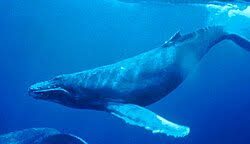
A stranded humpback whale was managed to swim free in Baltic Sea.
- The Humpback whale (Megaptera novaeangliae) is a species of baleen whale.
- It is a rorqual; a member of the family Balaenopteridae.
- They undertake long migrations between polar feeding grounds in summer and tropical or subtropical breeding grounds in winter.
- It has the distinctive hump on its back.
- Its long pectoral fins inspired its scientific name, Megaptera, which means “big-winged”
- Humpback females are larger than males.
Distribution: They inhabit all major oceans from sub-polar latitudes to the equator - Humpbacks use a unique method of feeding called bubble netting, in which bubbles are exhaled as the whale swims in a spiral below a patch of water dense with food.
- They filter their food through baleen plates. They strain krill, anchovies, cod, sardines, mackerel, capelin, and other schooling fish from the waters.
- Humpback whales reach sexual maturity between the ages of 4 and 10 years. Females produce a single calf every 2 to 3 years on average.
- Conservation status:
- IUCN: Least concern.
National Assessment and Accreditation Council : In News
Not a single university or college has received fresh accreditation for the current academic year from the National Assessment and Accreditation Council.
- It was established in 1994 as an autonomous institution of the University Grants Commission (UGC).
- Its primary objective is to ensure and enhance the quality of higher education through a rigorous accreditation process.
- It conducts assessment and accreditation of Higher Educational Institutions (HEI) such as colleges, universities or other recognised institutions to derive an understanding of the ‘Quality Status’ of the institution.
- NAAC evaluates institutions based on various parameters such as curricular aspects, teaching-learning processes, infrastructure, governance, and innovation.
- The NAAC functions through its General Council (GC) and Executive Committee (EC), comprising educational administrators, policymakers, and senior academicians from a cross-section of the Indian higher education system.
- The Chairperson of the UGC is the President of the GC of the NAAC; the Chairperson of the EC is an eminent academician nominated by the President of the GC (NAAC).
- At present the Assessment and Accreditation by NAAC is done on a voluntary basis.
- Headquarters: Bengaluru.
Bio-Bitumen: In News

The Council of Scientific and Industrial Research (CSIR) organised a Technology Transfer Event for its innovative technology “Bio-Bitumen from Lignocellulosic Biomass – From Farm Residue to Roads” for large-scale industry adoption in New Delhi.
- It is made using non-petroleum-based renewable resources and can be made from vegetable oils, synthetic polymers, or both.
- Renewable organic materials, such as plant-based oils, agricultural waste, or biomass.
- These materials undergo a special processing method to create a high-quality binder that is similar to traditional bitumen.
- It is an alternative to petroleum-based bitumen that lowers both carbon emissions and import dependency,
- Bio-bitumen production involves multiple steps, depending on the source material used.
- It is generated from renewable materials. This makes it a more environmentally friendly alternative to petroleum-based bitumen, which is derived from limited resources.
- As it is derived from organic materials that have absorbed carbon dioxide during their development, it often has a lower environmental impact than standard bitumen.
- It is less toxic and detrimental to the environment than regular bitumen. It contains fewer heavy metals and other hazardous pollutants.
- It is versatile and may be utilised in a variety of applications, including road paving, roofing, and waterproofing.
Indian Accounting Standards (Ind AS):

The Insurance Regulatory and Development Authority of India (IRDAI) has introduced Ind AS (Indian Accounting Standards) for the Insurance Sector.
- Indian Accounting Standards (Ind AS) are a set of accounting principles notified by the Ministry of Corporate Affairs (MCA) in 2015.
- These standards are largely converged with International Financial Reporting Standards (IFRS), bringing Indian financial reporting closer to global practices.
- Ind AS emphasizes a principle-based approach, focusing on fair value measurement, transparency, and enhanced disclosure.
- Before the introduction of Indian Accounting Standards (Ind AS), India followed the Indian Generally Accepted Accounting Principles (IGAAP).
- Indian GAAP was primarily developed by The Institute of Chartered Accountants of India (ICAI)
Provisions under the Companies Act, 1956
Indian GAAP comprised 18 accounting standards issued by ICAI, focusing largely on historical cost accounting and legal compliance. - Insurance Regulatory and Development Authority of India is a statutory body formed under the Insurance Regulatory and Development Authority Act, 1999 (IRDAI Act 1999), for the overall supervision and development of the insurance sector in India.
- It acts as an autonomous authority under the Ministry of Finance, Government of India.
- The main goals of IRDAI are:
- To safeguard the interest of the policyholders by fair business conduct and settlement of claims within time.
- To regulate the business of insurance with transparency, fairness, and honest practice.
- Facilitating financial prudence of the insurers through solvency and stability checks of insurers.
- It is responsible for registering and/or licensing insurance, reinsurance companies, and intermediaries according to the regulations.
- It sets the eligibility criteria, qualifications, and capital requirements for obtaining licenses in the insurance business.
- Head Office: Hyderabad
- It consists of a Chairman, five full-time members, and four part-time members, all appointed by the Government of India.
eGramSwaraj Portal:
India’s Gram Panchayats are witnessing a major leap in digital governance, with over ₹3 lakh crores (cumulative) in payments routed through the eGramSwaraj platform.
- eGramSwaraj Portal was launched in 2020.
- It is an e-governance platform that enhances transparency and efficiency in Panchayati Raj institutions.
- It is developed under the e-Panchayat Mission Mode Project and integrated with the Public Financial Management System (PFMS).
- PFMS enables real-time payments to vendors and service providers, ensuring seamless fund flow and reducing delays.
- It aims to bring in better transparency and strengthening the e-Governance in Panchayati Raj Institutions (PRIs) across the country through decentralized planning, progress reporting and work-based accounting.
- It will assist in enhancing the credibility of Panchayats which would induce greater devolution of funds to PRIs.
- It encompasses all aspects of Panchayat functioning viz. planning, budgeting, accounting, monitoring, asset management etc. on a single digital platform including online payments.
- The eGramSwaraj enables Panchayats to prepare and upload their Annual Panchayat Development Plans (GPDPs) online.
- It has facilitated digital planning, accounting, monitoring, and online payments at the Panchayat level.
- It supports decentralized planning, real-time progress reporting, and work-based accounting.
- The portal empowers Gram Panchayats to manage development projects effectively, ensuring that funds are utilized properly and citizens can access detailed reports on local governance activities.
- Launched by: Ministry of Panchayati Raj (MoPR)
Kugti Wildlife Sanctuary:
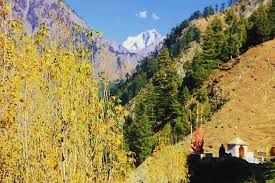
A rare white female albino Himalayan ‘tahr’ has been recorded in the Kugti Wildlife Sanctuary at Bharmour in Chamba district.
- It is the second largest sanctuary located in Himachal Pradesh.
- It houses the famous Manimahesh temple, an attraction to thousands of pilgrims despite the difficult terrain and extreme cold conditions.
- It has high-altitude sanctuary between Ravi and Chenab rivers.
- It is surrounded by Dhauladhar Wildlife Sanctuary on South-East direction and Tundah Wildlife Sanctuary on North-West direction.
- Its vegetation consists of Alpine Pasture, Western Mixed Coniferous Forest and Moist Deodar Forest.
- It is home to endangered species like the Ibex, Musk deer, Monal snow Cock, Pheasants, Himalayan Tahr, Red vented Bulbul, White Cheeked Bul Bul and so on.
- The major floras available in the Sanctuary are deodara (Cedrus deodara), kail (Pinus wallichiana), spruce (Picea smithiana), silver fir (Abies pindrow), ban (Quercus semicarpofolia), pink burans (Rhododendron campanulatum), etc.
Malwan – Anti-Submarine Warfare Shallow Water Craft:
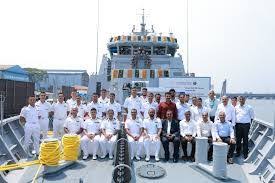
The Malwan – Anti-Submarine Warfare Shallow Water Craft was delivered to the Indian Navy.
- It is the second of eight Anti-Submarine Warfare Shallow Water Craft (ASW SWC) built by Cochin Shipyard Limited (CSL), Kochi.
- It has been indigenously designed and constructed by Cochin Shipyard Limited.
- It draws its name from the historic coastal town of Malwan in Maharashtra,
- The ship also encapsulates the legacy of the erstwhile INS Malwan, an Indian Naval Minesweeper which remained in service till 2003.
- Features of Malwan – Anti-Submarine Warfare Shallow Water Craft
- Propulsion: It is Waterjets propelled ASW SWCs
- Armaments: It is equipped with torpedoes, multifunctional anti-submarine rockets, and state-of-the-art sensors including advanced radars and sonar systems.
- The ship is equipped for underwater surveillance, Anti-Submarine Warfare (ASW) operations in coastal waters, Low Intensity Maritime Operations (LIMO) along with mine warfare capabilities.
- It has over 80% indigenous content and marks milestone in indigenous warship construction and reaffirms the Government of India’s vision of ‘Aatmanirbhar Bharat’.
Sanshodhak Survey Vessel:
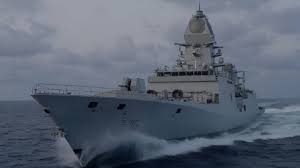
The Sanshodhak (Yard 3028) was delivered to the Indian Navy.
- It is the fourth and final Survey Vessel (Large) built under a four-ship project at Garden Reach Shipbuilders & Engineers Ltd (GRSE) in Kolkata.
- The previous ships of the same class, INS Sandhayak, INS Nirdeshak and INS Ikshak were commissioned.
- The SVL ships are designed and built as per classification rules of Indian Register of Shipping by M/s Garden Reach Shipbuilders & Engineers Ltd (GRSE), Kolkata.
- The ship is capable of full-scale coastal and deep-water Hydrographic survey of port/Harbour approaches and determination of navigational channels/ routes.
- The ship’s role also includes collecting oceanographic and geophysical data for defence and civil applications.
- It is fitted with state-of-the-art hydrographic equipment such as Data Acquisition and Processing System, Autonomous Underwater Vehicle, Remotely Operated Vehicle, DGPS long-range positioning systems, Digital Side Scan Sonar, etc.
- It is powered by two diesel engines; the ship can achieve speeds in excess of 18 knots.
- Sanshodhak has an indigenous content in excess of 80% by cost.
WTO’s 14th Ministerial Conference:

The 14th Ministerial Conference (MC14) of the World Trade Organization (WTO) in Yaoundé (Cameroon) ended without consensus due to disagreements over the e-commerce moratorium.
- Simultaneously, India strongly cautioned WTO members against the weaponisation of ‘transparency’ norms to justify trade retaliation or challenge the legitimate domestic policies of developing nations.
- Discussions on key agenda items have been postponed to the next General Council (GC) meeting in Geneva.
Key Outcomes of the 14th Ministerial Conference of the WTO:
- Lapse of the E-Commerce Moratorium: Due to the lack of consensus, the decades-old e-commerce moratorium (in place since 1998) has expired for the first time in 26 years.
- WTO members will theoretically no longer be legally prevented from taxing electronic transmissions.
- The safeguard against non-violation complaints under the Trade-Related Aspects of Intellectual Property Rights (TRIPS) agreement also lapsed.
- Developing countries have historically relied on this safeguard to protect policy space in public health, ensuring that WTO-compliant measures like compulsory licensing cannot be easily challenged.
- Ministers agreed to continue negotiations on reducing subsidies for distant water fishing fleets, with the aim of making concrete recommendations at the 15th Ministerial Conference (MC15).
- India strongly opposed the incorporation of the China-led IFD agreement into the WTO framework, stating it risks eroding the functional limits and foundational multilateral principles of the WTO.
- Despite the lapse of the multilateral e-commerce tax ban, a smaller coalition of participating nations (66 members, covering approximately 70% of global trade) made progress on the plurilateral WTO Agreement on Electronic Commerce.
- The Agreement seeks to establish common global rules for digital trade, including data flows, online transactions, and consumer protection.
- India and African nations have strongly demanded a permanent solution on Public Stockholding (PSH) for food security, allowing greater flexibility in domestic food subsidies without being penalised under WTO rules.
- Developing nations continue to face market access barriers, climate shocks, and distortions caused by high trade-distorting subsidies in developed countries.
- Developed nations have shown little support for expanding PSH flexibilities.
Shyamji Krishna Verma:
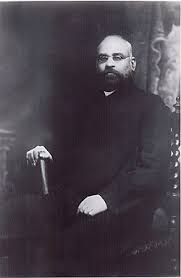
The Prime Minister of India paid tribute to Shyamji Krishna Varma on his death anniversary (30th March), praising his role in inspiring the freedom movement.
- Born on 4th October 1857, in Mandvi, Kutch District (Gujarat). He was a scholar of Sanskrit and became the first non-Brahmin to be conferred the prestigious title of ‘Pandit’ by the Pandits of Kashi.
- He was profoundly influenced by Swami Dayanand Saraswati and became the first President of the Bombay Arya Samaj in 1877.
- Served as the Diwan (Chief Minister) in the princely states of Ratlam, Ajmer, and Junagadh.
- In January 1905, he started an English monthly journal, “The Indian Sociologist” in London, which became a powerful ideological vehicle for anti-colonial propaganda and nationalist ideas.
- Shyamji Krishna Varma was barred from practising law in London in 1905 for anti-colonial writings by the Inner Temple (one of the four historic Inns of Court in London, serving as a professional association and training body for barristers and judges), later reinstated posthumously in 2015.
- In February 1905, he inaugurated the Indian Home Rule Society in London.
- He was one of the earliest Indian political leaders to use the term “Swaraj” (Self-Rule) and demand complete independence from British despotism.
- To shelter Indian students facing racial discrimination in England, he founded ‘India House’ in London (1905).
- This hostel rapidly transformed into a vibrant hub for revolutionary activities, nurturing iconic freedom fighters like Vinayak Damodar Savarkar, Madam Bhikaji Cama, and Virendranath Chattopadhyaya.
- In response to British criticism, Varma transitioned from England to Paris and subsequently settled in Geneva during World War I, where he remained until his death on 30th March 1930.
- A memorial called Kranti Teerth dedicated to him was built and inaugurated in 2010 near Mandvi.
Mahavir Jayanti 2026:
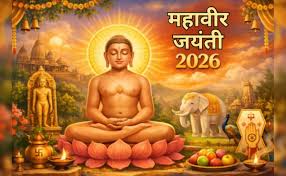
The President of India extended greetings on the eve of Mahavir Jayanti (Mahaveer Janma Kalyanak), which marks the birth anniversary of Lord Vardhamana Mahavira, who was the 24th and last Tirthankara (supreme preacher and spiritual teacher) of Jainism.
- In 2026, it is observed on 31st March, falling on Trayodashi tithi, the 13th day of Shukla Paksha (waxing phase of the moon) in the month of Chaitra.
- He was born as Vardhamana in 599 BCE in Kundalagrama, located near Vaishali in present-day Bihar.
- He belonged to the Ikshvaku dynasty and was born to King Siddhartha and Queen Trishala.
- At the age of 30, Vardhamana renounced his royal privileges, family, and material wealth to become an ascetic in pursuit of spiritual awakening.
- He attained ‘Kevala Jnana’ (omniscience or supreme infinite knowledge) under a Sal tree on the banks of the Rijupalika river.
- Upon conquering his senses and inner enemies (like anger, greed, ego, and deceit), Vardhamana earned the titles ‘Jina’ (the conqueror) and ‘Mahavira’ (the great hero).
- Lord Mahavira attained Moksha (liberation from the cycle of birth and death) at the age of 72 at Pavapuri, near modern-day Rajgir in Bihar.
- According to Mahavira, Nirvana or salvation is achieved through liberation from worldly desires, which begins with renunciation and is guided by the observance of the Tri-Ratna (Three Jewels) – (Samyak Darshan (right faith), Samyak Gyan (right knowledge), and Samyak Charitra (right conduct)).
- Mahavira prescribed five fundamental vows (Maha-vratas) for a meaningful life. Earlier, Parshvanatha (23rd Tirthankara) had taught four vows (Ahimsa, Satya, Asteya, and Aparigraha) while Mahavira added the fifth vow of Brahmacharya.
- The supreme principle (Ahimsa Paramo Dharma). It means not causing harm to any living creature physically, mentally, or verbally.
- Satya (Truthfulness): To always speak the truth and refrain from falsehood, exaggeration, or deception.
- Asteya (Non-stealing): Not taking anything that is not willingly offered or acquired through legitimate means.
- Aparigraha (Non-possessiveness): Complete detachment from material wealth, property, and worldly attachments.
- Brahmacharya (Chastity/Self-control): Exercising strict restraint over sensual pleasures and physical desires.
- Disciplinary Lineage: He organised his followers into the fourfold Jain Sangh—monks (Sadhus), nuns (Sadhvis), laymen (Shravaks), and laywomen (Shravikas).
- Mahavira had eleven chief disciples (ganadharas), among whom Indrabhuti Gautama and Sudharman played a key role in establishing the early monastic tradition.
- His teachings were preserved in the Agam Sutras, initially transmitted orally and later recorded on palm leaves, though many were lost over time.
- Anekantavada (Doctrine of Pluralism): The philosophy that truth and reality are complex and always have multiple aspects. It teaches that no single perspective possesses the absolute truth.
- Syadvada (Theory of Conditioned Predication): The premise that all judgments and truths are conditional and relative, holding good only under certain circumstances.
Spain has closed its airspace to American aircraft:
Spain has closed its airspace to American aircraft involved in military operations against Iran.Spain is located on the Iberian Peninsula in southwestern Europe.Spain shares its borders with Portugal (to the west), France and Andorra (to the northeast), and the British Overseas Territory of Gibraltar (to the south).Spain is bounded by the Mediterranean Sea (to the southeast and east), the Bay of Biscay (to the north), and the Atlantic Ocean (to the northwest and southwest).
India’s 1st National Repository for Deep-Sea Fauna:
The Center for Marine Living Resources & Ecology (CMLRE), Kochi, has reached a significant milestone in marine conservation with its “Bhavasagara” Referral Centre being officially designated as a National Repository for Deep-Sea Fauna.The Ministry of Environment, Forest and Climate Change (MoEFCC) conferred this status under Section 39 of the Biological Diversity Act, 2002.It serves as a critical national facility for the preservation, study, and documentation of India’s deep-sea biological heritage, supporting the nation’s Blue Economy goals.The center houses over 3,500 taxonomically identified and geo-referenced voucher specimens, ranging from marine invertebrates (cnidarians, molluscs, arthropods) to vertebrates.
Iran Considers Withdrawal from NPT:
Iran is reviewing a potential exit from the Nuclear Non-Proliferation Treaty (NPT), asserting that strikes by the U.S. and Israel on its nuclear sites like Isfahan breach the treaty’s spirit and violate its right to peaceful nuclear enrichment.If Iran withdraws from the NPT, it would fall outside International Atomic Energy Agency (IAEA) inspections, potentially weaken the global non-proliferation regime, and set a precedent for other countries to follow suit.NPT is aimed at preventing the spread of nuclear weapons and weapons technology, promoting cooperation in the peaceful uses of nuclear energy, and furthering the goal of nuclear disarmament.Opened for signature in 1968 and entering into force in 1970, it is the only binding commitment in a multilateral treaty to the goal of disarmament by the nuclear-weapon states. As of 2026, 191 countries are parties to the NPT (including the US, Russia, UK, France & China).



