
Today’s Current Affairs: 2nd April 2026 for UPSC IAS exams, State PSC exams, SSC CGL, State SSC, RRB, Railways, Banking Exam & IBPS, etc
Table of Contents
IMD Summer Forecast 2026:

The India Meteorological Department (IMD) released its summer forecast (April to June 2026). The forecast predicts an increase in the number of heatwave days across most parts of East, Central, Northwest India, and the Southeast Peninsula, alongside a nationwide rise in minimum (night time) temperatures.
Key Highlights of IMD Summer Forecast 2026:
- Heatwave Trend: India is expected to witness above-normal heatwave days, particularly across east, central, northwest India and the southeast peninsula.
- Temperature Pattern: Above-normal temperatures are likely over east and northeast India, eastern parts of central India, and adjoining peninsular regions, while most other regions may experience normal to below-normal temperatures.
- North India Exception: Unlike other regions, North India is likely to see a cooler-than-normal summer, indicating regional variation in heat patterns.
- Heatwave-Prone Areas: Regions such as Odisha, West Bengal, Tamil Nadu, Puducherry, Andhra Pradesh, and parts of Gujarat, Maharashtra, and Karnataka are likely to experience heatwaves, especially in April.
- Western Disturbances: India is expected to receive around 12% above-normal rainfall in April, supported by increased western disturbances.
- A higher frequency of western disturbances has contributed to increased rainfall and moderated temperatures.
- El Niño Concern: There is a likelihood of El Niño developing by July, which may negatively impact the monsoon.
- Cooler summer conditions may reduce land heating, potentially affecting monsoon onset and early progress.
AI-Driven Tax Governance in India:

India is increasingly using Artificial Intelligence (AI) in tax administration, especially through the Income Tax Department’s Project Insight (PI).
- While AI has improved tax compliance and revenue mobilisation, concerns around privacy, bias, and accountability are emerging.
- Project Insight (PI) is an initiative of the Income Tax Department (ITD) launched in 2017 (operational from 2019) to use Artificial Intelligence (AI) and data analytics for strengthening tax administration.
- It creates a 360-degree financial profile of taxpayers by analysing data from sources like banking, GST, property, and high-value transactions.
- It aims to detect tax evasion, improve voluntary compliance, and ensure fair and efficient tax enforcement, with three interlocking components.
- The Income Tax Transaction Analysis Centre (INTRAC) is the core analytical engine.
- It pulls financial data from banks, property transactions, credit card records, GST payments, and cryptocurrency holdings to build a comprehensive financial picture of each taxpayer.
- The Compliance Management Centralized Processing Centre (CMCPC) uses INTRAC’s outputs to identify discrepancies and flag likely cases of under-reporting.
- Non-intrusive Usage of Data to Guide and Enable (NUDGE) sends SMS and email reminders to taxpayers whose declared income doesn’t match their detected financial activity, prompting them to voluntarily revise their returns or explain their filings.
Appointment of Chairperson of NCBC:

Niranjan Jyoti has assumed charge as Chairperson, and Kiran Umesh Mahalle has assumed charge as Member of the National Commission for Backward Classes (NCBC).
- NCBC is a constitutional body dedicated to the welfare and protection of Socially and Educationally Backward Classes (SEBCs).
- Initially established as a statutory body in 1993, it underwent a significant transformation through the 102nd Constitution Amendment Act, 2018, which granted it constitutional status.
- Before 2018, the NCBC was limited to recommending the inclusion or exclusion of castes in the Central List of Other Backwards Classes (OBCs). Under the new constitutional framework:
- The government is required to consult the NCBC on all major policy matters affecting socially and educationally backward classes.
- It provides a more robust grievance redressal mechanism similar to those available to SCs and STs.
- The commission’s authority is derived from Article 338B of the Indian Constitution. It operates alongside the National Commission for Scheduled Castes (Article 338) and the National Commission for Scheduled Tribes (Article 338A).
- NCBC consists of 5 members—a Chairperson, Vice-Chairperson, and three others—all appointed by the President of India by warrant under his hand and seal.
- Additionally, the President holds the constitutional authority to determine the members’ specific tenure and conditions of service.
Fiscal Deficit : In News
India’s fiscal deficit reached Rs 12.52 trillion by the end of February 2026, accounting for 80.4% of the annual budgetary target. It is notably lower than the 85.8% recorded during the same period in 2024-25.
- For the full 2025-26 fiscal year, the Centre has set a fiscal deficit target of 4.4% of the GDP, amounting to an absolute value of Rs 15.58 trillion.
- These monthly accounts were compiled and released by the Controller General of Accounts (CGA), which functions under the Department of Expenditure, Ministry of Finance.
- Fiscal Deficit is the difference between a government’s total expenditure and its total revenue (excluding borrowings). It represents the total borrowing requirement of the government.
- It is calculated as the Total Expenditure minus (Revenue Receipts + Non-debt Capital Receipts), effectively showing the gap the government must fill through borrowing.
- Expenditure accounts for both Revenue Expenditure (recurring costs like salaries and interest) and Capital Expenditure (productive investments in infrastructure like roads and bridges).
- Revenue includes Tax and Non-tax revenue (dividends/fees) and Non-debt Capital Receipts (disinvestment proceeds and loan recoveries).
- High deficits can lead to “Crowding Out” (reducing capital available for private investment), inflationary pressure, or a “Debt Trap” where a majority of revenue is consumed by interest payments.
- The FRBM Act’s 2003 original 3% fiscal deficit target for March 2021 was relaxed due to the pandemic, leading to a post-2021 consolidation glide path. This commitment to bring the deficit below 4.5% of GDP by 2025-26 has now been achieved.
- While Fiscal Deficit indicates total borrowing, Revenue Deficit specifically measures the shortfall in the government’s daily operational expenses compared to its current income.
India’s Net International Liability Comes Down:

India’s net financial obligations to the rest of the world saw a notable decline of USD 10.9 billion during the third quarter of the 2025-26 fiscal year.
- The net claims of non-residents on India decreased to USD 260.5 billion, primarily because the growth in Indian residents’ overseas financial assets (USD 12.8 billion) significantly outpaced the rise in foreign-owned assets in India (USD 1.9 billion).
- Net claim is the difference between total foreign-owned assets in India and Indian-owned assets abroad.
- The ratio of India’s international assets to liabilities improved to 82.1%, up from 74.6% in 2024-25, indicating a strengthening external balance sheet.
- The Asset-to-Liability Ratio is a financial metric used to assess the solvency and financial health of an entity (a company, a country, or even an individual). It measures the relationship between what is owned (assets) and what is owed (liabilities).
- The surge in overseas assets was fueled by a USD 7.6 billion rise in outward direct investments and a USD 9.4 billion increase in currency and deposits.
- While Reserve assets (making up 57.4% of total overseas assets) dipped by USD 12.4 billion during the quarter to reach USD 687.7 billion, they maintained an annual growth of 8.2%.
- Inward direct and portfolio investments declined, but were offset by a USD 11.4 billion rise in trade credit; consequently, the share of debt liabilities in total external liabilities rose to 55.3%.
Nagoya Protocol on Access and Benefit-sharing (ABS):

India has emerged as the global leader in biodiversity compliance, issuing 3,561 Internationally Recognized Certificates of Compliance (IRCCs), which accounts for over 56% of the total certificates issued worldwide under the Nagoya Protocol.
- The Nagoya Protocol is a supplementary agreement to the Convention on Biological Diversity (CBD). It provides a transparent legal framework for the effective implementation of one of the three objectives of the CBD: the fair and equitable sharing of benefits arising out of the utilization of genetic resources.
- Adopted in October 29, 2010, in Nagoya, Japan.
- Entered into Force: October 12, 2014.
- There are currently 141 parties to the Nagoya Protocol (including 140 UN member states and the European Union).
- India signed the protocol in 2011 and ratified it in 2012.
- India implements the protocol through the Biological Diversity Act, 2002, and the Biological Diversity Rules, 2004.
- The National Biodiversity Authority (NBA), headquartered in Chennai, acts as the primary body.
- Key Features:
- It Creates predictable conditions for access to genetic resources, ensuring Prior Informed Consent (PIC) is obtained from the provider country.
- It Ensures that benefits (monetary or non-monetary) are shared fairly with the provider country based on Mutually Agreed Terms (MAT).
- It Requires parties to take measures to ensure that genetic resources utilized within their jurisdiction have been accessed in accordance with the provider country’s laws.
- It Covers traditional knowledge associated with genetic resources held by indigenous and local communities.
- An IT platform for exchanging information to help implement the protocol.
Internationally Recognized Certificates of Compliance (IRCCs):
- An IRCC is an electronic permit generated through the ABS Clearing-House that serves as official evidence that a user has legally accessed a genetic resource.
- It proves that Prior Informed Consent (PIC) was granted and Mutually Agreed Terms (MAT) were established between the user (e.g., a researcher or company) and the provider (e.g., a local community or national government).
Artemis II Mission:
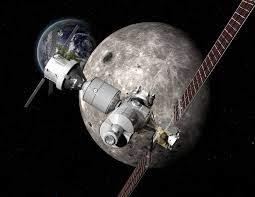
NASA is set to launch the Artemis II mission on Wednesday, April 1, 2026, marking the first time humans will venture to the Moon’s neighbourhood since the Apollo 17 mission in 1972.
- Artemis II is the first crewed mission under NASA’s Artemis program. It is a test-ride mission designed to fly a crew of four astronauts around the Moon and back to Earth without landing on the lunar surface.
- Organisation Involved: National Aeronautics and Space Administration (NASA).
- The SLS rocket and Orion spacecraft first debuted during the uncrewed Artemis I mission in 2022.
- Artemis II Launch: Scheduled for Wednesday, April 1, 2026.
- The primary objective is to test and validate the Space Launch System (SLS) rocket and the Orion spacecraft’s life-support systems with a crew on board.
- It serves as a foundational step for deeper space exploration and future lunar landings.
- The mission uses the SLS rocket, the most powerful launch vehicle currently available to NASA.
- The Orion spacecraft will complete two rounds of the Earth to gain necessary velocity and test systems before departing for the Moon.
- It will take three to four days to reach the Moon’s neighborhood, following a quicker, high-power trajectory similar to the Apollo missions.
- Orion will circle the Moon, reaching a distance of approximately 6,500 km from the far side of the lunar surface.
- After the flyby, the spacecraft will embark on a return journey, concluding the 10-day mission with a splashdown on Earth.
- This is the first time the SLS rocket and Orion spacecraft are being used to carry human astronauts.
- Unlike fuel-efficient uncrewed missions (like Chandrayaan-3) that take weeks, Artemis II uses a powerful SLS rocket to reach the Moon in just a few days.
- The spacecraft will travel farther into space than any previous human mission, exceeding the 110 km altitude reached by Apollo missions on the far side of the Moon.
Nyaya Setu AI Chatbot:

The Vice-President of India and the Minister of Law and Justice unveiled the Nyaya Setu AI Chatbot and its official mascot, Dishika, during the DISHA programme.
- Nyaya Setu is a voice-first, multimodal, and multilingual AI-powered legal assistant. It serves as a comprehensive digital bridge designed to simplify complex legal information for citizens.
- Developed By: The platform was built and is owned as a turnkey AI implementation by the Digital India BHASHINI Division (DIBD).
- The primary goal of Nyaya Setu is to democratize access to justice by ensuring that language and procedural complexities are no longer barriers for citizens seeking to understand their legal rights and processes.
- The platform enables seamless, voice-led user journeys by integrating a complete AI stack.
- It utilizes BHASHINI ASR (Automatic Speech Recognition) to understand spoken queries in various Indian languages.
- It processes these queries through multilingual Natural Language Processing (NLP) systems to provide context-aware responses.
- The AI is trained on frameworks such as the BNS (Bharatiya Nyaya Sanhita) to ensure responses are safe, responsible, and legally sound.
Khelo India Tribal Games (KITG) 2026:
India is hosting its first national multi-sport event for tribal athletes, Khelo India Tribal Games (25th March – 3rd April 2026) in Chhattisgarh (Raipur, Jagdalpur and Surguja), bringing tribal athletes from across the country onto a national platform.The Games are jointly organised by the Ministry of Youth Affairs & Sports, SAI, IOA, National Sports Federations and the Chhattisgarh government, with international-level technical standards.It aims to integrate tribal talent into mainstream sports by providing exposure, structured competition and pathways for future development.The Games are part of the Khelo India programme, which promotes grassroots participation, talent identification and inclusive expansion of India’s sporting ecosystem.
Mascot: “Morveer” symbolises tribal pride, identity and bravery.The Games feature seven medal sports—athletics, football, hockey, weightlifting, archery, swimming and wrestling—along with indigenous sports like kabaddi and mallakhamb, with over 60,000 athletes competing for 338 medals.Athlete selection follows a two-stage process: state/UT trials followed by national-level trials by sports federations, ensuring merit-based participation. A dedicated Talent Identification and Development Committee (TIDC) scouts promising athletes for further training under the Khelo India framework.
Nalanda Temple Stampede:
A tragic stampede at the Maa Sheetla Mandir in Nalanda, Bihar, resulted in the deaths of eight women as massive crowds overwhelmed local barricades.The stampede occurred at the Maa Sheetla Mandir in Maghra village, Nalanda district, during a religious gathering. As the volume of visitors surged, the existing barricades came under extreme pressure and eventually failed.The lack of effective crowd management led to a sudden panic, causing pilgrims to push one another and fall, resulting in eight fatalities and numerous injuries.Nearly 4,000 stampede events have been officially recorded in India over the last three decades.According to National Crime Records Bureau (NCRB) data from 2000 to 2022, a total of 3,074 lives have been lost in such incidents.The NCRB has been consistently collecting specific data on stampede incidents across the country since 1996. In the year 2025 alone, approximately 90 people lost their lives in various crowd crush events across India.
Purvanchal Mahotsav ‘Maati-9’ Festival:
Speaker of Lok Sabha addressed the Purvanchal Mahotsav ‘Maati-9’ Festival highlighting the region’s cultural and spiritual heritage.MAATI-9 is a premier cultural festival of the Purvanchal region, centred on the theme Maati (soil).It celebrates the deep bond between people and their ancestral roots through heritage, food, tourism, and arts.Organised as part of the Purvanchal Mahotsav with participation from cultural groups, artisans, and community representatives.
First Next Generation Offshore Patrol Vessel (Yard 1280, Shachi):
The Indian Navy marked a major indigenous shipbuilding milestone with the launch of Shachi (Yard 1280), the first of eleven Next Generation Offshore Patrol Vessels (NGOPVs), at Goa Shipyard Limited.Shachi is the lead ship of the Next Generation Offshore Patrol Vessel (NGOPV) The name is derived from Indian mythology, meaning one who renders assistance. These vessels are designed to be highly versatile, indigenously built platforms that will significantly augment the Indian Navy’s existing fleet of ten Offshore Patrol Vessels.The primary objective of the NGOPV project is to strengthen India’s maritime security by providing advanced platforms capable of performing multi-domain operations.
The construction of the eleven-ship NGOPV project is being undertaken concurrently at two major Indian shipyards:
- Goa Shipyard Limited (GSL), Goa: Builder of the first ship, Shachi.
- Garden Reach Shipbuilders & Engineers (GRSE), Kolkata: Working on subsequent vessels in the class.
Bhavasagara Referral Centre:
The Ministry of Environment, Forest and Climate Change (MoEFCC) has officially designated the Bhavasagara Referral Centre at CMLRE, Kochi, as a National Repository for Deep-Sea Fauna under the Biological Diversity Act, 2002.The Bhavasagara Referral Centre is a specialized scientific hub and India’s newly designated National Repository dedicated to the preservation, study, and documentation of deep-sea marine life. It serves as a centralized custody center for deep-sea specimens and their associated genetic data.Parent Organisation: The Centre for Marine Living Resources & Ecology (CMLRE), Kochi, Kerala.Ministry: Functions under the Ministry of Earth Sciences (MoES).Officially designated as a National Repository on March 30, 2026, by the Ministry of Environment, Forest and Climate Change (MoEFCC) under the Biological Diversity Act, 2002. The primary objective of the centre is to provide a foundational resource for ocean scientists to unlock the mysteries of the deep sea while strengthening India’s blue economy and marine biodiversity framework.It aims to foster expertise in deep-sea taxonomy in alignment with the UN Decade of Ocean Science for Sustainable Development (2021–2030).
INS Sanshodhak:
INS Sanshodhak the 4th and the final ship under a key naval project has been officially delivered to the Indian Navy. It was built with the strong focus on the indigenous technology and this vessel will enhances India’s ability to conduct the detailed ocean surveys and improve the navigation safety. This development will showcasing the country’s rising growing focus on the self-reliance and modernization in defense manufacturing and infrastructure.The Indian Navy has received the final Survey Vessel (Large) which is the INS Sanshodhak and with this delivery it is completing the important four-ship project.It was built by the Garden Reach Shipbuilders & Engineers Limited in Kolkata and it was delivered on March 30, 2026.This project was originally signed in the October 2018 and after so years of design, development and testing.
PM Modi Launches Kaynes Semiconductor Plant in Gujarat:
Honorable Prime Minister Narendra Modi has inaugurated the Kaynes Semicon Plant in Sanand, Gujarat on the March 31, 2026. This inauguration signals the India’s growing strength in the semiconductor manufacturing and with ambition to become the global tech leader. This facility has begin now the production of the advanced components which are crucial for the industries like electric vehicles and electronics.After the inauguration of the Kaynes Technology semiconductor plant it will start the domestic chip production by the company. It is located in Sanand in Gujarat and this facility is the part of the India’s broader plan to build the strong semiconductor ecosystem.
Amaravati Declared Sole Capital of Andhra Pradesh:
Lok Sabha passed the resolution and Amaravati has been declared sole capital of Andhra Pradesh. This move come after the years of the political debate and policy changes which regarding the state’s capital structure. The move is reflects the strong consensus in the Parliament and also parked the political debates in the State.Lok Sabha have amended the Andhra Pradesh Reorganization Act of 2014 and officially declare the Amaravati as the sole capital of Andhra Pradesh.
The amendment will,
Will replace the earlier provision under Section 5
Clearly state the Amaravati shall be the new capital
And come into effect retrospective from the June 2, 2024
India’s First Quantum Computer to be Launch in Amaravati:
For the major leap in the advanced technology as the Andhra Pradesh will launch the India’s first quantum computer on the April 14, 2026 in Amaravati. It was announced by the Chief Minister N Chandrababu Naid and this initiative is part of the state’s ambitious Amaravati Quantum Valley project. The program was backed by the strong industry partnerships and the National Quantum Mission. And with this it aims to position the India as the global leader in next-generation computing and the innovation.The launch of the India’s first quantum computer is the transformative step in the country’s technological journey.Unlike the traditional computers this quantum computers use the principles of quantum mechanics to solve high complex problems at un-precedented speeds.This initiative will place the Andhra Pradesh as the leader in the emerging technologies and it will strengthens India’s position in the global digital economy.
Vir Vikram Yadav Appointed DGCA Head as India Faces Aviation Safety Challenges:
Vir Vikram Yadav appointed as the new head of the Directorate General of Civil Aviation (DGCA). He was appointed by the The Government of India and he will replace the Faiz Ahmed Kidwai. This change has comes at the critical time when the India’s aviation sector is facing the multiple safety concerns, several operational disruptions and the regulatory challenges. With this new appointment it is expected to restoring the confidence in the one of the world’s largest aviation market.The Central Government has appointed the Vir Vikram Yadav as the new Director General of Directorate General of Civil Aviation (DGCA).He will replace the Faiz Ahmed Kidwai and he has been moved to the Department of Personnel and Training (DoPT) as the Additional Secretary.This transition ensures the continuity in the governance model while also brings the fresh leadership perspective to the aviation regulator.
Japan Establishes Specialized Centre for Indian Investments:
Japan is launching a specialized centre to streamline operations and provide critical support for Japanese firms expanding into the Indian market.The new centre will act as a facilitator to help companies navigate India’s complex tax system, state-level regulations, and perceived lack of transparency in legal applications.This move supports the 10 trillion yen (USD 62.6 billion) private-sector investment target set by New Delhi and Tokyo in August 2025 for the coming decade.Beyond traditional manufacturing, the focus will extend to high-tech and strategic areas including Artificial Intelligence (AI), startups, and critical minerals.Despite strong political ties, only 1,434 Japanese companies operated in India in 2024, significantly lower than the ~6,000 in Thailand and ~4,500 in Singapore.Japan currently ranks as the 5th-largest source of FDI for India, with cumulative investments reaching USD 43.2 billion (2000–December 2024), primarily in automobiles and telecommunications.



