
Today’s Current Affairs: 4th April 2026 for UPSC IAS exams, State PSC exams, SSC CGL, State SSC, RRB, Railways, Banking Exam & IBPS, etc
Table of Contents
Mudumalai Tiger Reserve:
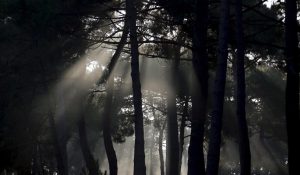
Nilgiris Collector inspected Thengumarahada, a remote village inside the core area of Mudumalai Tiger Reserve, to ensure basic amenities for voters.
- It is located in the Nilgiris District of Tamil Nadu.
- It is at the tri–junction of three states, viz, Karnataka, Kerala, and Tamil Nadu.
- It is part of the Nilgiris Biosphere Reserve, the first biosphere reserve in India.
- It has a common boundary with Wayanad Wildlife Sanctuary (Kerala) on the west, Bandipur Tiger Reserve (Karnataka) on the north.
- A variety of habitats ranging from tropical evergreen forest, moist deciduous forest, moist teak forest, dry teak forest, secondary grasslands, and swamps are found here.
- The Moyar River runs through the reserve.
- It has tall grasses, commonly referred to as “Elephant Grass”, bamboo of the giant variety, and valuable timber species like Teak, Rosewood, etc.
- It has wild relatives of cultivated plants, viz. wild rice, ginger, turmeric, cinnamon, etc\
- It includes elephant, gaur, sambar, four-horned antelope, spotted deer, barking deer, blackbuck, wild pig, mouse deer, and predators like tigers, leopards, and wild dogs.
Measles:
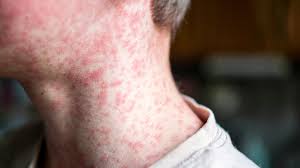
Bangladesh launched an emergency vaccination campaign targeting more than a million children as a fast-spreading measles outbreak sweeps across the country.
- Measles is a highly contagious, serious airborne disease caused by a virus.
- It is caused by a virus in the paramyxovirus family.
- It spreads by contact with infected nasal or throat secretions (coughing or sneezing) or breathing the air that was breathed by someone with measles.
- The virus remains active and contagious in the air or on infected surfaces for up to two hours.
- The virus infects the respiratory tract, then spreads throughout the body, causing severe disease, complications, and even death.
- The first sign of measles is usually high fever, beginning about 10 to 14 days after exposure to the virus and lasting four to seven days.
- A runny nose, cough, red and watery eyes, and small white spots inside the cheeks can develop in the initial stage.
- A rash erupts after several days, usually on the face and upper neck.
- Any non-immune person (not vaccinated or vaccinated but did not develop immunity) can become infected.
- Unvaccinated young children and pregnant persons are at the highest risk of severe measles complications.
- No specific antiviral treatment exists for measles.
- It can be prevented with a safe and effective measles-rubella (MR) vaccine that gives long-term immunity.
BioNEST:
The Union Minister inaugurated the Biotechnology Industry Research Assistance Council (BIRAC)-BioNEST Incubation Centre at the Central Food Technology & Research Institute (CFTRI) in Mysuru.
- The Bioincubators Nurturing Entrepreneurship for Scaling Technologies (Bio-NEST) was launched by Biotechnology Industry Research Assistance Council.
- It was launched with a vision that focused on fostering the biotech innovation ecosystem in the country.
- The BioNEST Incubators provide access to high end infrastructure, specialized and advanced equipment, business mentorship, IP, legal and regulatory guidance and networking opportunities to start-ups.
- The main objectives of the BioNEST scheme are to promote and establish Bioincubators in India which will:
- Support and encourage startups and entrepreneurs in the biotech sector
- Connect Industry and Academia and enable interactions for efficient exchange of knowledge as well as facilitate technical and business mentorship.
- Provide enabling services and required mentorship for IP and Technology management, legal support, certifications, validation, regulatory requirements, resource mobilization and a unique networking platform.
- The BIRAC funding for the BIRAC BioNEST Centres will be done in alignment with the Government’s umbrella scheme ‘Biotechnology Research Innovation and Entrepreneurship Development’ (Bio-RIDE).
Afghanistan:
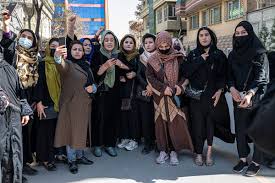
India has sent Humanitarian Assistance and Disaster Relief materials to Afghanistan, which is currently facing a difficult situation due to recent floods and earthquakes.
- Afghanistan is a landlocked mountainous country in Southern Asia.
- It is bordered by six nations – by Pakistan in the east and south; Iran in the west; Turkmenistan, Uzbekistan and Tajikistan in the north and China in the northeast.
- Capital City: Kabul
- It has hot summers and extremely cold winters which are typical in a semiarid steppe climate.
- It consists of Hindu Kush, Pamir Mountains in the northeast and Safed Koh range in the south.
- Major rivers: River Amu Darya, Helmand River, Kabul River
- Highest Point: Nowshak
- It mainly consists of coal, copper, natural gas, petroleum, gold, lithium, uranium, gold, rare earth elements.
Indian Softshell Turtle:
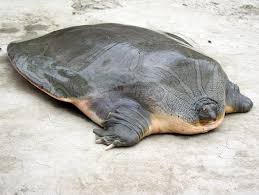
During a routine check police rescued -16 Indian Softshell turtles in Greater Noida.
- Indian softshell turtles (Nilssonia gangetica) are one of the largest freshwater turtle species in the world.
- It is also known as the Ganges Softshell turtle.
- It has carapace (upper shell), which is round to oval shaped, and green in colour with a yellow border.
- It has a long neck and tube-like snouts help them to extend their nose out of the water to breathe.
- The compressed shell, on the other hand, streamlines them, thereby making them brilliant and fast swimmers.
- These turtles inhabit deep rivers, streams, canals, lakes and ponds, typically preferring areas with sandy or muddy bottoms.
- They thrive in turbid water and spend most of their time hidden under the sand.
- They are found in Afghanistan, India, Bangladesh and Pakistan.
- Mainly found in Indus, Ganges, Meghna, Brahmaputra, Yamuna, Narmada and Mahanadi river basins.
- Indian softshell turtles are omnivorous, feeding on fish, amphibians, mollusks, insects, carrion and aquatic plants.
- These are often maintained in the temple ponds of Orissa where they are considered sacred.
- Habitat alteration and destruction, Poaching and illegal trading for traditional medicines, expansion of agriculture, commercial exploitation.
- Conservation Status:
- IUCN Red List: Endangered
- Wildlife Protection Act, 1972: Schedule
Obstructive Sleep Apnea: Study
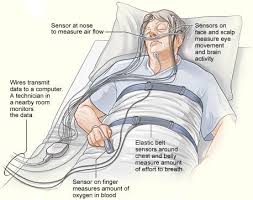
Scientists have found that those living with obstructive sleep apnea (OSA) have a 71 per cent higher risk of cardiovascular events (CVEs).
- Obstructive Sleep Apnea is the most common sleep-related breathing disorder.
- Those people with OSA repeatedly stop and start breathing while they sleep.
- These breath pauses are known as apneas.
- It is characterized by recurrent upper airway obstruction during sleep and is associated with reduced quality of sleep and life and increased cardiovascular risk.
- There are several types of sleep apnea. OSA occurs when the throat muscles relax and block the airway.
- Anyone at any age can have OSA. But it’s most common in middle-aged and older adults.
- This condition has significant implications for cardiovascular health, mental well-being, and quality of life.
- Treatment for OSA
- Making lifestyle changes like sleeping position adjustments (not sleeping on your back) or maintaining a weight that’s healthy for you.
- Using a continuous positive airway pressure (CPAP) machine
- Wearing oral appliances (mouthpieces)
Rove beetle:
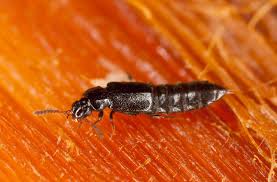
Researchers have discovered three previously unknown species of rove beetles in Arunachal Pradesh, marking a significant addition to the state’s rich biodiversity.
- Rove beetles (family Staphylinidae) are one of the largest beetle families.
- They are typically elongate, fast-moving beetles with shortened wing covers (elytra) that expose flexible abdominal segments.
- Many species of these beetles can raise the abdomen in a scorpion-like defensive posture (not a true sting).
- Preferred climate: sub-tropical, cold tolerant
- Rove beetles occupy almost all moist environments throughout the world.
- Typical microhabitats include leaf litter, soil surface, under bark, fungi, shorelines, dung, carrion, compost, and nests of social insects;
- These are usually found around decaying animal and vegetable matter, preying on carrion-feeding insects.
- These predatory beetles are beneficial to farmers and gardeners, because they can reduce pest populations, also referred to as biological control
- Chemical defenses from abdominal glands; secretions can deter predators and may include irritants or antimicrobial compounds
INS Aridhaman: In News
India significantly bolstered its maritime nuclear deterrence, by inducting INS Aridhaman, its third indigenous nuclear-powered ballistic missile submarine (SSBN).INS Aridhaman is the third vessel of the Arihant-class nuclear-powered ballistic missile submarines (SSBN).
It is a ballistic missile submarine (SSBN), meaning it is specifically designed to carry and launch nuclear-tipped ballistic missiles from underwater, thereby providing a credible second-strike capability.Developed By: The submarine was developed under the Advanced Technology Vessel (ATV) project.
RBI Ban on NDD Contracts:
The Reserve Bank of India (RBI) has restricted banks’ participation in Non-Deliverable Derivative (NDD) contracts to curb offshore currency manipulation and stabilize the Indian Rupee (INR) amidst global geopolitical tensions.Following the directive, the Rupee staged a sharp recovery, rallying from below 95 to 93.10 against the US Dollar as speculative pressure eased.Another significant aspect is the RBI’s restriction on Related Party Transactions (RPTs), a move designed to prevent intra-group dealings from obscuring true risk exposure or being used to shift profits and risks across jurisdictions.A Non-Deliverable Derivative (NDD) is a financial contract used to hedge or speculate on currencies that are non-convertible or subject to strict capital controls.Unlike a standard derivative, where the underlying asset is physically exchanged, an NDD is settled strictly in a freely convertible currency (usually the US Dollar).In an NDD, there is no exchange of the “principal” amount of the two currencies. Instead, the parties agree on a “contract rate” and a “fixing date.”On the fixing date, the market exchange rate (spot rate) is compared to the agreed contract rate.The difference between the contract rate and the spot rate is calculated. The “loser” pays the “winner” the difference in a convertible currency like USD.
Petrochemical Duty Waiver:
The Government of India has announced a full customs duty exemption on 40 critical petrochemical products until 30th June, 2026, to counter cost pressures and supply chain volatility triggered by the ongoing West Asia conflict.Petrochemical products are the fundamental chemical “building blocks” derived from petroleum or natural gas. They serve as the starting point for 95% of all manufactured goods, from medical devices to renewable energy components.They are categorized into 3 main groups based on their chemical structure:Olefins (Alkanes): Olefins are the most widely produced petrochemicals and are primarily used to create plastics and synthetic rubber. E.g.,Ethylene: Primary raw material for Polyethylene (PE)—the most common plastic used in packaging, bottles, and films,Propylene: Critical for making Polypropylene (PP), which is used in automotive parts, textiles, and heat-resistant food containers, Butadiene: The essential ingredient for Synthetic Rubber, used extensively in the manufacturing of vehicle tires and gaskets,BTX Aromatics: These ring-shaped hydrocarbons are vital for creating high-strength plastics, detergents, and synthetic fibers. E.g.,Benzene: Used in clothing and industrial packaging,Toluene: Primarily used as a high-octane gasoline additive and a solvent in paints,Xylenes: Used as raw material for PET (Polyethylene Terephthalate)—the clear plastic used for water bottles and polyester clothing.



