
Today’s Current Affairs: 27th April 2026 for UPSC IAS exams, State PSC exams, SSC CGL, State SSC, RRB, Railways, Banking Exam & IBPS, etc
Table of Contents
Gond Tribe:
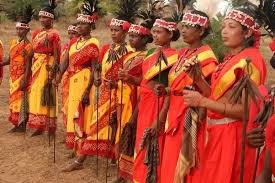
The Gond tribe travelled from Bastar, Chhattisgarh to the heart of Delhi with one message: protect the earth, stop the destruction.
- The Gond or Gondi (Gōndi) or Koitur are a Dravidian ethno-linguistic group.
- The states of Madhya Pradesh, Chhattisgarh, Maharashtra, and Odisha are home to the largest Gond populations.
- Gond tribes also live in the states of Uttar Pradesh, Telangana, Andhra Pradesh, Bihar, Karnataka, Jharkhand, West Bengal, and Gujarat.
- Gonds are mainly divided into four tribes, namely Raj Gonds, Madia Gonds, Dhurve Gonds, and Khatulwar Gonds.
- The majority of Gond people speak dialects of Gondi, an unwritten language of the Dravidian language family.
- Some Gond have lost their own language and speak Hindi, Marathi, or Telugu, depending on which is dominant in their area.
- The basis of the Gond economy is agriculture, but they also practice animal husbandry. Some Gond also gather wild plants to eat.
- The religion of the Gond tribes centers on clan and village gods, together with ancestor worship.
- Keslapur Jathra and Madai are important festivals of the Gonds.
Mali:
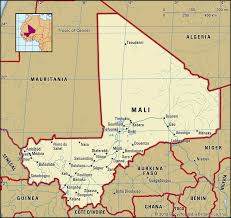
India advised its nationals in Mali to remain highly vigilant, exercise utmost caution and stay indoors due to recent security developments in the West African nation.
- It is a landlocked country in West Africa.
- It shares its border with Algeria(north), Niger and Burkina Faso (east), Côte d’Ivoire and Guinea (south), and Senegal and Mauritania (west).
- Capital City: Bamako
Geographical Features - It experiences a tropical savanna climate in the south becoming a desert climate in the north.
- Approximately 65% of the country is covered by desert or semi-desert.
- The Sahara Desert makes up a large portion of Mali’s total land area.
- The landscape transitions from the Sahara Desert in the north through the Sahel to the zone of Sudanian savanna in the south.
- The Niger River flows through its interior, serving as its main source of water.
- Highest point: Hombori Tondo at 3,789 ft (1,155 m).
- It includes gold, uranium, diamonds, copper, iron ore, precious stones, zinc, manganese, bauxite etc.
Olive Ridley Turtle:
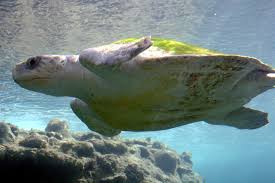
Olive Ridley turtles from Tamil Nadu have begun migrating towards the Sri Lanka Dome, a little-known but highly productive ocean region.
- It is one of the smallest and the most abundant of all sea turtles found in the world.
- It gets its name from the olive green colouration of its carapace (shell).
- It is best known for its unique mass nesting, called Arribada, where thousands of females come together on the same beach to lay eggs.
- They are mainly found in the warm waters of the Pacific, Atlantic, and Indian oceans.
- Odisha’s Gahirmatha Marine Sanctuary is known as the world’s largest rookery (a colony of breeding animals) of sea turtles.
- They are omnivorous, meaning they feed on both plants and animals.
- They are solitary, preferring the open ocean.
- These turtles spend their entire lives in the ocean, and migrate thousands of kilometers between feeding and mating grounds in the course of a year.
- Conservation Status:
- IUCN Red List: Vulnerable
- CITES: Appendix I
- Wildlife Protection Act, 1972: Schedule 1
Sri Lanka Dome:
- It is considered one of the most productive regions in the Indian Ocean.
- It is formed by seasonal upwelling that brings cool, nutrient-rich waters to the surface, triggering plankton blooms that attract turtles, fish, whales, and seabirds.
- This phenomenon typically begins in May, peaks in July, and declines by September, after which the turtles disperse and begin their return migration.
Sea Slugs:
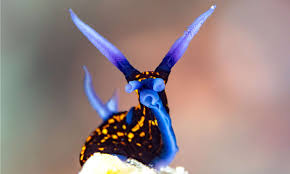
A rare sea slug, Discodorid cebuensis, has been recorded in India for the first time after being spotted recently at Haji Ali, Mumbai.
- Sea slugs, sometimes called ocean slugs, water slugs, or nudibranchs, are soft-bodied marine molluscs found in all the world’s oceans, from shallows to the deep sea.
- They are a type of gastropod, a large group of mollusks that includes both marine and land species such as snails and slugs.
- They have no shells, quills, or mantle cavities.
- They look like naked snails, i.e., without shells.
- These slow-moving grazers consume algae, sponges, and other small invertebrates, showcasing a range of feeding habits.
- They are usually found in coral reefs, and their presence is a significant indicator of a strong coral ecosystem.
- Sea slugs are renowned for their vibrant colours and intricate patterns, which often serve as warning signals to predators due to their toxicity.
- They get their toxicity from the creatures they eat, and some sea slugs can even keep the stinging cells of jellyfish inside their bodies.
- On their heads, nudibranchs have tentacles that serve as important sensory organs, helping them detect chemicals and movement in the water.
- When the sea slug eats, it absorbs and displays its prey’s pigment—the substance that gives the prey its color.
- Beyond their striking appearance, sea slugs possess other intriguing traits.
- Some can photosynthesise, producing their own food with sunlight.
- Others regenerate lost limbs, and a few can steal genes from their prey and incorporate them into their DNA.
- Most sea slugs are active throughout the day, but some species are also nocturnal.
Cerium–Magnesium Changesite:
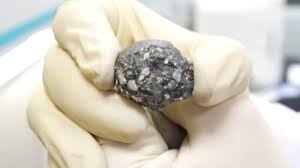
China recently announced the discovery of a new mineral from the Moon named Cerium-Magnesium Changesite, marking a significant addition to the growing catalogue of extraterrestrial materials and offering fresh insights into lunar geology.
- It is a newly discovered lunar mineral.
- The mineral was discovered in a lunar meteorite dubbed Pakepake 005, the first of its kind to have fallen within China.
- It is a single spherical meteorite weighing 44 grams, with a dark molten outer shell.
- The new mineral is colourless, transparent and brittle.
- Despite its tiny size, it holds significant scientific value due to its unique chemical and structural properties.
- One of the most striking features is its fluorescent behaviour, meaning it emits light under certain conditions.
- This property could have practical applications in advanced technologies, particularly in the development of next-generation LED materials.
- The mineral’s composition, especially its rare earth element ratios, along with its magnesium and iron content, offers valuable clues about the processes that shaped the Moon’s surface and interior.
- Variations in its crystal structure could help researchers better understand how lunar minerals form and evolve under extreme conditions.
Diphtheria:
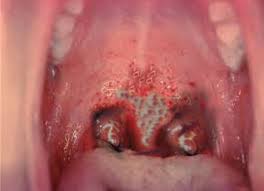
After decades of being largely under control, diphtheria — a serious but vaccine-preventable disease — is making an unexpected return in parts of Australia.
- Diphtheria is a highly contagious bacterial infection that can attack the upper respiratory tract and less often the skin.
- It is caused by strains of bacteria called Corynebacterium diphtheriae that make a toxin.
- The bacterium usually multiplies on or near the surface of the throat or skin.
- There are two main types of diphtheria:
- Classical respiratory diphtheria: It may affect your nose, throat, tonsils, or larynx (voice box). It’s the most common type.
- Skin (cutaneous) diphtheria: It causes a skin rash, sores, or blisters. They can appear anywhere on your body. Cutaneous diphtheria is more common in tropical climates. Overall, it’s rare.
- It can spread from person to person, usually through respiratory droplets, like from coughing or sneezing.
- People can also get sick from touching infected open sores or ulcers in case of cutaneous diphtheria.
- Some people may not develop disease manifestations but can still transmit the bacteria to others.
- Treatment:
- Neutralization of unbound toxin with Diphtheria Antitoxin (DAT).
- Antibiotics to prevent further bacterial growth;
- Monitoring and supportive care to prevent and treat complications, e.g. airway obstruction, myocarditis.
- It is a vaccine-preventable disease, but multiple doses and booster doses are needed to produce and sustain immunity.
Atlas Drone Swarm System:
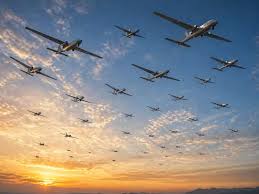
The Chinese People’s Liberation Army (PLA) unveiled its new Atlas drone swarm system (atelasi).
- It is a mobile battlefield platform designed to deploy and coordinate large numbers of drones from a single command point.
- The system is manufactured by China Electronic Technology Group Corporation (CETC), a state-owned defence electronics conglomerate working closely with the Chinese People’s Liberation Army (PLA).
- Mounted on vehicles, the system is intended to launch up to 96 drones in a coordinated swarm, with control consolidated under one operator.
- Built around a Swarm-2 combat vehicle, a command unit, and a support vehicle, Atlas is designed for reconnaissance, electronic disruption, and coordinated strikes.
- The system enables flexible grouping of drones into different operational formations, including coordinated defensive structures and precision strike patterns.
- Each drone within the Atlas system can carry different payloads.
- The drones can reportedly be equipped with electro-optical reconnaissance payloads, strike munitions, and relay communications packages, allowing the swarm to be configured for surveillance, attack support, battlefield sensing, and communications extension.
- The system is designed for swarm-level coordination, where drones can adapt formations and execute tasks collectively while retaining individual autonomy.
Pykara Lake:
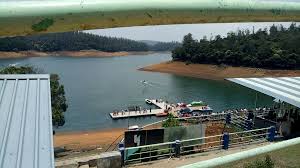
The Madras High Court has refused to lift the temporary stay on operating boating services for tourists on Pykara Lake in the Nilgiris district, Tamil Nadu.
- Pykara Lake is situated in the Nilgiri district of Tamil Nadu.
- It is formed as a result of the construction of the Pykara Dam over the Pykara River.
- The Pykara River, which originates from the Mukurthi peak, is the largest river in the district and is revered by the Todas, an Adivasi community, who consider it to be sacred.
- The dam also has a powerhouse, which is one of the oldest power plants in South India and is generating about 60 megawatts of electricity.
- A few hundred meters north of the lake, the river tumbles down the rocks to form the famous Pykara Falls.
- Pykara Falls consists of two cascades that fall from a height of about 55 meters and 61 meters, respectively.
- The lake is surrounded by the thick forest of Mukurthi National Park (MNP). As part of the Western Ghats, it MNP has been a UNESCO World Heritage Site since 1st July 2012.
Tornado : Oklahoma, USA
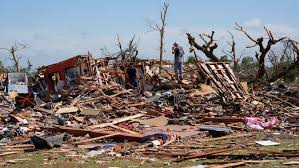
A large tornado touched down in Kay County, Oklahoma, USA.
- It is a vertical, land-based column of violently rotating air that forms from the base of a thunderstorm to the ground.
- It is characterised by a rapid cyclonic circulation and is often seen as a cloud-filled condensation funnel extending from the sky to the ground.
- When such a rotating column of air forms over a water body, it is known as a waterspout.
- Tornado formation is closely linked to interactions between contrasting air masses.
- A collision of warm, moist air(usually from tropical regions) with cool, dry air (typically from polar or upper regions), especially in the presence of a low-pressure system or trough, leads to the formation of thunderstorms and may trigger tornadoes.
- It typically exhibit wind speeds ranging from 105 to 322 km/h, but some extreme events can exceed this range.
- They can be stationary or move at high speeds, often advancing at around 97 km/h across the landscape.
- Tornadoes occur most commonly in mid-latitude regions (between 20° and 60° latitude in both hemispheres) where cold polar air meets warm tropical air, producing frequent thunderstorm activity.
- The United States experiences the highest frequency of tornadoes globally, particularly in the region known as “Tornado Alley”.
Strait of Malacca : In News
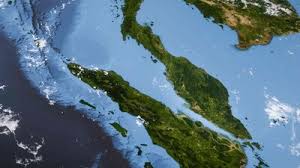
The closure of the Strait of Hormuz has forced policymakers in Asia to face questions over the security of other maritime chokepoints, including the Strait of Malacca.
- It connects the Andaman Sea (Indian Ocean) and the South China Sea (Pacific Ocean).
- Bounded by: Indonesia, Thailand, Malaysia and Singapore
- The Strait of Malacca’s name was derived from the Malacca Sultanate, who governed the archipelago from 1400 until 1511.
- The climate of the strait is hot and humid and is characterized by the northeast monsoon during the (northern) winter and the southwest monsoon during the summer.
- It links the Indian and Pacific oceans and is one of the busiest and most important shipping lanes in the world.
- Singapore, Malaysia, and Indonesia control the joint patrolling of the Malacca Strait.
- It is the largest “oil transit chokepoint” in the world.
- It carries nearly 22% of the world’s maritime trade.
- Roughly 60% of India’s seaborne trade and almost all of its LNG imports pass through the Malacca Strait.
Shekha Jheel Bird Sanctuary as India’s 99th Ramsar Site:
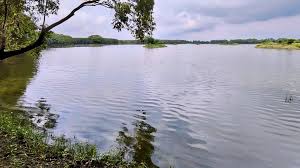
The Union Ministry of Environment, Forest and Climate Change has designated Shekha Jheel Bird Sanctuary in Aligarh, Uttar Pradesh, as a Ramsar site (Wetland of International Importance), taking India’s total Ramsar sites to 99 and the State’s tally to 12.
- It is a 25-hectare freshwater perennial wetland that came into existence in 1852 following the construction of the Upper Ganga Canal, which divides the lake into two parts.
- The wetland acts as a crucial wintering habitat for over 166 water bird species, including important species like the painted stork and bar-headed goose, alongside mammalian fauna such as the blackbuck (a Schedule I species) and blue bull.
- The dominant tree species include Terminalia arjuna and Syzygium cumini, but the native ecosystem is increasingly threatened by invasive alien species such as Lantana camara, Parthenium hysterophorus, and Water Hyacinth.
- The wetland is degrading due to siltation (caused by unscientific mound construction in 1991), loss of forest cover due to land distribution schemes, and increased poaching vulnerabilities facilitated by nearby road construction.
- Additionally, aggressive water chestnut farming has reduced the foraging surface area for migratory birds.
- The profuse and uncontrolled growth of water hyacinth is causing severe eutrophication, deteriorating the water body’s health and reducing habitats for waterfowl.
SEED Scheme for DNT Communities:

The Development and Welfare Board for De-notified, Nomadic and Semi-Nomadic Communities (DWBDNC) reported significant progress under the SEED Scheme during FY 2025–26, highlighting enhanced outreach and impact.
- SEED Scheme is a central sector scheme launched in February 2022 by the Ministry of Social Justice & Empowerment for economic empowerment of DNT, NT and SNT communities.
- The scheme has an outlay of ₹200 crore over five years (from 2021–22) and is implemented by DWBDNC through an online portal for registration and monitoring.
- It focuses on four major components:
- Free coaching for competitive exams and professional courses
- Health insurance coverage through PMJAY
- Livelihood support for income generation
- Housing assistance through schemes like PMAY
- DNT, NT and SNT Communities”
- The term De-notified Tribes refers to communities that were once classified under the Criminal Tribes Acts,1871 which were implemented by the British Government.
- The Acts were abolished by the Government of India in 1952, leading to the De-Notification of these communities.
- A few of these communities which were listed as de-notified were also nomadic.
- Nomadic and semi-nomadic communities are defined as those who move from one place to another rather than living in one place all the time.
- While most DNTs are spread across the SC, ST and OBC categories, some DNTs are not covered in any of the SC, ST or OBC categories.
- India has around 150 Denotified Tribes and ~500 Nomadic communities, accounting for nearly 10% of the population.
- Various committees (e.g., Kaka Kalelkar Commission, Mandal Commission, NCRWC) have highlighted their historical marginalisation, stigma and need for targeted welfare measures.
RBI Eases Rupee NDF Curbs:
The Reserve Bank of India (RBI) partially rolled back earlier restrictions on rupee-linked non-deliverable forward (NDF) transactions after improved market stability and reduced arbitrage risks.
- Banks are now permitted to undertake limited related-party transactions such as cancellation and rollover of existing contracts, while broader restrictions on forex derivatives remain in place.
- However, the move is unlikely to significantly affect the spot rupee, as broader global factors such as crude oil prices, geopolitics, and dollar strength continue to drive currency movements.
- The $100 million cap on net open positions in the onshore market remains unchanged, reflecting a cautious regulatory stance amid global uncertainties.
- The restrictions were imposed due to heightened forex volatility following West Asia geopolitical tensions and rising arbitrage positions between onshore and offshore markets.
- Non-Deliverable Forward (NDF):
- A Non-Deliverable Forward is a cash-settled derivative contract used to hedge or speculate on currencies where physical delivery is restricted.
- Widely used in offshore markets for currencies like the Indian Rupee, especially by foreign investors.
NDF markets can create arbitrage opportunities between onshore and offshore foreign-exchange markets.
1st Structured Pulse Procurement in Bihar:
The Government of India has strengthened Minimum Support Price(MSP)-based procurement under PM-AASHA, expanding operations in Chhattisgarh and launching Bihar’s first structured pulse procurement initiative under the Atmanirbhar Pulses Mission to support farmers and enhance self-reliance.Bihar Pulse Procurement Initiative: Organised procurement of masoor (lentil) initiated in Bihar led by the National Cooperative Consumers’ Federation of India Limited (NCCF), with the National Agricultural Cooperative Marketing Federation of India Limited (NAFED) preparing to scale operations under the Price Support Scheme through its cooperative network.Chhattisgarh MSP Procurement: Procurement is driven by the NCCF, utilising the E-Samyukti digital platform and PACS centres across multiple districts, with a focus on crops like chana and masoor and large-scale farmer participation.
India–Egypt Defence Cooperation:
India and Egypt held the 11th Joint Defence Committee meeting in Cairo to strengthen bilateral defence cooperation and outline a roadmap for future engagement.Both sides agreed on a forward-looking plan focusing on expanding structured military interactions, intensifying joint training, enhancing maritime security cooperation, and increasing the scope and complexity of military exercises.India highlighted its defence manufacturing growth, with production exceeding $20 billion and exports of around $4 billion to over 100 countries. Both sides explored opportunities for co-development and co-production.First-ever Navy-to-Navy staff talks held; India highlighted the role of its Navy in ensuring freedom of navigation in the Indian Ocean Region and the contribution of the Information Fusion Centre.The Indian delegation also engaged with the Egyptian Air Force leadership to strengthen air force cooperation. India–Egypt defence ties are anchored in the 2022 MoU on defence cooperation and were further strengthened by elevating relations to a Strategic Partnership in 2023, reflecting deepening strategic alignment.The Indian delegation’s tribute at the Heliopolis War Memorial highlights shared historical connections and longstanding goodwill between the two countries.
Rail Link to Bauxite Hills in Odisha:
The government proposed a new broad-gauge railway line from Tikiri to connect Sijimali and Kutrumali bauxite hills in Odisha, notified under the Railways Act, 1989, to facilitate mining operations in bauxite-rich regions.The bauxite hills lie in Rayagada and Kalahandi districts, forming part of the Eastern Ghats, a discontinuous, eroded mountain range along India’s eastern coast.The project has faced strong tribal protests over potential livelihood loss, forest diversion, water security issues, and concerns regarding protection of rights in Fifth Schedule areas.The region is rich in mineral resources and biodiversity but is ecologically fragile, comprising forested hills, tribal settlements, and river systems, making it highly sensitive to large-scale mining and infrastructure projects.
Soul Threads:
The Central Cottage Industries Corporation of India (CCIC) has launched its first heritage designer collection, Soul Threads, marking a major step in its revival and cultural promotion strategy.Soul Threads is the inaugural heritage designer collection launched by the Central Cottage Industries Corporation of India (CCIC) to celebrate and promote India’s artisanal legacy through handloom, handicrafts, designer fashion, and cultural performances.Launched By: Central Cottage Industries Corporation of India (CCIC).
Aim:
- To preserve, revive, and promote India’s traditional textile heritage and artisanal craftsmanship.
- To provide a prestigious commercial and cultural platform for artisans, designers, and folk performers while boosting the handloom and handicraft economy.



