
Today’s Current Affairs: 4th May 2026 for UPSC IAS exams, State PSC exams, SSC CGL, State SSC, RRB, Railways, Banking Exam & IBPS, etc
Table of Contents
Great Himalayan National Park:
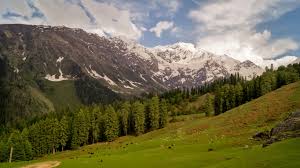
The Ministry of Environment recently declared a 326.69 sq.km. area around the Great Himalayan National Park in Himachal Pradesh as an eco-sensitive zone.
- It is a high altitude national park located in Kullu District of Himachal Pradesh.\
- Nestled in the far Western Himalayas, the park comprises four valleys: the Tirthan Valley, the Sainj Valley, the Parvati Valley, and the Jiwa Nal Valley.
- It is surrounded by steep ridges and permanent snow on its northern, eastern, and southern
- The GHNP is situated adjacent to Pin Valley National Park, Rupi-Bhaba Wildlife Sanctuary, and the Tirthan and Sainj Wildlife Sanctuaries.
- The park is a stunning mix of lush coniferous forests, meadows, glaciers, and mountain peaks.
- It was awarded UNESCO World Heritage Site status in 2014.
- Vegetation grows in well-defined altitude zones, beginning with rather open, subtropical forests at the lowest valley bottoms, gradually grading to mixed forests of horse chestnut, evergreen oak, spruce, and deodar, then to rusty-leaved kharsu oak, spruce, and fir in the upper temperate zone.
- Further up is a subalpine zone of birches, stunted firs, and rhododendron bushes, followed by the higher alpine areas where vegetation is reduced to grasses, herbs, and low shrubs, such as juniper.
- The park is home to 31 mammals, including the elusive snow leopard, the majestic Himalayan brown bear, and the vibrant blue sheep, or bharal.
- Other notable residents include the Himalayan tahr, musk deer, and serow.
- Birdlife in the park is equally diverse, with 209 species recorded, such as the endangered western tragopan and the impressive lammergeiers, alongside the Himalayan griffon vulture and golden eagle.
Allele : Study

A study from South Africa finds that while protective HLA-B alleles once aided survival and reduced HIV transmission before Antiretroviral therapy, widespread ART use has significantly slowed this natural selection-driven genetic shift.
- An allele is a variant form of a gene.
- Some genes have a variety of different forms, which are located at the same position, or genetic locus, on a chromosome.
- Humans are called diploid organisms because they have two alleles at each genetic locus, with one allele inherited from each parent.
- Each pair of alleles represents the genotype of a specific gene.
- Genotypes are described as homozygous if there are two identical alleles at a particular locus and as heterozygous if the two alleles differ.
Alleles contribute to the organism’s phenotype, which is the outward appearance of the organism. - Some alleles are dominant or recessive. When an organism is heterozygous at a specific locus and carries one dominant and one recessive allele, the organism will express the dominant phenotype.
- This genetic diversity allows offspring to inherit traits from both parents while exhibiting unique characteristics.
- For example, in hair color, dark hair is typically dominant over light hair; a child may inherit light hair only if both parents pass on the recessive allele.
- All genetic traits are the result of the interactions of alleles.
- Mutation, crossing over, and environmental conditions selectively change the frequency of phenotypes (and thus their alleles) within a population.
SVAMITVA Scheme: In News
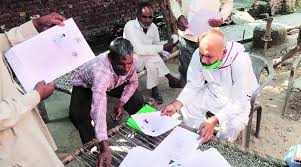
The rural property ownership scheme, SVAMITVA, is emerging as a potent tool for formalisation of residential land, improving the financial standing of gram panchayats, and making a positive impact on the rural economy, says a survey by IIM Ahmedabad.
- The Survey of Villages and Mapping with Improvised Technology in Village Areas (SVAMITVA) is a central sector scheme of the Ministry of Panchayati Raj.
- It was launched nationwide on National Panchayati Raj Day, 24th April 2021, after successful completion of the pilot phase of the scheme (2020-2021) in 9 states.
- It aims to empower rural citizens with property cards, enabling access to credit, dispute resolution, and better planning.
- It provides a ‘Record of Rights’ to village household owners with the issuance of legal ownership cards (property cards/title deeds) to the property owners by mapping land parcels using drone technology.
- The mapping shall be done across the country in a phased manner. It generates high-resolution and accurate maps to confer ownership property rights.
- The scheme seeks to achieve the following objectives:
- To bring financial stability to the citizens in rural India by enabling them to use their property as a financial asset for taking loans and other financial benefits.
- Creation of accurate land records for rural planning.
- Determination of property tax, which would accrue to the Gram Panchayats (GPs) directly in States where it is devolved or else add to the State exchequer.
- Creation of survey infrastructure and GIS maps that can be leveraged by any department for their use.
- To support the preparation of a better-quality Gram Panchayat Development Plan (GPDP) by making use of GIS maps.
- To reduce property-related disputes and legal cases.
- The applicant should have a property in a rural inhabited (Abadi) area.
- Exclusions: Agricultural lands are not covered under this scheme.
- It is implemented by the Survey of India (SoI) with the National Informatics Centre Services Inc. (NICSI) as the technology partner.
- In the States, the Revenue Department/Land Records Department will be the Nodal Department and shall carry out the scheme with the support of the State Panchayati Raj Department.
Udayan Fort:
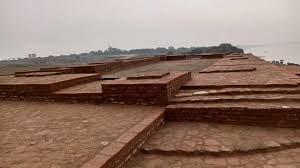
The historic Udyan Fort in Kaushambi, dating back nearly 2,500 years to the era of the ancient Vatsa Mahajanapada, is set to undergo restoration following official approval, officials said recently.
- Udayan Fort, also known as Udayan Kila, is a historical site located in the Kaushambi district of Uttar Pradesh.
- It is located on the banks of the Yamuna River.
- The fort is associated with King Udayana, the ruler of the Vatsa kingdom—one of the 16 Mahajanapadas of ancient India.
- It served as the capital fort of the Vatsa kingdom during the 6th century BCE.
- King Udayana was known for his military strength, diplomatic skills, and cultural patronage.
- According to Buddhist and Jain texts, Udayana had connections with both Lord Buddha and Mahavira, who visited Kaushambi and contributed to its spiritual growth.
- The fort thus played a key role in shaping the early political and religious landscape of the region.
- Architectural Remains and Layout:
- The layout of the fort suggests a well-planned administrative and residential zone, complete with defensive structures and public buildings.
- The defensive structures include thick brick walls, earth ramparts, and bastions rising up to 50 to 60 feet, along with evidence of protective moats or trenches.
- The site is characterized by extensive brickbats scattered across the ground, hinting at the density of buildings that once stood inside the fortress.
- Archaeologists have unearthed pottery, coins, and ancient tools from the area, providing evidence of a thriving settlement.
Spinal Muscular Atrophy:

Persons living with Spinal Muscular Atrophy (SMA), and parents have written to Prime Minister of India seeking urgent intervention to ensure nationwide access to generic Risdiplam under the National Policy for Rare Diseases (NPRD).
- It is a rare and progressive neuromuscular disorder that leads to muscle weakness and can cause life-threatening complications.
- It is a debilitating genetic condition which affects motor neurons that control movement, and leads to progressive muscle weakening.
- Most forms of SMA are caused by mutations of the survival motor neuron 1 gene (SMN1) on the fifth chromosome, resulting in insufficient expression levels of the SMN protein.
- There are five subtypes of SMA- type 0, 1, 2, 3, 4. Healthcare providers classify them based on the age of onset, as well as the severity and life expectancy.
- Symptoms of Spinal Muscular Atrophy:
- Its symptoms vary and may be mild or disabling, but involve a weakness of the muscles that control movement.
- The weakness in SMA tends to be more severe in the muscles that are close to the center of your body than in the muscles farther away from your body’s center.
- Treatment: Unfortunately, there isn’t a cure for SMA. Treatment for SMA mainly seeks to manage symptoms and prevent complications.
India and Ecuador:

India and Ecuador are looking at the possibility of firming up a preferential trade pact to boost economic ties.
- Ecuador is a country located on the northwestern edge of South America.
- It is bordered by Colombia to the north, by Peru to the south and east.
- It shares borders with the Pacific Ocean to the west.
- It consists of 4 geographic regions namely:
- Coastal lowlands and mountain area; the Central Andes Mountainsand its two major chains Cordillera Occidental in the West and the Cordillera Oriental in the east.
- Tropical along coast, becoming cooler inland at higher elevations; tropical in Amazonian jungle lowlands.
- The highest point in Ecuador is Mount Chimborazo.
- Cotopaxi is one of the world’s highest active volcanoes located in the Andes Mountains.
- Rivers: Babahoyo, Chira, Coca, Curaray.
- It mainly consists of Petroleum, fish, timber, hydropower
- India and Ecuador are looking at the possibility of firming up a preferential trade pact to boost economic ties.
Fiber Optic Drones:
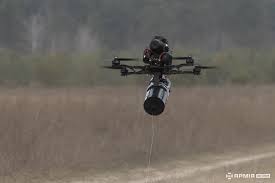
It was observed that the Hezbollah is using Fiber Optic Drones against Israel.
- Fiber optic drones are specialized unmanned aerial vehicles (UAVs) that integrate fiber optic technology.
- Fiber optic drones operate by using optical fiber cables instead of traditional wireless systems.
- These are operated while connected to the ground through a fiber optic tether.
- Unlike regular drones that rely on radio frequencies for communication and batteries for power, these drones receive both data connectivity and often electrical power through the
- Advantages:
- Real-time Data: It operates at near-zero latency transmission, ideal for surveillance, targeting and network maintenance.
- Improved Coverage: These can be operated in GPS-denied, RF-jammed environments like electronic warfare zones.
- High Security: These drones carry optical fiber cables, ensuring the transmission of large data volumes with minimal signal interference.
- Reliable Transmission: These drones provide high-speed, reliable data transmission over vast distances.
- Applications: Military and Drone Warfare, Telecommunications and Infrastructure Maintenance, Emergency and Disaster Response.
Atomic Energy Regulatory Board : In News
The Atomic Energy Regulatory Board (AERB) has issued permission for “major equipment erection” at Kudankulam Nuclear Power Project (KKNPP) Units 5 and 6.
- Atomic Energy Regulatory Board is India’s premier regulatory authority for nuclear and radiation safety.
- It was constituted on November 15, 1983, by the President of India by exercising the powers conferred by the Atomic Energy Act, 1962.
- The regulatory authority of AERB is derived from the rules and notifications promulgated under the Atomic Energy Act and the Environment (Protection) Act, 1986.
- Objective is to ensure the use of ionizing radiation and nuclear energy in India does not cause undue risk to the health of people and the environment.
- Headquarters: Mumbai
- It comprises six members of which two are whole time members including the chairman.
- The other whole-time member is the executive director of the AERB Secretariat who is an ex-officio member of the Board.
- The other four members are eminent experts from various disciplines relevant to the mandate of the board.
- The Board shall be responsible to the Atomic Energy Commission.
- Functions of AERB:
- Develop safety policies in nuclear, radiation and industrial safety areas for facilities under its purview.
- Develop Safety Codes, Guides and Standards for siting, design, construction, commissioning, operation and decommissioning of different types of nuclear and radiation facilities.
- Grant consents for siting, construction, commissioning, operation and decommissioning, after an appropriate safety review and assessment, for establishment of nuclear and radiation facilities.
- It shall have authority to administer the provisions of the Factories Act, 1948, the industrial safety for the units of Department of Atomic Energy (DAE).
India Allows 100% FDI In Insurance Sector Under Automatic Route:
India had allowed the 100% foreign direct investment in the insurance sector under the automatic route. The central government has notified the new amendments to the Foreign Exchange Management (Non-debt Instruments) Rules, 2019 on the 2nd May, 2026. After this move it is expected that the global investors will strengthen the India’s insurance ecosystem and will improve the services. As the investment norms are liberalized the government has ensured the strict regulatory oversight and compliance to maintain the transparency and stability in the sector.The recent amendment by the Finance Ministry of India have marked the important step shift the country’s investment policy. Under the new revised rules the foreign investors can now hold up to 100% equity in the Indian insurance companies and intermediaries via the automatic route which manes that the prior government approval is not required.This reform is part of the India’s broader strategy to make the country’s financial sector more open, competitive and globally integrated.By easing the investment restrictions now the government aims to bring in more capital and expertise into the insurance sector of the India.
India’s Thomas Cup 2026:
France beat India 3-0 to reach maiden Thomas Cup final; India take bronze. India’s campaign in the Thomas Cup 2026 comes to an end as they have suffered the 0-3 defeat against the France in the semifinals of the tournament. With this loss team India have to settle with the bronze medal for this edition. Lakshya Sen injury have proved costly to the Indian team as they are not able to win a single match in the semis. But on the other side France has created history by entering to their first ever Thomas Cup final.
Reserve Bank of India Says 98.47% of ₹2,000 Notes Returned to Banking System:
The Reserve Bank of India have announced that 98.47% of ₹2,000 Indian currency notes have been returned to the central banking system. ₹2,000 denominations notes were withdraw by the RBI three years ago. It marks the significant milestone in the India’s currency management process and it reflects the smooth transition from the valid notes.The RBI have announced the withdrawal of ₹2,000 banknotes from circulation on 19th May, 2023. This decision comes from the central bank of India for its currency management strategy.At that time the total circulation of thee valid notes is approximately around ₹3.56 lakh crore.Unlike the demonetization this move did not invalidate the notes but it is aims to gradually reduce their circulation.
AI in National Security Bureaucracy:
In the context of national security, AI integration refers to the use of machine learning, large language models (LLMs), and predictive analytics to manage the cognitive load of statecraft.It involves moving beyond simple automation to creating second brains that can search institutional memory, draft complex legal communiqués, and simulate geopolitical crisis outcomes to assist policymakers.