
India Hosts Kimberley Process Intersessional Meeting 2026:
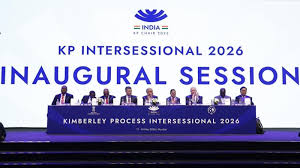
India, currently serving as the Chair of the Kimberley Process (KP) for 2026, hosted the KP Intersessional Meeting in Mumbai to fortify the global regulatory framework and ensure the integrity of the natural diamond supply chain.
- The meeting focuses on the Kimberley Process Certification Scheme (KPCS), an international initiative established under UN General Assembly Resolution 55/56 (2000) to prevent “conflict diamonds” from entering the legitimate global market.
- India is one of the founding members of the KPCS.
- India’s Strategic Theme: India’s Chairship theme for 2026 focuses on the 3Cs – credibility, compliance and consumer confidence – to enhance the transparency and sustainability of the natural diamond sector.
- Economic Significance: The event underscores India’s position as a global leader in diamond cutting and polishing, with the country processing nearly 90% of the world’s diamonds and accounting for around 75% of global diamond turnover by value.
- Although India is not a major producer, it imports rough diamonds mainly from the UAE, Belgium and Russia, with major industry hubs in Surat and Mumbai.
- India is also emerging as a major producer of Lab-Grown Diamonds (LGDs), contributing over 15% of global output in 2023.
Kimberley Process:
- The KP is an international forum launched in 2000 by Southern African countries to regulate the trade in rough diamonds.
- It aims to prevent the trade of conflict diamonds, which are diamonds used by rebel groups to finance armed conflicts against legitimate governments.
- KP is not a formal international organisation or legally binding treaty. It operates through burden-sharing contributions from participating countries with support from industry and civil society.
- Its rules are implemented through national laws rather than international legal obligations.
- The KP has 60 participants representing 86 countries (with the European Union acting as a single bloc), incorporating industry observers like the World Diamond Council and the Civil Society Coalition.
- The KP members account for approximately 99.8% of global rough diamond production.
- As the Chair, India aims to modernize the process to remain effective in a shifting geopolitical environment, ensuring that natural diamonds are recognized as a sustainable and responsibly sourced product.



