
Today’s Current Affairs: 13th May 2026 for UPSC IAS exams, State PSC exams, SSC CGL, State SSC, RRB, Railways, Banking Exam & IBPS, etc
Table of Contents
Agalega Islands:
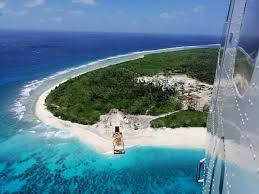
As strategic competition in the Indian Ocean intensifies, Agaléga is no longer being seen as merely a remote island territory.
- Agalega Islands is a two-island dependency of Mauritius, in the western Indian Ocean.
- It comprises two low-lying coral islands: North Island, the main inhabited island, and South Island.
- The two islands are connected by a natural sandbank that can be crossed on foot during low tide.
- The archipelago’s economy is mostly reliant on the exportation of coconut oil.
- Agalega is strategically important because of its location in the Indian Ocean sea lanes.
- It lies about 3,400 kilometers southwest of India’s southern tip.
- India, under a bilateral agreement with Mauritius, has constructed a 3,000-meter-long airstrip and deep-sea jetty on Agalega.
- The island is now effectively being transformed into a logistics and surveillance base that gives India an unprecedented maritime reach across the southern and western Indian Ocean.
- Its location bridges India’s western command with Africa, linking to the Andaman and Nicobar Islands in the east.
Block-Level Monsoon Forecasting System:
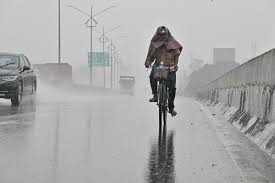
IMD recently launched India’s first AI-enabled block-level monsoon forecasting system to deliver hyperlocal rainfall and onset predictions weeks in advance.
- It is India’s first artificial intelligence (AI)-enabled monsoon advance forecasting model launched by the India Meteorological Department (IMD).
- It was developed in collaboration with the Indian Institute of Tropical Meteorology (IITM), Pune, and the National Centre for Medium Range Weather Forecasting (NCMRWF).
- It aims to deliver hyperlocal, impact-based, and AI-driven weather services across the country.
- It combines existing numerical weather prediction models with AI to generate probabilistic forecasts of monsoon progression every Wednesday up to four weeks in advance, with a model error margin of around four days.
- The system will base its assessment on the onset of a continuous five-day rainfall spell and the absence of prolonged dry spells over the subsequent 30 days.
- It will disseminate alerts through mobile applications, SMS, and local agricultural extension networks.
- The forecasting system currently covers 3,196 blocks across 15 states and one Union Territory, largely concentrated in rainfed regions where monsoon onset plays a critical role in agriculture and water management.
- The coverage will gradually be expanded to other parts of the country.
Bharat Maritime Insurance Pool:

The Department of Financial Services (DFS) formally inaugurated India’s domestic insurance pool, that is, the Bharat Maritime Insurance Pool (BMIP).
- It was launched by the Central Government as a $1.5 billion domestic insurance mechanism backed by a sovereign guarantee of $1.4 billion.
- BMIP has been created to ensure uninterrupted maritime insurance coverage for Indian-flagged or Indian-controlled vessels, as well as ships operating to and from India.
- It will provide coverage for a wide range of maritime risks, including Hull and Machinery, Cargo, Protection and Indemnity (P&I), and War Risk insurance.
- Policies will be issued by domestic insurers that are Pool members, using the combined underwriting capacity of the Pool.
- These risks would then be reinsured by all Pool members, in proportion to their capacity commitment in the Pool.
- Under the structure, claims up to USD 100 million will be met through pooled capacity, while higher claims will be backed by the sovereign guarantee after exhausting reserves and reinsurance arrangements.
- A governing body has been constituted to oversee the functioning of the pool, including approvals regarding the invocation of the sovereign guarantee.
- In addition, an Underwriting Committee (UC) responsible for ensuring prudent, consistent, and technically sound underwriting of risks ceded to the pool has been formed.
- The General Insurance Corporation of India (GIC Re) will act as the pool administrator.
Binsar Wildlife Sanctuary:

The forest department has begun preparations for a scientific wildlife census in Binsar Wildlife Sanctuary to assess the population and movement of key species, including tigers, leopards, bears, deer, and foxes.
- Binsar Wildlife Sanctuary is situated in the Kumaon region of the Himalayas, in the Almora district of Uttarakhand.
- From Zero Point, also known as Jhandi Dhaar, which is the highest point in the sanctuary, the Himalayan peaks of Kedarnath, Chaukhamba, Shivling, Trisul, and Nanda Devi, are visible among many others.
- Apart from protecting wildlife, the sanctuary was established with an aim to conserve the broadleaf oak forests, mainly located in the Central Himalayan region.
- Binsar was the erstwhile summer capital of the Chand Dynasty rulers, who ruled Kumaon from the 7th to 18th century AD.
- It was later converted to a summer retreat for British bureaucrats.
- It is named after the Bineshwar Mahadev temple, a 16th-century temple dedicated to Lord Shiva.
- It is covered by oak and rhododendron forests at higher altitudes and by chir pine forests at a lower height.
- It is home to Barking Deer, Himalayan bear, leopard, fox, musk deer, langur, porcupine, flying squirrel, chital, jungle cat, etc.
- It has been declared an Important Bird Area by Bird Life International, as there are more than 200 species of birds in the sanctuary, including Fork tail, Blackbirds, Laughing Thrush, Pheasant, Nuthatches, Parakeets, and Monal.
National Technology Day 2026:

The Prime Minister recently greeted people on National Technology Day.
- It is celebrated in India on May 11 every year, commemorating the successful nuclear tests conducted at Pokhran in 1998.
- This day also acknowledges the country’s scientific achievements and technological advancements, honouring the contributions of scientists, engineers, and innovators.
- On May 11, 1998, India marked a significant milestone with successful nuclear tests at the Pokhran range in Rajasthan, led by Dr. A.P.J. Abdul Kalam.
- India conducted three underground nuclear tests on May 11, followed by two additional tests on May 13.
- These tests, known as Operation Shakti, established India as the sixth country to join the ‘Nuclear Club’.
- On the same day, India performed a successful test firing of the Trishul Missile (a surface-to-air short-range missile) and had test-flown the first indigenous aircraft, ‘Hansa – 3’.
- The day was officially declared by then Prime Minister Atal Bihari Vajpayee in 1998, and since 1999, it has been celebrated as NTD.
- Every year, the Technology Development Board of India (a statutory body under the Ministry of Science and Technology) celebrates the day by awarding individuals with the National Award for their contribution to science and technology in India.
- NTD 2026 Theme: ‘Responsible Innovation for Inclusive Growth’
Melanoseris Pendryi:
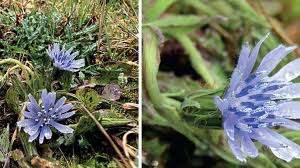
A team of botanists has discovered a new plant species in the Sikkim Himalayas named Melanoseris pendryi.
- Melanoseris Pendryi is a new plant species found at altitudes over 4,000m in Sikkim.
- Melanoseris is a genus of flowering plants belonging to the family Asteraceae.
- Its native range is Iran to Southern Central China and Northern Central Indo-China, Java.
- Features of Melanoseris Pendryi:
- It has uniquely hairy purple petals high in the alpine grasslands of India.
- It grows close to the ground amongst cushion-like shrubs, the plant relies on a fleshy, branching root system to survive the harsh alpine conditions.
- Researchers have suggested it be classified as Critically Endangered due to habitat pressure from tourism and grazing.
National Florence Nightingale Award 2026:
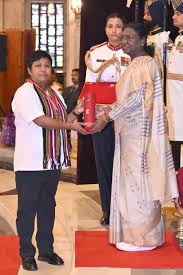
The President of India conferred the National Florence Nightingale Awards for the year 2026
- It was instituted by the Ministry of Health and Family Welfare, Government of India in the year 1973.
- It is a prestigious award given to outstanding nursing personnel employed in Central, State/UTs and Voluntary Organizations.
- It honours the dedication, compassion, and resilience of the nursing profession.
- These prestigious awards are presented to Registered Nurses, Midwives, Auxiliary Nurse Midwives, and Lady Health Visitors serving across Central and State Governments, Union Territories, and voluntary organizations.
- Award: Each award includes a Certificate of Merit, a cash prize of ₹1,00,000, and a medal.
- Florence Nightingale was an English social reformer, statistician and the founder of modern nursing.
- Nightingale came to prominence while serving as a manager and trainer of nurses during the Crimean War, in which she organised care for wounded soldiers at Constantinople.
- Her efforts to formalize nursing education led her to establish the first scientifically based nursing school—the Nightingale School of Nursing, at Thomas’ Hospital in London.
Indian Ocean Rim Association: 10th edition
The 10th edition of the Indian Ocean Dialogue was organised by the Ministry of External Affairs in collaboration with the Indian Ocean Rim Association (IORA) Secretariat.
- It was established in 1997 as an intergovernmental organisation of States on the rim of the Indian Ocean.
- It was formerly known as the Indian Ocean Rim Initiative and the Indian Ocean Rim Association for Regional Cooperation (IOR-ARC).
- Objectives of IORA:
- To promote sustainable growth and balanced development of the region and member states.
- To focus on those areas of economic cooperation which provide maximum opportunities for development, shared interest and mutual benefits.
- To promote liberalisation, remove impediments and lower barriers towards a freer and enhanced flow of goods, services and investment within the Indian Ocean Rim.
- Member countries:
- It has members from Africa, West Asia, South Asia, Southeast Asia, Europe and Oceania.
- It currently comprises 23 member states and 12 dialogue partners.
- Asia: India, Bangladesh, Indonesia, Iran, Malaysia, Maldives, Oman, Singapore, Sri Lanka, Thailand, United Arab Emirates and Yemen.
- Africa: Kenya, Madagascar, Mozambique, Somalia, South Africa, Tanzania, Comoros, Mauritius, Seychelles.
- Oceania:
- Europe: France
- Dialogue Partners: China, Egypt, the European Union, Germany, Italy, Japan, Russia, Saudi Arabia, South Korea, Türkiye, the United Kingdom, and the United States.
- Six priority areas of IORA: Trade and Investment, Maritime Safety and Security, Fisheries Management, Disaster Risk Management and Blue Economy.
- Governance of Indian Ocean Rim Association
- Its apex body is the Council of Foreign Ministers (COM) which meets annually.
- The secretariat is based in Ebène Mauritius and is overseen by a secretary-general who is appointed for a three-year period.
Lavan Island:
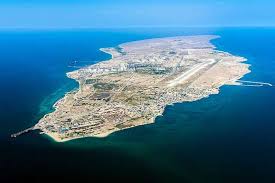
The UAE secretly carried out military strikes on Iran during the recent Middle East conflict, including an alleged attack on a refinery at Iran’s Lavan Island, a report claimed.
- It is a strategic Iranian island located in the Persian Gulf, near the Strait of Hormuz.
- Lavan Island is also known as the Hidden Pearl Island, which has long been home to pearl fishing.
- However, now the main occupation of the people of Lavan Port is working in the oil and fishing industry.
- It is now one of the most important oil export terminals in Iran.
- It is the operating base for Iran’s three offshore fields, namely, Salman, Resalat, and Reshadat.
- Salman field, 144 km south of the Lavan Island, has one of the largest offshore complexes in the Persian Gulf.
- The island features infrastructure such as process plants, storage and export systems, utility and maintenance facilities, a storehouse, and a loading jetty.
- Produced oil from offshore fields is transferred to Lavan for final processing.
National Social Assistance Programme:
Recent assessment of the National Social Assistance Programme (NSAP) has found that the Centre’s fixed monthly pension support for elderly citizens, widows, and persons with disabilities has sharply declined in real value over the last decade due to inflation.
- It a fully funded Centrally Sponsored Scheme launched in 1995.
- It extends financial support to individuals living below poverty line (BPL).
- Nodal Ministry: It is implemented by the Ministry of Rural Development.
- It is a key social welfare scheme that provides pensions to vulnerable groups, including the elderly, widows, and persons with disabilities.
- Currently, NSAP covers five schemes:
- Indira Gandhi National Old Age Pension Scheme (IGNOAPS): Under IGNOAPS, the Centre provides financial assistance of Rs 200 per month to individuals aged 60–79 years and Rs 500 per month to those aged 80 and above.
- Indira Gandhi National Widow Pension Scheme (IGNWPS): Under IGNWPS, the Centre provides Rs 300 per month to widows aged 40–79 years and Rs 500 to those 80 and above.
- Indira Gandhi National Disability Pension Scheme (IGNDPS): Financial assistance of Rs 300 per month is provided to individuals with severe or multiple disabilities aged 18–79, and Rs 500 to those aged 80 years and above.
- National Family Benefit Scheme (NFBS): Under this the amount of one-time financial assistance is fixed at Rs 20,000. This is provided to families after the death of a primary breadwinner aged 18 to 59.
- Annapurna Scheme: Under this component 10 kg of food grains per month, free of cost, are provided to those senior citizens who, though eligible, were not receiving old-age pension.
Judicial Infrastructure Advisory Committee:
Chief Justice of India Surya Kant has constituted a high-powered ‘Judicial Infrastructure Advisory Committee’ headed by Supreme Court Justice Aravind Kumar.The Judicial Infrastructure Advisory Committee is a high-level expert panel formed to overhaul the physical and digital landscape of the Indian judiciary.It comprises senior judges from the Supreme Court and various High Courts, along with top administrative and technical officials.Established By: Supreme Court of India. The primary aim of the committee is to address chronic infrastructural gaps in the Indian court system by creating a comprehensive roadmap for the 21st century.It seeks to ensure substantial financial backing from the Government of India to transform courts into modern, tech-enabled, and litigant-friendly spaces.
AI-enabled weather forecasting:
Union Minister launched two path-breaking AI-enabled weather forecasting products developed by the Ministry of Earth Sciences.These systems are designed to provide hyper-local, impact-based monsoon forecasts to support 16 states and over 3,000 sub-districts.AI-Enabled Monsoon Forecasting Platforms These are advanced, data-driven forecasting systems that leverage Artificial Intelligence (AI) and Machine Learning (ML) to provide granular, probabilistic weather information.They shift India’s meteorological services from conventional broad-scale predictions to site-specific, impact-based decision support forecasting.



