
Today’s Current Affairs: 20th May 2026 for UPSC IAS exams, State PSC exams, SSC CGL, State SSC, RRB, Railways, Banking Exam & IBPS, etc
Table of Contents
Make in India in the Defense Sector:

Amid intense disruptions in global energy and military supply chains caused by the escalating West Asian conflict, security analysts released an exhaustive evaluation of the Make in India initiative in defense.
- Make in India in the Defense Sector launched as part of a broader national manufacturing push, Make in India in Defence is a strategic policy framework designed to transform India from a top global arms importer into a self-reliant defense manufacturing hub (Aatmanirbharta).
- Governed by the Defence Acquisition Procedure (DAP), the policy aims to build an independent Military-Industrial Complex (MIC) by cutting import dependencies, standardizing procurement, and integrating domestic private firms into global supply chains.
India’s Defense Sector:
- The Ministry of Defence was allocated a record-shattering ₹7.85 lakh crore ($83 billion) for FY2026–27, representing 14.67% of total central government expenditure.
- Out of the massive ₹2.19 lakh crore capital outlay, the government has earmarked a record 75% (₹1.39 lakh crore) exclusively for procurement from domestic industries.
- India’s defense exports hit an all-time high of ₹38,424 crore in FY2025–26, marking a staggering 62.66% year-on-year growth and a 31-fold jump over the past decade.
- Despite sweeping liberalization reforms, Defense Public Sector Undertakings (DPSUs) still control over 70% of total domestic production, creating an un-balanced theatre for private competitors.
JANANI Platform Launched for Maternal & Child Healthcare:

The Ministry of Health and Family Welfare has launched the JANANI (Journey of Antenatal, Natal and Neonatal Integrated Care) platform to improve maternal and child healthcare services through digital integration and monitoring.
- JANANI is a service-oriented digital platform designed to maintain longitudinal health records of women during their reproductive age. It has been developed as an upgraded version of the existing RCH portal.
- It tracks the continuum of care, including antenatal care, delivery, postnatal care, newborn care, and family planning, ensuring seamless monitoring, timely interventions and continuity of care.
- JANANI introduces QR-enabled digital Mother and Child Health cards, automated alerts for high-risk pregnancies, real-time dashboards for supervisory review and due-list generation.
- It enables beneficiary registration through unique identifiers such as ABHA, Aadhaar, through OTP and biometric authentication, and mobile number, ensuring pan-India portability and seamless tracking of beneficiaries.
- It is designed to integrate with U-WIN and POSHAN, while also supporting self-registration through web and mobile platforms, improving accessibility, especially for migratory populations.
- The platform has registered 1.34 crore beneficiaries, including over 30 lakh pregnant women, generated 30 lakh MCH cards, and completed over 1 lakh biometric verifications.
- JANANI strengthens continuity of care and real-time monitoring, enhances service delivery and accountability, and contributes to improved maternal and child health outcomes through digital health governance.
Decentralized Bioenergy:
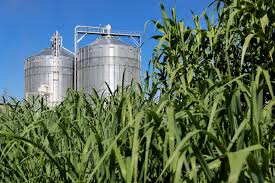
Amid prolonged disruptions in global energy corridors, India’s Ministry of New and Renewable Energy (MNRE) prioritized the deployment of decentralized bioenergy architectures.
- Bioenergy is a form of renewable energy derived from biological sources, known as biomass, which includes agricultural residues, organic municipal solid waste, animal manure, sewage sludge, and food waste. Through advanced thermal, chemical, and biological conversion pathways, this raw organic material is processed into versatile energy carriers such as solid pellets, liquid biofuels, or gaseous fuels (biogas and syngas).
- Types of Bioenergy Conversion Systems
- To achieve maximum fuel efficiency, decentralized plants split waste management into two core scientific pathways based on the moisture profile of the feedstock:
- Gasification (Thermal Pathway forDry Waste)
- The Feedstock: Designed for dry organic matter like paddy straw, cotton stalks, coconut husks, and woody biomass.
- The Process: Inside a closed gasifier, the dry matter undergoes a multi-stage thermochemical breakdown (drying, pyrolysis, partial oxidation, and reduction) at extreme temperatures of 800–1,000°C with a strictly limited oxygen supply.
- The Output: Yields Syngas (Synthesis Gas)—a versatile mixture of carbon monoxide and hydrogen—alongside Biochar, a carbon-dense byproduct utilized to restore soil fertility and lock away carbon emissions.
- Anaerobic Digestion (Biological Pathway for Wet Waste)
- The Feedstock: Optimized for high-moisture waste streams like municipal kitchen waste, dairy manure, industrial effluents, and urban sewage sludge.
- The Process: Specialized strains of anaerobic microorganisms break down the complex organic polymers inside a sealed biodigester in the total absence of molecular oxygen.
- The Output: Yields Biogas (predominantly methane and carbon dioxide), which can be scrubbed into 90%+ pure Compressed Biogas (CBG), alongside a nutrient-rich liquid digestate that acts as an excellent organic fertilizer.
United Nations Forum on Forests:

The Global Forest Goals Report 2026 was launched during the 21st session of the United Nations Forum on Forests.
- It is an intergovernmental body established in 2000 by the UN Economic and Social Council (ECOSOC)
- Its objective is to promote sustainable forest management and conservation worldwide.
- Its mandate includes:
- Strengthening long-term political commitment to forests;
- Facilitating policy dialogue among countries and stakeholders;
- Promoting international cooperation, including financial and technical support; and
- Considering future options for international forest policy, including legal frameworks.
- The forum holds annual sessions at the UN Headquarters, alternating between technical discussions (odd years) and policy-level dialogues (even years).
- It is composed of all United Nations Member Statesand States members of specialised agencies, participating on a full and equal basis.
- India is a founding member of the UNFF, and continues to play a proactive role in shaping forest-related global policy.
- It has established the Global Forest Financing Facilitation Network (GFFFN) to facilitate access to and effective use of funding for forests, to share data and best practices.
India Export Target:

Union Commerce and Industry Minister announced India’s target of achieving $1 trillion exports in 2026 and $2 trillion exports within the next five years.
- The India Export Target is a national export expansion strategy aimed at transforming India into a globally competitive manufacturing and services hub through export-led growth, domestic industrial strengthening, and import substitution.
- Target:
- $1 trillion exports in 2026.
- $2 trillion exports within the next five years.
- Current exports have already reached nearly $863 billion, around 5% higher than the previous year despite global economic disruptions.
Key Features:
- Free Trade Agreements (FTAs) Expansion: India is pursuing FTAs with nearly 38 developed countries to secure preferential market access and lower import duties for Indian goods globally.
- Focus on Import Substitution & Swadeshi: The government has urged industries to identify heavily imported products and expand domestic manufacturing capacity to reduce foreign dependence.
- Export-Oriented Manufacturing Push: Emphasis is being placed on improving quality standards, productivity, packaging, value addition, and scaling MSMEs to make Indian products globally competitive.
SHE-MART Initiative:
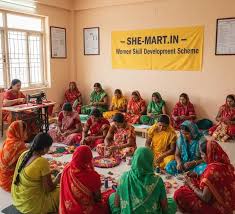
The Ministry of Rural Development (MoRD) convened a high-level national consultation in Bhubaneswar, Odisha, to finalize the operational guidelines for the newly launched SHE-MART initiative.
- SHE-MART (Self Help Entrepreneurs – Marketing Avenues for Rural Transformation) is a revolutionary socio-economic initiative designed to build women-led rural marketing and supply chain aggregation
- Moving beyond isolated micro-credit models, it transitions women from loan-dependent, subsistence-level earners into formal enterprise and retail owners.
- Announced In: Union Budget 2026–27.
- Nodal Ministry: Ministry of Rural Development (MoRD), implemented via the Deendayal Antyodaya Yojana–National Rural Livelihoods Mission (DAY-NRLM).
- Aim:
- The primary aim is to systematically bridge the critical gap of market access for rural women.
- It transforms the grassroots livelihood architecture by scaling up production, eliminating exploitative middlemen, creating high-visibility regional brands, and supporting the national goal of creating three crore additional Lakhpati Didis by 2029.
The Privilege Notice:
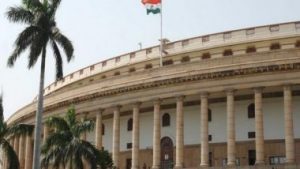
Congress Chief Whip in the Rajya Sabha moved a formal privilege notice against Union Education Minister Dharmendra Pradhan.
- A Privilege Notice is a specific institutional mechanism available to Members of Parliament (MPs) to raise a question of privilege when they believe an individual, minister, or organization has breached the defined rights, immunities, and privileges of the House, its committees, or its members.
- If an individual disregards or insults these core protections, it is treated as a Breach of Privilege or Contempt of the House.
- The fundamental aim of a privilege notice is to protect the freedom, authority, dignity, and autonomy of Parliament from external interference, misrepresentation, or derogatory attacks.
- It acts as a shield to ensure that parliamentarians can execute their legislative duties—and that parliamentary committees can function as mini-Parliaments—without fear, favor, or institutional denigration.
- An MP gives a written notice to the presiding officer (the Rajya Sabha Chairman under Rule 187 or the Lok Sabha Speaker under Rule 222).
- The presiding officer examines the notice to see if it carries a prima facie (at first sight) case of breach of privilege.
- The presiding officer can either rule on the matter directly from the Chair or, more commonly, refer the question to the Committee on Privileges for an in-depth investigation.
- The committee functions like a quasi-judicial body—examining documents, summoning the accused, and recording evidence—before tabling a final recommendation report.
- The House debates the report and votes on the penalty, which can range from a formal warning or reprimand to suspension or imprisonment for extreme contempt.
Amit Shah Launches AI-Powered Dial 112 Emergency Response Vehicles in Chhattisgarh:
Respectable Union Home Minister Amit Shah has launched the major public safety initiative by flagging off a new fleet of advanced Dial 112 emergency response vehicles and the modern forensic mobile vans in Raipur, Chhattisgarh. This upgraded system now expands from the 16 districts to all 33 districts of the state.A major upgrade has come to the Chhattisgarh’s emergency response infrastructure.Union Home Minister Amit Shah has launched the modern emergency vehicle fleet at a state level event in Raipur.
Indian Air Force Officer Squadron Leader Saanya Becomes First Woman Cat-A Flying Instructor:
The Indian Air Force has marked the historic milestone as Squadron Leader Saanya has becomethe first women in the Indian Air Force to earn the Cat-A Qualified Flying Instructor (QFI) qualification. It showcases the growing role of the women in the India’s defense forces.The Indian Air Force has officially announced the achievement on 18th of May, 2026. On X post (Formerly Twitter) IAF has described the Squadron Leader Saanya’s success as a proud milestone.The force said her achievement reflects the excellence, dedication and relentless pursuit of the professional standards.The Cat-A Qualified Flying Instructor (QFI) qualification is one of the most respected flying instructor certifications in the Indian Air Force.It is awarded to those pilots who demonstrates the exceptional instructional ability, flying expertise and professional competence.Also Qualified Flying Instructors plays the critical role in training future military pilots.The Cat-A category represents the highest standards in the flying instruction.
Lok Sabha Speaker Om Birla Constitutes Committee on Empowerment of Women:
Lok Sabha Speaker Shri. Om Birla has constituted the Committee on Empowerment of Women. This committee focused on focused on women centric policy oversight and the welfare initiatives. This newly formed committee will be chaired by the BJP MP Dr Daggubati Purandeswari.The Committee on Empowerment of Women has officially been constituted by the Lok Sabha Speaker.This parliamentary panel plays the important role in examining issues related to women’s welfare, development and empowerment.Their main functions to reviewing government policies and implementation concerning women.The formation of the committee this comes as part of regular parliamentary institutional processes.Senior BJP leader Dr Daggubati Purandeswari has been appointed as the chairperson of the committee.She is the Member of Parliament from the Lok Sabha.Purandeswari is an experienced parliamentarian with and had a long public and political career.
Amit Shah Chairs Central Zonal Council Meeting in Jagdalpur:
Union Home Minister Amit Shah is chairing the Central Zonal Council meeting in the Jagdalpur, Chhattisgarh. This zonal council meeting brings together the Chief Ministers and senior officials from multiple states. This high-level meeting comes at that time when inter-state coordination, security issues and the regional development remain important priorities.
- The important meeting is taking place in the Jagdalpur at the divisional headquarters of Bastar.
- This is the key administrative and strategic location in Chhattisgarh.
- The meeting is being chaired by Union Home Minister Amit Shah.
- Also the senior leadership from multiple states is participating.
- The meeting will focuses on to coordination between states and the Centre.
Uttarakhand Plans ₹450 Crore Ropeway Between Rishikesh and Neelkanth Mahadev Temple:
The state government of Uttarakhand will built the ropeway between Rishikesh and Neelkanth Mahadev Temple to cut the travel time for the devotees. The proposed project estimated around ₹450 crore aims it aims to reduce the current journey from almost three hours to just 15 minutes.The upcoming ropeway project between Rishikesh and Neelkanth Mahadev Temple us expected to become Uttarakhand’s major religious tourism infrastructure upgradesThe proposed alignment will begin from the Tapovan area in Rishikesh and extend towards the revered Neelkanth Mahadev Temple which is a major pilgrimage destination dedicated to Lord Shiva.As of now, the pilgrims have limited options. They either have to take a winding 30 km mountain road route which often becomes congested during the peak pilgrimage seasons or have to trek approximately 9 km through forest terrain.
Delhi Airport is set to launch its first automated air train by 2029:
Indira Gandhi International Airport of the New Delhi now preparing for one of the its biggest passenger convenience upgrades for the future. After a lot of years discussion, Delhi International Airport Limited (DIAL) has confirmed that the airport will get its first automated air train system and it is designed to make the transfers between the terminals much faster and easier.Delhi Airport operated by DIAL and managed by GMR Airports and they have decided to directly fund the long awaited Automated People Mover (APM) project after the earlier attempt to execute it through a concessionaire model failed.The airport’s original plan was to invite a private third-party operator to build and manage the project while recovering the investment through advertising and commercial earnings.However the plan received only one bidder and it could not get move forward.Now, DIAL will fund the project through its own internal resources and will recover costs through airport tariffs and other revenue channels.
Google and Blackstone Launch $5 Billion AI Cloud Venture to Challenge Nvidia’s Dominance:
Google and Blackstone have announced the new artificial intelligence cloud infrastructure company that will provide the compute as a service and it allows the businesses to rent the powerful AI computing resources instead of building the expensive infrastructure themselves.The new venture will use the Google’s proprietary TPU chips with the specialized processors designed specifically for machine learning and AI workloads.Blackstone is investing around the $5 billion into the project, making it one of the biggest AI infrastructure investment deals in recent times.The first phase of the venture is expected to involve around 500 megawatts of data center capacity and highlighting the massive scale of the project.
DRDO Successfully Tests Indigenous ULPGM-V3 Missile to Boost India’s Drone Warfare Capabilities:
The Defense Research and Development Organization (DRDO) has successfully completed has successfully conducted the development trials of the ULPGM-V3. It is an indigenous UAV-launched precision-guided missile in both air to ground and air to air modes. This will strengthens the India’s drone warfare capabilities and push the country towards the self reliance in the defense manufacturing.DRDO has successfully carried out the final development trials of the Unmanned Aerial Vehicle Launched Precision Guided Missile (ULPGM)-V3.The tests were conducted at the DRDO test range near the Kurnool.This trials validated the missile’s operational effectiveness in both offensive ground attack and aerial engagement roles.This marks the important breakthrough for the India’s indigenous precision weapon systems.The ULPGM-V3 is an indigenous precision guided missile which is designed for the launch from unmanned aerial vehicles.It has primarily been developed for the anti-tank warfare in air-to-ground combat scenarios.The missile has also demonstrated effectiveness against the enemy drones, helicopters, and airborne threats in air-to-air mode.This dual-role capability makes it flexible modern battlefield weapon.
Russian President to Attend BRICS Summit 2026 in New Delhi in September:
Honorable Russian President Vladimir Putin will travel to the India to attend the BRICS Summit in New Delhi. This confirmation came for the Kremlin and President Putin will visit in month of September 2026. With this news the high profile visit to get the global attention as the BRICS nations will discuss the trade, geopolitics, strategic cooperation.The Kremlin has confirmed that Russian President Vladimir Putin will participate in the upcoming BRICS Summit in the National capital New Delhi.The summit is also scheduled to be held in the September 2026, making it one of the most significant international diplomatic gatherings which will be hosted by India this year.Putin’s visit will be closely watched by worldwide amid the evolving global geopolitical equations.
ICRA Cuts India’s FY27 GDP Growth Forecast to 6.2% Amid Rising Crude Oil Prices:
ICRA has lowered India’s FY27 GDP growth forecast to 6.2% from 6.5%, citing higher crude oil prices due to the West Asia crisis. The revision raises concerns over inflation, exports, industrial growth, and the broader economic outlook.Domestic rating agency ICRA has lowered the India’s FY27 GDP growth forecast to 6.2% which is down from the earlier forecast of 6.5%. This downgrade comes as rising the crude oil prices, ongoing tensions in West Asia, also pressure on Indian Rupee, rising threat of inflation and weakening of exports.
ICRA Cuts India’s FY27 GDP Growth Forecast:
- Domestic rating agency ICRA has revised the India’s GDP growth estimate for financial year of 2026-–27 (FY27) to 6.2% and cited the sustained high crude oil prices.
- Earlier, this agency had projected a stronger 6.5% growth.
- According to ICRA Chief Economist Aditi Nayar, the key reason behind the downgrade is the sharp increase in the expected oil prices.
- ICRA now assumes the average crude oil prices of USD 95 per barrel in FY27 which compared with its earlier estimate of USD 85 per barrel.
- This shift reflects the concerns over prolonged geopolitical uncertainty in West Asia, which continues to keep the global energy prices elevated.



