
Today’s Current Affairs: 17th jun 2026 for UPSC IAS exams, State PSC exams, SSC CGL, State SSC, RRB, Railways, Banking Exam & IBPS, etc
Table of Contents
Exercise Pitch Black 2026:
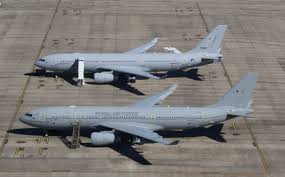
India will participate in Australia’s Exercise Pitch Black 2026 from July 20 to August 7 alongside 18 other nations.
- Exercise Pitch Black is a biennial and multinational exercise hosted by the Royal Australian Air Force (RAAF).
- It is the RAAF’s flagship international flying exercise.
- The name ‘Pitch Black’ was derived from the emphasis on nighttime flying over large unpopulated areas.
- 2026 Edition:
- It will run with operations based out of RAAF Bases Darwin and Tindal in the Northern Territory, as well as RAAF Base Amberley in Queensland.
- It features a massive assembly of global air forces, providing an unparalleled platform for interoperability.
- The exercise focuses on highly complex aerial manoeuvres, including offensive counter-air operations, air defence tracking, and tactical coordination between completely different styles of aircraft and communication systems.
- The IAF has dispatched a highly capable multi-role task force to the exercise, ensuring robust participation across multiple operational spectrum.
- For the IAF, training alongside advanced air assets from nations like the US, UK, Australia, France, and regional partners offers crucial exposure to contemporary air warfare tactics, electronic warfare defence, and modern network-centric operations.
- The IAF has previously participated in the 2018, 2022, and 2024 editions of this exercise.
Hamataliwa mawlyngot:
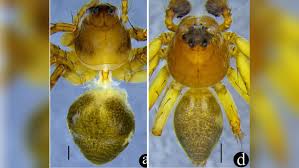
Researchers recently identified a new species of spider named Hamataliwa mawlyngot from Meghalaya’s East Khasi Hills.
- Hamataliwa mawlyngot is a new species of lynx spider.
- It was discovered from a hillside shrub in Meghalaya’s East Khasi Hills.
- Researchers found male and female specimens living on Molucca brambles growing along the slopes of the hills.
- It was named after Mawlyngot Village, where it was discovered.
- It marks the first recorded presence of the lynx spider genus Hamataliwa in Meghalaya.
- Lynx spiders are agile hunters that do not build webs to trap prey.
- Instead, they actively stalk insects among leaves and shrubs, relying on sharp vision and quick movements.
- Because they prey on a wide range of insects, they are considered important natural predators in ecosystems and may also contribute to biological pest control in agricultural landscapes.
- While several species of Hamataliwa have been recorded from parts of China, Southeast Asia, and southern India, northeastern India remains poorly studied.
- The finding also helps bridge a gap in the known distribution of the genus between the Indian subcontinent and Southeast Asia.
What is Drop Shipping?
The success of Amazon, the largest e-commerce retailer in the world, can be credited at least in part to drop shipping practices.
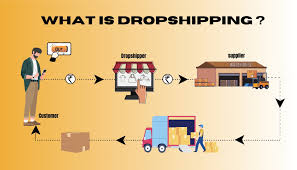
- Dropshipping is a retail business model in which a seller accepts customer orders without keeping the products in stock.
- Instead, when a customer places an order, the seller purchases the product from a third-party supplier, who then ships it directly to the customer.
- A dropshipper is an intermediary between consumers and suppliers, curating and promoting the goods that suppliers ship to customers.
- Many businesses prefer dropshipping because it removes costs like warehouse storage and unsold inventory.
- The dropshipping model is attractive to smaller retailers and entrepreneurs because it requires relatively little capital investment and overhead.
- Drop-shipping is not illegal, but there can be problems for buyers and sellers.
Crohn’s Disease : Recent Study
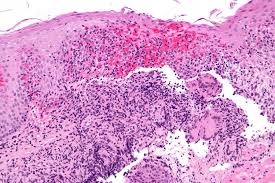
A detailed cellular study of Crohn’s disease recently mapped how gene activity changes across more than 50 cell types in the gut.
- Crohn’s Disease is a chronic inflammatory bowel disease (IBD) that causes swelling and irritation of the tissues, called inflammation, in the digestive tract.
- It can affect any part of digestive tract. But it usually affects the end of the small intestine and the beginning of the large intestine.
- The inflammation often spreads into the deeper layers of the bowel.
- Crohn’s disease can be both painful and debilitating. Sometimes, it may lead to serious or life-threatening complications.
- People with a first-degree relative, such as a parent, sibling, or child, are at higher risk to have the disease.
- Crohn’s disease can develop at any age, but usually first appears in people aged in their 20s and 30s.
- It is more common in people living in the Western world, but it’s also becoming more common in developing countries.
- Crohn’s is a lifelong condition. There’s no known cure for Crohn’s disease.
- But treatment can help manage symptoms, reduce inflammation, and live an active life.
San Andreas Fault:
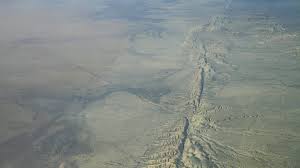
According to new research, stress along the San Andreas fault in Southern California has reached the highest levels in 1,000 years.
- San Andreas Fault is a major continental transform boundary that is situated in the extreme western part of the continent of North America.
- It is believed that the San Andreas Fault started to form about 30 million years ago in the mid-Cenozoic Era.
- It forms the border between two principal tectonic plates: the North American Plate on the eastern side and the Pacific Plate on the western side.
- Geologists classify the San Andreas Fault as a “strike-slip fault”, as the Pacific Plate slides laterally over the North American Plate in a northward direction.
- It is one of the world’s largest and most extensively studied faults.
- The northward movement along the San Andreas Fault had led to the creation of the Baja Peninsula.
- Strike-slip Fault occurs in an area where two plates are sliding past horizontally with little to no vertical movement.
- Strike-slip faults are found in California, the San Andreas Fault being the most famous, which has caused many powerful earthquakes.
Indocolea devendrae:
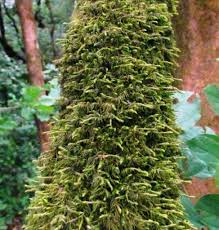
A team of researchers from Kerala recently identified a new genus of bryophyte plant named Indocolea devendrae from the forests of northern Kerala.
- Indocolea devendrae is a new species of bryophyte plant.
- It was discovered in the forests of northern Kerala.
- It has been named ‘Indocolea devendrae’ in honour of noted bryologist and specialist in the study of non-flowering plants, Devendra Kumar Singh of the Botanical Survey of India (BSI).
- A unique feature of the newly identified plant is that it grows on the mushroom Phellinus fastuosus, which develops on tree trunks.
- Indocolea is an entirely new genus discovered in India and belongs to liverworts, a group within the bryophytes.
- Liverwort is a species of small nonvascular (lacking xylem and phloem) spore-producing plants.
- They are closely related to mosses and hornworts.
- Unlike flowering plants, liverworts lack true roots, stems, and leaves.
- Rather than having distinct stems and leaves, liverworts have a combined structure called a ‘’thallus’’ that branches, creating flattened lobes.
- They absorb water and nutrients directly through their surface.
- Liverworts are distributed worldwide, though most commonly in the tropics.
- The plants are not economically important to humans but do provide food for animals, facilitate the decay of logs, and aid in the disintegration of rocks by their ability to retain moisture.
- Liverworts are among the oldest terrestrial plants on Earth, with fossil records dating back over 470 million years.
Venus Flytrap:
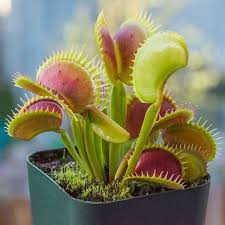
Scientists have found the physical mechanism behind the snapping action of Venus flytrap.
- Venus flytrap is a small perennial carnivorous plant of the sundew family.
- It is native to a limited region of North Carolina and South Carolina in the United States.
- The plant grows in moist, acidic soil.
- It grows in nutrient-poor environments and supplements its nutrition by capturing and digesting insects.
- The “trap” is made of two hinged lobes at the end of each leaf.
- It uses specialized trigger hairs called trichomes located on the inner surface of the trap.
- When an insect touches these hairs twice within a short period of time, the trap closes. Closure can occur in as little as one tenth of a second.
- After the plant absorbs the nutrient-rich liquid produced by the digestive processes, the trap reopens, with the insect’s empty exoskeleton left behind.
- This type of movement is called thigmonasty—a nondirectional plant response to being touched.
- Findings of the new Study:
- The research says that when the trap is stimulated, the cell walls of the outer epidermal layer rapidly soften by roughly 30 to 40%, and cell wall becomes more flexible.
- This releases internal stresses stored in the tissue and causes the trap to bend and close.
- When the trap snaps shut, the insect is sealed inside for digestion.
Planetary Climate Vital Signs Report 2026:
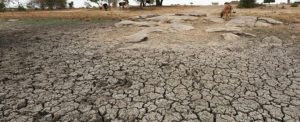
A new global climate assessment released during the Bonn Climate Change Conference (SB64), 2026 warns that all major planetary climate indicators have worsened since the last IPCC assessment cycle.
- The Planetary Climate Vital Signs Report 2026 is a global scientific assessment published in Earth System Science Data by around 70 scientists from 17 countries.
- It provides updated measurements of key climate indicators between IPCC assessment cycles, offering policymakers real-time evidence on global warming, greenhouse gas emissions, and climate extremes.
Key Findings:
- All 11 Major Climate Indicators Worsened: Every climate indicator assessed recorded deterioration since the IPCC Sixth Assessment Report, confirming an accelerating climate crisis.
- Marine Heatwaves Recorded the Sharpest Increase: Marine heatwaves increased by 1%, making them the fastest-worsening climate indicator globally.
- Earth’sEnergy Imbalance Reached Record Levels: Earth’s Energy Imbalance rose by 8%, indicating faster accumulation of heat within the climate system.
- Global Temperatures Continue to Rise: Maximum daily temperatures increased by 9%, while human-induced warming reached 1.37°C above pre-industrial levels in 2025.
- Greenhouse Gas Concentrations Hit New Highs: Global emissions reached an all-time high of 8 billion tonnes CO₂-equivalent, driven largely by fossil fuel combustion.
- Crossing the 1.5°C Threshold is Imminent: Current trends indicate the world could exceed the Paris Agreement’s 1.5°C warming limit within approximately four years.
- Land and Ocean Warming Intensifying: Average land temperatures rose by 81°C, while ocean temperatures increased by 1.03°C during 2016–2025.
- Indian Ocean Approaching Permanent Marine Heatwave State: Studies suggest the Indian Ocean may experience 220–250 marine heatwave days annually by 2100, compared to around 20 days historically.
The U.S.–Iran Preliminary Peace Accord 2026:
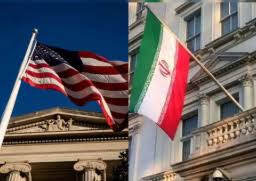
The United States and Iran officially announced a breakthrough preliminary peace agreement to immediately end their military conflict and completely lift the naval blockade on the strategic Strait of Hormuz and the Gulf of Oman.
- The U.S.–Iran Preliminary Peace Accord of 2026 is an emergency geopolitical memorandum of understanding (MoU) designed to halt an active hot war and avert a global energy collapse. Rather than acting as a final treaty, this preliminary pact serves as a 60-day de-escalation mechanism.
- The JCPOA Legacy and Collapse: The 2015 JCPOA restricted Iran’s nuclear program in return for sanctions relief, but its collapse revived regional tensions and mistrust.
- The Outbreak of War (Early 2026): Years of geopolitical rivalry and proxy conflicts escalated into direct military confrontation between the U.S., Israel, and Iran.
- The Strait of Hormuz Chokehold: Iran’s control over the Strait of Hormuz threatened a critical global energy route carrying major oil and LNG supplies.
- The Counter-Blockade: The U.S. responded with a naval blockade aimed at isolating Iran economically and restricting its maritime trade.
- Macroeconomic Havoc: The prolonged standoff disrupted energy supplies, causing sharp oil price spikes and widespread global economic uncertainty.
Key Highlights of the Preliminary Agreement:
- Immediate Multilateral Ceasefire: Mandates the absolute and permanent termination of all direct and proxy military operations across all active war fronts, explicitly including the theater of operations in Lebanon.
- The Toll-Free Re-Opening of the Strait: The U.S. completely terminates its naval blockade in the Gulf of Oman, while Iran authorizes the open, toll-free passage of international commercial shipping through the Strait of Hormuz, commencing immediate mine-removal operations.
- 60-Day Technical Standstill Window: Establishes a strict 60-day timeline during which the primary ceasefire holds while diplomats prepare for final, core negotiations regarding Iran’s nuclear enrichment and long-term Western trade sanctions.
- Unfreezing ofIranian Sovereign Capital: The preliminary text lays out the phased unfreezing and release of $24 billion in frozen Iranian assets during the 60-day negotiation timeline.
- Bilateral Commitment to Financial Reparations: Washington formally commits to developing a financial mechanism to pay war reparations to Tehran for damage suffered during the 2025–2026 campaigns.
- Permitted Navigation Service Charges: While explicit transit tolls are banned, Iran retains the legal right to collect standard maritime fees for navigation services, environmental protection, coastal upkeep, and vessel insurance within the Strait.
Wind Turbine Supply Chain Management Portal (WT-MARUT):
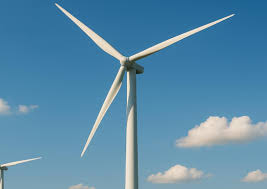
Union Minister for New and Renewable Energy officially launched India’s first dedicated wind turbine supply chain management portal, WT-MARUT, at the Global Wind Day Conference in Goa.
- WT-MARUT is India’s first indigenous, centralized digital platform explicitly dedicated to managing, tracking, and optimizing the domestic wind turbine manufacturing supply chain ecosystem.
- Ministry: Ministry of New and Renewable Energy (MNRE)
- The aim of WT-MARUT is to strengthen India’s domestic wind manufacturing capabilities and drive inclusion across the supply chain.
Key Features of the Portal:
- Provides end-to-end operational visibility across the entire tier-structured wind energy component network, from raw processing to final assembly.
- Facilitates smooth compliance with domestic sourcing rules under the government’s Approved List of Models and Manufacturers (ALMM) framework, ensuring clear tracking of local content requirements.
- Functions as a business-to-business platform that helps project developers find, verify, and qualify component suppliers, reducing procurement times.
- Serves as a unified communication and data-sharing platform linking turbine manufacturers, independent power producers, component designers, and policy regulators.
- Incorporates tracking mechanisms to help domestic manufacturers align their component specifications with international quality standards, enhancing global trade operations.
The Order of the White Double Cross, 1st Class:
Prime Minister of India was formally conferred with The Order of the White Double Cross, First Class, the highest state honor of the Slovak Republic.The Order of the White Double Cross (Slovak: Rad Bieleho dvojkríža) is the highest state decoration awarded by the Slovak Republic.
It is specifically designed to honor foreign citizens who have rendered exceptional services to the development of relations between their home nations and Slovakia, or who have significantly enhanced the international standing of the Slovak Republic.
Smart Village Initiative by CSIR:
The Council of Scientific and Industrial Research (CSIR) is deploying AI-enabled technologies and infrastructure upgrades in Kusunpur village, Odisha, under the ‘Smart Village’ initiative to mitigate human-animal conflict, enhance rural livelihoods, and integrate villages into India’s growth trajectory.An AI-enabled wild animal detection and alert system is being planned to reduce human-animal conflict, particularly crocodile-related incidents, by issuing alerts when crocodiles approach human settlements.Kusunpur, one of Odisha’s worst human-crocodile conflict zones with over 20 deaths in the past four years, is being targeted under the initiative as a direct response to repeated wildlife-related fatalities.It aims to transform rural villages by integrating science, technology, and sustainable infrastructure, improving quality of life, livelihoods, and safety. +Council of Scientific & Industrial Research (CSIR) under its lab-to-land approach, deploying technologies developed in CSIR laboratories.
Concerns Over Dengue Vaccine DengiAll:
Concerns have emerged about India’s forthcoming dengue vaccine DengiAll, following reports of severe adverse events during Brazil’s vaccination campaign with Butantan-DV, highlighting antibody-dependent enhancement (ADE) risks, tetravalent vaccine efficacy, and the need for robust monitoring.Vaccine Type: Both DengiAll (India) and Butantan-DV (Brazil) are live-attenuated tetravalent dengue vaccines, combining four weakened dengue virus serotypes (DENV-1, 2, 3, 4).All four dengue serotypes are prevalent in Brazil and India, and their envelope proteins differ enough to require protection against each serotype separately; merely mixing four weakened viruses does not automatically guarantee balanced immunity.Dengue vaccination can produce type-specific antibodies, which block one serotype effectively, and cross-reactive antibodies, which recognise all four serotypes but protect only when present at sufficiently high levels.When cross-reactive antibody levels fall, they may enhance rather than block dengue infection, leading to severe and potentially fatal dengue; this phenomenon is called antibody-dependent enhancement and is treated as a serious adverse event.
Lt Gen Dhiraj Seth Appointed as Army Chief:
Lieutenant General Dhiraj Seth has been appointed the next Chief of the Army Staff and will assume office on 30th June 2026, succeeding General Upendra Dwivedi.He is a graduate of the Higher Command Course and the National Defence College, attended the Command and Staff Course in Paris, and also undertook defence acquisition training at the United States Naval Postgraduate School.He will be the third Army Chief from the 2nd Lancers after General Maharaj Shri Rajendrasinhji Jadeja and General Bipin Chandra Joshi.He will be the first Armoured Corps officer to become Army Chief in nearly three decades after General Shankar Roy Chowdhury.
India–Slovakia Comprehensive Partnership:
The Indian Prime Minister paid a historic State Visit to the Slovak Republic (also Slovakia), marking the first visit by an Indian Prime Minister to Slovakia since its independence in 1993. During the visit, the two countries elevated their bilateral relations to a Comprehensive Partnership and signed several MoUs to expand cooperation across various sectors.Furthermore, the Indian Prime Minister Shri Narendra Modi was conferred with Slovakia’s highest state honour, the Order of the White Double Cross (1st Class).India and Slovakia elevated their ties to a Comprehensive Partnership during the first-ever visit of an Indian Prime Minister to Slovakia since 1993, signing 11 agreements covering defence, cybersecurity, skilled mobility, education, and technology cooperation. Slovakia also conferred its highest state honour, the Order of the White Double Cross (1st Class), on the Indian Prime Minister.
The partnership offers significant opportunities in trade, defence manufacturing, skilled migration, and space technology, while challenges remain in low trade volumes, delays in defence project implementation, the absence of a Social Security Agreement (SSA), and limited funding for joint innovation initiatives.
India – France Adopt Innovation Roadmap 2030:
The Indian Prime Minister and French President Emmanuel Macron held high-level bilateral talks in Nice, marking their first official meeting since the elevation of India-France ties to a Special Global Strategic Partnership.During the visit, the two leaders adopted the Innovation Roadmap 2030, and launched a first-of-its-kind Economic Security Dialogue.India and France adopted the Innovation Roadmap 2030 and launched an Economic Security Dialogue to strengthen cooperation in AI, semiconductors, critical minerals, defence, nuclear energy, startups, education, and Indo-Pacific security.
Despite strong strategic convergence, challenges remain due to delays in the Jaitapur Nuclear Power Project, differing digital regulations, geostrategic priorities, and low trade volumes; both countries aim to address these through technology co-development, resilient supply chains, maritime cooperation, and deeper economic engagement.



