
Today’s Current Affairs: 18th jun 2026 for UPSC IAS exams, State PSC exams, SSC CGL, State SSC, RRB, Railways, Banking Exam & IBPS, etc
Table of Contents
World Day to Combat Desertification and Drought 2026:
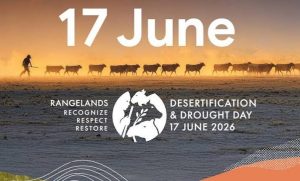
World Day to Combat Desertification and Drought was observed globally recently.
- It is observed annually on June 17 to spread awareness about international cooperation to combat desertification and the effects of drought.
- Desertification was identified as one of the greatest challenges to sustainable development during the Rio Earth Summit in 1992.
- In 1994, the UN General Assembly established the United Nations Convention to Combat Desertification (UNCCD).
- This legally binding international agreement linked the environment and development to sustainable land management.
- In addition to the UNCCD, the UN proclaimed June 17 as World Day to Combat Desertification and Drought.
- In 2026, the theme “Rangelands: Recognize. Respect. Restore.” highlights the importance of rangelands—ecosystems that have long been undervalued despite their critical role.
- This year’s observance also aligns with the International Year of Rangelands and Pastoralists.
- Rangelands are expansive natural areas primarily characterized by native vegetation like grasses, shrubs, and forbs.
- Covering about 50% of the Earth’s land surface, they play a vital role in supporting livestock, wildlife, and diverse ecosystems.
- These lands are not typically suitable for intensive agriculture due to limitations such as low precipitation and poor soil quality.
- Rangelands provide essential resources, including recreational opportunities and habitats for various animal species, while also serving as watersheds and mining locations.
- The dynamic nature of rangelands is influenced by numerous factors, including climate changes, grazing practices, and human encroachment.
- Rangelands store vast amounts of carbon and either originate or serve as freshwater catchment areas for most of the world’s largest rivers and wetlands.
- They support the lives of around two billion people worldwide, including many pastoralists and Indigenous Peoples whose knowledge and stewardship have sustained these landscapes for generations.
- Rangelands provide almost 70 per cent of livestock feed globally, making them critical to food systems.
- Indian rangelands occupy about 121 million hectares, from the Thar Desert to the alpine meadows in the Himalayas.
- According to the UNCCD ‘Global Land Outlook Thematic Report’, the area used for grazing is estimated at around 40 per cent of the total land surface of India, including grasslands (17 per cent), and forests (23 per cent).
- Around 70 per cent of rangelands are in the temperate region, however, a large share is considered underutilised, including degraded forest lands, land unsuitable for crop production, ravines, and wastelands.
International Year of Rangelands and Pastoralists:
- The United Nations has declared 2026 as the International Year of Rangelands and Pastoralists.
- Led by Mongolia and supported by a broad coalition of organisations, this initiative aims to raise awareness, encourage responsible investments and shape policies that safeguard rangelands and pastoralist livelihoods.
- Present in more than 75 percent of countries and managing at least one quarter of the world’s land, pastoralists herd about one billion animals worldwide.
Mombasa Declaration:
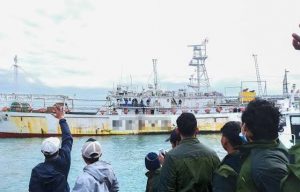
15 Fifteen countries from Africa, Asia, Europe, the Caribbean, and the Pacific recently adopted the Mombasa Declaration to step up efforts to combat illegal fishing.
- Mombasa Declaration was adopted by 15 countries from Africa, Asia, Europe, the Caribbean, and the Pacific to step up efforts to combat illegal fishing.
- It calls on governments to improve access to information on fishing vessels, ownership, and licensing, and to strengthen data sharing to better track fishing activities and enforce regulations.
- It is named after the Kenyan city hosting the 11th Our Ocean Conference (OOC).
- Out of the more than 30 countries represented in the summit, Belgium, Cameroon, Chile, the Dominican Republic, France, Gambia, Ghana, Guinea, Liberia, Panama, Papua New Guinea, Peru, the Republic of the Congo, Somalia, and South Korea signed the agreement.
- It is intended to curb illegal, unreported, and unregulated fishing, also known as IUU fishing, which threatens marine ecosystems and the livelihoods of millions of people who depend on fisheries.
- The declaration builds support for the Global Charter for Fisheries Transparency, a set of 10 policy principles aimed at improving governance through low-cost reforms, including modernizing vessel registries and publishing fishing authorizations.
Our Ocean Conference (OOC):
- Launched in 2014 by the U.S. Department of State and former Secretary of State John Kerry, the OOC is a major international platform that unites governments, businesses, NGOs, and academic institutions to drive ocean-related action and ambition.
- The conference focuses on six critical areas:
- Marine protected areas.
- Sustainable blue economy
- Climate change
- Maritime security
- Sustainable fisheries
- Marine pollution.
- 2026 OCC: Mombasa (Kenya) – Marking the first time the global summit was held on African soil, themed “Our Ocean, Our Heritage, Our Future”
India International Institute of Democracy and Election Management (IIIDEM):
Chief Election Commissioner (CEC) recently congratulated the India International Institute of Democracy and Election Management (IIIIDEM) team for completing 15 years in service of electoral training and management.
- IIIDEM was established in 2011 by the Election Commission of India (ECI) to serve as a premier global centre for electoral training, research, and capacity building.
- It functions under the direct supervision of the ECI and operates from its independent campus in Dwarka, New Delhi.
- In pursuance of its vision and mission, the key functions of IIIDEM are:
- To promote and lay down standards for professional competence in election management
- To innovate electoral processes to promote electoral integrity and ease of voting
- To encourage and promote research and knowledge development
- To develop training, academic, and capacity-building programs
- To enrich democratic systems, values, and practices
- To promote international cooperation and global engagements
- IIIDEM aims to achieve its vision and mission by following a strategy based on four key strategic pillars:
- Strengthen National Programs
- Expand Global Programs and Engagements
- Encourage Research and Knowledge Development
- Promote Sustainable Democracy and Election Management
- It holds domestic and international courses and training programmes that are residential and non-residential.
- IIIDEM collaborates and partners with various national and international organizations like the International Institute for Democracy and Electoral Assistance (International IDEA) on various aspects of democracy and election management.
- Through MoUs, bilateral engagements, international conferences, exposure visits, and customized capacity-building programs, IIIDEM fosters global cooperation.
- Flagship initiatives include the International Election Visitors’ Programme (IEVP) and the Master’s Programme in International Electoral Management and Practices (MIEMP) in collaboration with the Tata Institute of Social Sciences, Mumbai.
Kishau Dam Project:
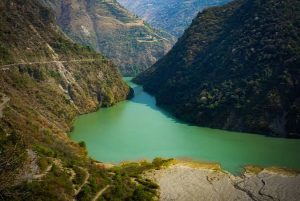
The eight-year deadlock on the construction of Kishau Dam ended recently after the Centre and beneficiary states agreed to cover the ₹2,000 crore power component cost for the project.
- Kishau Dam Project is a multipurpose dam project proposed to be built on the Tons river (a major tributary of river Yamuna) along the Uttarakhand-Himachal Pradesh border.
- Beneficiary States: Delhi, Uttar Pradesh, Rajasthan, Haryana, Uttarakhand and Himachal Pradesh.
- The project envisages construction of a concrete dam, thus creating an installed capacity of 4 x 165 MW (660 MW) of hydroelectric power, create an irrigation potential of 97,000 hectares, and supply 517 million cubic metres (MCM) water annually to Delhi, Rajasthan and Haryana.
- It will play a crucial role in enhancing the flow of fresh water into the Yamuna, particularly during lean seasons.
- For the construction of this project, a joint venture of Uttarakhand and Himachal Pradesh Government, Kishau Corporation Limited has been formed in the year 2017.
- As part of the project, 90 percent of the water component will be funded by the Centre as central assistance and the remaining 10 percent will be borne by the six beneficiary states.
- Himachal Pradesh’s share of water will be allocated to Delhi and Rajasthan in return for sharing the cost of Himachal Pradesh’s portion of the power component.
REWARD Program:
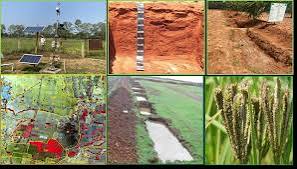
The National Rainfed Area Authority (NRAA) organized a meeting on the draft National Technical Guidelines (NTG) for Improved Watershed Management under the Rejuvenating Watersheds for Agricultural Resilience through Innovative Development (REWARD) Programme.
- REWARD (Rejuvenating Watersheds for Agricultural Resilience through Innovative Development) program is a watershed development program which is being implemented in the States of Karnataka and Odisha.
- Time Period: 2021 to 2026
- The program aims to introduce modern watershed practices in the Department of Land Resources and in the States of Karnataka and Odisha.
- It is assisted by the World Bank.
- The REWARD program works on a financial instrument called “PforR” (Program for Results) which means World Bank will reimburse the loan amount against the achievement of Disbursement Linked Indicators (DLIs).
- Objective of REWARD is to strengthen capacities of national and state institutions to adopt improved watershed management for increasing farmers resilience and support value chains in selected watersheds of participating States”.
- The program focuses on two important result areas:
- Strengthened institutions and supportive policy for watershed development:
- Science based watershed development for climate resilience and enhanced livelihoods:
Mishmi Takin:
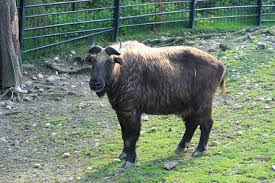
The first-ever video footage of a herd of the elusive Mishmi Takin have been recently recorded in the Tingda Reserve Forest of North Sikkim
- Mishmi Takin is a species of goat-antelope belonging to the family Bovidae (order Artiodactyla).
- It is one of 4 subspecies of Takin, which vary in coat color.
- Scientific Name: Budorcas taxicolor
- It is a native of the eastern Himalayas, including the mountainous regions of northeastern India, northern Myanmar, southeastern Tibet and parts of China.
- The Mishmi Hills in Arunachal Pradesh is the region that gave the Mishmi Takin its name.
- They inhabit a wide range of environments, from forested valleys to rocky alpine zones.
- They can live at altitudes of up to 4,500 m and are well-equipped for mountain life.
- Features:
- Horns are present in both sexes and run parallel to the skull before turning upwards to a short point.
- It has a golden-yellow to dark brown coat. The coat is long and shaggy.
- They also have oily skin secretions that coat their fur and protect them from the cold, damp climate.
- They live in small family groups of around 20 individuals.
- They are herbivorous (folivorous) animals.
- Conservation Status:
- IUCN Red List: Vulnerable
United Nations Conference on Trade and Development : Report
According to a new report by the United Nations Conference on Trade and Development (UNCTAD) developing countries could save nearly $500 billion annually if they were able to borrow at the same interest rates as developed economies.
- United Nations Conference on Trade and Development (UNCTAD) is a permanent intergovernmental body established by the United Nations General Assembly in 1964.
- It supports developing countries to access the benefits of a globalized economy more fairly and effectively.
- It provides economic and trade analysis, facilitates consensus-building and offers technical assistance to help developing countries use trade, investment, finance and technology for inclusive and sustainable development.
- It is part of the UN Secretariat.
- It reports to the UN General Assembly and the Economic and Social Council but has its own membership, leadership, and budget.
- It is also part of the United Nations Development Group.
- Members:195 nations (including India)
- Headquarter: Geneva, Switzerland
- It helps countries to:
- Comprehend options to address macro-level development challenges
- Achieve beneficial integration into the international trading system
- Diversify economies to make them less dependent on commodities
- Limit their exposure to financial volatility and debt
BGP Hijacking:
Following the Indian government’s temporary block on Telegram, the platform’s founder and CEO Pavel Durov claimed that the app’s global access was being compromised via BGP hijacking.Border Gateway Protocol (BGP) hijacking is an advanced cyber-tactical event in which internet traffic is maliciously or accidentally misdirected. This happens when a network operator falsely advertises IP address space that it does not own, confusing the internet’s global routing directory.The global internet is partitioned into thousands of massive, independent network blocks called Autonomous Systems (AS) run by telecom operators, ISPs, and cloud providers. Each AS uses BGP to announce which IP addresses it can reach.The core infrastructure of the internet relies on implicit trust; networks generally accept these BGP routing paths as accurate reflections of the best map routes.During a hijack, a rogue or misconfigured Autonomous System broadcasts a fraudulent routing announcement claiming it has the shortest, most efficient path to a target service’s IP addresses.
The Super El Niño:
The United States’ National Oceanic and Atmospheric Administration (NOAA) confirmed the formation of a new El Niño in the equatorial Pacific, placing the odds at 63% that it will intensify into a very strong or super El Niño by the northern winter.An El Niño represents the periodic, anomalous warming of sea-surface temperatures (SSTs) across the central and eastern equatorial Pacific Ocean. While the India Meteorological Department (IMD) classifies a standard El Niño based on temperature departures from the long-term average, a very strong or super El Niño is explicitly defined by a massive temperature departure exceeding 2°C in a specific reference patch of the Pacific.
RBI’s Record Surplus Transfer:
The Reserve Bank of India (RBI) approved a record Rs 2.87 lakh crore surplus transfer to the Union Government for FY26, surpassing the previous record of Rs 2.11 lakh crore. While consistent with the Economic Capital Framework (ECF), the unprecedented scale of transfers has sparked debate on the RBI’s evolving role in India’s fiscal architecture, central bank independence, and fiscal federalism.RBI’s record Rs 2.87 lakh crore surplus transfer reflects its growing role in India’s fiscal architecture, providing significant non-tax revenue that supports fiscal consolidation, reduces borrowing pressures, and sustains capital expenditure.However, rising dependence on RBI earnings raises concerns regarding central bank independence, fiscal dominance, depletion of risk buffers, and fiscal federalism, as these transfers bypass State governments and remain outside the divisible tax pool.



