
Today’s Current Affairs: 22nd jun 2026 for UPSC IAS exams, State PSC exams, SSC CGL, State SSC, RRB, Railways, Banking Exam & IBPS, etc
Table of Contents
Kalamkari Painting:
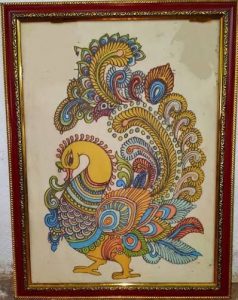
The Prime Minister of India gifted a Kalamkari Mahabharata painting to French President.
- Kalamkari Painting is a highly popular form of hand-painted or block-printed cotton textile and paintings, practised in Andhra Pradesh.
- It came up as a textile tradition during the reign of Qutb Shahis at Golconda in the 16-17th century.
- “The word ‘Kalam’ meant pen, while ‘Kari’ meant craftsmanship.
- The process of creating Kalamkari begins by soaking the fabric in a mixture of astringents and buffalo milk, followed by drying it in the sun.
- The outlines of the design in red, black, brown, and violet are drawn using a mordant, after which the cloth is dipped in an alizarin bath.
- Wax is then applied to the areas that remain undyed, and the fabric is immersed in indigo dye.
- Once the wax is removed, the remaining areas are hand-painted.
- Artists use a bamboo or date palm stick with fine hair attached to create design contours, applying natural dyes extracted from roots, leaves, seeds, and minerals like iron and copper.
- Kalamkari Painting Styles is broadly divided into two distinct styles based on the regions where the art form developed—Srikalahasti and Machilipatnam.
- Srikalahasti Kalamkari is practised in Srikalahasti of Tirupati district and is done entirely by hand using the kalam (pen).
- This form is characterized by freehand drawing and intricate detailing.
- Theme: It portrays mythological figures and themes, religious iconography, temple architecture, and Hindu deities.
- Machilipatnam Kalamkari is also known as Pedana Kalamkari, developed in Pedana near Machilipatnam.
- It is deeply influenced by Persian art due to the patronage of the Mughals and the Golconda Sultanate.
- It uses block-printing techniques, focusing on floral and geometric designs.
Brahmani River : In News
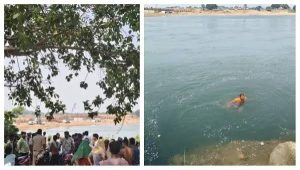
A study revealed that Microscopic plastic pollution is infiltrating the pristine habitats of India’s Bhitarkanika Wildlife Sanctuary, carrying a toxic cargo of heavy metals into the Brahmani River.
- Brahmani River is one of the major rivers in eastern India, primarily flowing through the state of Odisha.
- It is formed by the confluence of the Sankh and South Koel rivers near the major industrial town of Rourkela in Odisha.
- Both the sources of the Brahmani River are on the Chota Nagpur Plateau.
- The basin flows through Jharkhand, Chhattisgarh, and Odisha states, before it outfalls into the Bay of Bengal.
- The Brahmani River basin is bounded in the north by the Chhotanagpur plateau, in the west and south by the Mahanadi basin, and in the east by the Bay of Bengal.
- The principal tributaries of this river are Sankh, Tikra, and Karo.
- The Brahmani delta is the site of the Bhitarkanika Wildlife Sanctuary, famous for its estuarine crocodiles.
- It is one of the few rivers that cut across the Eastern Ghats and has formed a minor gorge at Rengali in Odisha, where a dam has been built.
Dongria Kondh Tribe:
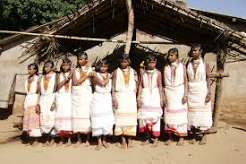
The Dongria Kondh tribes who inhabit the Niyamgiri hills across Rayagada and Kalahandi districts in southwestern Odisha for whom forests, food and faith shape their daily life.
- Dongria Kondh Tribe is a Particularly Vulnerable Tribal Group (PVTG) Community.
- Dongria Kondhs are ancient occupants of Niyamgiri hills spread across Kalahandi and Rayagada districts of Odisha.
- They derive their name from dongar, meaning ‘hill’ and the name for themselves is Jharnia: protector of streams.
- They trace their ancestry to Niyam Raja, a mythical god-king, who they believe is a creator of the Niyamgiri hills and whose stewardship has been left to them.
- The Dongria have distinctive jewellery, tattoos and hairstyles. Women wear many rings through their ears and three through their noses, while boys wear two nose rings.
- They have no overarching political or religious leader
- Clans and villages have their own leaders and individuals with specific ceremonial functions, including the beju and bejuni, male and female priests
- They speak two languages namely “kuyi” and “kuvi”,vocabulary which is completely unrelated to odiya, the state’s official language.
- Members of the Dongria Kondh tribe perform a traditional dance at Phakeri.
- The economy and livelihood of Dongria kondh is dependent on collection of Non-timber forest products (NTFPs) and podu cultivation. They are traditionally horticulturists.
Financial Action Task Force:
India has been elected to the Vice-Presidency of the Financial Action Task Force (FATF) for the first time.
- Financial Action Task Force is an independent intergovernmental body that develops and promotes policies to protect the global financial system against money laundering and terrorist financing.
- It was established in 1989 during the G7 Summit in Paris in response to a growing concern about money laundering.
- In 2001, its mandate expanded to include terrorism financing.
- Headquarters: Paris, France.
- Members: FATF members include 40 countries, including the United States, India, China, Saudi Arabia, Britain, Germany, France, and the EU as such.
- India became a member of FATF in 2010.
- In addition, over 200 jurisdictions around the world have committed to the FATF Recommendations through the global network of FSRBs and FATF memberships.
- FATF regularly publishes reports that raise awareness about the latest money laundering, terrorist financing, and proliferation financing techniques.
- Once a member, a country or organization must endorse and support the most recent FATF recommendations and commit to being evaluated by (and evaluating) other members.
- The FATF holds countries to account that do not comply with the FATF Standards.
- If a country repeatedly fails to implement FATF Standards, then it can be placed under the grey and black lists.
- The FATF recommendations are recognised as the global anti-money laundering (AML) and counter-terrorist financing (CFT) standard.
Pradhan Mantri Viksit Bharat Rozgar Yojana: Key Features
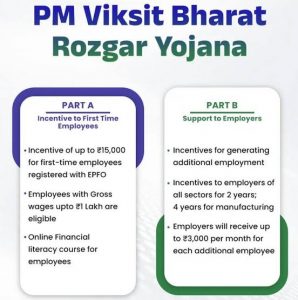
The Prime Minister of India disbursed incentives amounting to approximately ₹2,400 crore under the Pradhan Mantri Viksit Bharat Rozgar Yojana (PM-VBRY).
- Pradhan Mantri Viksit Bharat Rozgar Yojana is a flagship employment generation scheme launched by the Government of India to encourage job creation in the formal sector.
- The scheme provides financial incentives to employers and first-time employees, promoting increased enrollment in the Employees’ Provident Fund Organisation (EPFO).
- It aims to boost employment opportunities, strengthen social security coverage, and support the vision of a developed India by 2047.
Key Features of Pradhan Mantri Viksit Bharat Rozgar Yojana:
- Part A – Support to First-Time Employees:
- Targeting first-time employees registered with EPFO, this Part will offer one-month EPF wage up to Rs 15,000 in two installments.
- Employees with salaries up to Rs 1 lakh will be eligible for the incentives.
- All payments to the First Time Employees under Part A of the Scheme will be made through DBT (Direct Benefit Transfer) mode using Aadhar Bridge Payment System (ABPS).
- Part B – Incentives for Employers:
- This part will encourage generation of additional employment in all sectors, with a special focus on the manufacturing sector.
- The employers will get incentives in respect of new employees with salaries up to Rs 1 lakh.
- The Government will incentivize employers, up to Rs 3000 per month, for two years, for each additional employment, sustained for at least six months.
- For the manufacturing sector, incentives will be extended to the 3rd and 4th years as well.
- Payments to the Employers under Part B will be made directly into their PAN-linked Accounts.
Energy Transition Index : India Rank
India moved up two places to rank 70th in the Energy Transition Index (ETI) 2026.
- Energy Transition Index is released by the World Economic Forum.
- It evaluates countries on energy security, sustainability and equity, along with the readiness of their policy, financial and infrastructure environments to support the transition.
- A country’s final ETI score is a weighted composite of two sub-indices: system performance (60%) and transition readiness (40%).
- System performance is evenly distributed across equity, security and sustainability dimensions, while transition readiness is divided into two categories: core enablers and enabling factors.
- Core enablers include regulation and political commitment as well as finance and investment, while enabling factors encompass innovation, infrastructure and education and human capital.
- ETI scores use a 0-100 scale, with 100 representing the highest global performance for each indicator and index component.
Key Findings of Energy Transition Index 2026:
- Sweden, Finland and Denmark retained their top three positions globally
- Singapore posted one of the largest improvements, climbing 10 places to 42nd due to stronger regulations and political commitment.
- Six G20 members featured in the top 20: Germany (9th), France (10th), the United Kingdom (11th), China (14th), Brazil (17th) and the United States (19th).
New Naval Platforms:
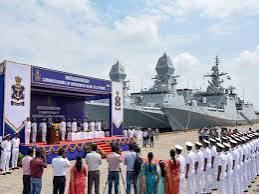
The Indian Navy is scheduled to commission three indigenously built frontline platforms – Dunagiri, Sanshodhak, and Agray – in Kolkata.
New Naval Platforms:
- INS Dunagiri
- It is the fifth Project 17A stealth frigate.
- It was designed by Warship Design Bureau (WDB).
- It was built at Garden Reach Shipbuilding and Engineers Ltd (GRSE).
- It is equipped with advanced weapons and sensors, including BrahMos surface-to-surface missiles and the Medium Range Surface-to-Air Missile system, significantly enhancing the Navy’s combat capability.
- Sanshodhak
- It is the fourth Survey Vessel (Large).
- It is designed for coastal and deep-water hydrographic surveys and collection of oceanographic and geophysical data for defence and civil applications.
- It is equipped with advanced survey systems including Autonomous Underwater Vehicles and Remotely Operated Vehicles.
- Agray
- It is the fourth of the Arnala-class Anti-Submarine Warfare Shallow Water Craft.
- It is equipped with lightweight torpedoes, indigenous rocket launchers, and shallow-water sonar systems to detect and engage underwater threats in littoral waters.
Turquoise Nexus Initiative:
Turkey’s Presidency of 2026 UNFCCC COP31 and Food and Agriculture Organization (FAO) have introduced the Turquoise Nexus Initiative (TNI).
- Turquoise Nexus Initiative is aimed at integrating food security, water management and climate adaptation into national climate plans.
- It is unveiled by Turkey’s upcoming COP31 Presidency and Food and Agriculture Organization.
- It will help developing countries align NDCs and Paris Agreement efforts with farmer-inclusive strategies and improved climate finance.
- It is a proposed programme under FAO’s multistakeholder Food and Agriculture for Sustainable Transformation (FAST) Partnership which was launched by the COP27 Presidency in 2022 in Sharm el-Sheikh, Egypt.
FAST Partnership:
- The FAST Partnership is a multi-stakeholder partnership that aims to catalyze and accelerate the transformation of agriculture and food systems by 2030 for people, climate, and nature.
- FAST is the most consistent COP-to-COP mechanism for agrifood systems.
- The three pillars of FAST are:
- Access to finance: enhance country capacities to identify and access climate finance and investment.
- Knowledge and capacity: develop analyses and voluntary guidelines, support capacity development across stakeholders.
- Policy support and dialogue: ensure agrifood systems are fully embedded and prioritized in climate change policies.
Fast X-ray Transient:
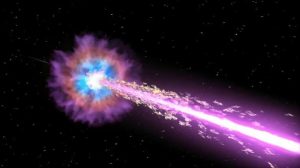
Astronomers have uncovered new clues about the origin of a rare and powerful cosmic X-ray flash known as a Fast X-ray Transient (FXT).
- Fast X-ray Transient are energetic, non-repeating bursts of low-energy X-rays associated with violent cosmic events.
- They typically last from a few minutes to several hours before fading rapidly, making them difficult to study and leaving their origins largely uncertain.
- Many FXTs are associated with high-redshift long period gamma-ray bursts (lGRBs).
- Known X-ray transient types with these timescales include stellar flares, X-ray binary outbursts, supernova shock breakouts (SN SBOs) and gamma-ray bursts (GRBs).
Gamma-Ray Burst:
- It is a powerful astronomical cosmic burst of high-energy gamma-ray.
- It emits more energy in a few seconds than our Sun will emit in its lifetime.
- It has two distinct emission phases: the short-lived prompt emission (the initial burst phase that emits gamma-rays), followed by a long-lived multi-wavelength afterglow phase.
- They are produced by the hottest and most energetic objects in the universe, such as neutron stars and pulsars, supernova explosions, and regions around black holes.
- On Earth, gamma waves are generated by nuclear explosions, lightning, and the less dramatic activity of radioactive decay.
Bharat Climate Observation Network:
The Indian Institute of Tropical Meteorology and the Aryabhatta Research Institute of Observational Science Nainital have signed a long-term Memorandum of Understanding (MoU) to establish a climate observation station in the Himalayan region under the Bharat Climate Observation Network (BCON).
- Bharat Climate Observation Network is a national observational initiative conceptualized and implemented by Indian Institute of Tropical Meteorology (IITM) under the Ministry of Earth Sciences (MoES), Government of India,
- It is to develop a long-term, high-precision climate monitoring framework across the country.
- BCON will monitor meteorological parameters, climate-active trace gases (greenhouse gases and short-lived climate forcers), atmospheric chemistry and soil moisture observations.
- BCON will develop a robust national database that supports the detection of long term trends, advances climate change research, and strengthens India’s capacity for climate assessment and evidence based policy development.
- The high accuracy datasets produced through BCON will also provide the critical validation and benchmarking required for Earth System Models, including India’s first ESM, the IITM ESM.
- It enables more accurate simulations of the Indian climate change and enhancing future climate projections.
Drunix:
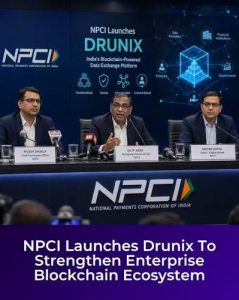
The National Payments Corporation of India (NPCI) rolled out Drunix platform.
- Drunix is an enterprise-grade distributed ledger technology designed to help organizations build and scale tokenization platforms, digital asset ecosystems, and multi-organization networks.
- Drunix is a custom-built private blockchain framework designed to deliver high scalability and optimized performance.
- It enables blockchain deployment at scale and is engineered for enterprise and public infrastructure adoption.
- It is a high-performance distributed ledger platform built as an enhanced fork of Hyperledger Fabric.
- Hyperledger Fabric is an open-source enterprise blockchain framework developed under the umbrella of the Linux Foundation.
Blockchain Technology:
- Blockchain, also known as Distributed Ledger Technology (DLT), is an emerging technology that facilitates the conversion of currency and various assets into digital formats for storage and management.
- The blockchain is a distributed ledger that exists on multiple computers simultaneously in a peer-to-peer network.
- Once data is written to the blockchain, it is extremely difficult to alter it retroactively. Cryptographic hashes help achieve this which improves security and trust.
- Cryptography through hashing and digital signatures secures the blockchain network. It also provides participant identity protection through private/public keys.
- For a transaction to be valid and added to the blockchain, all nodes must agree to its validity based on the existing rules of the network through a consensus mechanism.
- No single entity or computer controls the network. Full copies of the blockchain reside on multiple computers in a decentralised manner.
International Day of Yoga 2026:
As India celebrates the 12th International Day of Yoga (IDY) on 21st June 2026, the Ministry of Ayush’s Yoga Sangam Portal has achieved a significant milestone, with over 6 lakh organizations registering to participate in the nationwide yoga event and perform yoga simultaneously with the Prime Minister of India.
Key Highlights of IDY 2026:
- The theme for IDY 2026 is “Yoga for Healthy Ageing”. It focuses on promoting physical vitality, mental resilience, and holistic wellness across all stages of life.
- The 2026 theme aligns with the WHO Decade of Healthy Ageing (2021–2030) by promoting independence among older adults, reducing fall-related risks, improving quality of life, and encouraging person-centered approaches to health and well-being.
- Yoga Sangam Initiative is a flagship initiative aiming to connect institutions and communities nationwide through synchronized yoga sessions based on the Common Yoga Protocol (CYP).
- Instead of a single-location celebration, organizations can conduct sessions at their own venues while remaining part of a collective national movement.
Strait of Messina:
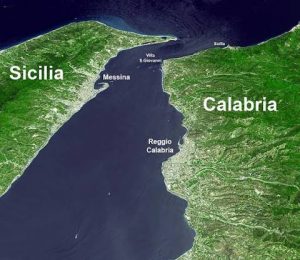
Japan’s Prime Minister emphasized bilateral cooperation in the ambitious plan to build a bridge across Italy’s Strait of Messina recently.
- Strait of Messina is a narrow water body in the Mediterranean Sea in southern Italy.
- It is an example of a strait that runs through a country. It separates mainland Italy and the island of Sicily.
- It is named after the city of Messina, located on the northeastern tip of Sicily.
- It connects the Tyrrhenian Sea in the north with the Ionian Sea in the south. Both are parts of the larger Mediterranean Sea.
- The waters of the strait are known for strong currents, whirlpools, and tidal flows.
- The strait was greatly feared by sailors in antiquity, mainly because of the rocks and whirlpools known as Scylla and Charybdis, which were personified as female monsters in Greek mythology.
- It has a unique marine ecosystem due to its strong water currents.
- The alternating and intense current, abundant phosphorus and nitrogen, and low water temperature support abundant and diverse species.
- It is a migratory route used by fish and other species to access the Mediterranean Sea.
- Every year, several bird species pass through the strait to their breeding grounds in Europe.
Three-Language Formula and Nagaland’s Linguistic Challenge:
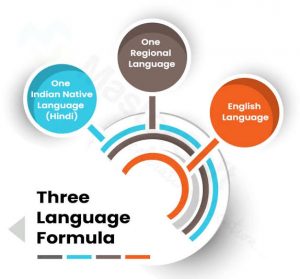
The Association of Unaided CBSE Schools in Nagaland has expressed concerns over the Central Board of Secondary Education’s (CBSE) mandate to implement the Three-Language Formula under National Education Policy (NEP) 2020.
- The association has termed the policy “not viable” for the state due to its unique linguistic demographic and severe resource constraints.
- Nagaland has no single common regional language, with 17 major tribes speaking distinct languages. English serves as the official language and medium of instruction, while none of the state’s tribal languages is included in the Eighth Schedule.
- Additionally, a lack of trained teachers, textbooks, and standardized curricula makes implementation difficult, especially in linguistically diverse classrooms.
- The Three-Language Formula was first formulated by the Ministry of Education in 1968 based on the recommendations of the Kothari Commission (1964-66).
- NEP, 1968 emphasised study of Hindi, English and a modern Indian language (preferably one of the southern languages) in Hindi-speaking States and Hindi, English and a regional language in non-Hindi speaking States.
- Three-Language Formula under NEP 2020: The National Education Policy (NEP) 2020 requires students to learn three languages. This policy is designed to promote multilingualism while respecting India’s cultural and regional diversity.
- At least two of the three chosen languages must be native Indian languages.
- Unlike the NEP of 1968, which rigidly mandated Hindi, English, and a regional language, the NEP 2020 allows for flexibility in language selection. States, regions, and students have the autonomy to choose the languages they wish to study.
- A foreign language can only be taken as the third language (R3) if the other two are native Indian languages. Alternatively, a foreign language can be taken as an optional fourth language.
- Under the National Curriculum Framework for School Education (NCF-SE), CBSE proposed that students study three languages up to Class 10, with at least two being native Indian languages.
- Schools facing shortages of qualified native language teachers can use existing staff who have “functional proficiency” in the language as an interim measure.
- Schools are encouraged to use flexible solutions like inter-school sharing (Sahodaya clusters), hybrid/virtual teaching, or hiring retired teachers.



