
Samagra Shishu Bal Swasthya Karyakram:
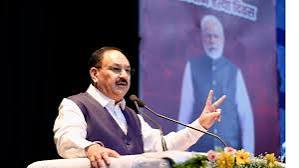
The Union Minister of Health and Family Welfare launched the Samagra Shishu Bal Swasthya Karyakram (SSBSK)
- Samagra Shishu Bal Swasthya Karyakram is a unified national programme that provides a seamless continuum of home and community-based care for every child from birth to 36 months of age.
- The programme embodies the vision of Comprehensive care during the first three years.
- It integrates the existing Home-Based Newborn Care (HBNC) and Home-Based Care for Young Child (HBYC) programmes into a single comprehensive framework.
- It introduces a risk-stratified approach, providing intensified follow-up for newborns and children identified as “at-risk”, due to conditions such as low birth weight, prematurity, delayed initiation of breastfeeding etc.
- Under the programme, ‘At-risk’ newborns will receive up to nine home visits during the first 42 days of life, while ‘At-risk’ children will receive up to eight home visits up to the age of 36 months.
- It introduces Well-Baby Sessions at every Village Health, Sanitation and Nutrition Day (VHSND) and a monthly Shishu Shivir at Ayushman Arogya Mandirs.
- It incorporates post-partum maternal mental health screening as an integral component of community-based care.
- ASHAs will undertake early screening and facilitate timely referral for further assessment and support whenever necessary.
- It also mainstreams Nurturing Care for Early Childhood Development (ECD) by promoting responsive caregiving, early learning opportunities.
- It envisages use of digital technologies to enhance service delivery, monitoring and continuity of care.
- Decision-Support Systems (DSS), child-wise digital tracking, referral mechanisms and alert systems will strengthen follow-up and case management of ‘At-risk’ newborns and children.
- These digital systems will be integrated with the JANANI Portal, U-WIN Portal, MPCDSR Portal, RBSK 2.0 Portal and POSHAN Tracker, enabling seamless data exchange through ABHA and Baal-ABHA IDs.
- It includes tailored strategies to strengthen home-based care in urban areas, particularly for children residing in slums, migrant settlements and other underserved communities.



