
Today’s Current Affairs: 20th jul 2026 for UPSC IAS exams, State PSC exams, SSC CGL, State SSC, RRB, Railways, Banking Exam & IBPS, etc
Table of Contents
Laudankia Vine Snake:
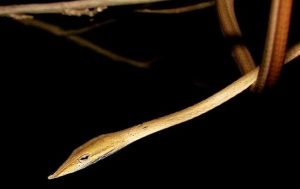
Wildlife enthusiasts have successfully photographed the rare Laudankia Vine Snake (Ahaetulla laudankia) in Udaipur’s Ubeshwar wildlife area.
- Laudankia Vine Snake ,Scientific Name: Ahaetulla laudankia.
- It is a diurnal and arboreal species belongs to the vine snake group.
- The snake is distinguished by its slender, vine-like body, chestnut-brown colour with fine black speckles and pale white patches on the lower part of its head.
- It also has a long, pointed snout, large eyes and horizontal pupils
- It inhabits dry deciduous forests, scrublands, hill slopes and other natural green habitats.
- It is endemic to India
- Its known range extends from the Eastern Ghats through Central India to eastern Rajasthan.
- Its diet mainly consists of lizards, geckos, small frogs and small birds.
- It is mildly venomous and rear-fanged, its venom is primarily effective against small prey and is not considered seriously dangerous to humans.
Manasbal Lake:
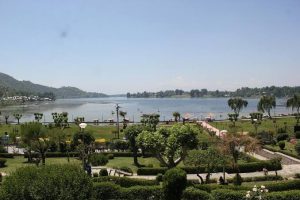
It was observed that the Manasbal Lake is on the path of ecological recovery with the return of migratory birds.
- Manasbal Lake is located in the Ganderbal district of Jammu and Kashmir, India.
- The lake lies at an altitude of about 1,585-1,600 metres in the Jhelum Valley.
- It is considered the deepest freshwater lake in India with a depth of about 13 metres (43 ft).
- The name is derived from Lake Manasarovar.
- It is surrounded by Baladar mountains, Karewa plateau in the north and Ahtung hills in the south used for limestone extraction.
- It is being fed mainly by precipitation and over 1,200 springs, with outflow regulated into the Jhelum River.
- The lake is monomictic with thermal stratification from March to November, thermocline depth of 9 metres and surface water temperature ranging from 6°C in winter to 27.5°C in summer.
- The Mughal garden Jaroka Bagh built by Nur Jahan overlooks the lake, while nearby ruins of a 17th century fort and an ancient temple (800-900 AD).
- The lake hosts macrophytes (emerged, submerged, floating) and phytoplankton, with plankton biomass.
- It supports zooplankton, benthos and fish species such as Schizothorax niger, S. esocinus, Cyprinus carpio and Neomacheilus latius, contributing to local fisheries and economy.
First Meeting Of The India-Belgium Strategic Dialogue:
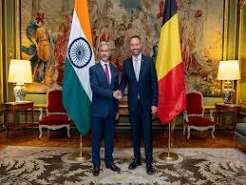
The first meeting of the India-Belgium Strategic Dialogue was held in Brussels.
- Belgium is a Western European nation.
- It is bordered by 4 countries: by the Netherlands in the north; by Germany in the east; by Luxembourg in the southeast and by France in the southwest.
- It is bounded by the North Sea in the northwest.
- Capital City: Brussels
- It has three main geographical regions: the coastal plain to the northwest, the central plateau, and the Ardennes uplands to the southeast.
- The highest point is the Botrange, at 2,276 ft. (694m).
- The Scheldt, Meuse, and Yser are the three major rivers of the country.
- The country also has several lakes like Lake Genval, Lake Gileppe, Lake Eupen, Lake Robertville, etc.
- It mainly consists of Limestone, cobalt, copper, iron and steel, lead, nitrogen (ammonia), tin, and zinc.
World Artificial Intelligence Cooperation Organization:

29 countries recently signed an agreement in Shanghai to set up the World Artificial Intelligence Cooperation Organisation, or WAICO.
- World Artificial Intelligence Cooperation Organization (WAICO) is an independent intergovernmental international organization headquartered in Shanghai, China.
- It was first proposed by China in July, 2025.
- It aims to promote international cooperation and global governance on AI.
- The organization will uphold the purposes of the UN Charter, be committed to extensive consultation and joint contribution for shared benefit, and adhere to a people-centered
- Founding Members: China, Russia, Pakistan, South Africa, Brazil, Malaysia, Myanmar, Cambodia, Indonesia, Laos, Oman, Cuba, Venezuela, Belarus, Serbia, Kazakhstan, Kyrgyzstan, Tajikistan, Uzbekistan, Algeria, Cameroon, Congo, Ethiopia, Kenya, Lesotho, Mozambique, Senegal, Zambia, and Nicaragua.
E-Commerce Council of India:
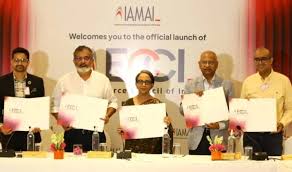
The Internet and Mobile Association of India (IAMAI) recently launched the E-Commerce Council of India (ECCI), a first-of-its-kind national platform dedicated to unify India’s $120 billion digital commerce ecosystem.
- E-Commerce Council of India (ECCI) is a first-of-its-kind national platform dedicated to advancing the country’s digital commerce ecosystem through collaborative engagement between industry, government, and other key
- It was launched by the Internet and Mobile Association of India (IAMAI).
- The ECCI aims to bring together policymakers, e-commerce marketplaces, brands, retailers, logistics providers, technology companies, payment solution providers, startups, exporters, MSMEs, industry experts, and academic institutions.
- The council will focus on policy advocacy, research, and industry engagement across areas such as product and service e-commerce,cross-border trade,logistics and Supply chain,mobility,travel technology,MSME enablement,digital payments,consumer trust,artificial intelligence.
Internet and Mobile Association of India (IAMAI):
- Established in 2004, the IAMAI is a not-for-profit industry body registered under the Societies Registration Act, 1860.
- It is the country’s only organization representing the digital services industry, with over 500 members, including Indian and multinational corporations, as well as startups.
- The overarching objective of IAMAI is to ensure the progress of the internet and the digital economy.
- It is dedicated to presenting the unified voice of the businesses it represents to the government, investors, consumers, and other stakeholders.
- IAMAI advocates free and fair competition and progressive and enabling laws for businesses as well as for consumers.
- IAMAI represents varied sectors such as digital advertising, digital entertainment, traveltech, online gaming, digital payments, fintech, digital commerce, edtech, healthtech, agritech, big data, ML, AI & IoT, AR/VR, logistics-tech, and so on.
- Its major areas of activities are public policy and advocacy, business to business conferences, research, promotion of start-ups, and promotion of consumer trust and safety.
What is ‘Boss Scam’?
Securities and Exchange Board of India (SEBI) recently cautioned regulated entities and listed firms against a ‘Boss Scam’, wherein fraudsters impersonate chief executives or senior officials to trick finance teams into transferring funds.
- Boss Scam is an emerging cyber fraud where fraudsters impersonate Chief Executive Officers (CEOs), Managing Directors (MDs) and other senior officials to trick finance executives into transferring funds.
- Cyber criminals are using two major methods to carry out the fraud.
- Under the first method, fraudsters use deepfake technology, including AI-generated voice cloning, fake video calls and false social media groups to impersonate top executives.
- Finance officials are then instructed to transfer money to a specified bank account.
- In some cases, they are also told not to disclose the transaction by claiming that it relates to Unpublished Price Sensitive Information (UPSI).
- Another method involves sending compressed ZIP files containing malicious executable programs.
- Once opened, these files can compromise systems and hijack the active WhatsApp Web sessions.
- The fraudster gets access to the finance officer’s WhatsApp account and then contacts accounts or finance employees, instructing them to make immediate payments to specified bank accounts
- In some instances, attackers modify contact lists by saving their own numbers under the names of CEOs or MDs, making fraudulent messages appear genuine.
MH-60R Seahawk:
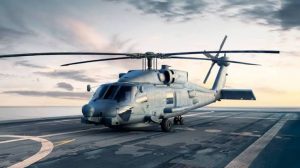
The Indian Navy recently received another MH-60R Seahawk multi-role naval helicopter from the United States.
- MH-60R Seahawk is a state-of-the-art multi-mission naval helicopter.
- Often called the “Romeo,” it is manufactured by US defence major Lockheed Martin.
- It is an all-weather helicopter designed for anti-submarine warfare (ASW), anti-surface warfare (ASuW), maritime surveillance, search and rescue, medical evacuation, and shipborne operations.
- It is the S. Navy’s primary anti-submarine and surface warfare helicopter.
- Besides the United States, the platform is operated by countries including India, Australia, Japan, South Korea, Israel, Greece, Norway, Saudi Arabia, Singapore, Spain, Thailand, and Brazil.
- India signed a deal with the United States to procure 24 MH-60R Seahawk helicopters in 2020 as part of efforts to modernise the Indian Navy’s helicopter fleet.
- It measures 19.5 m (63.9 ft) in length with a height of 5.18 m.
- The helicopter can carry a crew of three to four personnel, accommodate five additional passengers, lift nearly 3,000 kg of payload, attain a top speed of about 330 kmph and has an operational range of around 830 km.
- It can endure airborne for up to7 hours when deployed in undersea warfare missions and up to 3.3 hours in surface warfare operations.
- It is one of the world’s best submarine-hunting helicopters, equipped with advanced sensors like the AN/AQS-22 ALFS dipping sonar, sonobuoys, and multi-mode radar.
- The cockpit is also fitted with a global positioning system, an inertial navigation system, a satellite communication system, and secure VHF/UHF communications.
- It can be armed with Mk 54 lightweight torpedoes for anti-submarine warfare missions.
- For surface warfare missions, the MH-60R can carry AGM-114 Hellfire missiles, lightweight torpedoes, and machine guns.
What is Vishwas 2026?

The Employees’ Provident Fund Organisation (EPFO) recently launched VISHWAS, 2026 to facilitate amicable settlement of disputes relating to the levy of damages and penalty-related disputes.
- Vishwas 2026 was launched by the Employees’ Provident Fund Organisation (EPFO), under the Ministry of Labour & Employment.
- It is a one-time dispute resolution initiative to facilitate amicable settlement of disputes relating to levy of damages and penalty-related disputes.
- The scheme provides employers with an opportunity to settle eligible cases through a transparent, fully digital and time-bound process.
- It has been introduced with the objective of promoting voluntary compliance, reducing litigation, and enabling speedy resolution of long-pending disputes relating to penalty/damages while safeguarding the interests of employees.
- The VISHWAS scheme came into effect on June 29, 2026. It will remain operational for six months from the date of notification.
- The scheme will broadly cover four categories of cases, including:
- Cases where orders for penalty or damages are under challenge before a judicial forum.
- Final damages or penalty orders where recovery is pending or only partly made, including Recovery Certificate (RRC) cases.
- Cases where notices have been issued but final orders for damages or penalty are yet to be passed.
- Cases where notices for penalty or damages are yet to be issued.
- It enables eligible employers to settle disputes by offering substantially reduced rates for historical defaults (prior to 14 June 2024), subject to payment of the applicable statutory interest and compliance with prescribed conditions.
- For employers, the scheme presents a valuable opportunity to regularise legacy EPF compliance issues at a significantly lower financial cost.
- Although the scheme is primarily directed at employers, employees stand to benefit through quicker resolution of long-pending EPF disputes and improved compliance by establishments.
Operation Southern Readiness 26-2:
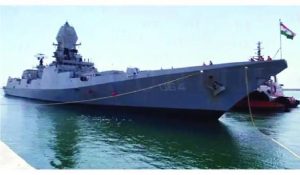
The Indian Navy is set to host Operation Southern Readiness 26-2 at the Southern Naval Command, Kochi.
- Operation Southern Readiness 26-2 is a multinational maritime training exercise.
- It is hosted by the Indian Navy at the Southern Naval Command, Kochi.
- The four-day multinational training engagement will be conducted in partnership with the Combined Maritime Forces (CMF) under the aegis of the Indian Navy-led Combined Task Force 154 (CTF 154), CMF’s dedicated Training Task Force.
- It brings together personnel from CMF partner nations for professional maritime security training, practical exercises, and the exchange of best practices.
- The CMF is a multinational maritime partnership comprising more than 40 nations, with the Indian Navy playing an active role in advancing collaborative maritime security efforts.
- The initiative is aimed at strengthening regional capacity building and enhancing collective maritime security through closer cooperation among participating countries.
- The training programme will combine classroom instruction, simulator-based training, and practical exposure.
- Sessions will cover areas including Maritime Law, Maritime Domain Awareness and Information Sharing, Counter-Narcotics, Force Protection, Asymmetric Threats, and maritime Uncrewed Systems.
- Participants will also be trained in Damage Control and Firefighting, maritime communications, Survival at Sea, Boarding procedures, and hands-on training onboard Indian naval ships.
Qeshm Island:
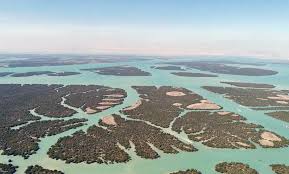
More than 10 projectiles struck Iran’s Gulf island of Qeshm in the strategic Strait of Hormuz recently, as hostilities resumed between Tehran and Washington.
- Qeshm Island is the largest island in the Persian Gulf near the Straits of Hormoz.
- It belongs to Iran.
- The Arabic name means “long island.”
- It lies parallel to the Iranian coast, across the naval port city of Bandar Abbas, from which it is separated by the Khuran (Khoran) or Clarence Strait.
- It has an irregular outline and a generally rocky coast except for sandy bays and mud flats fringing the northwest.
- Irregular table-topped hills almost cover Qeshm.
- It has a hot and arid climate, typical of the Persian Gulf region.
- It is home to the Hara mangrove forest, a vital breeding ground for migratory birds, and the Qeshm Geopark – the first of its kind in the region to be recognised by UNESCO, an honour it attained in 2006.
- Namakdan Salt Cave: One of the world’s longest salt caves, stretching for more than 6km, is located on the island.
Arun-3 Hydroelectric Project:
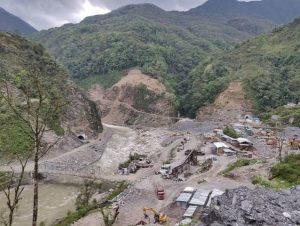
The Power Secretary recently reviewed the progress of SJVN’s 900 MW Arun-3 Hydroelectric Project in Nepal.
- It is a 900 MW run-of-the-river hydropower project being developed on the Arun River in the Sankhuwasabha District of Eastern Nepal.
- Arun is a tributary of the Koshi River in Nepal.
- It envisages a concrete gravity dam and a Head Race Tunnel (HRT) of 11.74 km with an underground power house containing four generating units of 225 MW each on the left bank.
- Once completed, it will be the biggest hydroelectric facility in Nepal.
- It is being developed on a build-own-operate and transfer (BOOT) basis by Satluj Jal Vidyut Nigam (SJVN) Arun 3 Power Development Company (SAPDC), a joint venture of the Government of India and the Government of Himachal Pradesh.
- SAPDC will operate the facility for a period of 25 years, excluding the construction period of five years, before transferring ownership to the Nepal government.
- Nepal will receive 21.9% of the electricity generated at the power plant as free power during these initial 25 years of commercial operations.
- The project will provide surplus power to India, strengthening economic linkages with Nepal.
- The power from the project shall be exported from Dhalkebar in Nepal to Muzaffarpur in India.
Malvan- Anti-Submarine Warfare Shallow Water Craft:
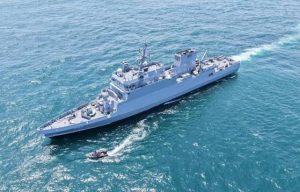
The Indian Navy is set to commission the Malvan Anti-Submarine Warfare Shallow Water Craft (ASW-SWC).
- It is the second of the Mahe-class Anti-Submarine Warfare Shallow Water Craft (ASW-SWC).
- It has been indigenously designed and constructed by Cochin Shipyard Limited.
- It draws its name from the historic coastal town of Malvan in Maharashtra,
- It has the legacy of the erstwhile INS Malvan, an Indian Naval Minesweeper which remained in service till 2003.
- Features of Malvan – Anti-Submarine Warfare Shallow Water Craft
- Capacity: It has displacing capacity of 1,100 tons.
- Propulsion: It is Waterjets propelled ASW SWCs
- It is equipped with torpedoes, multifunctional anti-submarine rockets, and state-of-the-art sensors including advanced radars and sonar systems.
- The ship is equipped for underwater surveillance, Anti-Submarine Warfare (ASW) operations in coastal waters, Low Intensity Maritime Operations (LIMO) along with mine warfare capabilities.
- It has over 80% indigenous content and marks a milestone in indigenous warship construction and reaffirms the Government of India’s vision of ‘Aatmanirbhar Bharat’.
PARIVARTAN Scheme:
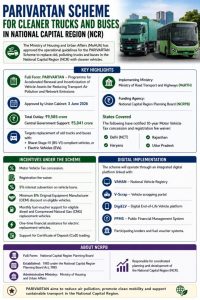
The Ministry of Housing & Urban Affairs (MoHUA) has approved the Guidelines for the PARIVARTAN Scheme.
- PARIVARTAN (Programme for Accelerated Renewal and Incentivization of Vehicle Assets for Reducing Transport Air Pollution and Network Emissions) was launched by the central government.
- It is aimed at facilitating the replacement of older, highly polluting trucks and buses operating in the National Capital Region (NCR) with cleaner Bharat Stage (BS)-VI compliant or electric vehicles.
- Implementing Ministry: It is implemented by the Ministry of Road Transport and Highways (MoRTH).
- Funding: It is funded by the National Capital Region Planning Board (NCRPB)
- States Covered: Rajasthan, Haryana, Uttar Pradesh and NCT of Delhi issued notifications granting Motor Vehicle Tax concessions.
- Incentives under the Scheme:
- Motor Vehicle Tax concessions, registration fee waivers,
- 5% interest subvention on vehicle loans,
- A minimum 8% OEM discount on eligible new vehicles,
- Monthly fuel voucher support for eligible diesel and CNG replacement vehicles, and
- One-time financial assistance for electric replacement vehicles and Certificate of Deposit (CoD) trading.
- It will be implemented through an integrated digital platform that will seamlessly interface with VAHAN, V-Scrap, DigiELV, the Public Financial Management System (PFMS), participating lenders.
- MoHUA Approves Guidelines for PARIVARTAN Scheme to Accelerate Replacement of Old Trucks and Buses in NCR



