
Today’s Current Affairs: 21st jul 2026 for UPSC IAS exams, State PSC exams, SSC CGL, State SSC, RRB, Railways, Banking Exam & IBPS, etc
Table of Contents
India’s First Immersive Language Museum:
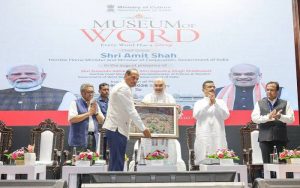
India’s first immersive language museum, the Museum of Word, was recently opened at the National Library.
- India’s First Immersive Language Museum, Museum of Word, also known as Shabdalok, at the National Library campus in Kolkata, is India’s first immersive language museum.
- It was developed by the National Library under the Union Culture Ministry.
- It showcases the country’s linguistic heritage and traces the evolution of oral and written traditions through interactive, technology-driven exhibits.
- The first phase of the museum chronicles the diversity of Indian languages, scripts, and literature.
- Instead of being a conventional repository, it has been designed as an immersive cultural experience with digital displays, holograms, and motion-sensor technology to engage visitors.
- The museum has nine galleries that explore different facets of the history of languages and their influence on India’s civilization and culture.
- Shabdalok celebrates India’s 22 official languages and traces their journey from oral traditions and ancient manuscripts to printed works and modern electronic texts.
- One of its key attractions allows visitors to trace the evolution of words over centuries, illustrating how their pronunciation, meaning, and usage have changed over time.
Aral Sea:
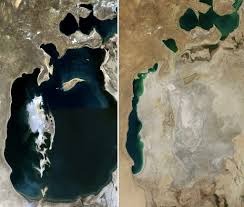
Drying of the Aral Sea has released more than 200 teragrams of carbon from exposed lake-bed sediments, turning a once-stable carbon reservoir into an active source of greenhouse gases, according to a new study.
- Aral Sea is a saline lake in Central Asia straddling the boundary between Uzbekistan and Kazakhstan to the south and north.
- It was once a large saltwater lake in Central Asia and the world’s fourth-largest body of inland water.
- The remnants of it nestle in the climatically inhospitable heart of Central Asia, to the east of the Caspian Sea.
- The Aral Sea depression was formed toward the end of the Neogene Period.
- It was made by waters from the Syr Darya and the Amu Darya rivers that were dependent on glacial melt.
- The Aral Sea is located within the harsh climate region of Central Asia.
- The area experiences a desert-continental climate, characterized by hot summers, cold winters, and varying diurnal air temperature.
- The lake once covered large area between the Kyzylorda and Aktobe regions in Kazakhstan and the Karakalpakstan region of Uzbekistan.
- However, the lake started shrinking in the 1960s, when the Soviet government decided to divert the Syr Darya and the Amu Darya, to irrigate the surrounding desert region.
- By the 1980s, the Aral Sea had shed 80% of its volume, resulting in the extinction of native fish species and severe ecological degradation, including the emergence of the Aralkum Desert.
- Today it is on the verge of complete disappearance.
Hoollongapar Gibbon Wildlife Sanctuary:
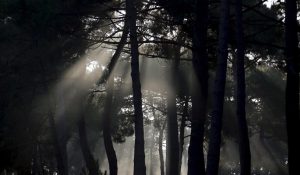
Assam’s Hoollongapar Sanctuary, which is home to the endangered western hoolock gibbon, is also one of the richest butterfly habitats in the state where several of the rare winged beauties are found, says a new book.
- Hoollongapar Gibbon Wildlife Sanctuary is located in the Jorhat district of Assam.
- It is named after the Hoolock Gibbon, the only ape species found in India. It has the thickest gibbon populations in Assam.
- The Bhogdoi River creates a waterlogged region dominated by semi-hydrophytic plants along the border of the sanctuary.
- Most of the vegetation is evergreen in character and is composed of several canopy layers.
- Hollong trees, Nahar trees and many shrubs.
- It is home to the only nocturnal primate found in the northeast Indian states, the Bengal slow loris.
- Other primates include the stump-tailed macaque, northern pig-tailed macaque, eastern Assamese macaque, rhesus macaque, and capped langur.
- Also found at the sanctuary are Indian elephants, tigers, leopards, jungle cats, wild boar, three types of civet, four types of squirrel, etc.
- The sanctuary is home to many species of birds, including several rare and endangered species, such as the white-winged wood duck, the Bengal florican, and the great hornbill.
Mangal Pandey:
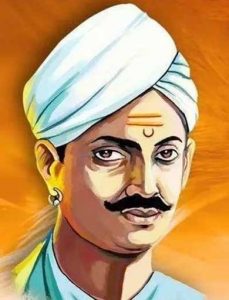
The Prime Minister recently paid tributes to the great revolutionary Mangal Pandey ji on his birth anniversary.
- Mangal Pandey was a brave Indian soldier during the pre-independence era.
- His attack on British officers on March 29, 1857 is widely regarded as one of the earliest triggers of the Revolt of 1857, referred to in different historical traditions as the First War of Independence or the Sepoy Mutiny.
- He was born on July 19, 1827, Ballia district in Uttar Pradesh.
- In 1849, Pandey joined the army of the British East India Company at the age of 22.
- He served as a sepoy in the 6th Company of the 34th Bengal Native Infantry in Barrackpore.
- He revolted against the East India Company for introducing cartridges that were greased with animal fat, as it hurt the religious sentiments of the soldiers.
- Mangal Pandey attacked two British officers on March 29, 1857.
- Following this, he was hanged to death on April 8, 1857, in Barrackpore. He was only 29 years old when he was executed.
- However, his act of revolt, subsequent arrest, and hanging triggered a nationwide uproar and marked the beginning of the revolt of 1857.
- Following this huge mass movement, the British were forced to recognise the trouble and passed new rules through the Government of India Act, 1858.
Narwar Fort:
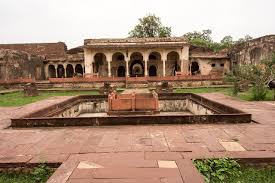
A daring overnight theft at Madhya Pradesh’s Narwar Fort has left authorities scrambling after a 3,000 kg Scindia-era cannon was recently stolen by an armed gang.
- Narwar Fort is a historical fort located in the Shivpuri district of Madhya Pradesh.
- It is spread atop the Vindhya ranges.
- Madhav National Park is located a short distance to the west.
- The Narwar town, which lies below the fort, is said to have been the capital of Raja Nala of the Sanskrit epic Mahabharata, and it was called Nalapura until the 12th century.
- Constructed by the Kachwaha Rajputs in the 10th century, Narwar Fort has witnessed the rise and fall of various dynasties.
- Successively held by the Kachwaha, Parihara, and Tomara Rajputs, it eventually fell under Mughal rule in the 16th century.
- It was conquered by the Maratha chief Scindia in the early 19th century.
- The interior of the fort is divided by cross walls into four sections known as “ahata” and “dholaahata,”
- The architecture of the fort and palaces is basically Rajput in style with flat ceilings, fluted columns, and multifold arches.
- The inner walls of the palaces have been decorated with bright paint and glass beads.
- Outside the walled town are memorial pillars of the Tomar chiefs.
Mexico : In News

A powerful magnitude 7.3 earthquake struck off the coast of southern Mexico triggering a tsunami warning for parts of the Pacific.
- Mexico is located in the southern part of North America.
- It shares its land border with the United States of America to the north and with Guatemala and Belize to the southeast.
- It is surrounded by the Pacific Ocean to the south and west; by the Gulf of Mexico and the Caribbean Sea to the east.
- Capital City: Mexico City.
- It is a part of the circum-Pacific “Ring of Fire”—a region of active volcanism and frequent seismic activity.
- It consists of the Baja Peninsula and Yucatan Peninsula.
- Major Rivers: Rio Grande River and Colorado river (which is shared with US)
- Lakes: Lake Chapala and Lake Cuitzeo.
- Major mountain range: Sierra Madre.
- Natural Resources: Petroleum, silver, Antimony, Copper, Gold, Lead, zinc, natural gas.
Kolleru Wildlife Sanctuary: In News
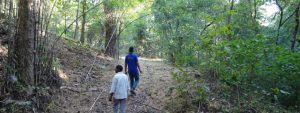
The Supreme Court-appointed Central Empowered Committee (CEC) is learnt to have issued directions to the Andhra Pradesh government over illegal fish ponds and environmental degradation in the Kolleru Wildlife Sanctuary.
- Kolleru Wildlife Sanctuary is located in the West Godavari and Krishna districts of Andhra Pradesh.
- It was established in November 1999, under the Wildlife Protection Act of 1972.
- The sanctuary covers wetlands and marshes that provide a vital habitat for diverse flora and fauna.
- The sanctuary protects part of the Kolleru Lake wetland, which was designated as a Ramsar Site of International Importance in 2002.
- The Lake is fed directly by the seasonal Budameru and Tammileru rivers and is connected to the Krishna and Godavari systems by 67 inflowing drains and channels.
- It is a crucial wetland ecosystem and serves as a stopover point for migratory birds.
- The sanctuary’s flora includes various aquatic plants, submerged macrophytes, and wetland vegetation that provide essential food and shelter for the diverse bird species.
- It is home to many species of resident and migratory birds.
- Commonly found birds in the sanctuary are: little egret, cattle egret, pied kingfisher, small blue kingfisher, blackcapped kingfisher, pond heron, reef heron, grey heron, night heron, etc.
Electronic Gold Receipts:

The National Stock Exchange of India (NSE) introduced Electronic Gold Receipts (EGRs) which is a new exchange-traded segment for buying and selling gold in electronic form.
- Electronic Gold Receipts (EGRs) are exchange-traded securities representing ownership of physical gold (specified purity) stored in SEBI-regulated vaults.
- They can be held electronically in a demat account, bought and sold in different denominations on the bourse and converted into physical gold via prescribed process.
- Buying and Selling of Electronic Gold Receipts:
- Like shares, EGRs follow a T+1 settlement cycle with the receipts credited to the buyer’s demat account the next trading day.
- Retail investors, jewellers, bullion traders, refiners, institutional investors and other eligible market participants can buy EGRs via registered stockbrokers.
- Investors need both trading and demat accounts to buy and sell EGRs.
- The EGRs are available in two purity standards: 999 (99.9% pure gold) and 995 (99.5% pure gold).
- In each purity category, investors have six different denominations such as 10 mg, 100 mg, 1 g, 10 g, 100 g and 1 kg.
- Those who prefer physical gold can convert EGRs into gold whenever needed.
- This offers a transparent and standardised way to own gold while removing concerns over purity and personal storage.
Directorate General of Maritime Administration:
The Directorate General of Maritime Administration (DGMA) has directed ship-owners to avoid deploying Indian seafarers on vessels undertaking voyages through the Strait of Hormuz until further orders.
- Directorate General of Maritime Administration is the apex maritime authority of the Government of India which was established in September 1949.
- It is functioning as an attached office of the Ministry of Ports, Shipping and Waterways.
- It deals with all executive matters, relating to merchant shipping.
- Headquarters: Mumbai
- Functions of the Directorate General of Maritime Administration:
- The Directorate is responsible for the implementation of national shipping policy and legislation.
- It is responsible for promotion of maritime education and training in coordination with the International Maritime Organization (IMO).
- It extends to the registration, survey and certification of vessels, examination and certification of Merchant Navy Officers.
- Issuing Licenses and Certifications to Seafarers: DG Shipping issues various important certificates to merchant navy officers, ensuring that they are trained and qualified to work on board ships at sea.
- As part of the implementation of its mandate, DG Shipping ensures the continuous development of maritime education and skills training.
- One of the most important roles of DG Shipping is safeguarding the rights of Indian seafarers.
- DG Shipping ensures that both Indian-flagged ships and foreign vessels operating in Indian waters and ports are compliant with international conventions and regulations.
India’s First Night Safari:
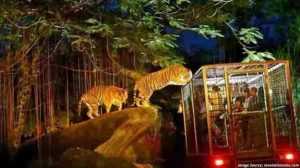
The SC has allowed the UP government to proceed with the country’s first night safari and the world’s fifth after Singapore, Thailand, China and Indonesia and zoological park project at Kukrail Reserve Forest in Lucknow.
- The project has received approval from the Central Zoo Authority and the Ministry of Environment, Forest and Climate Change.
- Kukrail Reserve Forest, notified in 1950, is located in Lucknow, Uttar Pradesh and spans around 4,500 acres, making it the city’s largest contiguous green cover.
- Kukrail Reserve Forest is named after the Kukrail stream, a tributary of the Gomti River.
- Kukrail Gharial Rehabilitation Centre (KGRC): The forest is also home to the KGRC, which is also home to India’s first gharial conservation centre, established in 1975 to save the critically endangered gharial.
- Urban Green Lung acts as Lucknow’s key urban green lung, helping in carbon sequestration, temperature regulation, groundwater recharge, air purification and climate resilience.
- The forest supports important urban biodiversity, including birds, reptiles, butterflies and small mammals, and contributes to the ecological health of the Kukrail stream.
White Rabbit Technology- Based IST Dissemination Demonstration Network
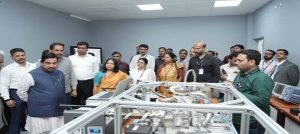
The Union Minister for Consumer Affairs, Food & Public Distribution commissioned the White Rabbit Technology-based Indian Standard Time (IST) Dissemination Demonstration Network at the Regional Reference Standard Laboratory (RRSL), Bengaluru, establishing a major milestone in building indigenous, secure Digital Public Infrastructure (DPI) for the country.
- IST Dissemination Demonstration Network: It is a secure, tamper-resistant network designed to distribute IST across critical digital infrastructure, ensuring precise synchronization across connected systems.
- The network is a collaborative effort between the Department of Consumer Affairs, the CSIR-National Physical Laboratory (CSIR-NPL) (the custodian of IST), and the Indian Space Research Organisation (ISRO).
- It disseminates IST that is directly traceable to the national time standard, UTC (NPLI) maintained by CSIR–NPL, using Precision Time Protocol (PTP)-based White Rabbit (WR) Technology.
- It is engineered to deliver resilient, tamper-proof time synchronization across banking and financial markets, telecommunications (5G/6G), power systems (smart grids), transportation, and digital governance.
- A successful verification test of secure time transmission was already completed between the Regional Reference Standard Laboratory (RRSL) in Bengaluru and the National Stock Exchange (NSE) facility in Chennai.
- White Rabbit (WR) is an advanced extension of the Precision Time Protocol (IEEE 1588). It combines highly accurate timing with standard Ethernet networking capabilities, ensuring that data packets carry hyper-accurate timestamps.
- It allows for synchronization of network nodes with microsecond-to-nanosecond accuracy over optical fibers.
- Unlike foreign satellite-based systems like the Global Positioning System (GPS), which are vulnerable to spoofing, jamming, and signal loss, WR transmitted over terrestrial optical networks is highly secure and resilient.
Breeding of Indian Grey Hornbills in Gir:
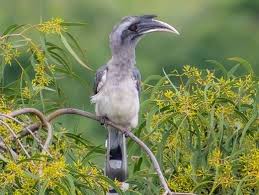
After disappearing from Gujarat’s Gir forests for over 60 years, the Indian Grey Hornbill has successfully bred for the fourth consecutive year following its reintroduction in 2021.
- 40 Indian Grey Hornbills were translocated from Gujarat’s Aravalli forests and released in two phases (28 birds during 2021–22 & 12 birds in 2023) 11 male hornbills were fitted with satellite transmitters to monitor their movement, habitat use, settlement patterns, and breeding behaviour.
Indian Grey Hornbill - The Indian Grey Hornbill is a hornbill species found in the Indian subcontinent and is associated with forests, wooded areas, orchards and human-modified landscapes.
- The Indian Grey Hornbill is scientifically known as Ocyceros birostris.
- It is the most widely distributed hornbill species in India, found from Jammu to Kerala and from Rajasthan to West Bengal.
- The species is also found in parts of Pakistan, Nepal and Bangladesh.
- It prefers dry plains, foothills and open habitats, and can be seen in deciduous forests, orchards, thorny scrub, gardens and urban areas with old trees.
- Improved protection after the declaration of Gir Wildlife Sanctuary in 1965 and Gir National Park in 1975 created favourable conditions for reintroduction.
- IUCN Status: Least Concern
- The bird has an ashy, silvery-grey body, long tail feathers with a white band, and a curved ivory-coloured beak that is blackish at the base.
- It has a narrow protruding casque on its beak, with males having a larger casque than females.
- Adults have red eyes and grey skin around the eyes, while juveniles have brown-orange eyes with reddish-orange skin around them.
- It acts as an important seed disperser and helps regenerate trees across forests, rural landscapes and urban spaces.
The Mission Aagaman: Vikram-1:

Skyroot Aerospace successfully launched Vikram-1 under Mission Aagaman, making it India’s first privately developed orbital-class rocket to place multiple payloads into Low Earth Orbit (LEO).
- Mission Aagaman is the maiden orbital launch mission of Vikram-1, India’s first privately developed orbital launch vehicle.
- It represents the first attempt by an Indian private company to place multiple customer payloads into Low Earth Orbit (LEO).
- Developed by: Skyroot Aerospace
- Authorised and facilitated by IN-SPACe (Indian National Space Promotion and Authorisation Centre)
- Aim:
- To validate India’s first indigenous private orbital launch capability.
- To demonstrate the commercial viability of private launch services under the reforms introduced through the Indian Space Policy 2023.
- Key Features:
- Launch Window: Between 12 July and 4 August 2026.
- Orbit: Payload deployment into 450 km Low Earth Orbit (LEO).
- Multiple Payload Mission: Carries satellites from Indian and international customers, including:
- SCOPE (Skyroot Aerospace)
- SOLARAS S3 (Grahaa Space)
- DCUBED technology demonstration payload
- Embrace robotic debris-capture payload (Cosmoserve Space)
- Symbolic Payloads: Includes Cosmic Bloom artwork and an 18-karat gold micro-rocket featuring microscopic sculptures of C. V. Raman, Vikram Sarabhai, and A. P. J. Abdul Kalam.
The UNFPA Demographic Futures Survey 2026:

The United Nations Population Fund (UNFPA) published its groundbreaking global study, the Lives, Choices and Futures — Demographic Futures Survey 2026.
- The Demographic Futures Survey 2026 is a cross-national, global study designed by UNFPA to examine the aspirations, relationship patterns, and family decisions of young adults aged 18–39. Sampling 108,926 internet-connected young adults across 73 countries and territories, it provides comparative data on how economic, social, and institutional factors shape transitions to adulthood.
Key Findings of the Report:
- Over two-thirds of surveyed young adults prefer a living arrangement that includes marriage—36% favoring marriage before cohabitation and 34% after cohabiting.
- Among respondents aged 25–39 who wish to marry or live with a partner, 25% are currently single and not dating, with a higher share among men (30%) than women (19%).
- Financial security is rated as the most critical consideration for entering a partnership (81%), with economic and housing barriers listed as primary obstacles (57%).
- Financial stability (88%), stable employment (87%), and emotional readiness (85%) rank as the top three non-negotiable thresholds before having children.
- 80% of respondents state that the joy and happiness children bring is their top motivation for parenthood, whereas state incentives and workforce contributions rank among the lowest motivators.
- Economic and housing constraints represent the single highest barrier to parenthood globally (72%), followed by the lack of a suitable partner and reproductive health concerns.
- Across all world regions, the average number of children among older respondents (aged 35–39) is consistently lower than the ideal number reported by younger cohorts (aged 18–39).
- In India, women aged 18–39 desire an ideal family size of 2.1 children (compared to an actual average of 1.0 child among those aged 35–39), while Indian men report an ideal of 2.2 children (versus 1.1 actual).
FIFA World Cup 2026:
Spain are the new FIFA World Cup 2026 champions after edging Argentina 1-0 in extra time to end Lionel Messi’s bid for back-to-back titles.The FIFA World Cup 2026 was the 23rd edition of the quadrennial flagship international men’s football tournament organized by FIFA. It crowned Spain as the world champions for the second time in their history.
Host Nations: The 2026 tournament was co-hosted across 16 cities in three North American nations:
- Canada: Toronto, Vancouver
- Mexico: Guadalajara, Mexico City, Monterrey
- United States: Atlanta, Boston, Dallas, Houston, Kansas City, Los Angeles, Miami, New York/New Jersey (MetLife Stadium), Philadelphia, San Francisco Bay Area, Seattle



