
Today’s Current Affairs: 22nd jul 2026 for UPSC IAS exams, State PSC exams, SSC CGL, State SSC, RRB, Railways, Banking Exam & IBPS, etc
Table of Contents
e-Shram Portal : In News
India’s e-Shram portal has registered more than 31.78 crore unorganised workers, strengthening its role as the country’s largest digital database for workers in the informal sector.
- It was launched by the Ministry of Labour and Employment on 26th August 2021 to support and empower the unorganized workforce.
- It is designed to create a comprehensive National Database of Unorganised Workers (NDUW).
- It is the first-ever national database of unorganised workers including migrant workers, construction workers, gig and platform workers, etc.
- Objectives:
- Establish a centralized database of unorganized workers for effective policy implementation.
- Enhance access to social security schemes and benefits for workers in sectors such as agriculture, construction, domestic work, and street vending.
- Facilitate job matching and skill development opportunities.
- Strengthen labor market resilience by integrating unorganized workers into the formal economy.
- Promote financial inclusion through direct benefit transfers and digital payments.
- Eligibility for Registering on e-SHRAM Portal:
- An unorganised worker (UW).
- Age should be between 16-59 years.
- Not a member of EPFO/ESIC or NPS (Govt. funded)
- Possess an Aadhaar card, a valid mobile number linked to Aadhaar, and a bank account.
- Features:
- Registered workers receive a UAN linked to their Aadhaar, enabling seamless access to benefits.
- The portal streamlines the registration process, requiring minimal documentation such as Aadhaar and bank account details. The ease of self-registration is also available to the beneficiaries.
- Workers from diverse regions can access the portal in multiple Indian languages, ensuring inclusivity.
- A dedicated helpline and support system address workers’ queries and grievances promptly.
- Registered workers can connect with employment opportunities, skilling, apprenticeship, pension schemes, digital skilling, and state-specific schemes through the portal.
- Family details for migrant workers are captured, aiding in the provision of child education and women-centric schemes for those who have migrated with their families.
- The data of construction workers registering on e-Shram is shared with the concerned Building and Other Construction Workers’ (BOCW) Welfare Boards, ensuring their registration with the respective boards and access to schemes meant for them.
- A Data Sharing Portal has been launched to allow the secure sharing of e-Shram beneficiary data with State and Union Territory governments.
Moldova:
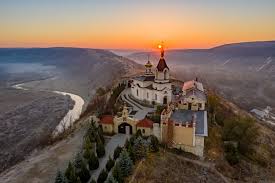
The President of India recently reached Moldova, marking the first visit by an Indian President to Moldova.
- Moldova, officially the Republic of Moldova, is a landlocked country in Eastern Europe.
- It is situated in the east of the Carpathian Mountains between the Prut and Dniester Rivers.
- It is bordered by Romania to the west and Ukraine to the north, east, and south.
- Formerly known as Bessarabia, this region was an integral part of the Romanian principality of Moldavia until 1812, when it was ceded to Russia by its suzerain, the sultan of the Ottoman Empire.
- Bessarabia remained a province of the Russian Empire until after World War I, when it became a part of Greater Romania.
- It reverted to Russian control in 1940–41.
- Again after World War II, it was joined to a strip of formerly Ukrainian territory, the Moldavian Autonomous Soviet Socialist Republic, on the left bank of the Dniester River to form the Moldavian Soviet Socialist Republic.
- Upon the collapse of the Soviet Union in August 1991, this republic declared its independence and took the name Moldova.
- The government system is a republic; the chief of state is the president, and the head of government is the prime minister.
- Capital: Chișinău
- Currency: Moldovan Leu (MDL)
- Romanian is the official language.
- Russian, Gagauze, and Ukrainian are the major minority languages spoken in the country.
- Moldova’s economy is primarily agricultural, with wine production being a significant aspect of its identity, as the country is famous for its vineyards and winemaking traditions.
QDENGA (TAK-003):

The Drug Controller General of India (DCGI) recently granted market authorisation to Takeda Biopharmaceuticals India’s QDENGA (TAK-003), making it the first dengue vaccine to be approved in the country.
- QDENGA (TAK-003) is a dengue vaccine developed by the Japanese pharmaceutical company Takeda.
- It is the first dengue vaccine to be approved in India.
- The vaccine has been approved for the prevention of dengue in individuals aged four to 60.
- QDENGA is a live-attenuated (weakened) tetravalent vaccine designed to provide protection against all four dengue virus serotypes (DENV-1 to DENV-4).
- It is administered as a two-dose regimen, with doses given three months apart.
- The vaccine can be administered irrespective of whether an individual has had a previous dengue infection and does not require pre-vaccination screening.
- The vaccine has already been approved in more than 40 countries, including the European Union, the United Kingdom, Brazil, Indonesia, and Argentina.
Dengue:
- Dengue disease is a mosquito-borne tropical disease caused by the dengue virus, leading to mild, flu-like symptoms in most people.
- However, a small number of patients develop severe disease, with potentially fatal bleeding and organ damage.
- It poses a significant global public health threat, with prevalence in over 125 countries.
- India accounts for nearly one-third of the global dengue burden.
Pachycheles ravichandrani:
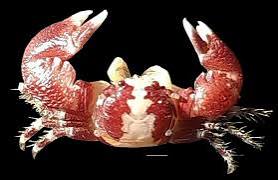
Scientists recently discovered a new species of porcelain crab named Pachycheles ravichandrani living in the shallow coral reefs of the Lakshadweep Islands
- Pachycheles ravichandrani is a new species of porcelain crab.
- While they look like true crabs, porcelain crabs are actually more closely related to squat lobsters, known for their fragile bodies, like porcelain, and tendency to lose limbs easily to escape predators.
- Pachycheles ravichandrani was found living in the shallow coral reefs of the Lakshadweep Islands, India.
- The tiny crustacean, which sports a striking deep-red colour, was found during a survey of the rocky shores of Agatti Island.
- It was found hiding among rock boulders covered in coralline algae at depths of less than one meter.
- It has a unique sub-circular shell and specialised hair-like structures, called setae, along its ridges.
- It has a distinct gap between the fingers of its smaller claw and a unique truncate cutting edge that is not seen in similar species.
- In its natural habitat, the crab is visually distinct, featuring a dark carmine red shell decorated with a white blotch down its back and white spots on its claws.
- Its walking legs are patterned with horizontal carmine stripes.
Digital Local Pass System:

The National Highways Authority of India (NHAI) has expanded the digital services available on the RajmargYatra mobile application by introducing a digital local pass system.
- Digital Local Pass System enables eligible commuters to purchase monthly toll passes digitally through the RajmargYatra mobile application without the need to visit a toll plaza.
- It has been rolled out initially at the Mundka-Bakkarwala Toll Plaza on Urban Extension Road-II (UER-II) in Delhi.
- Under the new system, residents living within a 20-kilometre radius of an eligible toll plaza can purchase a Local Pass through the app, allowing them unlimited travel through the respective toll plaza for one month.
- It uses consent-based integration with government platforms such as DigiLocker and VAHAN to automatically retrieve verified information related to a commuter’s address, vehicle registration and linked FASTag.
- Eligibility is further verified using GIS-based validation.
- Rajmargyatra App is a citizen-centric mobile App developed for smoother and better experience of citizens on highways, integrated with a web-based application for updating information and monitoring of complaint redressal.
- It provides information about the highway, toll plaza, nearby amenities such as petrol pumps, hospitals, charging stations, weather updates, etc.
Central Bureau of Narcotics:
The Central Bureau of Narcotics (CBN) has prevented an attempt to illegally divert an export consignment of 12 crore high-strength Tramadol Hydrochloride tablets.
- Central Bureau of Narcotics is a central government organization dealing with the international trade of Narcotic Drugs, Psychotropic Substances, and Precursor Chemicals.
- It works under the ambit of various United Nations Conventions and the provisions of Narcotic Drugs and Psychotropic Substances Act, 1985.
- It works under the Department of Revenue (DoR), Ministry of Finance.
- Headquarter: Gwalior
- Narcotics Commissioner is the head of Central Bureau of Narcotics.
- A Deputy Narcotics Commissioner is in-charge of each of respective three opium growing States of Rajasthan, Madhya Pradesh and Uttar Pradesh.
- The Deputy Narcotics Commissioner is assisted by the Assistant Narcotics Commissioner and District Opium Officers.
- The District Opium Officer issues licences for cultivation of opium poppy as per the General Licencing Conditions notified by the Central Government.
- Functions of Central Bureau of Narcotics:
- Supervision over licit cultivation of opium poppy in India
- Preventive and enforcement functions especially in the three poppy growing States.
- Investigation of cases under the NDPS Act, 1985 and filing of complaint in the Court.
- Issue of licences for manufacture of synthetic narcotic drugs.
- Issuance of Export Authorisations/ Import Certificate for export/ import of Narcotic Drugs and Psychotropic Substances.
- Issuance of No Objection Certificate (NOC) for import/ export of a select number of Precursor Chemicals.
Kala Sanskriti Vikas Yojana:
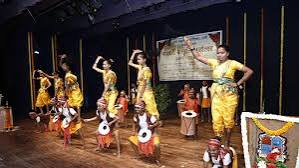
The Union Minister for Culture informed the Lok Sabha about the Kala Sanskriti Vikas Yojana (KSVY).
- Kala Sanskriti Vikas Yojana is an umbrella scheme under Ministry of Culture for the promotion of art and culture in the country.
- Under this financial assistance is provided to eligible cultural organizations/ individuals working in the field of performing arts.
- It was launched to promote, preserve, and develop India’s rich art and cultural heritage.
- It has the following sub-schemes
- Financial Assistance for Promotion of Guru-Shishya Parampara (Repertory Grant)
- Scheme of Financial Assistance for Promotion of Art and Culture.
- Scheme of Scholarship and Fellowship for Promotion of Art and Culture.
- Financial Assistance for Construction of Tagore Cultural Complexes (TCC)
- Financial Assistance for Veteran Artists.
- Seva Bhoj Yojana
- National Gandhi Heritage Site Mission
- National Award Scheme
- Features of Kala Sanskriti Vikas Yojana:
- Provides grants to artists, cultural organizations, NGOs, and institutions for conducting programs and activities.
- Encourages organization of festivals, exhibitions, seminars, workshops, and performances at various levels.
- Offers funding for creation and modernization of cultural infrastructure like auditoriums, museums, and cultural centers.
- Aims to safeguard traditions such as music, dance, crafts, and rituals, including those recognized by UNESCO.
- Promotes participation from rural areas, tribal communities, and underrepresented groups.
- Ensures cultural development and outreach across all states and regions of India.
Index of Core Industries with Base Year 2022-23:
The Office of Economic Adviser (OEA), Department for Promotion of Industry and Internal Trade (DPIIT) under the Ministry of Commerce and Industry, released the first provisional Index of Core Industries (ICI) under a new series with the base year 2022-23.
- The 2022–23 base year series replaces the 2011–12 series and is applied retrospectively from April 2023, with the back series released for historical comparison.
- The ICI is a vital macroeconomic indicator that measures the combined and individual production performance of India’s foundational industrial sectors on a monthly basis.
- The provisional ICI for a reference month will normally be released on the 20th of the following month, or on the next working day.
- Core industries serve as the structural backbone for all other industrial activities. The combined weight of these core industries in the broader Index of Industrial Production (IIP) is now 32.88% (under the new 2022-23 base), updated from the previous 40.27% under the 2011-12 series.
- The revised ICI has expanded the list of core industries from eight to nine by including Iron Ore, recognizing its extensive use in steel manufacturing and its vital contribution to industrial development.
- Consequently, the revised ICI now covers Coal, Crude Oil, Natural Gas, Refinery Products, Fertilizers, Steel, Cement, Electricity, and Iron Ore.
- The Steel Index will now be compiled using Gross Production Data instead of Net Production Data, ensuring consistency with the revised IIP.
- To eliminate double counting, only Raw Coal has been retained, while Coal Middling and Washed Coal have been excluded.
- Further, the sectoral weights have been updated using the IIP (Base Year 2022–23) and normalized to 100.
- Electricity has the highest weight (30.93%), followed by Refinery Products (22.57%), Steel (17.58%), Crude Oil (7.43%), Coal (5.59%), Iron Ore (4.90%), Cement (4.41%), Natural Gas (3.84%), and Fertilizers (2.73%).
- To maintain historical comparability, a linking factor has been calculated using the following formula:
Linking Factor = (Geometric Mean of the monthly ICI of the old series for 2022-23) / (Geometric Mean of the monthly ICI of the new series for 2022-23)
The Linking Factor for the Overall Index of Core Industries is established at 1.47. - The ICI recorded 5.0% year-on-year (Y-o-Y) growth in June 2026 (Provisional Estimates), improving from 3.2% recorded in May 2026 (Final Estimates).
Iron Ore (43.9%), Electricity (9.8%), Cement (9.8%), Steel (4.6%), and Coal (1.4%) observed positive year-on-year (Y-o-Y) growth, while Natural Gas, Crude Oil, Refinery Products, and Fertilizers recorded negative Y-o-Y growth. - Iron Ore and Electricity emerged as the major drivers of overall ICI growth in recent months.
- The cumulative ICI growth during April–June 2026 stood at 3.6% (Provisional Estimates), compared to 1.0% in the corresponding period of the previous year.
Article White Gold: India’s Cotton Story
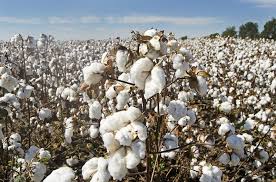
The PIB published the feature article White Gold: India’s Cotton Story – From Seed to Shirt, highlighting India’s cotton sector, recent policy initiatives, and its role in agriculture, textiles, and exports.
- White Gold: India’s Cotton Story is a PIB feature highlighting the importance of cotton in India’s agricultural, industrial, and export economy, along with recent government initiatives to improve productivity, quality, and global competitiveness.
- It showcases India’s journey from traditional cotton cultivation to a modern, technology-driven and value-added cotton ecosystem under the vision of Atmanirbhar Bharat.
Key Characteristics:
- Global Cotton Leader: India is the only country cultivating all four recognized cotton species, ranking first in cultivated area and second in production and consumption.
- Economic Backbone: Supports nearly 6 million cotton farmers and provides employment to 40–50 million people across the textile value chain.
- Policy-Driven Growth: Backed by initiatives such as MSP procurement, Mission for Cotton Productivity, Kapas Kisan App, and Kasturi Cotton Bharat.
- Technology & Quality Focus: Promotes high-density planting, digital procurement, blockchain-based traceability, and climate-resilient cotton varieties.
The National Award-Winning Film ‘Angen’:

For the first time in Indian cinema history, a Santhali-language film titled Angen (Invisible) won a National Film Award.
- Announced at the 72nd National Film Awards, director Ravi Raj Murmu received the prestigious honor for Best Debut Film of a Director in the Non-Feature Category.
- Angen is a 12-minute 10-second Santhali short film inspired by a mystical indigenous folktale passed down through generations.
- It marks a historic milestone as the first Santhali film ever to win a National Film Award, bringing Jharkhand’s rich tribal culture and storytelling to the national stage.
- The short film was written and directed by Ravi Raj Murmu, a 34-year-old filmmaker and Film and Television Institute of India (FTII), Pune graduate from Jaduguda in East Singhbhum, Jharkhand.
- The plot centers on an innocent shepherd boy whose flute playing attracts a celestial deity (one of the seven sisters/goddesses). Mesmerized by his music, she uses her divine powers to take him to the heavenly realm. Overcome by memories of his roots, he embarks on a journey back to Earth, only to discover that his beloved village has completely vanished.
- The film uses the folktale as a metaphor for contemporary social issues—specifically the large-scale migration of young villagers to metropolitan cities in search of modern opportunities.
- It reflects on how blindly chasing development often disconnects youth from their native language, culture, and social identity.
India’s First eVTOL Aircraft (e200X):

Chennai-headquartered deep-tech startup The ePlane Company (incubated at IIT Madras) unveiled e200X (PT-01), India’s first full-scale prototype of an electric vertical take-off and landing (eVTOL) aircraft.
- An electric vertical take-off and landing (eVTOL) aircraft—often termed an electric air taxi—is a zero-emission, battery-powered aircraft that lifts off and lands vertically like a helicopter before transitioning to forward winged flight like a conventional airplane.
- Developed By the e200X platform was engineered, designed, and assembled in-house by The ePlane Company.
- Unlike complex tilt-rotor designs that physically rotate engines, the e200X uses separate, dedicated propulsion sets: six vertical lift rotors for hover/take-off and four forward propellers for cruise flight.
- If any single motor or propeller fails during flight, the remaining motors automatically redistribute thrust to descend or land safely, eliminating single-point mechanical failures.
- Built with a patented wing design that provides aerodynamic lift at low airspeeds. This allows the aircraft to maintain stability without requiring an intrusive, wide wingspan.
- Driven by an 800V high-voltage EV powertrain, the aircraft runs on the NVIDIA IGX Thor platform, fusing real-time data from cameras, LiDAR, and radar to give the pilot a 360° view through congested urban environments.
Batukeshwar Dutt : Death Anniversary

Union Home Minister paid national tributes to the iconic Indian revolutionary freedom fighter Batukeshwar Dutt on his death anniversary.
- Batukeshwar Dutt (also known as B.K. Dutt, Battu, or Mohan) was a prominent Indian socialist revolutionary.
- He is best known for executing the symbolic Central Legislative Assembly bombing in New Delhi alongside Bhagat Singh in 1929 to make the deaf hear against oppressive colonial legislation.
- On April 8, 1929, Dutt and Bhagat Singh entered the visitor’s gallery of the Central Assembly in Delhi. They threw two low-intensity, non-lethal bombs onto vacant areas of the floor, scattered anti-imperialist leaflets, and raised the historic slogan Inquilab Zindabad! (Long Live the Revolution!).
- Refusing to flee, they courted arrest to use the British courtrooms as a public platform to spread their revolutionary message across India.
- Following their arrest and sentence of life imprisonment, Dutt and Bhagat Singh launched an unprecedented hunger strike in jail.
- They protested against the abusive treatment of Indian prisoners compared to European inmates, ultimately forcing the British administration to grant fundamental rights and improved standards for political prisoners.
- Sentenced to transportation for life (Kalapani) in 1929, Dutt was deported to the Cellular Jail in the Andaman Islands. He endured years of brutal forced labor and participated in major prison hunger strikes in 1933 and 1937.
- After contracting tuberculosis in jail, he was released in 1938. Unwavering in his commitment, he joined Mahatma Gandhi’s Quit India Movement in 1942 and was imprisoned for another four years in Motihari Jail, Bihar.
- After 1947, Batukeshwar Dutt lived quietly in Patna, Bihar, with his family.
- Despite his sacrifices, he faced severe economic hardship and public neglect.
- Final Illness and Passing: In the 1960s, he developed bone cancer.
- He was brought to AIIMS Delhi for treatment, where he passed away on July 20, 1965, at the age of 54.
- In accordance with his final request, he was cremated at Hussainiwala (Firozpur, Punjab), right beside his comrades Bhagat Singh, Rajguru, and Sukhdev.
Senegal’s President, Bassirou Faye, has been elected as the new Chairman of the Economic Community of West African States:
Senegal s a West African country.It is bordered by four countries; Mauritania, Mali, Guinea, and Guinea-Bissau to the north, east, southeast, and southwest, respectively.The country is bordered by the Atlantic Ocean to the west. Capital City: Dakar.It is a flat country that lies in the depression known as the Senegal-Mauritanian Basin.
Major Geographical regions: Cap-Vert Peninsula (It is the Western most point of Africa), Sahelian Zone (Baunez Ridge (648 m) located in this region), Sudanian Zone and Casamance Region.It has a tropical and dry climate. Senegal River (forms the northern border with Mauritania), River Gambia River, Saloum Delta.Senegal is rich in critical minerals, including titanium, zirconium, gold, and phosphate.
India’s Water Conservation Drive:
A focused nationwide campaign is being carried out from 4th July to 4th August 2026 to promote rainwater harvesting, groundwater recharge, restoration of traditional water bodies, plantation activities and public participation.The campaign comes in response to the Prime Minister’s Mann Ki Baat appeal to conserve every drop of rain and sustain the momentum of water conservation across the country.The National Water Mission’s “Catch the Rain” campaign, with the tagline “Catch the rain, where it falls, when it falls”, encourages states and stakeholders to build rainwater-harvesting structures suited to local climatic and sub-soil conditions before the monsoon.The campaign promotes check dams, water-harvesting pits, rooftop systems, desilting of tanks, removal of encroachments and channel obstructions, repair of stepwells, and use of defunct borewells and unused wells for groundwater recharge.States have been asked to establish Rain Centres in every district at Collectorates, municipalities or gram panchayat offices to provide technical guidance on suitable rainwater-harvesting methods.Buildings are encouraged to install rooftop harvesting systems and retain most rainwater within their premises to improve soil moisture, raise groundwater levels, reduce road damage and help prevent urban flooding.District authorities, educational institutions, public-sector bodies, transport agencies and security organisations with large landholdings have been urged to map water bodies, remove encroachments and actively implement rainwater-conservation measures.
World AI Cooperation Organization:
At the 2026 World Artificial Intelligence Conference (WAIC) held in Shanghai, China announced the operational launch of the World AI Cooperation Organization (WAICO).The establishment of WAICO, signed by 29 countries, marks China’s most significant attempt to influence global Artificial Intelligence (AI) governance by creating an alternative institutional framework focused on inclusive AI development, Global South participation, and state-led governance.WAICO is an independent intergovernmental organization headquartered in Shanghai, China, established to promote global cooperation and governance in AI.First proposed at the 2025 World Artificial Intelligence Conference (WAIC), Shanghai and subsequently incorporated into China’s Five-Year Plan (2026–2030).It was formally established through an agreement signed by 29 countries. The signatories include countries from Africa, Asia, Europe, Latin America, and the Middle East, such as China, Russia, Pakistan, Kazakhstan, Indonesia, Laos, Brazil, and South Africa.Objective is to ensure that the development and benefits of AI are accessible to all countries, particularly developing nations, through “extensive consultation, joint contribution, and shared benefit.”WAICO seeks to provide developing countries with greater access to AI technologies, infrastructure, capacity building, and cooperation, enabling them to participate in the AI ecosystem even if they lack indigenous AI capabilities.As part of this initiative, China has committed to providing 5,000 AI training opportunities and research projects over the next five years to developing nations across ASEAN, the African Union, the Shanghai Cooperation Organisation (SCO), and BRICS.
Canada-India Defence Collaboration:
Canadian High Commissioner to India Chris Cooter outlined a strategic framework to expand defence and high-technology partnerships between Ottawa and New Delhi.Canada-India defence collaboration is an emerging strategic alignment between two major democracies to diversify supply chains, co-develop advanced military platforms, and secure critical natural resources.Driven by changing global geopolitics and vulnerabilities exposed by West Asian conflicts, the framework focuses on combining Canada’s high-tech R&D, space robotics, and mineral reserves with India’s massive industrial base, manufacturing scale, and expanding defense market.
Key Data and Statistics on India and Canada:
- Defense Outlay Expansion: Canada has surpassed 2% of its GDP on defence spending in 2026 and is on track to hit 5% by 2035.
- Global Critical Minerals Reserve: Canada possesses vast geological reserves of 31 critical minerals, including 5% of the world’s tungsten reserves and the 10th largest reserves of rare earth elements.
- Aerospace R&D Allocation: Ottawa launched a $500 million investment in next-generation aerospace technologies, including a dedicated drone innovation hub.
- Top-Tier Recoverable Uranium: Canada holds the 3rd largest recoverable resources of uranium worldwide, serving as a primary clean energy and nuclear partner.



