
Today’s Current Affairs: 28th jul 2026 for UPSC IAS exams, State PSC exams, SSC CGL, State SSC, RRB, Railways, Banking Exam & IBPS, etc
Table of Contents
Atal Beemit Vyakti Kalyan Yojana (ABVKY):
The Employees’ State Insurance Corporation (ESIC) recently approved extension of the Atal Beemit Vyakti Kalyan Yojana (ABVKY) from 01.07.2026 to 30.06.2027.
- It is an unemployment relief scheme for workers covered under the Employees’ State Insurance (ESI) Act.
- It was introduced on July 1, 2018. It is being implemented by the Employees’ State Insurance Corporation (ESIC).
- It provides temporary financial assistance to insured employees who lose their jobs, helping them meet expenses while searching for fresh employment.
- The scheme provides relief to the extent of 50% of the average daily earnings during the previous four contribution periods (total earnings during the four contribution periods/730) to be paid up to a maximum of 90 days of unemployment once in the Insured Person’s lifetime.
- The Eligibility Criteria to Avail Benefit under the ABVKY is as under:
- The employees must be covered under Section 2(9) of the ESI Act of 1948;
- During the period of the claim for relief, the Insured Person (IP) must be unemployed;
- The IP must have worked in insurable employment for at least two years.
- The IP’s contribution should not be less than 78 days during each of the four contribution periods.
- The contribution in respect of him should have been paid or payable by the employer.
- The IP’s Aadhaar and bank account must be linked.
- Relief under ABVKY shall not be admissible in the following circumstance:
- During lockout.
- Strike resorted to by the employees declared illegal by the competent authority.
- Voluntary abandonment of employment/voluntary retirement/premature retirement.
- Less than two years of contributory service.
- On attaining the age of superannuation.
- Convicted (i.e. punished for a false statement) under the provisions of Section 84 of the ESI Act read with Rule 62 of the ESI (Central) Rule
On being re-employed elsewhere during the period he/she is in receipt of relief under ABVKY. - Dismissal/termination under disciplinary action.
- On the death of the IP.
- The claim for relief under ABVKY may be submitted by the claimant any time after rendering unemployed, but not later than one year from the date of unemployment.
Museum Grant Scheme:

The Union Minister for Culture and Tourism recently informed the Lok Sabha that the Ministry of Culture is executing the Museum Grant Scheme.
- It is a Central Sector Scheme of the Ministry of Culture, Government of India.
- It was launched in 2013.
- It provides financial assistance for setting up new museums and strengthening and modernizing existing ones at regional, state, and district levels.
- The scheme also promotes digitization of museum collections to make images and catalogues accessible online and focuses on capacity building of museum professionals.
- It supports institutions such as Central and State Governments, Public Sector Undertakings, Societies, Autonomous Bodies, Local Bodies, Academic Institutions, and Trusts registered under the Societies Act.
- The scheme also aims to develop at least 1 Central/State Government Museum located in the State Capital each year.
- Museums are categorised into three groups under the scheme, with distinct funding norms according to ownership and status.
- Category I: Existing renowned museums of the Central or State Governments located in the state capitals.
- Category II: Central or State Govt. owned museums, including museums of Public Sector Undertakings (PSUs)
- Category III: Projects of Societies, Autonomous bodies, local bodies, Public Sector Undertaking, Academic Institutions and Trusts registered as a society under the
- Indian Societies Act of 1860 (XXI) or a similar legislation of the state governments or as a Public Trust under any law.
- Funding Pattern:
- The scheme allocates up to Rs 15 crore for Category I museums, up to Rs 10 crore for establishing new Category II museums, and up to Rs 8 crore for the development of existing Category II
- For Category III museums, funding of up to Rs 5 crore is available to set up new museums, and up to Rs 4 crore for improvement of existing ones.
- Dedicated financial assistance is available for digitisation of museum collections and for training museum professionals.
- Category I museums can receive up to Rs 50 lakh, while Category II museums are eligible for assistance up to Rs 25 lakh for these purposes.
Microporellus kolhapurensis:
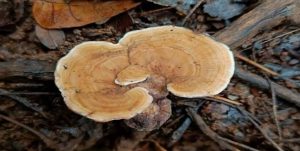
A new fungus species of polypore (bracket) named Microporellus kolhapurensis, was discovered in Bhudargad taluka in Kolhapur district.
- Microporellus kolhapurensis is a new fungus species of polypore (bracket).
- It was discovered in Bhudargad taluka in Kolhapur District, Maharashtra.
- The fungus was found on rotting wood.
- This particular Microporellus fungus species fruits from July to September, and mainly grows singly.
- The characteristics of the yellowish-orange to grayish-brown species are distinct from other closely related species due to its
- umbrella-shaped structure
- lateral stalk
- ground-growing nature
- large pores
- teardrop-shaped spores, and
- distinctive thick-walled cystidia (large cells found on the spore-bearing surfaces of certain fungi that do not make spores themselves).
- Polypores:
- Polypores, also called bracket or shelf fungi, are a group of fungi so named because of the pores present on the underside of their fruiting body.
- The pores of a polypore fungi are used to house their spores, which are microscopic particles that allow fungi to be reproduced, much like seeds are to a plant.
- The function of pores is to increase the surface area that spores can attach to.
- These pores look different on the underside of different polypores, but are generally circular and regularly spaced along the surface.
- Polypores are also called bracket fungi due to their shelf-like appearance.
- They can often be seen on living trees or fallen logs. Some polypores have a short stalk to attach them to their substrate.
- They damage healthy trees but also help to break down dead trees.
- Their mycelium is embedded inside the trunks of their host trees, with only their fruiting bodies being visible.
National Biodiversity Authority:
The National Biodiversity Authority (NBA) recently constituted an Expert Committee on Invasive Alien Species to address the growing ecological and socio-economic risks posed by such species across the country.
- National Biodiversity Authority (NBA) is an autonomous, statutory body established under the Biological Diversity Act, 2002.
- Headquarters: Chennai, Tamil Nadu.
- The NBA performs facilitative, regulatory, and advisory functions for the Government of India, particularly on matters related to the conservation of biodiversity, sustainable use of biological resources, and the fair and equitable sharing of benefits derived from them.
- This includes recommending policies, strategies, and action plans to both central and state
- A key advisory function involves guiding state governments on the selection of areas of biodiversity importance to be notified as heritage sites and recommending measures for managing such sites.
- The NBA regulates activities and issues guidelines for access to biological resources and for fair and equitable sharing of benefits.
- Foreign individuals or corporate bodies seeking to obtain biological resources or associated traditional knowledge for research, surveys, or commercial use must obtain prior approval from the NBA.
- The NBA is required to determine the terms of benefit-sharing while granting approvals.
- Indian citizens and companies, on the other hand, seek permissions from their respective SBBs for commercial purposes.
- It is mandatory to obtain prior approval from the NBA before applying for any intellectual property right – in India or abroad – that is based on a biological resource of Indian origin or associated traditional knowledge.
- Facilitative Role:
- Beyond regulation and advice, the NBA actively facilitates conservation action on the ground.
- It supports the establishment and capacity-building of State Biodiversity Boards (SBBs) and Biodiversity Management Committees (BMCs), organises awareness and training programmes, and monitors and prevents actions prohibited under the Act.
- It also works to ensure that monetary and non-monetary benefits from bio-resources reach the local communities that have traditionally conserved them.
- An eminent person with proven knowledge and experience in biodiversity conservation, sustainable use of biological resources, and equitable sharing of benefits.
- 10 Ex officio Members: Senior representatives from the Government of India, nominated to provide policy insights and ensure inter-ministerial coordination.
- 5 Non-Official Members: Experts and professionals from diverse fields related to biodiversity management, nominated to contribute independent perspectives and specialized expertise.
- All members are appointed by the Central Government.
- The Act establishes a three-tier institutional structure: the NBA at the national level, the State Biodiversity Boards (SBBs) at the state level, and the Biodiversity Management Committees (BMCs) at the local body level.
- State Biodiversity Boards (SBBs): Functioning at the state level to regulate access to biological resources within their jurisdiction.
- Biodiversity Management Committees (BMCs): Established at the local village or panchayat level to promote grassroots-level biodiversity conservation and documentation.
Kalpasar Project:
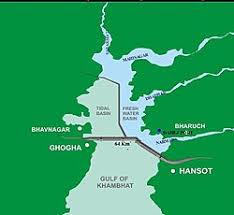
The Detailed Project Report (DPR) for Gujarat’s ambitious Gulf of Khambhat (Kalpasar) Project is at an advanced stage of finalisation, the Centre informed the Rajya Sabha recently.
- The Kalpasar Project, or the Gulf of Khambhat Development Project, is a proposed multipurpose water infrastructure project in Gujarat.
- It aims to cater to the irrigation, drinking water, transport, and energy demands of Gujarat’s Saurashtra region.
- The project proposes a 64-km-long dam across the Gulf of Khambhat to create a reservoir spanning around 2,000 sq.km., one of the world’s largest coastal freshwater reservoirs.
- The aim is to trap freshwater flowing from several rivers into the gulf and create a giant reservoir.
- The proposed reservoir will have a gross storage capacity of 13,000 million cubic metres (MCM), larger than the Sardar Sarovar dam’s 9,460 MCM.
- The reservoir will receive water from four major rivers – Sabarmati, Mahi, Dhadhar, and Narmada.
- The project is expected to significantly enhance freshwater availability and help address water scarcity in the Saurashtra region.
- It is expected to irrigate nearly 10 lakh hectares across nine districts of Saurashtra.
- Besides water storage, the project proposes a highway-cum-rail corridor over the dam.
- The corridor is expected to reduce the travel distance between Bhavnagar and Surat by around 179 kilometres, bringing it down from about 356 km to approximately 177 km via the proposed dyke corridor.
- The project also envisages the development of around 2,470 MW of hybrid renewable energy capacity on reclaimed land that remains submerged during high tide.
- The renewable energy generated is proposed to be used, among other purposes, for pumping freshwater to meet irrigation requirements in the coastal regions of Saurashtra.
- The Netherlands is providing technical expertise and engineering cooperation for the Kalpasar Project.
Bhargavastra:

A new counter-swarm drone system called ‘Bhargavastra’ has been showcased to the army.
- Bhargavastra is India’s first indigenous micro-missile system designed to take on the threat of swarm drones.
- It was developed by the Economic Explosives Ltd.
- It has dual-layered kill mechanism.
- It combines unguided micro-rockets with a lethal radius of 20 metres and precision-guided micro-missiles capable of intercepting targets up to 2.5 kilometres away.
- It can detect larger UAVs up to a range of 10 km and 6 km for smaller drones.
- It uses a combination of radar, Electro-Optical/Infrared (EO/IR) sensors and passive radio-frequency (RF) sensors integrated through a Command, Control, Communication, Computers and Intelligence (C4I) architecture for UAV detection.
- It is designed to operate across diverse set of terrains, ranging from deserts to snow-bound high altitude regions over 5,000 metres.
- The system employs soft-kill techniques such as electronic jamming, providing a comprehensive layered defence.
- It is capable of neutralising both individual drones and coordinated swarms.
- The system offers a cheaper alternative to deploying expensive surface-to-air missiles against relatively low-cost drones.
Bab el-Mandeb Strait: In News
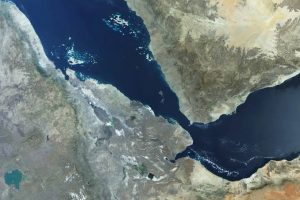
The Bab el-Mandeb Strait has returned to the geopolitical spotlight after Yemen’s Iran-backed Houthi movement announced a maritime blockade against Saudi Arabia.
- It is also known as the “Gate of Tears” in Arabic, referring to the large number of shipwrecks that have occurred in this region
- It lies at the southern tip of the Red Sea, between Yemen and the Horn of Africa. It connects the Red Sea to the Gulf of Aden and further to the Indian Ocean.
- It also separates Arabia, in the northeast, from the African continent, in the southwest.
- It acts as a link between the Indian Ocean and the Mediterranean Sea via the Red Sea and the Suez Canal.
- The strait is 30 kilometers (KM) wide and is divided into two channels by the Yemeni island of Perim, with the eastern channel being called Alexander’s Strait, and the western channel called the Dact-el-Mayun Channel.
- It is a crucial link in the trade route connecting the Mediterranean to Asia.
- Ships transporting goods between Europe and Asia, as well as Middle Eastern oil bound for Europe and North America, pass through it when using Egypt’s Suez Canal.
Atmanirbhar Panchayat Programme:
The Union Minister of Panchayati Raj launched the Atmanirbhar Panchayat Programme and the SAMARTH Panchayat Portal.
- Atmanirbhar Panchayat Programme is a unique initiative of the Ministry of Panchayati Raj.
- It enables Gram Panchayats and Block Panchayats to identify local assets and opportunities and develop them, with dedicated technical support from the Ministry, into bankable, revenue-generating projects that build sustainable Own Source of Revenue (OSR).
- It is facilitated through Public-Private Partnerships, Corporate Social Responsibility contributions, convergence with other schemes and bank finance, with NABARD and HUDCO as institutional partners.
- A total of 350 projects are to be developed over four years, comprising 50 projects in the first year and 100 in each of the following three years.
- Gram Panchayats with a minimum OSR of 50 lakh and Block Panchayats with a minimum OSR of Rs. 1 crore, each with at least three years of tenure remaining, are eligible to apply, with relaxed thresholds for special category States.
SAMARTH Portal:
- It is a first-of-its-kind digital initiative of the Ministry of Panchayati Raj designed to strengthen the financial capacity of Gram Panchayats through technology-enabled management of OSR.
- It is developed as a unified, configurable national platform which enables Gram Panchayats to digitally manage the complete OSR lifecycle, from taxpayer registration and demand generation to online payments, collection and real-time monitoring.
- Chhattisgarh and Himachal Pradesh have already been onboarded on the portal.
India Allows FDI in Inventory-Based E-Commerce Model for Exports:
The government has revised the Foreign Direct Investment policy to permit foreign-funded e-commerce entities to maintain inventories exclusively for exporting goods manufactured or produced in India. Foreign-owned e-commerce companies can now own and manage inventory in India, provided the goods are domestically produced and sold only in overseas markets. The Department for Promotion of Industry and Internal Trade has created an export-specific exception to the restrictions on inventory-based e-commerce.However, foreign-funded inventory-based e-commerce remains prohibited for domestic retail sales, preserving safeguards for small traders and the ban on FDI in multi-brand retail.The policy aims to improve Indian sellers’ access to global markets, promote exports and reduce the compliance burden on MSMEs. The measure could help Tier-2 and Tier-3 manufacturers, artisans and small businesses export products such as handicrafts, garments, books, art, gems and jewellery. Beneficiaries: Global platforms such as Amazon and Walmart-owned Flipkart can source products from Indian manufacturers, manage inventories and handle export-related paperwork, testing, labelling and traceability requirements.
Maharashtra to Get India’s 1st AI-Powered Bird Sanctuary:
Maharashtra has approved the development of a ₹45-crore Eco-Nature Park at the Thane Creek Flamingo Sanctuary, featuring India’s first Artificial Intelligence (AI)-powered bird detection and monitoring centre.The sanctuary will use Artificial Intelligence-based cameras and monitoring systems to identify bird species, track migration patterns and collect scientific data. The technology will analyse bird activity across a 1.5-kilometre stretch of the park through automated image and sound recognition.
Thane Creek Flamingo Sanctuary located between Mumbai and Navi Mumbai along Thane Creek, the sanctuary was declared a wildlife sanctuary in 2015 and is India’s first dedicated flamingo sanctuary.It is an important coastal wetland ecosystem supporting thousands of flamingos and over 200 bird species, including greater flamingos, lesser flamingos, herons, egrets, shorebirds and kingfishers.The sanctuary forms part of the Central Asian Flyway, an important migratory route connecting Europe, Central Asia and the Indian subcontinent.
Next Teesta Tunnel Disaster: Methane Risks and Himalayan Infrastructure Vulnerability:
A sudden explosive release of suspected methane and other toxic gases inside the under-construction Head Race Tunnel of the Teesta Stage VI Hydropower Project at Samardung in Sikkim’s Namchi district killed several workers and left others trapped.The incident highlights the serious safety and geological risks associated with large infrastructure projects in the fragile Himalayan region.Methane is a colourless, odourless and highly flammable gas that may accumulate naturally in underground rock formations and confined spaces such as tunnels.When methane mixes with air in a particular concentration, sparks generated by drilling or other construction equipment can ignite it and cause an explosion.Drilling during the construction of the Head Race Tunnel may have disturbed methane-bearing rocks, causing the gas to escape suddenly into the tunnel.Methane may occur as natural gas trapped within porous rocks or as isolated gas pockets in young and fragile geological formations.In mountainous regions with coal-bearing or carbon-rich strata, methane can form through the decomposition of ancient organic matter over millions of years.Waterlogged valleys and hilly depressions may create oxygen-deficient conditions in which microorganisms decompose organic material and release methane.



