
What is the Care Economy?
NITI Aayog has released the report “Reimagining Care: Strategies for Empowering Caregivers in Viksit Bharat@2047”, proposing a roadmap to build a professional, inclusive, and future-ready caregiving ecosystem while positioning India as a global hub for skilled caregivers.
- NITI Aayog’s “Reimagining Care” report proposes a comprehensive roadmap to professionalise India’s caregiving ecosystem through policy reforms, skill development, social security, technology integration, and global partnerships, positioning India as a global hub for skilled caregivers.
- The report emphasises that strengthening the care economy is essential to address India’s ageing population, empower women, generate employment, improve long-term care services, and achieve the vision of Viksit Bharat@2047 through inclusive and sustainable development.
- India is witnessing a rapid demographic transition, with the elderly population (60+) projected to increase from 149 million in 2022 to 347 million (20.8% of the population) by 2050.
- Additionally, 26.8 million Indians live with disabilities, while the growing burden of chronic diseases, dementia, and age-related illnesses is sharply increasing the demand for long-term, geriatric, palliative, and home-based care.
- Nearly 10% of India’s population are family caregivers, most of whom are untrained and unpaid. Developing a skilled caregiving workforce can address rising care needs while generating employment and strengthening Viksit Bharat@2047.
- The global demand for caregivers is rising rapidly due to ageing populations and workforce shortages.
- According to the World Health Organization (WHO), the world faces a shortage of nearly 11 million health workers by 2030, while OECD countries will require 13.5 million additional care workers by 2040.
- India can leverage this opportunity to become a global hub for skilled caregivers.
- The World Economic Forum (2024) estimates that the care economy accounts for 16% of global employment, while unpaid care work contributes nearly USD 11 trillion annually without formal economic recognition.
- In India, the care services market is projected to grow from USD 29.62 billion in 2023 to USD 72.31 billion by 2030 (CAGR 13.76%), highlighting its immense potential for employment generation and economic growth.
- Women bear a disproportionate share of India’s unpaid caregiving responsibilities.
- According to the NSO Time Use Survey (2024), 41% of women in the 15–59 age group participated in caregiving activities, compared to 21.4% of men. Women also spent 140 minutes per day on caregiving, nearly twice as much as men (74 minutes per day), highlighting the female-dominated nature of unpaid caregiving in India.
- Formalising the caregiving sector can reduce this unpaid burden, generate dignified employment, and enhance female labour force participation.
- Nearly 10% of India’s population serves as family caregivers, most of whom are untrained and unpaid.
- Developing a professional caregiving workforce will not only address rising domestic care needs but also convert India’s demographic dividend into a source of skilled employment and human capital for Viksit Bharat@2047.
- With ageing societies across Japan, Germany, the UK, and other OECD countries, India can standardise caregiver training and expand Government-to-Government (G2G) mobility pathways to become a trusted global supplier of skilled caregivers, boosting employment, remittances, and India’s global soft power.
- An organised caregiving ecosystem can improve access to quality care for the elderly, Persons with Disabilities (PwDs), and other vulnerable groups, while advancing the Purple Economy by enabling PwDs to participate as trained caregivers.
Care Economy:
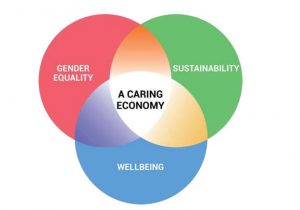
- The care economy comprises all paid and unpaid care work and services that support health, well-being, and daily living. It includes care provided through households, the public and private sectors, MSMEs, non-profit organisations, and the social and solidarity economy, involving both care providers and care recipients.
- Professionalising caregiving can boost GDP, generate skilled employment, and enhance female labour force participation.
- Caregiving aligns with Article 41, which directs the State to provide public assistance for old age, sickness, disability, and other vulnerable conditions, while promoting the right to work through professional caregiving.



