
Today’s Current Affairs: 7th Aug 2026 for UPSC IAS exams, State PSC exams, SSC CGL, State SSC, RRB, Railways, Banking Exam & IBPS, etc
Table of Contents
Lalit Kala Akademi: 72nd Foundation Day

The Lalit Kala Akademi celebrated its 72nd Foundation Day at Rabindra Bhavan, New Delhi.
- Lalit Kala Akademi was inaugurated on 5th August 1954 by the then Minister for Education, Maulana Abul Kalam Azad.
- The Akademi was given the status of statutory authority in 1957, under the Societies Registration Act 1860.
- Headquarters: New Delhi.
- It functions through its General Council, Executive Board, and other Committees.
- It has regional centres situated at Chennai, Lucknow, Kolkata, Bhubaneswar, Garhi.
- Nodal Ministry: Ministry of Culture.
- It has been at the forefront of promoting and nurturing visual arts in India through national and international exhibitions, artists’ camps, workshops, scholarships, publications, documentation, research initiatives and collaborative cultural programmes.
- It has preserved and documented a permanent collection of the highest order that reflects the vitality, complexity, and unfolding patterns of contemporary, modern, folk, and tribal art in India.
- It promotes the Visual Art of India in various countries of the world through Cultural Agreements and Cultural Exchange Programmes.
- The National Exhibition of Art is the most prestigious annual event of the Lalit Kala Akademi.
- It continues to provide an important platform for artists and remains committed to strengthening India’s visual arts ecosystem.
Jeevan Raksha Padak:

The Union Minister of Road Transport and Highway conferred the Sarvottam Jeevan Raksha Padak on 12 rat miners in recognition of their exceptional courage and selfless service during the Silkyara Tunnel Rescue Operation.
- Jeevan Raksha Padak is conferred on individuals who undertake life-saving efforts during incidents such as drowning, fire accidents, electrocution, natural calamities including landslides, animal attacks, and rescue operations in mines.
- The Jeevan Raksha Padak series comprises three categories.
- Sarvottam Jeevan Raksha Padak: It is awarded for conspicuous courage in saving life under circumstances of very great danger to the rescuer.
- Uttam Jeevan Raksha Padak: It is conferred for courage and promptitude in saving life under conditions of great danger.
- Jeevan Raksha Padak: It is awarded for courage and promptitude in life-saving acts where the rescuer sustains grievous bodily injury.
- The awards are open to individuals from all walks of life.
- Members of the Armed Forces, Police Forces and recognised Fire Services are also eligible, provided the act of bravery is performed beyond the call of normal duty.
- Personnel of Central Armed Police Forces and Central Police Organisations are also eligible under the revised framework.
- It is presented to the awardees by the respective Union Ministries/Organizations/State Government to which the awardee belongs.
- Features of Jeevan Raksha Padak Awards:
- Its nominations are invited annually from States/UTs and Union Ministries.
- The recommendations of the award are considered by the Awards Committee within a period of two calendar years from the date of performance of the act.
- Final approval is given by the Prime Minister and the President of India.
- The decoration of the award consists of a Medal, Certificate, along with a one-time monetary allowance: Sarvottam Jeevan Raksha Padak (₹2 lakh), Uttam Jeevan Raksha Padam (₹1.5 lakh) and Jeevan Raksha (₹1 lakh).
- No other facility/benefit in terms of any concession in Railways, Airfare etc. is provided by the Government.
Pigeon pea:
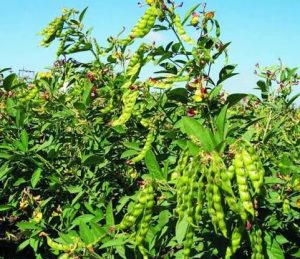
The Indian Council of Agricultural Research (ICAR) has developed India’s first fully annotated telomere-to-telomere (T2T) reference genome of pigeonpea (Cajanus cajan L. Millsp.) variety ‘Asha’.
- Pigeon pea is popularly known as ‘Arhar’ or ‘Tur’.
- It is one of India’s most important pulse crops and a major source of dietary protein.
- It is a legume crop and protein-rich food which is primarily consumed as dal in India.
- It is predominantly a crop of tropical areas mainly cultivated in semi-arid regions of India.
- It requires 600-650mm of annual rainfall along with moist conditions for the initial eight weeks and dry conditions during its flowering and pod development phase.
- It can be grown with a temperature ranging from 26 to 30 degree Celsius in the rainy season and 17to 22 degree Celsius in the post rainy (November to March) season.
- It can be grown on all types of soil, however, sandy loam or loam soil is most suitable for its cultivation.
- It is very sensitive to low radiation at pod development, therefore flowering during the monsoon and cloudy weather, leads to poor pod formation.
- It is commonly intercropped with a wide range of crops.
- The important diseases of Pigeon pea are Wilt, Sterility mosaic disease, Phytophthora blight, Alternaria blight and Powdery mildew etc.
- It has low glycaemic index and is rich in thiamine, riboflavin, niacin, vitamin B-6, folate, vitamin A, calcium, zinc, iron and magnesium
- Major Pigeon pea producing states: Uttar Pradesh, Madhya Pradesh, West Bengal, Bihar and Jharkhand.
National Centre for Cell Science:

A National Centre for Cell Science (NCCS) study uncovers nearly 200 previously undocumented microbial strains, showing that a healthy gut is shaped by diet, geography, and lifestyle and why India needs its own microbiome map.
- National Centre for Cell Science (NCCS) is an autonomous organisation aided by the Department of Biotechnology, Ministry of Science and Technology, Government of India.
- It was established to facilitate cell biology research in the country.
- It is located on the campus of Savitribai Phule Pune University, Pune,
- The institute traces its origin to the National Tissue Culture Facility (1986) and was established as the National Facility for Animal Tissue and Cell Culture Collection (NFATCC) in 1988.
- It was renamed National Centre for Cell Science (NCCS) in 1996.
- The tripartite mandate of NCCS includes the following as its key functions:
- To serve as a National Cell Repository.
- To perform basic research in cell biology.
- Human resource development through teaching and training.
- NCCS is engaged in cutting-edge research in the diverse areas of modern cell biology, broadly categorized as
- Cell Biology and Cancer Biology.
- Structural Biology, Bioinformatics, and Omics.
- Infectious diseases, Immunology, and Microbiology.
- Neurobiology & Stem Cell Biology.
- The research addresses challenging health issues like cancer, infectious diseases, metabolic disorders, and regenerative medicine through approaches that integrate modern and conventional disciplines.
- The institute hosts a National Cell Repository that maintains and distributes well-characterized animal cell lines to various colleges, universities, and research institutions in India at affordable costs.
- NCCS hosts the DBT-funded National Centre for Microbial Research for collecting, identifying, preserving, and distributing microbial cultures from various ecological niches across the country.
- NCCS has the third-largest microbial collection in the world.
MSME Sustainable ZED Certification Scheme:
The Ministry of Micro, Small and Medium Enterprises (MSME) is promoting quality-driven and environmentally sustainable manufacturing through the MSME Sustainable (Zero Defect, Zero Effect – ZED) Certification Scheme.
- It aims to help MSMEs improve manufacturing processes, adopt higher quality standards and reduce their environmental footprint.
- Nodal Ministry: Ministry of Micro, Small & Medium Enterprises
- It focuses on encouraging women entrepreneurs, with the government providing a 100 per cent subsidy on the cost of ZED certification for women-owned MSMEs, effectively making the certification free for eligible enterprises.
- The ZED framework offers Bronze, Silver and Gold certifications, allowing MSMEs to progressively improve their quality and sustainability standards.
- Eligible enterprises can avail financial assistance of up to 75 per cent of the cost of testing, system or product certification.
- The scheme has also gained support across the country, with 22 States and Union Territories integrating ZED into their industrial policies and offering additional incentives to certified MSMEs.
Nitrosamines:
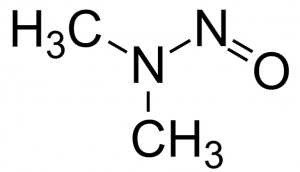
It was observed that packaged foods, pharmaceuticals, industrial products and global supply chains contain chemicals known as nitrosamines.
- Nitrosamines are organic compounds that contain alkyl and an aryl group with the following nitrogen and oxygen group: N–N=O.
- It is formally named N-nitrosamines.
- These compounds get formed when amines react with nitrites or nitrates (often found in preservatives, food additives or environmental sources) under specific conditions, such as acidic environment, heat and presence of oxidising agents.
- Formation of nitrosamine in foods occurs either during preparation or storage, or in the stomach.
- The concentration of nitrosamines tends to increase over time, and their formation is enhanced by high temperatures.
- Exposure can be through ingestion, inhalation and dermal contact.
- The other major sources of nitrosamines are contaminated water, pharmaceuticals and tobacco products. (One of the most concerning nitrosamines in water is NDMA (N nitrosodimethylamine)
- These compounds have been linked to potential health risks, including cancer, even at very low concentrations over long-term exposure.
Pseudecheneis likimroensis:
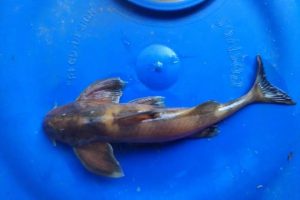
Pseudecheneis likimroensis, has been described from India’s north-eastern state of Nagaland.
- Pseudecheneis likimroensis is a new catfish species found in Nagaland.
- The species, named after the fast-flowing Likimro river, from which specimens have been collected so far.
- It is locally known as “Nupedro” among the Chirr Naga community and is also referred to as “Jetfighter”.
- It belongs to a group of freshwater rheophilic catfishes adapted to life in swiftly flowing hill streams.
- These fish exhibit remarkable adaptations, such as dorso-ventrally flattened bodies and specialised adhesive structures, enabling them to thrive in torrential environments.
- The species is carnivorous in nature as it feeds on insects, larvae and other organisms found attached to rocks.
- It often spawns in stretches of river which are shallow.
- Likimro river originates around Nagaland’s highest peak, Mount Saramati.
- It is a tributary of the Tizu river, flowing along the eastern Kiphire district.
- Tizu River drains flows into Myanmar and joins the Chindwin River which in turn ultimately merges into the Irrawaddy river system.
What is the Care Economy?
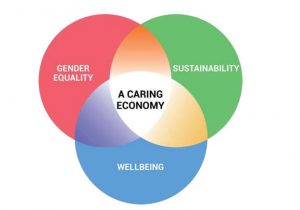
NITI Aayog has released the report “Reimagining Care: Strategies for Empowering Caregivers in Viksit Bharat@2047”, proposing a roadmap to build a professional, inclusive, and future-ready caregiving ecosystem while positioning India as a global hub for skilled caregivers.
- NITI Aayog’s “Reimagining Care” report proposes a comprehensive roadmap to professionalise India’s caregiving ecosystem through policy reforms, skill development, social security, technology integration, and global partnerships, positioning India as a global hub for skilled caregivers.
- The report emphasises that strengthening the care economy is essential to address India’s ageing population, empower women, generate employment, improve long-term care services, and achieve the vision of Viksit Bharat@2047 through inclusive and sustainable development.
- India is witnessing a rapid demographic transition, with the elderly population (60+) projected to increase from 149 million in 2022 to 347 million (20.8% of the population) by 2050.
- Additionally, 26.8 million Indians live with disabilities, while the growing burden of chronic diseases, dementia, and age-related illnesses is sharply increasing the demand for long-term, geriatric, palliative, and home-based care.
- Nearly 10% of India’s population are family caregivers, most of whom are untrained and unpaid. Developing a skilled caregiving workforce can address rising care needs while generating employment and strengthening Viksit Bharat@2047.
- The global demand for caregivers is rising rapidly due to ageing populations and workforce shortages.
- According to the World Health Organization (WHO), the world faces a shortage of nearly 11 million health workers by 2030, while OECD countries will require 13.5 million additional care workers by 2040.
- India can leverage this opportunity to become a global hub for skilled caregivers.
- The World Economic Forum (2024) estimates that the care economy accounts for 16% of global employment, while unpaid care work contributes nearly USD 11 trillion annually without formal economic recognition.
- In India, the care services market is projected to grow from USD 29.62 billion in 2023 to USD 72.31 billion by 2030 (CAGR 13.76%), highlighting its immense potential for employment generation and economic growth.
- Women bear a disproportionate share of India’s unpaid caregiving responsibilities.
- According to the NSO Time Use Survey (2024), 41% of women in the 15–59 age group participated in caregiving activities, compared to 21.4% of men. Women also spent 140 minutes per day on caregiving, nearly twice as much as men (74 minutes per day), highlighting the female-dominated nature of unpaid caregiving in India.
- Formalising the caregiving sector can reduce this unpaid burden, generate dignified employment, and enhance female labour force participation.
- Nearly 10% of India’s population serves as family caregivers, most of whom are untrained and unpaid.
- Developing a professional caregiving workforce will not only address rising domestic care needs but also convert India’s demographic dividend into a source of skilled employment and human capital for Viksit Bharat@2047.
- With ageing societies across Japan, Germany, the UK, and other OECD countries, India can standardise caregiver training and expand Government-to-Government (G2G) mobility pathways to become a trusted global supplier of skilled caregivers, boosting employment, remittances, and India’s global soft power.
- An organised caregiving ecosystem can improve access to quality care for the elderly, Persons with Disabilities (PwDs), and other vulnerable groups, while advancing the Purple Economy by enabling PwDs to participate as trained caregivers.
Care Economy:
- The care economy comprises all paid and unpaid care work and services that support health, well-being, and daily living. It includes care provided through households, the public and private sectors, MSMEs, non-profit organisations, and the social and solidarity economy, involving both care providers and care recipients.
- Professionalising caregiving can boost GDP, generate skilled employment, and enhance female labour force participation.
- Caregiving aligns with Article 41, which directs the State to provide public assistance for old age, sickness, disability, and other vulnerable conditions, while promoting the right to work through professional caregiving.
Indian Statistical Institute Bill, 2026:

The Indian Statistical Institute (ISI) Bill, 2026 introduced in the Lok Sabha seeks to reform the governance of ISI to strengthen research, promote interdisciplinary collaboration, and develop it as a global centre of excellence. However, the Bill has drawn criticism over concerns of greater Central Government control and erosion of institutional autonomy.
- The Bill repeals the Indian Statistical Institute Act, 1959 and converts ISI from a registered society into a not-for-profit statutory body corporate, giving it a distinct legal identity.
- The President of India will be the Visitor of ISI, empowered to review the Institute’s functioning, order inquiries, and issue binding directions based on such reviews.
- The Bill replaces the existing 33-member Council with an 11-member BoG comprising a Chairperson nominated by the Visitor, two Central Government officials, four eminent persons, and four ISI representatives, with the aim of streamlining governance and decision-making.
- BOG is responsible for administration, budget approval, establishment of departments and centres, granting degrees, framing regulations, creating posts, and conducting periodic performance reviews.
- The Bill creates an Academic Council to oversee academic matters, a Finance Committee for financial scrutiny, and Management Councils for the administration of individual ISI centres.
- The Director will be appointed by the Board with the prior approval of the Visitor and will serve as the Chief Executive Officer, responsible for implementing Board decisions and managing the Institute’s day-to-day administration.
- Unlike the 1959 Act, which required prior Central Government approval for every amendment to the regulations, the Bill requires such approval only for the first set of regulations, providing greater flexibility thereafter.
Heatwaves and Lightning Included as Notified Natural Calamities:

The Union Government has included heatwaves and lightning in the list of notified natural calamities under the operational guidelines of the State Disaster Response Fund (SDRF) and National Disaster Response Fund (NDRF) for the 2026–31 award period, enabling states to provide relief and assistance to affected people.
- The decision follows the recommendation of the 16th Finance Commission (2026–31), citing the increasing frequency and intensity of extreme weather events due to climate change.
- States can now utilise SDRF funds to provide relief to people affected by heatwaves and lightning.
- NDRF assistance may supplement state resources in accordance with the applicable guidelines.
- Heat-wave mitigation projects are also eligible under the Disaster Mitigation Funds.
- The notified list has expanded from 12 to 14 categories, with heatwaves and lightning added to cyclone, drought, earthquake, fire, flood, tsunami, hailstorm, landslide, avalanche, cloudburst, pest attack, and frost and cold wave.
- The move strengthens India’s disaster risk financing framework by aligning disaster management policies with the growing impacts of climate change.
- Heat waves are prolonged periods of abnormally high temperatures compared to the normal climate of a region, occurring in India mainly from March to June (occasionally extending into July), with May being the peak month.
- The India Meteorological Department (IMD) declares a heat wave based on region-specific temperature thresholds.
Nauru Renamed as Republic of Naoero:

The Pacific island nation formerly known internationally as Nauru has adopted its indigenous name, the Republic of Naoero, to reaffirm its cultural identity, linguistic heritage and national pride.
- Located northeast of Australia, Naoero is a coral-limestone island covering approximately 21 square kilometres.
- It is the world’s smallest island country and, with a population of about 12,000, the third-smallest country by population. By land area, it is the world’s third-smallest sovereign country, after Vatican City and Monaco.
- The country’s international code will change from NRU to NRO, while its citizens will be called dei-Naoero instead of Nauruans. National aircraft, ships and official records will also adopt the revised name.
- The island was introduced to the Western world as Pleasant Island, annexed by Germany in 1888, administered by Australia, Britain and New Zealand, occupied by Japan during the Second World War and placed under a United Nations trusteeship before gaining independence in 1968.
- Naoero was altered to Nauru because foreign colonisers found the indigenous pronunciation difficult. The name Nauru entered official usage during German colonial rule and continued after independence in 1968
- The renaming seeks to protect dorerin Naoero, the country’s indigenous language, which UNESCO classifies as severely endangered, and to strengthen its transmission to future generations.
- The government has formally notified countries and international organisations, while the United Nations and several foreign governments have begun using the name Naoero.
- The change reflects a wider process of decolonisation in which countries reclaim indigenous names, similar to Eswatini, Türkiye and the Micronesian State of Chuuk.
The Bankers’ Books Evidence Bill, 2026:

The Lok Sabha passed The Bankers’ Books Evidence Bill, 2026 by voice vote amid Opposition protests.
- Introduced by Finance Minister on August 3, 2026, the legislation replaces the 135-year-old colonial-era Bankers’ Books Evidence Act, 1891 to formally align legal evidence standards with modern digital, virtual, and cloud-based banking
- The Bankers’ Books Evidence Bill, 2026, is an updated legislative framework that regulates how bank records are admitted as valid, primary evidence in legal proceedings.
- It allows certified physical and electronic extracts of bank records to be presented in court without requiring original ledgers or summoning bank officials as routine witnesses.
- Aim: To modernize India’s banking evidence laws, incorporate technology-neutral provisions for digital banking records (electronic, virtual, and cloud-based), speed up judicial proceedings in financial disputes, and reduce operational burdens on banking personnel.
Key Features of the Bill:
- Expanded Definition of Bankers’ Books: Broadens the legal definition beyond paper ledgers to cover all record formats—including electronic, digital, virtual, and cloud-based databases.
- Admissibility & Integrity Conditions for Electronic Records: Specifies that electronic records are legally enforceable provided they satisfy integrity criteria:
- being a true representation of data,
- showing no unauthorized data changes, and
- reflecting no system tampering.
- Mandates that electronic records submitted to courts must be accompanied by a technical certificate detailing the generating computer system, authenticated by manual or digital signatures of designated branch or office heads.
- Retains and refines provisions ensuring bank officers cannot be compelled to produce original books or appear as witnesses in cases where the bank is not a party, unless ordered by a judge under a strictly defined special cause.
- Empowers the Central Government to extend the Act’s provisions to other financial sector institutions and entities via official notification.
India’s 1st Telecom Manufacturing Zone in Gwalior:

Telecom Manufacturing Zone (TMZ) in Gwalior, Madhya Pradesh secured fresh investment commitments of Rs 2,000 crore, taking the total committed investment to Rs 5,500 crore.
- The Telecom Manufacturing Zone (TMZ) in Gwalior, Madhya Pradesh is India’s first dedicated telecom manufacturing cluster, designed to establish a globally competitive, end-to-end telecom manufacturing ecosystem.
- It aims to transform India from a telecom services-led economy to a telecom products and manufacturing hub under the vision of “Make in India, Make for the World” by increasing domestic value addition, creating indigenous intellectual property (IP), and boosting telecom exports.
- The TMZ will house the complete telecom value chain, including design, research & development (R&D), testing, manufacturing, semiconductors, optical fibre, telecom equipment, electronic components, and allied industries, supported by common plug-and-play testing infrastructure.
- The Zone is expected to generate more than 18,000 employment opportunities.
- Gwalior offers a central location, strong connectivity, skilled workforce, competitive operating costs, industrial ecosystem, and improved logistics, including the upcoming Agra–Gwalior Greenfield Expressway.
- The project will be jointly implemented through a Special Purpose Vehicle (SPV) comprising the Department of Telecommunications (DoT) and the Government of Madhya Pradesh, supported by land, capital, skill development, employment-linked incentives, and logistics support from the State Government.
Dr. M.S. Swaminathan Award for Environment Protection 2026:
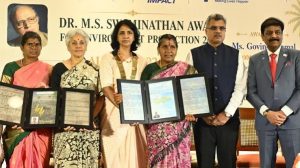
Two Women changemakers—P. Pechiyammal and Govindhammal were honored with the Dr. M.S. Swaminathan Award for Environment Protection 2026 at an event in Chennai.
Pechiyammal (Ramanathapuram, Tamil Nadu)
- Field: Marine Conservation & Ocean Plastic Management
- Led community efforts to remove abandoned fishing nets from coastal waters and shorelines.
- Helped protect coral reefs, turtles, and fish by reducing ghost-net entanglement.
Govindhammal (Villupuram, Tamil Nadu)
- Field: Sustainable & Climate-Resilient Agriculture
- Promoted organic farming, soil health, and climate-resilient agricultural practices.
- Strengthened Farmer Producer Companies to improve farmers’ bargaining power.
Award:
- The Dr. M.S. Swaminathan Award for Environment Protection is a national recognition awarded to grassroots individuals, community champions, or organizations for outstanding contributions to environmental preservation, coastal plastic cleanup, biodiversity protection, and sustainable agriculture.
- Instituted / Supported By: M.S. Swaminathan Research Foundation (MSSRF) in partnership with CavinKare Pvt. Ltd. and the Rotary Club of Madras East (RI District 3234).
- Aim: To recognize, honor, and encourage grassroots leaders working tirelessly to preserve natural ecosystems, clean up marine pollution, promote climate-resilient farming, and strike a balance between developmental growth and ecological conservation.
- Eligibility:
- Open to individuals, local community workers, smallholder farmers, fisherfolk, and non-governmental entities operating across India.
- Candidates must demonstrate tangible, measurable improvements in areas such as marine waste management, sustainable farming, seed preservation, or biodiversity restoration.
The ‘Seafarer-First’ Initiative:
Union Minister of Ports, Shipping and Waterways launched a whole-of-government ‘Seafarer-First’ response following attacks on two merchant vessels (MT Al Bahiyah and MT Mombasa) carrying Indian crew members in the Strait of Hormuz.The ‘Seafarer-First’ initiative is an emergency, whole-of-government contingency mechanism launched by India to safeguard, track, and support all Indian seafarers operating in high-risk, conflict-affected maritime zones across West Asia (including the Persian Gulf, Strait of Hormuz, and Gulf of Oman) regardless of the flag state of their vessels.Nodal Ministry: Ministry of Ports, Shipping and Waterways (MoPSW).Aim: To individually account for every Indian seafarer in conflict zones, protect their legal and contractual rights, provide 24×7 emergency and medical support, and ensure that no seafarer is forced to sail into high-risk areas without informed consent and protection.



