
Today’s Current Affairs: 11th Aug 2026 for UPSC IAS exams, State PSC exams, SSC CGL, State SSC, RRB, Railways, Banking Exam & IBPS, etc
Table of Contents
Myoglobin : Study
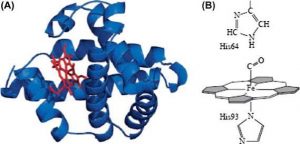
Scientists have engineered lettuce and tobacco plants to produce myoglobin.
- Myoglobin is a small protein that accounts for about 2% of total muscle protein.
- It is found predominantly in striated muscle tissue, namely skeletal muscle and cardiac muscle.
- Specifically, it is in the cytoplasm of cardiac myocytes and the sarcoplasm of oxidative skeletal muscle fibers.
- It encodes a single polypeptide chain with one oxygen binding site.
- It is one of the members of the globin superfamily, which also includes hemoglobin. It often gets compared structurally and functionally to hemoglobin.
- It’s made of amino acids, iron and other molecules that work together to hold onto oxygen.
- Functions of Myoglobin:
- Transports Oxygen: It transports oxygen from the bloodstream to the muscles when they need it to convert stored energy into movements.
- It serves as a sensitive indicator of cellular damage when detected in urine or plasma.
- It serves as a buffer of intracellular oxygen concentrations and as an oxygen reservoir in muscle.
- Enzymatic functions: It is necessary for the decomposition of bioactive nitric oxide to nitrate. The removal of nitric oxide enhances mitochondrial respiration.
- Remove reactive oxygen species: It can do this by interacting with fatty acids.
E-Samudra Platform:
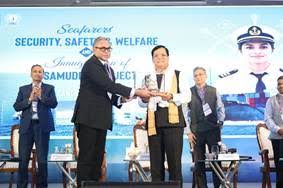
The Union Minister for Ports, Shipping and Waterways inaugurated the E-Samudra platform.
- E-Samudra Platform is a comprehensive digital platform, making maritime governance simpler, more transparent and more stakeholder-centric.
- It is an initiative by the Directorate General of Shipping, is driving a digital revolution in maritime governance.
- This comprehensive e-governance solution streamlines shipping and seafarer operations, automates administrative processes, and enhances compliance monitoring.
- It is aimed at transforming maritime governance by bringing services for seafarers, shipping companies, ports and other stakeholders under a single digital window.
- It transforms maritime administration from a physical office-based model into an integrated digital ecosystem. It represents a transition towards Digital First and Faceless Governance
- It is part of a broader effort to make maritime administration more transparent, technology-driven and accessible while strengthening the safety, security and welfare of India’s growing seafarer workforce.
- It will bring maritime services into a single digital window with end-to-end workflows, online payments, real-time tracking and digitally issued certificates.
Thoti Tribe:
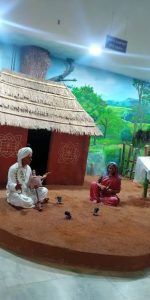
It was observed that the Thoti tribe in Telangana is facing a rapid decline driven by a shrinking population.
- Thoti Tribe is a tribal community concentrated in northern Telangana.
- They are classified as a Particularly Vulnerable Tribal Group (PVTG).
- They are historically served as village messengers, ballad singers, and folk artists, maintaining a rich heritage of storytelling and indigenous cultural practices.\
- Historically, they were oral storytellers, narrating episodes from the Mahabharata using traditional instruments such as the burra, maddela, and harmonium.
- They speak Gonti as their mother tongue and have a more traditional appearance.
- The social structure of this community is hierarchically organized, wherein the village head and elders of the community exercise authority over most social, political, and legal matters related to the community and its members.
- They are known to be strong believers in the idea of rebirth, this is also evidenced in their traditional songs.
- They worship and believe in their community God called “Persapen” and other village deities, and celebrate a festival known as “Nagappa Jathara” (Chariot festival).
- During ceremonial occasions, Thotis play the kingri, a three-stringed fiddle, and blow trumpets.
- Many Thoti women are skilled tattoo artists, and they are responsible for the complex tattoos covering the arms, shoulders, and chests of many Gond women.
- The Thotis have been known to practice endogamy.
Suckermouth catfish:
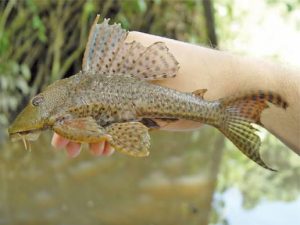
The Bombay Natural History Society (BNHS) has launched an active removal of invasive fish species like the suckermouth catfish and others from Ujani reservoir.
- Suckermouth catfish is a tropical fish belonging to the armored catfish family (Loricariidae).
- It has a strongly arched body and a very large dorsal fin with one spine and seven branched rays.
- Its ability to endure out of water is facilitated by its accessory breathing organ, akin to a gill cavity, which permits the fish to extract oxygen from the air.
- It is locally known as Helicopter fish’ for its unusual appearance.
- It is native to the Amazon River in South America and entered India through the global aquarium trade.
- It naturally occurs in northeastern Brazil, the Guianas, and Trinidad and Tobago.
- They are opportunistic omnivores and feed on algae, plants, invertebrates and small fish.
- It feeds on fish eggs, burrows into river banks and earthen check dams.
- It is known for its resilience and adaptability, particularly its ability to survive in conditions that would be inhospitable to other fish.
Mount Bromo:
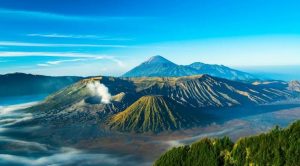
Indonesia recently deployed aircraft and hundreds of firefighters to control a major wildfire in Mount Bromo National Park.
- Mount Bromo is a small but active volcanic cinder cone located on the Indonesian island of Java.
- It is located in the center of the Sandsea Caldera, itself only a portion of the larger Tengger Caldera.
- The historical record indicates eruptions of Bromo every few years since 1804, and geologic evidence indicates eruptions at least several hundred years earlier.
- The most recent eruption occured in 2004 and tragically killed two tourists.
Exercise Pitch Black 2026:
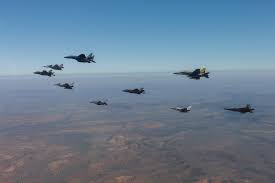
The Indian Air Force (IAF) recently said its contingent at the multi-nation exercise ‘Pitch Black’ in Australia had “accomplished the mission” and “mastered” the skies, while several partnerships were “strengthened”.
- Exercise Pitch Black 2026 is a biennial and multinational exercise hosted by the Royal Australian Air Force (RAAF).
- It is the RAAF’s flagship international flying exercise.
- The name ‘Pitch Black’ was derived from the emphasis on nighttime flying over large unpopulated areas.
- 2026 Edition was based out of RAAF Bases Darwin and Tindal in the Northern Territory, as well as RAAF Base Amberley in Queensland.
- It featured a massive assembly of global air forces, providing an unparalleled platform for interoperability.
- The exercise focused on highly complex aerial manoeuvres, including offensive counter-air operations, air defence tracking, and tactical coordination between completely different styles of aircraft and communication systems.
- The IAF contingent consisted of 145 air warriors including the IAF Commandos team, Garuds, four Su-30 MKI, one C-130, and one C-17 for logistic support for induction and de-induction.
- For the IAF, training alongside advanced air assets from nations like the US, UK, Australia, France, and regional partners offers crucial exposure to contemporary air warfare tactics, electronic warfare defence, and modern network-centric operations.
- The IAF has previously participated in the 2018, 2022, and 2024 editions of this exercise.
Qadr-F Missile:

The Qadr-F Missile has reportedly been used in Iran’s conflicts with Israel, highlighting Tehran’s ability to deploy long-range ballistic missiles in live combat.
- Qadr-F Missile is a ballistic missile developed by Iran.
- The missile was developed by the Islamic Republic of Iran under its national missile program based upon the Shahab-3 missile.
- Its existence was disclosed by the Iranian Armed Forces during a military parade in September 2007.
- It features a dual-stage propulsion system using both liquid and solid fuel and follows a ballistic flight path.
- It has a maximum range of 2,000-2,500 kilometers.
- It features a radar-evading warhead to allow it to penetrate areas protected by missile defenses.
- It can carry a single blast fragmentation warhead or multiple reentry vehicles depending on the target profile.
Sonai Rupai Wildlife Sanctuary:
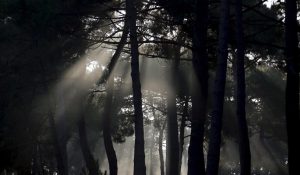
The Assam Finance Minister recently inaugurated the newly constructed Kalamati Wildlife Range Office at Sonai Rupai Wildlife Sanctuary in Sonitpur.
- Sonai Rupai Wildlife Sanctuary is a protected area located in the northwestern area of the Sonitpur district of Assam.
- The sanctuary experiences a subtropical type of climate with hot and humid summers, with heavy summer rains often causing floods and river overflows.
- The Burhidihing River traces its course through the sanctuary.
- The Namchang River, flowing from the state of Arunachal Pradesh, enters this region and joins the Burhidihing River.
- It mostly comprises evergreen forest. However, grasslands are also common in this region.
- The main attractions of the sanctuary are Elephant and Indian bison.
- The other animals found in the sanctuary are deer, one-horned rhinoceros, leopard, tiger and some rare species of cats.
- Avifauna includes endangered species like White Winged Wood Duck. Other birds commonly found here are Woodpecker, Hill Myna, Indian Roller, Nightjar, Horned Owl, etc.
Microbacterium Pollutisoli:
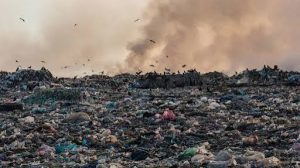
Researchers have discovered a new species of bacteria thriving in the harsh, toxic soil of a banned pesticide dumpsite and named Microbacterium pollutisoli.
- Microbacterium pollutisoliis a new species of bacteria discovered in toxic soil of a banned pesticide Hexachlorocyclohexane in Uttar Pradesh.
- It is named by combining the Latin words pollutus, meaning “contaminated,” and solum, meaning “soil.” Together, the name literally translates to “the Microbacterium of polluted soil.”
- It forms shiny, yellow circular colonies and is shaped like a short rod.
- It is capable of growing in temperatures ranging from 12°C to 46°C and surviving in highly alkaline conditions.
- Its genome revealed biosynthetic gene clusters.
- These are sets of instructions in their DNA that allow the bacteria to produce valuable compounds like carotenoids (natural pigments used in vitamins), ectoine (a substance that protects cells from stress), and beta-lactones (chemicals often studied for their ability to fight bacteria or even cancer cells.
Nyishi Tribe:
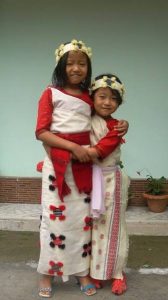
Researchers named Begonia neelamorum after the Neelam clan of the Nyishi tribe, whose members helped them navigate rugged terrain and locate the plant during a difficult expedition.
- The Nyishi are the largest ethnic group in Arunachal Pradesh.
- In Nishi, their traditional language, Nyi refers to “a man” and the word shi denotes “a being”, which combined together refers to a civilized human being.
- The Nyishi support themselves with slash-and-burn agriculture and hunting and fishing.
- Along with agriculture and allied activities, the Nyishis are experts in handicrafts such as weaving, cane and bamboo works, pottery, blacksmith, wood carving, carpentry, etc.
- The Nyishi celebrates three major festivals, namely, Boori-Boot (February), Nyokum (February), and Longte (April).
- Polygymy is prevalent among the Nyishi.
- They trace their descent patrilineally and are divided into several clans.
- One striking feature of Nyishi society is that it is neither based on a caste system nor stratified into classes, except for a loose type of social distinction which is not determined by birth or occupation.
World Tribal Day 2026:
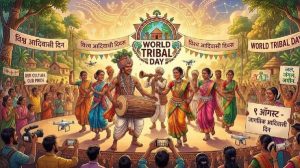
Ahead of the International Day of the World’s Indigenous Peoples, also known as World Tribal Day, a two-day cultural festival showcasing the heritage of indigenous communities was held at Vellalar College for Women, Erode, Tamil Nadu.
- World Tribal Day, also referred to as International Day of World’s Indigenous People, is observed on August 9 every year to raise awareness and protect the rights of the world’s indigenous population.
- The origins of the International Day of the World’s Indigenous People date back to December 1994, when the United Nations General Assembly designated 9 August for this annual observance.
- This date holds symbolic significance as it marks the first meeting of the UN Working Group on Indigenous Populations of the Subcommission on the Promotion and Protection of Human Rights.
- This meeting took place in Geneva in 1982.
- World Tribal Day 2026 Theme: “Honouring Indigenous Midwives: Safeguarding Life and Well-being”
- Indigenous peoples make up less than 6% of the world’s population but represent at least 15% of the extremely poor.
- They are the guardians of 28% of the Earth’s surface, which includes 11% of the world’s forests.
- Indigenous territories are home to most of the world’s remaining biodiversity.
- Their food systems are incredibly self-sufficient, producing 50-80% of their own food and resources.
Everest Engine:
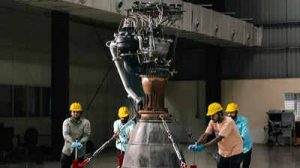
Astrobase Space Technologies recently unveiled Everest, an 800 kN Full-Flow Staged Combustion rocket engine, as India’s private space sector targets reusable, high-cadence orbital launches.
- Everest Engine is an 800 kN Full-Flow Staged Combustion (FFSC) rocket engine.
- It was developed by Astrobase Space Technologies, a Bengaluru-based Indian space-tech startup.
- It is India’s first privately developed high-thrust FFSC engine.
- It is designed for reusable medium-lift launch vehicles, supporting precision control, faster turnaround, and improved launch economics.
- It is powered by liquid oxygen and liquid methane, a combination known as methalox, and is designed to produce about 800 kilonewtons of thrust in the vacuum of space.
- In a conventional rocket engine, some of the hot gases produced during combustion are used to power the turbopumps that push fuel and oxidiser into the main combustion chamber.
- A full-flow engine takes this a step further.
- Both the fuel and oxygen are first partially burned in separate pre-burners, producing hot gases that drive their respective pumps before both flows enter the main combustion chamber.
- This allows the engine to operate efficiently at very high pressure while reducing stress on some components.
- The design is widely considered among the most advanced approaches to rocket propulsion.
- SpaceX is currently the only company to have flown an FFSC engine in an orbital rocket.
Centralised Public Grievance Redress and Monitoring System:
The Centralised Public Grievance Redress and Monitoring System (CPGRAM) over the last decade has emerged as one of the world’s largest digital public grievance redressal platforms.
- Centralised Public Grievance Redress and Monitoring System is the Government’s flagship digital grievance redressal platform.
- It functions as a comprehensive digital ecosystem that combines technology, accountability, and citizen participation to ensure effective and accessible grievance redressal.
- It was developed and monitored by the Department of Administrative Reforms and Public Grievances (DARPG), Ministry of Personnel, Public Grievances, and Pensions.
- It is available to citizens 24×7, CPGRAMS provides a single portal connected to all Central Ministries, Departments, State Governments, and Union Territories.
- To make grievance redressal more accessible, CPGRAMS supports submissions in 22 scheduled languages, in addition to English.
- One Nation–One Portal: Integration of State grievance portals and other Government platforms with CPGRAMS has created a unified and streamlined grievance redressal ecosystem across the country.
- The status of the grievance filed in CPGRAMS can be tracked with the unique registration ID provided at the time of registration of the complainant.
- The grievances received on the CPGRAMS shall be resolved promptly as soon as they are received but within a maximum period of 21 days.
- CPGRAMS also provides an appeal facility to the citizens if they are not satisfied with the resolution by the Grievance Officer.
- After closure of grievance, if the complainant is not satisfied with the resolution, he/she can provide feedback.
- If the rating is ‘Poor’ the option to file an appeal is enabled.
- The status of the appeal can also be tracked by the petitioner with the grievance registration number.



