
Indonesian Babirusa : Pig-deer
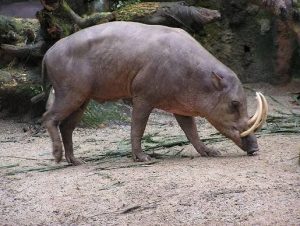
Chester Zoo in the UK announced the birth of Rana, a rare babirusa piglet, amid declining wild populations threatened by African swine fever, habitat loss, and hunting in Indonesia.
- The babirusa (genus Babyrousa)—commonly known as the pig-deer—is one of the oldest living and strangest wild pig species. The name babirusa comes from the Malay language, describing its distinctive look and stag-like upper tusks.
- Geographic Range: Endemic exclusively to four Indonesian islands: Sulawesi, Togian, Sula, and Buru.
- Inhabits tropical rainforests, swamps, and wetlands, frequently choosing areas near riverbanks and natural ponds rich in aquatic plants.
- IUCN Status: Vulnerable on the IUCN Red List of Threatened Species.
Key Characteristics:
- Unique Upper Tusks (Males Only): Male babirusas possess upper canine teeth that grow upward, pierce through the skin of their snout, and curve backward toward their forehead.
- Small Litters & Long Gestation: Unlike standard pigs that give birth to large litters, female babirusas give birth to only one or two piglets per litter after a highly predictable 155 to 161-day gestation period.
- Sparse Hair & Unstriped Piglets: They possess barrel-shaped bodies with bristly, nearly hairless grey-brown skin. Uniquely for wild pigs, newborn piglets lack protective camouflage stripes.
- Agile Omnivorous Foragers: They use specialized hooves to dig for roots and insect larvae, stand on two hind legs to reach high leaves, and can run at speeds up to 30 mph.
- Distinct Behaviors & Scent-Marking: Solitary or social in small groups, they communicate through grunts and tooth-clattering, and practice an unusual ploughing behavior—kneeling and pushing their heads through soft sand while foaming at the mouth.



