
Today’s Current Affairs: 14th Aug 2026 for UPSC IAS exams, State PSC exams, SSC CGL, State SSC, RRB, Railways, Banking Exam & IBPS, etc
Table of Contents
Kuril Islands:

The President of Russia has visited the disputed Kuril Islands for the first time, travelling to Iturup as Moscow’s relations with Japan remain deeply strained over Russia’s war in Ukraine.
- The Kuril Islands is an island group in the Russian Far East that forms the boundary between the Pacific Ocean and the Sea of Okhotsk.
- The archipelago, administered as part of Sakhalin Oblast (Russia), extends for about 1,300 kilometers from the Kamchatka Peninsula’s (Russia) southern tip to Hokkaido’s (Japan) northeastern corner.
- The islands are divided into the Greater and Lesser Kuril Chains.
- These are part of the Pacific Ring of Fire
- The climate in the islands is severe, with long, cold, snowy winters and cool, wet, foggy summers.
- Vegetation ranges from tundra on the northern islands to dense forest on the larger southern islands.
- The principal centers are the towns of Kurilsk on Iturup, the largest island, Severo-Kurilsk on Paramushir, and Yuzhno-Kurilsk on Kunashir.
- Although Russia administers all the Kuril Islands, some islands are at the heart of the Russo-Japanese feud known as the Kuril Islands dispute.
Japan considers the four southernmost islands as part of its Northern Territories. - Tokyo claims that the disputed islands have been part of Japan since the early 19th century.
- As a result of this dispute, Russia and Japan have never formally concluded a peace treaty to end World War II.
Southern African Customs Union:

India and the five-member Southern African Customs Union (SACU) recently signed the Terms of Reference (ToR) to start negotiations for a Preferential Trade Agreement (PTA), with an aim to conclude the trade talks within a year.
- Southern African Customs Union (SACU) is an African regional economic organization.
- It is the world’s oldest customs union, which was established in 1910.
- Member countries: South Africa, Namibia, Botswana, Lesotho, and Eswatini (formerly Swaziland).
- The SACU Secretariat is located in Windhoek, Namibia.
- The five member states maintain a common external tariff, share customs revenues, and coordinate policies and decision-making on a wide range of trade issues.
- Like other customs unions, a key feature of SACU is the application of a single tariff regime − the Common External Tariff (CET).
- This means the member states form a single customs territory which provides for a free movement of goods where tariffs and other barriers are eliminated on all trade between them.
- The CET applies to goods imported from all territories that are not members of SACU.
- South Africa accounts for around 91 percent of the bloc’s total economic output and is India’s largest trading partner within the grouping.
- SACU countries are also part of the Southern African Development Community (SADC), together with Angola, the Democratic Republic of Congo, Malawi, Mozambique, Tanzania, Zambia, and Zimbabwe; as well as the island nations of Mauritius, Seychelles, Comoros, and Madagascar.
Kollidam River:
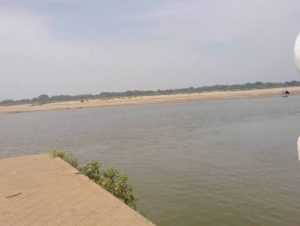
ASI archaeologists recently found remains of a possible Sangam-era irrigation structure in the Kollidam river near Lalgudi, Trichy.
- It is a river in southeastern India flowing through the Tamil Nadu
- It is the northern distributary of the Kaveri River.
- It is also known as Kolidam and sometimes Coleroon in English.
- Formed by the northern bifurcation of the Kaveri River just west of Srirangam, the Kollidam River flows in an easterly and then northeasterly direction.
- It finally empties through several mouths into the Bay of Bengal.
- The town of Chidambaram lies on its banks.
Ghatiana Karnataka:
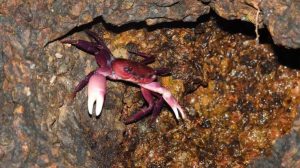
A beat forester from Mookambika Wildlife Sanctuary, Udupi has scientifically described a new freshwater crab species, Ghatiana Karnataka.
- Ghatiana Karnataka is a new species of freshwater crab.
- It was discovered from Mookambika Wildlife Sanctuary in Karnataka.
- Unlike the other species of Ghatiana that are hard to find during the dry seasons, Ghatiana Karnataka was recorded in all the seasons.
- They live near perennial streams and in evergreen or semi-evergreen forests.
- During the monsoon, they can be found on laterite rocks, and during other seasons, inside the tree cavities that are moist.
Three new species of cascade frogs:
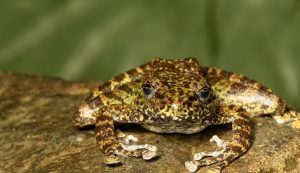
Scientists have discovered three new species of cascade frogs from the biodiverse-rich forests of Northeast India.
- These frogs belong to the genus Amolops.
- They are typically found around rocky waterfalls and fast-flowing forest streams.
- Cascade frogs are vital ecological anchors that connect aquatic and terrestrial food webs, control pest populations, and serve as sensitive indicators of clean water ecosystems.
- Three New Cascade frog species:
Ammachi’s Cascade Frog (Amolops ammachi):
- It was discovered in the Jampui Hills of Tripura.
- It honours the late Kerala social worker and philanthropist Padmini Varkey, affectionately known as ‘Ammachi’ (or mother).
- It has a light brown body interspersed with beautiful olive-green reticulations.
Sendenyu Cascade Frog (Amolops sendenyu):
- It was found in Nagaland and named after Sendenyu Village; and
Beautiful Cascade Frog (Amolops bella):
- It was discovered in West Bengal and named for its striking green body marked with yellowish-green or reddish-brown mosaic patterns.
Liberia:
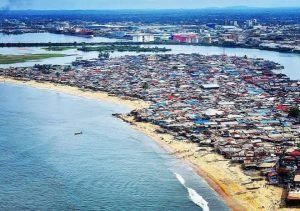
The Union Women and Child Development Minister met a parliamentary delegation from Liberia and discussed India’s initiatives on women-led development, political representation and gender-responsive governance.
- Liberia is located along the coast of western Africa.
- It is the only state in Africa which was never subjected to colonial rule and is Africa’s oldest republic.
- It is bounded by Sierra Leone to the northwest, Guinea to the north, Côte d’Ivoire to the east.
- Water Bodies: The Atlantic Ocean borders Liberia to the south-southwest.
- Capital City: Monrovia
Geographical Features of Liberia:
- Climate: It has tropical hot-humid climate.
- Major Mountain Peaks: It has Cape Mount (about 1,000 feet in elevation) in the northwest, Cape Mesurado in Monrovia, and Cape Palmas in the southeast.
- Highest Peak: Mount Wuteve.
- Major Rivers: The Mano and Morro Rivers in the northwest and the Cavalla in the east and southeast are major rivers and form sections of Liberia’s boundaries.
- Natural Resources: It is richly endowed with mineral resources such as diamond, iron ore, and gold, manganese, graphite, cyanite.
India’s Infrastructure Transformation:

India’s infrastructure landscape has undergone a major transformation over the past 12 years, with integrated planning and large-scale expansion across transport, logistics, housing and water infrastructure.
- This transformation has been supported by a sharp rise in public capital expenditure, from about ₹2 lakh crore in FY 2014–15 to ₹12.2 lakh crore in FY 2026–27, strengthening connectivity, access to essential services and the foundations for sustained economic growth.
- The railway budget increased from around ₹32,000 crore in 2014–15 to ₹2.78 lakh crore in FY 2026–27, enabling greater investment in infrastructure, safety and modernisation.
- Rail electrification increased from about 20% before 2014 to 99.6% by July 2026, supporting lower dependence on diesel and more energy-efficient operations.
- Indian Railways is operating 162 Vande Bharat, 2 Vande Bharat Sleeper and 72 Amrit Bharat services, expanding faster and more modern passenger connectivity.
- The indigenous Kavach Version 4.0 Automatic Train Protection system had been commissioned on 2,633 route km by July 2026, strengthening collision prevention and operational safety.
- The Mumbai–Ahmedabad High-Speed Rail Corridor is being developed over approximately 508 km with a design speed of 350 kmph, marking India’s entry into high-speed passenger rail.
- Under the Amrit Bharat Station Scheme, 1,340 stations have been identified for redevelopment, of which 261 stations had been completed by 18 July 2026.
- India launched its first indigenously developed Hydrogen Fuel Cell Trainset in July 2026. The 10-coach train with capacity for around 2,600 passengers is designed for the Jind–Sonipat section and produces water vapour and heat as by-products.
Grievance Appellate Committee:
Google informed the Delhi High Court that it had withheld Dhruv Rathee’s YouTube video in India pursuant to an order of the Centre’s Grievance Appellate Committee (GAC), while the issue of a global blocking order remains pending before a Division Bench of the High Court.
- Grievance Appellate Committee (GAC) is an online dispute-resolution mechanism established under Rule 3A of the Information Technology (Intermediary Guidelines and Digital Media Ethics Code) Rules, 2021 under the Information Technology Act, 2000.
- The IT Rules and GAC seek to promote a Safe, Trusted and Accountable Internet for Indian users by strengthening intermediary accountability and grievance redressal.
- It acts as a regulatory body to hear appeals from users (Digital Nagriks) who are aggrieved by the decisions of Grievance Officers (GO) of social media platforms and other intermediaries (e.g., Facebook, WhatsApp, Twitter). The entire appeal process is conducted digitally.
- An aggrieved user can approach the GAC only after contacting the intermediary’s GO.
- An appeal may be filed before the GAC within 30 days if the user is dissatisfied with the Grievance Officer’s decision or receives no response within 30 days.
- Under the Information Technology Rules, 2021, Rule 3(1)(b) requires intermediaries to make reasonable efforts to ensure that users do not host, display, upload, modify, publish, transmit, store, update or share specified prohibited information.
- Rule 3(2) requires intermediaries to maintain a grievance-redressal mechanism, with grievances generally resolved within 15 days, removal requests within 72 hours, and specified intimate, sexual, impersonated or morphed content addressed within 24 hours under Rule 3(2)(b).
Government Approves Polymer Banknotes for Field Trials:
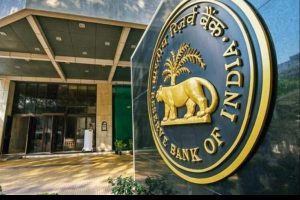
The Government has approved the Reserve Bank of India (RBI) proposal under Section 25 of the Reserve Bank of India Act, 1934 to introduce one billion pieces each of Rs 10 and Rs 20 polymer banknotes for field trials.
- Polymer notes will be issued alongside existing paper-substrate banknotes rather than immediately replacing them.
- The notes will initially undergo field trials, after which successful trials may lead to their regular issuance in these denominations. Field trials will help assess their cost, durability, security, environmental impact and suitability for India’s climatic conditions.
- These are made from biaxially oriented polypropylene (BOPP), unlike traditional Indian currency made from cotton-pulp paper.
- Polymer Banknotes are more durable, water-resistant and tear-resistant, with features such as transparent windows and embedded security elements that make counterfeiting harder.
- Polymer notes generally last 2.5–4 times longer than paper notes.
- India reportedly spends nearly Rs 5,000 crore annually on replenishing and maintaining its banknote stock and destroys around 20–24 billion soiled notes each year under the RBI’s Clean Note Policy.
- Since lower denominations such as Rs 10 and Rs 20 deteriorate faster due to frequent circulation, polymer notes could reduce replacement frequency and lifecycle costs.
Supreme Court Directs States to Declare Cancer as Notifiable Disease:
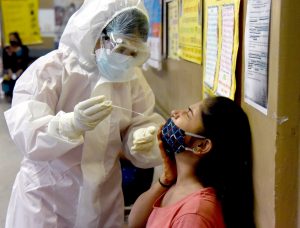
The Supreme Court has directed the 19 States and Union Territories that have not yet done so to consider declaring cancer a “notifiable disease”.
- At present, 17 of India’s 36 States and UTs have already notified cancer, following the recommendations of a Parliamentary Standing Committee.
- The direction came in the backdrop of a Public interest Litigation (PIL) highlighting deficiencies in the ICMR’s National Cancer Registry Programme, which reportedly covers only about 10% of India’s population, with rural coverage as low as 1%.
- Declaring cancer notifiable would make reporting of diagnosed cancer cases mandatory, helping governments maintain systematic data, strengthen surveillance, promote early detection and improve planning for treatment and care.
- Notifiable diseases are those legally mandated to be reported to public health authorities under laws like the Epidemic Diseases Act, 1897. The primary framework for surveillance is the Integrated Disease Surveillance Programme (IDSP), managed by the National Centre for Disease Control (NCDC).
- Once a disease is declared notifiable, all healthcare providers (public and private), hospitals, and medical practitioners are legally obligated to report suspected, probable, and confirmed cases to designated authorities, ensuring comprehensive data collection.
- While lists vary state wise, diseases commonly declared notifiable across many states include Tuberculosis, Dengue, Malaria, Cholera, Hepatitis, Measles, Leptospirosis, and Polio. Covid-19 was universally declared notifiable during the pandemic.
- Recent examples of newly notified diseases include snakebite in 2024 and human rabies in 2025.
- India lacks a single, uniform national list of notifiable diseases. The authority to declare a disease notifiable rests primarily with state/UT (with legislative assembly) governments, leading to variations in the list of diseases across different states and union territories.
- The International Health Regulations (2005) (IHR) under the World Health Organization (WHO) are a legally binding international law that require memeber countries to inform the WHO about public health risks or events that may have international health implications, irrespective of their origin or source.
The Proposed Reset: National Food Security (Amendment) Bill, 2026
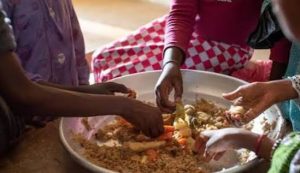
Leading public health and nutrition experts—including Dr. Soumya Swaminathan and Dr. V. Mohan—jointly highlighted the policy implications of the draft National Food Security (Amendment) Bill, 2026.
- The proposed reset aims to resolve structural inequities between individual and household entitlements under the NFSA. Currently, Priority Households (PHH) receive 5 kg of foodgrains per person per month, whereas Antyodaya Anna Yojana (AAY) households (the poorest of the poor) receive a flat quota of 35 kg per household per month.
Key Features of the Draft National Food Security (Amendment) Bill, 2026:
- Amends NFSA, 2013: Proposes to amend the first proviso to Section 3(1) of the National Food Security Act, 2013.
- Per-PersonAAY Entitlement: Every person belonging to an Antyodaya Anna Yojana (AAY) household will be entitled to 7 kg of foodgrains per month.
- 35-kg Household Ceiling: The total entitlement of an AAY household will be capped at 35 kg per month, irrespective of household size.
- Shift from Household to Individual Basis: Replaces the existing uniform 35 kg per household entitlement with a per-person allocation, subject to the overall ceiling.
- Addressing Intra-Category Inequity: Seeks to correct disparities under which smaller AAY households receive more foodgrain per capita than larger households.
- Rational &Nutrition-Linked Allocation: Aims to provide a more rational distribution of foodgrains and better align entitlements with individual nutritional requirements.
- Government-Determined Implementation: The extent of AAY coverage will continue to be specified by the Central Government for each State, while the amendment will take effect from a date notified in the Official Gazette.
Srijan: Voices from the Loom:
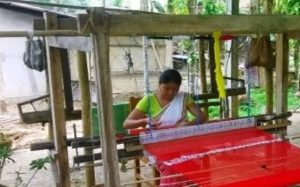
The Ministry of Textiles is organising ‘Srijan: Voices from the Loom’ in New Delhi to celebrate the contribution of women weavers to India’s handloom heritage.
- Srijan: Voices from the Loom is a special programme recognising the stories, skills and contributions of women weavers engaged in India’s handloom sector.
- It provides women artisans a platform to narrate their experiences of resilience, creativity and preservation of traditional weaving practices.
- Organised By: Ministry of Textiles, Government of India
- Aim is to recognise and amplify the voices of women weavers, celebrate their role in preserving India’s weaving traditions and highlight their contribution to the country’s handloom heritage.
Key Features:
- Women Weaver Participation: Brings together over 100 women weavers from six handloom clusters.
- First-Person Narratives: Provides a platform for weavers to share their personal journeys, challenges and achievements.
- Celebrating Resilience: Highlights how women artisans sustain livelihoods while overcoming social and economic challenges.
- Preserving Weaving Traditions: Recognises women’s role in transmitting traditional handloom skills and knowledge across generations.
- Anthology Release: Features the release of an anthology documenting the stories, journeys and voices of participating women weavers.
What Is Cess?
The Himachal Pradesh government imposed a widow and orphan cess of 60 paise per litre on petrol and high-speed diesel.
- A cess is a specialized, targeted tax levied by the government over and above basic taxes to generate revenue for a specific, pre-determined purpose (e.g., education, road development, worker welfare). Once the earmarked objective is fulfilled, the cess is meant to be discontinued.
- Constitutional Article & Devolution Rules:
- Governed under Article 270 of the Constitution of India.
- Under Article 270, revenues collected through Union cesses and surcharges are excluded from the divisible pool of taxes shared between the Centre and the States. The central government retains 100% of its collected cess revenues without devolving them through Finance Commission recommendations.
- Central Government: Imposes nationwide cesses through Parliamentary legislation.
- State Governments: State legislatures hold constitutional powers under List II (State List) and List III (Concurrent List) to levy specific welfare or development cesses on state-level subjects like motor spirits, land, and local infrastructure.
- Aim is to create a dedicated, non-lapsable pool of funds for a specific social or infrastructural priority without relying on general budget allocations.
Key Features of a Cess:
- Funds raised through a cess are ring-fenced and cannot be diverted or spent on general administrative overheads or unrelated government expenditures.
- Can be calculated either as a tax on tax or as a flat per-unit surcharge.
- Cess proceeds are typically deposited into dedicated statutory funds so unused funds carry forward to subsequent financial years.
- States frequently utilize fuel sales as a convenient administrative base for specific welfare cesses—such as Kerala’s ₹2/litre Social Security Cess or Himachal Pradesh’s 60p/litre Widow and Orphan Cess.
The Sprite Tejas Express:
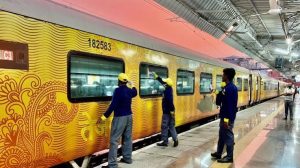
Indian Railways and IRCTC awarded full commercial train-branding rights for the Lucknow–Delhi–Lucknow Tejas Express (Sprite Tejas Express) to beverage brand Sprite for six months.
- The ‘Sprite’ Tejas Express is India’s first privately branded, fully air-conditioned corporate superfast train operated by the Indian Railway Catering and Tourism Corporation (IRCTC) featuring full external/internal brand advertising rights.
- Operates Between: Lucknow Junction (LJN), Uttar Pradesh to New Delhi (NDLS).
- Runs under the operational supervision of the North Eastern Railway (NER) zone using Indian Railways infrastructure.
- Indian Railway Catering and Tourism Corporation (IRCTC), paying haulage charges to Indian Railways.
- Branding Partner: M/s Sprite (The Coca-Cola Company).
- Aim is to commercialize train branding to generate non-fare revenue for IRCTC/Indian Railways while offering high-speed, modern passenger amenities on a key intercity transit corridor.
Key Features:
- First Branded Train Name: Marks the first instance in Indian Railways history where a scheduled train service incorporates a commercial corporate brand name in station audio/visual announcements.
- On-Board Passenger Comforts: Equipped with modern LHB coaches, extensive high-quality on-board food/beverage catering, and personalized infotainment systems.
- Group Booking Provision: Allows corporate groups, wedding parties, or event travelers to book an entire AC Chair Car coach (78-seat capacity) as a single block.
- Semi-High-Speed Operations: Runs 6 days a week, covering the ~512 km route between Lucknow and New Delhi in approximately 6 hours and 15 minutes.
Indonesian Babirusa : Pig-deer
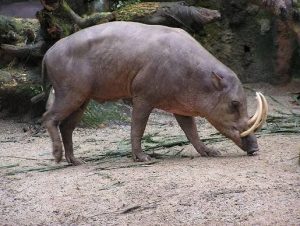
Chester Zoo in the UK announced the birth of Rana, a rare babirusa piglet, amid declining wild populations threatened by African swine fever, habitat loss, and hunting in Indonesia.
- The babirusa (genus Babyrousa)—commonly known as the pig-deer—is one of the oldest living and strangest wild pig species. The name babirusa comes from the Malay language, describing its distinctive look and stag-like upper tusks.
- Geographic Range: Endemic exclusively to four Indonesian islands: Sulawesi, Togian, Sula, and Buru.
- Inhabits tropical rainforests, swamps, and wetlands, frequently choosing areas near riverbanks and natural ponds rich in aquatic plants.
- IUCN Status: Vulnerable on the IUCN Red List of Threatened Species.
Key Characteristics:
- Unique Upper Tusks (Males Only): Male babirusas possess upper canine teeth that grow upward, pierce through the skin of their snout, and curve backward toward their forehead.
- Small Litters & Long Gestation: Unlike standard pigs that give birth to large litters, female babirusas give birth to only one or two piglets per litter after a highly predictable 155 to 161-day gestation period.
- Sparse Hair & Unstriped Piglets: They possess barrel-shaped bodies with bristly, nearly hairless grey-brown skin. Uniquely for wild pigs, newborn piglets lack protective camouflage stripes.
- Agile Omnivorous Foragers: They use specialized hooves to dig for roots and insect larvae, stand on two hind legs to reach high leaves, and can run at speeds up to 30 mph.
- Distinct Behaviors & Scent-Marking: Solitary or social in small groups, they communicate through grunts and tooth-clattering, and practice an unusual ploughing behavior—kneeling and pushing their heads through soft sand while foaming at the mouth.
The Parliament passes bill to rename Kerala as Keralam:
Parliament passed the Kerala (Alteration of Name) Bill, 2026, officially renaming Kerala as Keralam, following a unanimous resolution by the State Legislative Assembly.The Kerala (Alteration of Name) Bill, 2026 is a Parliamentary law that amends the First Schedule of the Constitution of India to change the official name of the state from Kerala to Keralam—aligning the English legal name with its native Malayalam pronunciation and cultural heritage.Article 3 of the Constitution: Empowers Parliament by law to form new states, alter state boundaries, or change the name of any existing state.First Schedule Amendment: Modifies Entry 15 of the First Schedule of the Constitution, which lists the names and territorial extents of the States.
The Panama Canal:
A container ship paid nearly $4 million to bypass a 10-day Panama Canal queue amid surging shipping demand, Middle East diversions, and drought-related transit restrictions.The Panama Canal is an artificial 50-mile (82 km) lock-type waterway that cuts across the narrow Isthmus of Panama. Connecting the Atlantic Ocean (via the Caribbean Sea) with the Pacific Ocean, it serves as one of the world’s most critical maritime transit choke points.Situated at 9° N latitude in Central America across the Isthmus of Panama, connecting Colón on the Atlantic side to Balboa/Panama City on the Pacific side.Solely owned, operated, and administered by the autonomous Panama Canal Authority (ACP) (Autoridad del Canal de Panamá), an agency of the Government of Panama.
The One Herb, One Standard (OHOS) Initiative:
The Ministry of Ayush and the Ministry of Health and Family Welfare (MoHFW) renewed their partnership under the ‘One Herb, One Standard’ initiative for an additional three years.The ‘One Herb, One Standard’ initiative is an inter-ministerial collaborative framework designed to establish unified, scientifically synchronized quality and testing standards (monographs) for medicinal plants used across different systems of medicine in India.Pharmacopoeia Commission for Indian Medicine & Homoeopathy (PCIM&H): Under the Ministry of Ayush.Indian Pharmacopoeia Commission (IPC): Autonomous body under the Ministry of Health & Family Welfare.Aim: To eliminate conflicting quality parameters across different pharmacopoeias, establishing single, clear, and scientifically reliable standards for medicinal herbs to improve the quality, safety, and international credibility of Indian botanical products.



