
Today’s Current Affairs: 17th Aug 2026 for UPSC IAS exams, State PSC exams, SSC CGL, State SSC, RRB, Railways, Banking Exam & IBPS, etc
Table of Contents
Loggerhead Sea Turtle:
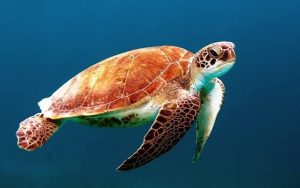
Mumbai Police personnel recently rescued a distressed 100-kg Loggerhead sea turtle after finding it struggling to swim and floating on the surface of the Arabian Sea.
- It is a species of oceanic turtle belonging to the family Cheloniidae.
- Scientific Name: Caretta caretta
- It is the world’s largest hard-shelled turtle, slightly larger at average and maximum mature weights than the green sea turtle and the Galapagos tortoise.
- It is also the world’s second largest extant turtle after the leatherback sea turtle.
- Loggerheads live in oceans all over the world, except in the coldest seas.
- The majority of loggerhead nesting occurs in the western rims of the Atlantic and Indian Oceans, primarily in Oman, the United States, and Australia.
- They may be found hundreds of miles out to sea, as well as in inshore areas such as bays, lagoons, salt marshes, and creeks.
- Loggerheads are named for their relatively large heads, which support powerful jaws and enable them to feed on hard-shelled prey, such as whelks and conchs.
- They have a large, reddish-brown, hard shell; a pale yellow underbelly (or ‘plastron’); and four flippers with two (or sometimes three) claws on each.
- Adult males are distinguished by long tails that extend beyond the rear carapace and a narrowing of the carapace that tapers towards the rear.
- They use the geomagnetic field as a map when navigating large distances.
- Lifespan: Loggerheads can live up to 80 years or more.
- Conservation Status:
- IUCN Red List: Vulnerable.
Friedreich ataxia:
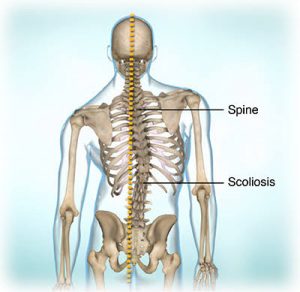
A new study from researchers at the University of Oklahoma Health Sciences Center found that Friedreich’s ataxia is caused when a gene called FXN becomes mutated.
- Friedreich ataxia (FA) is a rare, inherited disorder that causes progressive damage to the nervous system.
- The damage affects your spinal cord and the nerves that control muscle movement in your arms and legs.
- It is caused when a gene called FXN becomes mutated.
- The FXN gene codes for a protein called frataxin. Frataxin is essential for mitochondria, which are our cells’ powerhouses.
- The chemical ATP, which is the cell’s energy currency, is made mostly in the mitochondria.
- Nerve, spinal cord, brain, and heart muscle cells use a lot of energy.
- When their frataxin levels become abnormally low, the mitochondria produce ATP less effectively and also accumulate toxic by-products.
- This renders the cell dysfunctional, leading to the symptoms of FA.
- Individuals who inherit two defective copies of the FXN gene, one from each parent, will develop the disease.
- A person who inherits only one abnormal copy of the gene is called a carrier.
- Most of the affected individuals come from consanguineous marriages. That is, marriages between relatives, such as uncles and nieces, or between cousins.
- There is currently no cure for FA.
- Treatment focuses on easing symptoms and maintaining comfort and function for as long as possible.
Chips to Start-ups Programme:
According to the Ministry of Electronics and Information Technology more than 68,000 students have been trained in semiconductor chip design under the government’s Chips to Start-ups (C2S) Programme.
- Chips to Start-ups (C2S) Programme is an umbrella capacity-building initiative launched by the Ministry of Electronics and Information Technology (MeitY) in 2022.
- It targets the development of industry-ready professionals across undergraduate, postgraduate, and doctoral levels.
- It aims to catalyse the incubation of start-ups and enable technology transfers.
- It seeks to provide access to SMART lab facilities, train students, generate patents, and support focused research publications.
- It supports innovation, enhances employability, and enables academic institutions to play a more active role in India’s semiconductor value chain.
- The C2S Programme adopts a comprehensive approach, providing students with hands-on experience in chip design, fabrication, and testing.
- It is achieved through regular training sessions in collaboration with industry partners, combined with mentorship and practical support.
- Students gain access to advanced chip design tools, fabrication facilities, and testing resources, including state-of-the-art EDA software and semiconductor foundries.
- These opportunities also include implementing R&D projects under the C2S Programme to develop working prototypes of Application-Specific Integrated Circuit (ASICs), Systems-on-Chip (SoCs), and Intellectual Property (IP) Core designs.
Mount Elbrus:
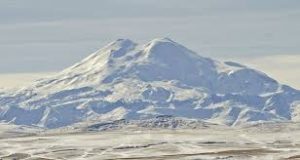
Andhra Pradesh Police Sub-Inspector V. Venkateswara Rao of Eluru Rural Police Station marked India’s 80th Independence Day in a unique way by scaling Mount Elbrus, the highest peak in Europe, which stands at 5,642 metres in Russia.
- Mount Elbrus Located in Southern Russia, Mount Elbrus is the highest peak of the Caucasus Mountains.
- Mount Elbrus is the world’s 10th most prominent peak as well as the highest mountain peak in both the European continent and Russia.
- It is one of the Seven Summits of the world, which are the tallest mountains on each of the seven continents.
- Mount Elbrus is an inactive volcano that consists of two principal summits, both of which are dormant volcanic domes. It is also Eurasia’s highest stratovolcano.
- It is believed that the Caucasus Mountains were formed due to the northward collision of the Arabian Plate with the Eurasian Plate.
- Major Glaciers: Bolshoi Azaou and Irik Glacier.
- Many Russian rivers like the Baksan, Malka, and Kuban rivers originate from these glaciers.
Mahadayi River:
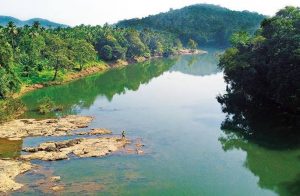
There is no proposal before the Union government from Karnataka seeking an Environmental Clearance (EC) for the diversion of the Mahadayi River for various projects, the Centre recently told the Lok Sabha.
- The Mahadayi River, also known as the Mandovi or Mhadei River, is a rain-fed river shared between Karnataka and Goa.
- It originates from the Bhimgad Forest in the Western Ghats, located in the Belagavi district of Karnataka.
- It flows westward to join the Arabian Sea at Panaji, Goa.
Panaji, the state capital, and the town of Old Goa are situated on the left bank of the Mandovi River. - Near the town of Old Goa, there are three large freshwater islands, Divar, Chorao, and Vashee, in the Mandovi River. The island of Chorao houses Salim Ali Bird Sanctuary.
- It has several tributaries, namely Rogaro, Kushavati, Nanorem, Nanuz, Valvota, and Mapusa.
- The river is central to a decades-long dispute between Karnataka and Goa, primarily over Karnataka’s plans to divert water from the Kalasa and Bhandura tributaries to the Malaprabha basin for drinking water needs.
- The Mahadayi Water Disputes Tribunal (MWDT) in 2018 allocated 13.42 tmc (380 Mcum) of water to Karnataka, including permissions for limited diversion from the Kalasa (1.72 tmc) and Bhandura (2.18 tmc) streams.
New Development Bank (NDB): In News
Iran will soon join the New Development Bank, the development lender established by the BRICS group of nations, central bank governor Abdolnaser Hemmati said in a state media report published recently ahead of a BRICS finance meeting in India.
- The New Development Bank (NDB), formerly known as the BRICS Development Bank, is a multilateral development bank established by Brazil, Russia, India, China, and South Africa (BRICS).
- NDB aims to mobilize resources for infrastructure and sustainable development projects in BRICS countries and other emerging economies and developing countries.
- The agreement for establishing the NDB was signed during the BRICS Summit held in Fortaleza, Brazil, on July 15, 2014.
- The bank became operational in 2015 and is headquartered in Shanghai, China, with a regional office in Johannesburg and additional offices later opened in São Paulo and Moscow.
- Membership in NDB is open to any member of the United Nations.
- NDB’s key areas of operation include clean energy and energy efficiency; transport infrastructure; water and sanitation; environmental protection; social infrastructure; and digital infrastructure.
- Its founding capital was set at USD 100 billion, with initial subscribed capital of USD 50 billion divided equally among the five founding members.
- The bank is governed by a Board of Governors made up of the finance ministers of the five BRICS countries, and a Board of Directors.
- Both the presidency and vice-presidency of the NDB are rotated among BRICS founding members.
- Unlike in the case of the World Bank or Asian Development Bank (ADB), each member in the NDB has an equal voting power.
Hara Mangrove Forest:
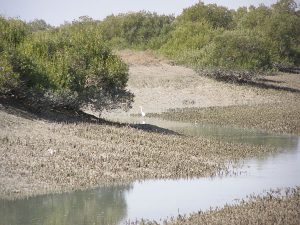
Recent satellite images have revealed a major environmental threat to Hara mangrove forest due to an oil spill off Qeshm’s southern coast.
- Hara Mangrove Forest are a vital ecological treasure of the Persian Gulf, spanning the Strait of Hormuz.
- These mangrove forests consist mainly of grey mangrove trees (Avicennia marina).
- They have a special filtration system in their roots that allows them to thrive in saline conditions.
- The forests are designated as a UNESCO Biosphere Reserve.
- The same roots also protect the coast against erosion and are voluminous carbon sinks, sequestering significantly more carbon than terrestrial forests.
- They serve as an important nursery for marine life as they shelter shrimp, crabs, and numerous fish species that sustain the region’s fisheries.
- The Hara forests’ canopy is also a major migratory hub for birds like the great stone-curlew and various herons.
- The mangroves are the backbone of the sustainable tourism programmes of Qeshm, an Iranian island in the Persian Gulf, and draw visitors to their labyrinthine waterways.
Nancy Grace Roman Space Telescope: Set To Begin
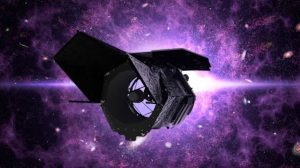
Nasa’s Nancy Grace Roman Space Telescope is set to begin its journey to a new home in deep space on August 30.
- Nancy Grace Roman Space Telescope is NASA’s flagship orbital observatory.
- It is designed to settle essential questions in the areas of dark energy, exoplanets, and infrared astrophysics.
- Scientists by using this telescope will focus on three main topic areas: dark energy, exoplanets, and dark matter.
- It will provide one of the deepest-ever views into the heart of our Milky Way galaxy.
- It will orbit around a special place in space called the second Sun-Earth Lagrange point, or L2.
- It will monitor hundreds of millions of stars in search of tell-tale flickers that betray the presence of planets, distant stars, small icy objects that haunt the outskirts of our solar system and isolated black holes.
- It will have two instruments:
- Wide Field Instrument:
- It is a 300-megapixel infrared camera.
- It will have a field of view that is 100 times greater than the Hubble infrared instrument, capturing more of the sky with less observing time.
- It will measure light from a billion galaxies over the course of the mission lifetime.
- It will perform a microlensing survey of the inner Milky Way to find ~2,600 exoplanets.
- Coronagraph Instrument:
- It is a technology demonstration which will perform high contrast imaging and spectroscopy of individual nearby exoplanets.
- Its Galactic Bulge Time-Domain Survey will focus on the Milky Way.
- Wide Field Instrument:



