
Today’s Current Affairs: 26th Aug 2026 for UPSC IAS exams, State PSC exams, SSC CGL, State SSC, RRB, Railways, Banking Exam & IBPS, etc
Table of Contents
Dihing Patkai National Park:

A male tiger was camera-trapped in Assam’s Dihing Patkai National Park.
- Dihing Patkai National Park is located in the Dibrugarh and Tinsukia districts of
- It lies in the Dehing Patkai Landscape, which is a dipterocarp-dominated lowland rainforest.
- It is situated at the foothills of Patkai Hill Ranges, on the banks of the River Dehing (Tributary of Brahmaputra), and adjacent to the Namdapha Wildlife Sanctuary.
- It is famous for its largest stretch of tropical lowland rainforests in India.
- It was declared a wildlife sanctuary in 2004. In 2020, Government of Assam upgraded it into a national park.
- Tribal Communities: indigenous Assamese communities, particularly Tai Phake, Khamyang, Khampti, Singpho, Nocte, Ahom, Kaibarta, Moran and Motok, Burmese, and non-indigenous Nepali people.
- The Park is a deciduous rainforest with semi-evergreen and lush green flora.
- It is dominated by species like Hollong, Nahor, Mekai, Paroli, Simul, various orchids, ferns, cane, and bamboo.
- The rich biodiversity includes diverse species such as slow loris, pig-tailed macaque, stump-tailed macaque, capped langur, Indian leopard, Asian elephant, royal Bengal tiger, etc.
Adi Vaani Platform:
The Ministry of Tribal Affairs today began the three-day National Conclave on Tribal Languages & Museums in Mysuru, Karnataka in which full-fledged Adi Vaani Platform was launched.
- Adi Vaani Platform is India’s first AI-powered translator for tribal languages.
- It is designed to bridge communication gaps between tribal and non-tribal communities, while safeguarding endangered tribal languages using advanced Artificial Intelligence (AI).
- The project combines advanced AI technologies with community-driven approaches to protect, promote, and revitalize tribal languages and cultures across India.
- It is developed by a national consortium of premier institutions led by IIT Delhi with BITS Pilani, IIIT Hyderabad, and IIIT Nava Raipur in collaboration with Tribal Research Institutes (TRIs) in Jharkhand, Odisha, Madhya Pradesh, Chhattisgarh, and Meghalaya.
- AI Language Models: Refined deployment of models such as No Language Left Behind (NLLB) and IndicTrans2 for low-resource tribal languages.
- It aims to:
- Enable real-time translation (text and speech) between Hindi/English and tribal languages.
- Provide interactive language learning for students and early learners.
- Digitally preserve folklore, oral traditions, and cultural heritage.
- Support digital literacy, healthcare communication, and civic inclusion in tribal communities.
- Awareness of the government schemes and important speeches
- Features:
- Multilingual Translator: It converts images and documents to editable text in seconds.
- Audio files to Text: It transcribes live speech or audio files into text and translate into indigenous languages instantly.
- Speech to speech Translation: Speak or upload speech in English or Hindi and listen to real-time voice translation in Santali, Mundari, or Bhili.
Lead : New study
Researchers at the ICMR-National Institute of Nutrition (ICMR-NIN), Hyderabad, have found that exposure to lead can significantly disrupt the natural waste-clearing and recycling system of nerve cells.
- Lead is a naturally occurring element found in small amounts in the earth’s crust.
- It is a soft, silvery white or grayish metal in Group 14 (IVa) of the periodic table.
- Lead has a bright lustre and is a dense, ductile, very soft, highly malleable, bluish-white metal that has poor electrical conductivity.
- It is also highly resistant to corrosion and because of this property is used to contain corrosive liquids (e.g. sulphuric acid).
- It is usually found in ore with zinc, silver and copper and is extracted together with these metals.
- The main lead mineral is galena (PbS). Other common varieties include cerussite (PbCO3) and angelsite (PbSO4).
- It used for lead-acid batteries for vehicles, backup emergency systems, the telecoms sector and fork lift trucks.
- It is also used in rolled and extruded products, compounds in the glass and plastics industries, shot and ammunition and for radiation shielding.
- Impacts of Lead on Human Health:
- It is highly toxic to humans and the environment.
- Exposure to lead can affect multiple body systems and is particularly harmful to young children and women of child-bearing age.
Guggal Plant:
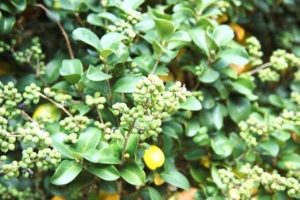
A Kutch-based non-profit is planting Khara and Mitha Guggal across five villages to restore native medicinal heritage and biodiversity on community grazing lands.
- Guggal Plant is a spiny shrub or small tree belongs to Burseraceae family.
- It is native to India, Arabia and Pakistan.
- In India, it is found in the arid, rocky tracts of Rajasthan, Gujarat, Madhya Pradesh and Karnataka in India.
- The plant prefers arid and semi-arid climates and is tolerant of poor soil.
- It grows well in sandy to silt loam soils, which are poor in organic matter and rich in other matters and also considered as drought and salinity resistant plant.
- Gum guggul is used as incense, to make lacquers, varnishes, and ointments, as a fixative in perfumes, and in medicine.
- Modern therapeutic uses of guggul include nervous diseases, hemiplegia, leprosy, marasmus, musclespasms, neuralgia rtc.
- Guggal-gum extract targets the Farnesoid X Receptor (FXR) that regulates cholestrol and checks bile acids produced from cholestrol by the liver.
- The resin from the Guggal tree, known as guggul, is valued in Ayurvedic medicine for treating various ailments.
Dak MITRA and Dak Sewa Apps:

The Union Minister for Communications launched the revamped Dak Sewa App and Dak MITRA App at a function in New Delhi.
- The upgraded Dak MITRA (Mobile Interface for Transactions & Rural Assistance) application serves as a unified operational platform for more than 1.4 lakh Branch Post Offices.
- It is developed indigenously by the Centre for Excellence in Postal Technology (CEPT)under the Advanced Postal Technology (APT) platform as part of DoP IT 2.0 Modernization,
- It enables Branch Postmasters to undertake paperless and real-time postal and financial transactions,
- It includes mail booking, OTP-based doorstep delivery, Core Banking Services, insurance services, Aadhaar-based biometric e-KYC, cash deposits and withdrawals etc.
- Dak Sewa App provides citizens with 24×7 access to postal services, including tracking, booking, complaints; Post Office and PIN code locators, and financial calculators.
- It supports 23 Indian languages through BHASHINI.
Information Technology Resilience Index:
The Securities and Exchange Board of India (SEBI) has introduced an Information Technology Resilience Index (ITRI) for market infrastructure institutions (MIIs).
- Information Technology Resilience Index is introduced to assess the functioning and resilience of information technology systems of market infrastructure institutions (MIIs), including stock exchanges, depositories and clearing corporations.
- It is an initiative of the Securities and Exchange Board of India.
- It is aimed at strengthening oversight of the resilience of IT systems and identifying emerging weaknesses at an early stage, so that timely corrective measures can be taken.
Key Features of IT Resilience Index:
- The ITRI will be computed using a uniform set of nine parameters, each carrying a specific weightage.
- These parameters are namely availability, security, integrity, governance, reliability and monitoring, business continuity, modularity and flexibility, scalability, and other relevant factors.
- Availability and security will carry the highest weightage of 20 per cent each, followed by integrity, governance, reliability and monitoring, business continuity, and modularity and flexibility at 10 per cent each.
- MIIs would be required to calculate the index on a half-yearly basis within 60 days of the end of each half-year.
- They would also have to submit a comparative analysis of two consecutive half-years on a rolling basis, along with details of corrective actions taken or proposed, to their Standing Committee on Technology (SCOT) and governing boards.
- MIIs will also develop an Early Warning System (EWS) to detect any deterioration in ITRI parameters that could potentially lead to performance issues, system slowness or other disruptions, and take remedial measures.
Doronicum sanctum:
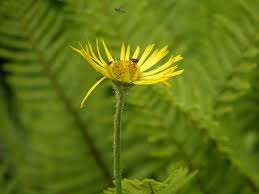
Researchers from the CSIR-Institute of Himalayan Bioresource Technology (IHBT) have announced the discovery of a new plant species and named it as Doronicum sanctum.
- Doronicum sanctum was discovered in the high-altitude wilderness of Arunachal Pradesh.
- It is the new plant species belonging to the sunflower family.
- It is the first time a member of the Doronicum genus, commonly known as Leopard’s bane, has been documented in Northeast India.
- The researchers chose sanctum name because the plant’s type locality is situated near the Chumi Gyatse Holy Waterfalls, a site held in high spiritual regard by the local population.
- It was found at an elevation of approximately 4,086 metres above sea level in the Tawang district.
- It possesses pubescent ray cypselae, which are tiny, hairy seeds at the edge of the flower head, and a caducous pappus, a feathery structure that falls off easily.
- It has dilated flower stalks (peduncle apex) and flat, lance-shaped green bracts that cup the flower.
- It has vibrant yellow flowers and heart-shaped leaves, the species appears to be extremely rare.
Gen-Next Support for Innovative Startups Scheme:
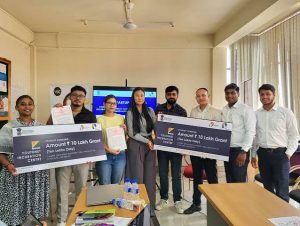
The Ministry of Electronics and Information Technology (MeitY), through MeitY Startup Hub (MSH) has launched Gen-Next Support for Innovative Startups (GENESIS) Entrepreneur-in-Residence (EIR) Cohort 3.
- Gen-Next Support for Innovative Startups Scheme is a flagship initiative of the Ministry of Electronics and Information Technology (MeitY) Startup Hub.
- It is designed to discover, support, grow and accelerate startups across India’s Tier-II and Tier-III cities.
- Through its Entrepreneur-in-Residence, Pilot (EIR), Investment and DeepTech funding components, GENESIS supports startups and innovators from early ideation and experimentation through to validation, investment and scale.
- The EIR component specifically provides funding of up to Rs 10 lakh per startup to help innovators, students and entrepreneurs at the ideation and prototype stages develop their ideas into pilot-ready solutions.
- Financial Assistance: Total budget outlay of ₹490 crore,
- The scheme seeks to unlock the entrepreneurial potential of emerging regions and connect them more deeply with India’s growing innovation ecosystem.
GENESIS EIR 3.0:
- It will support innovations in areas including artificial intelligence and machine learning, Internet of Things, semiconductor and VLSI technologies, cybersecurity, blockchain, quantum technologies, and augmented reality, virtual reality, spatial and immersive technologies.
- Eligibility for GENESIS EIR 3.0
- Applicants must be Indian citizens and may include entrepreneurs, innovators, researchers, students or founders and co-founders of early-stage startups.
- The proposed innovation must be at Technology Readiness Level (TRL) 1-4, covering stages from ideation and proof of concept to prototype, MVP or early validation.
- For incorporated startups, the company must be less than two years old as of the date of application and must be based in a Tier-II or Tier-III city.
- Applicants are also required to ensure that the proposed idea or startup has not received financial assistance exceeding Rs 10 lakh under any Central or State government scheme.
The Garbhini Mitra Course:

The All India Institute of Ayurveda (AIIA), New Delhi, has launched the “Garbhini Mitra” course for the 2026–2027 academic session.
- Garbhini Mitra is a structured, six-month offline healthcare skill-development training program. It blends traditional Ayurvedic maternal care principles with fundamental modern healthcare-support practices to develop non-clinical support personnel who provide lifestyle guidance, dietary advice, and wellness assistance to women throughout pregnancy and the postpartum period.
- Apex Implementing Body: All India Institute of Ayurveda (AIIA), New Delhi (an autonomous premier institution).
- Aim is to create a cadre of skilled community health workers and maternal wellness guides capable of delivering holistic, Ayurveda-based pre-conceptional, antenatal, and postnatal support to mothers and newborns, while facilitating timely clinical referrals to qualified medical professionals.
Key Features of the Programme:
- Rooted in Classical Ayurvedic Frameworks: Built around three core traditional pillars:
- Garbhadhana Vidhi: Pre-conceptional health care and preparation.
- Garbhini Paricharya: Structured, month-by-month and trimester-specific antenatal regimen.
- Sutika Paricharya: Comprehensive postnatal care and maternal recovery practices.
- Trains participants in stage-specific dietary planning, pregnancy-safe yoga postures, breathing exercises, emotional support techniques during labor, and traditional newborn massage (Abhyanga).
- Incorporates essential modern non-clinical health practices, including Basic Life Support (BLS), infection control, sanitization standards, workplace safety, and biomedical waste handling.
- Open to candidates who are at least 18 years of age and have completed the Senior Secondary (10+2) examination (with provision for students awaiting 12th-grade results); intake is capped at 20 students per batch to ensure focused practical training.
- Strictly designed to complement—not replace—clinical obstetrics; trained personnel assist mothers with routine health checks, track blood pressure/hemoglobin markers, identify high-risk warning signs, and facilitate prompt hospital referrals.
The UN Mission in South Sudan:

India has strongly condemned a deadly ambush on peacekeepers deployed with the UN Mission in South Sudan (UNMISS) near Pajut in Jonglei State, which resulted in the death of an Ethiopian Blue Helmet and injuries to several personnel.
- UNMISS is an ongoing multidimensional United Nations peacekeeping mission operating under Chapter VII of the UN Charter in the Republic of South Sudan.
- It deploys military contingents (Blue Helmets), police personnel, and civilian specialists to maintain stability, protect civilians, and monitor human rights compliance in the world’s youngest nation.
- Establishment Date: July 8, 2011, established by the United Nations Security Council via Resolution 1996 (2011) immediately following South Sudan’s formal declaration of independence.
- Following the outbreak of civil conflict in December 2013, the Security Council adopted Resolution 2155 (2014), reprioritizing the mission’s core focus toward civilian protection and humanitarian assistance delivery.
- Aim is to consolidate peace and security, protect vulnerable civilian populations from armed conflict and inter-communal violence, facilitate the unhindered delivery of life-saving humanitarian aid, and support the implementation of the Revitalized Agreement on the Resolution of the Conflict in the Republic of South Sudan (R-ARCSS).
The Hawk Fire:
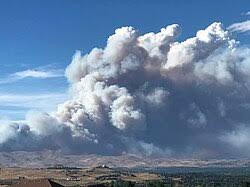
The Hawk Fire, a fast-spreading, human-caused wildfire burning across Peavine Peak northwest of Reno, prompted Nevada Governor Joe Lombardo to declare a State of Emergency in Washoe County.
- The Hawk Fire is a rapidly moving, wind-driven wildland-urban interface (WUI) fire in western Nevada. It is characterized by high rates of spread across light fuels (dry brush and sere grasses), jumping major transit corridors and threatening dense suburban neighborhoods and critical municipal infrastructure.
- Origin & Location:Near Hawk Meadow Trail in the Humboldt–Toiyabe National Forest on Peavine Peak, just northwest of Reno, Washoe County, Nevada.
- Region Affected:
- Nevada: Washoe County (including communities in Lemmon Valley, Stead, Golden Valley, Raleigh Heights, and the periphery of the University of Nevada, Reno).
- California: Cross-border spread into rural tracts of Sierra County and near Lassen County.
Key Features of the Hawk Fire:
- Ignited under a Red Flag Warning with humidity down to 18% and southwest wind gusts reaching up to 40 mph, propelling rapid ember spotting across desiccated vegetation.
- Exploded from 15 acres to over 15,050 acres within 24–36 hours, jumping across the multi-lane U.S. Route 395 near Peppermint Drive and forcing its closure between Parr Boulevard and Red Rock Road.
- Destroyed 32 residential homes, damaged six, prompted the shutdown of Reno-Stead Airport to general aviation, and forced the emergency electrical de-energization of over 59,000 NV Energy utility customers.
Chlorpheniramine and Phenylephrine Combination:
The Union Health Ministry has tightened rules for FDCs containing chlorpheniramine maleate and phenylephrine, requiring labels to warn against their use in children below four years.It is an over-the-counter and prescription Fixed-Dose Combination (FDC) commonly formulated as oral drops, syrups, and tablets for symptomatic relief of common cold, allergic rhinitis, and upper respiratory tract congestion. It combines two active pharmacological agents:Chlorpheniramine Maleate: A first-generation antihistamine that blocks H1 histamine receptors to alleviate sneezing, watery eyes, and a runny nose.Phenylephrine Hydrochloride: A sympathomimetic nasal decongestant that constricts dilated blood vessels in the nasal passages to relieve stuffiness.
India’s First Non-GMO High-Expansion Popcorn Maize Hybrid Seed:
Vice-President C. P. Radhakrishnan launched India’s first non-GMO, high-expansion popcorn maize hybrid seed at Musunuru in Eluru district, Andhra Pradesh.It is an indigenously developed hybrid maize seed specifically designed for producing high-expansion popcorn, launched in association with Gourmet Popcornica.
It is non-GMO, meaning its desired characteristics have been developed without genetic modification.High-expansion refers to the ability of kernels to produce a larger volume of popped corn, an important commercial quality parameter in the popcorn industry.Aim is to develop a domestic, high-quality popcorn maize seed ecosystem, reduce dependence on imported hybrid technology, improve farmer-market linkages and make India’s popcorn industry globally competitive.



