
Today’s Current Affairs: 5th Sep 2026 for UPSC IAS exams, State PSC exams, SSC CGL, State SSC, RRB, Railways, Banking Exam & IBPS, etc
Table of Contents
Rudra Raptors Exercise:
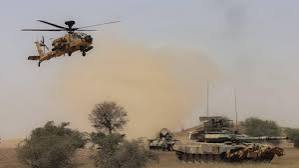
The Indian Army’s Konark Corps recently conducted the ‘Rudra Raptors’ exercise in Jaisalmer.
- Rudra Raptors Exercise is a high-intensity joint military exercise conducted by the Konark Corps of the Indian Army.
- It was conducted in the forward areas of the desert sector in Jaisalmer, Rajasthan.
- Theme: “One team, one purpose, absolute battlefield dominance”
- The exercise witnessed joint integrated training and active participation from the elite helicopters of ‘Thar Raptors’ such as AH-64E Apaches, and tanks of the ‘Black Mace’ Brigade.
- Black Mace Brigade is the Rudra all-arms formation under Konark Corps, which the Army validated during Exercise Akhand Prahar in 2025 as a combined-arms unit grouping armour, mechanised infantry, artillery, air defence, and support elements under one headquarters.
- The exercise was aimed at establishing seamless synergy between aerial and ground combat capabilities, as well as validating integrated battle strategies for realistic battlefield conditions.
- During the joint training, attack helicopters and tanks executed operational activities in tandem to demonstrate coordinated actions between aerial and ground military assets.
What is Alexander Disease?
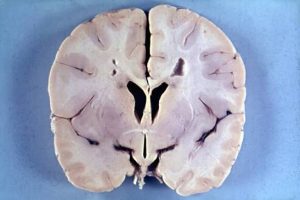
Ionis Pharmaceuticals recently said it would price its newly approved therapy to treat Alexander disease at $285,000 per dose, a day after the U.S. FDA cleared the injectable drug, making it the first approved treatment for the genetic disorder in adults and children.
- It is a rare genetic disorder that progressively damages the nervous system.
- It is a type of leukodystrophy, a group of conditions that affect the white matter of the brain.
- These diseases damage the myelin sheath, which surrounds and protects the nerve cells in the brain and spinal cord and speeds transmission of messages between cell
- In Alexander disease, the myelin insulating the nerve fibers in the brain deteriorates over time, and abnormal clumps of protein, called Rosenthal fibers, accumulate in the brain.
- This causes the nervous system to stop working properly.
- Most cases of Alexander disease are caused by a mutation in the GFAP gene, which directs the body’s production of a glial fibrillary acidic protein (GFAP).
- At normal levels, GFAP supports the brain’s white matter (the myelin sheath).
- The mutation of this gene in Alexander disease causes this protein to accumulate.
- Instead of helping maintain the brain’s white matter, the extra GFAP does the opposite, killing other cells and damaging the myelin.
- In most cases, the gene mutation associated with Alexander disease is not inherited from a parent.
- It is simply a random mutation and is new in the person who develops the syndrome.
- In some cases, Alexander disease is inherited from a similarly affected parent.
- Most cases of Alexander disease begin before age 2 and are described as the infantile form.
- Signs and symptoms of the infantile form typically include an enlarged brain and head size (megalencephaly), seizures, stiffness in the arms and/or legs (spasticity), intellectual disability, and developmental delay.
- Less frequently, onset occurs later in childhood (the juvenile form) or in adulthood.
- Common problems in juvenile and adult forms of Alexander disease include speech abnormalities, swallowing difficulties, seizures, and poor coordination (ataxia).
- Rarely, a neonatal form of Alexander disease occurs within the first month of life and is associated with severe intellectual disability and developmental delay, a buildup of fluid in the brain (hydrocephalus), and seizures.
- Treatment:
- There is no complete cure for Alexander disease, but the U.S. FDA recently approved Zanvastro (zilganersen), which is the first disease-modifying therapy that directly targets the underlying protein buildup driving the condition.
- The disease is often fatal.
Sukhna Lake: In News
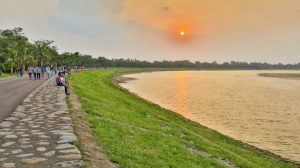
The MSME Development and Facilitation Office (DFO), Ludhiana, and the Chandigarh tourism department recently launched a three-day pilot market access initiative at Sukhna Lake.
- Sukhna Lake is an artificial lake located in the city of Chandigarh at the foothills of the Shivalik hills.
- It came into existence in 1958 when the Sukhna Choe, a seasonal stream originating from the Shivalik Hills, was dammed.
- Initially spanning 230 hectares, the lake’s area diminished to approximately 154 hectares by 2007 due to siltation, leading to the creation of the Sukhna Lake Reserve Forest.
- Over time, the water level dropped from 5 meters in 1958 to 2 meters by 2004, exacerbated by significant soil erosion from the 4,200-hectare catchment area.
- The water flowing into the lake is heavily loaded with silt. Due to higher run-off, there is an accelerated pace of erosion in the catchment areas, resulting in the higher rate of sedimentation in the reservoir of Sukhna Lake and streambeds.
- The lake is fringed by a golf course to the south, and the famous Nek Chand Rock Garden of Chandigarh to its west.
- The lake is declared a National Wetland by the Government of India.
- During winter, Sukhna Lake transforms into a haven for diverse migratory birds such as Siberian ducks, storks, and cranes, hosting around 30 resident and migratory species.
- The lake is also a part of the Sukhna Wildlife Sanctuary.
- Sukhna Lake has the longest channel for rowing and yachting events in Asia.
New Species of Pistol Shrimp:
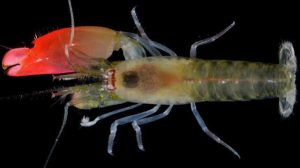
Researchers at the Cochin University of Science and Technology (CUSAT) recently discovered two new species of pistol shrimp named Alpheus vembanadi and Alpheus hari in the Kochi backwaters.
Alpheus vembanadi and Alpheus hari:
- They are two new species of pistol shrimp.
- They were discovered in the Kochi backwaters of Kerala. The specimens were collected from gillnets, a traditional fishing method used in the backwaters.
- The first species, Alpheus vembanadi, has been named after the Vembanad backwaters.
- It is found in the Kochi backwaters throughout the year and can survive in waters with salinity levels of up to 31 parts per thousand (ppt).
- The second species, Alpheus hari, was named in honour of Dr. M. Harikrishnan, Senior Professor at CUSAT’s School of Industrial Fisheries.
- The species has a notable ability to tolerate changes in salinity.
- Researchers found it in waters with very low salinity, while laboratory studies showed that it can also survive in freshwater.
Pistol shrimp:
- Also known as snapping shrimp, are a crustacean in the family Alpheidae.
- There are hundreds of species found all over the world, but most species are found in reefs and seagrass beds in temperate and tropical regions.
- They have one small claw called a pincer and a much larger claw-like snapper.
- Some shrimps have snappers that are bigger than half its body.
- The snapper is the shrimp’s weapon for killing or stunning prey.
- However, they don’t grab or choke prey the way a crab does. Instead, the snapper has a complex mechanism that gives it much more power.
- By rapidly snapping the snapper shut, the shrimp creates a cavitation bubble that collapses with a loud snapping sound.
- This snap can stun or even kill small prey, which the shrimp then consumes.
Stegodyphus sarasinorum:
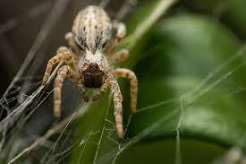
A team of Indian researchers has produced the first comprehensive molecular and functional profile of the venom gland of Stegodyphus sarasinorum.
- Stegodyphus sarasinorum is a colonial spider species.
- It is also called an Indian cooperative spider or an Indian social spider.
- It is found across the Indian subcontinent.
- It inhabits the semi-arid areas of the central and southern states.
- It lives in permanent colonies, constructs communal silk nests and captures prey cooperatively.
- The colony composition of S. sarasinorum is dominated by females.
- It is among only a small number of permanently social spider species known worldwide.
- They hunt and feed communally, and live in cooperatively built nests of silk and other matter. These nocturnal spiders feed together.
- Sexual dimorphism is observed among sarasinorum where males are smaller than females and darker in colour.
Agentic AI Skilling Program:
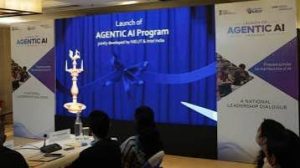
The National Institute of Electronics and Information Technology (NIELIT) and Intel India have launched two Agentic AI skilling programmes.
- Agentic AI Skilling Program is aimed at expanding access to industry-aligned Agentic AI learning opportunities and contributing to the development of a future-ready AI talent ecosystem in the country.
- It was launched by the National Institute of Electronics and Information Technology (NIELIT), Ministry of Electronics and Information Technology (MeitY), in collaboration with Intel India.
- Under the initiative, two programmes have been introduced:
- Agentic AI for Everyone : It introduces learners to workflow automation, AI agents and multi-agent systems, with a focus on improving productivity, enabling business transformation and supporting intelligent decision-making. The programme provides hands-on exposure to designing and governing AI-powered workflows and agentic systems using no-code platforms.
- Engineering Agentic AI Systems focuses on designing, building and deploying AI-powered agentic systems. Learners will gain practical exposure to no-code/low-code platforms and code-based frameworks, covering areas including agent architecture, tool integration, orchestration, memory and deployment to develop scalable and production-ready solutions.
Agentic AI:
- It is an advanced form of artificial intelligence focused on autonomous decision-making and action.
- It consists of AI agents—machine learning models that mimic human decision-making to solve problems in real time.
- Unlike traditional AI, which primarily responds to commands or analyzes data, agentic AI can set goals, plan, and execute tasks with minimal human intervention.
“Agentic” indicates agency — the ability of these systems to act independently, but in a goal-driven manner - Using a large language model (LLM), agentic AI analyzes the gathered data to understand the context, identify relevant information, and formulate potential solutions.
- The AI then uses the information it gathered to develop a plan. This involves setting goals, breaking them down into smaller steps, and figuring out the best way to achieve them.
- Based on its plan, the AI takes action. This could involve performing tasks, making decisions, or interacting with other systems.
- After taking action, the AI learns from the results. It evaluates whether its actions were successful and uses this feedback to adjust its plans and actions in the future.
CVC Annual Report 2025:

The Central Vigilance Commission (CVC) Annual Report 2025 highlights a severe judicial and investigative backlog, revealing that over 7,200 corruption cases probed by the Central Bureau of Investigation (CBI) under the Prevention of Corruption (PC) Act, 1988 remain pending trial, with hundreds languishing for over two decades.
Key Findings of the Central Vigilance Commission (CVC) Annual Report 2025:
- Bottlenecks in the Higher Judiciary: The crisis of pendency is not restricted to lower trial courts but extends deep into the appellate system.
- A staggering volume of appeals, writ petitions, and revisions remain unresolved in High Courts and the Supreme Court, severely compounding the delay in final judicial outcomes.
- Pending government sanctions under Section 17A of the Prevention of Corruption (PC) Act, 1988 often delay investigations and prosecutions against public servants.
- Section 17A requires police officers to get prior government approval before conducting any inquiry or investigation into official decisions or recommendations made by public servants.
- Despite the massive pendency, the CBI’s conviction rate marginally improved to 71.71% in 2025, compared to 69.14% in 2024.
- The CBI is operating with a severe manpower shortage, holding 1,088 vacant positions against a sanctioned strength of 7,300, with the highest deficit (672 posts) in the executive ranks.
- Disproportionate asset cases require complex financial verification, while delays in Letters Rogatory (LRs) slow international evidence collection, despite a marginal improvement in CBI convictions.
- The CVC continues complaint disposal and first-stage advice, with many cases leading to major penalty proceedings, strengthening accountability through administrative action.
RAKSHA Document on Defence Diplomacy:
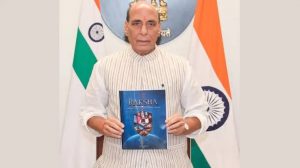
The Defence Minister officially released the ‘RAKSHA’ document on defence diplomacy. This comprehensive policy blueprint outlines India’s strategic roadmap and vision for forging global defence partnerships over the next decade.
- Defence diplomacy refers to the use of defence resources and military cooperation as instruments of foreign policy to build trust, strengthen partnerships, enhance interoperability and promote regional stability without resorting to force.
- It is a 10-year policy framework that formally codifies defence diplomacy as a central pillar of India’s foreign policy.
- The RAKSHA document transitions India from a historically cautious and non-aligned defence posture to an assertive and proactive global strategic role, positioning India as an anchor of regional stability while maintaining strategic autonomy through diversified partnerships based on converging interests.
- It serves as a coordinated, actionable vision integrating the objectives of the Ministry of Defence (MoD), the Ministry of External Affairs (MEA), and the National Security Council Secretariat (NSCS).
- Key Pillars of the Blueprint:
- Strategic Partnerships: Deepening bilateral and multilateral security cooperation with friendly, like-minded nations to counter shared geopolitical threats and ensure collective regional security.
- Capacity Building: Enhancing joint military exercises, targeted training programmes, and sharing operational best practices with allied nations, particularly focusing on the Global South.
- Indigenous Exports: Actively promotes ‘Make in India’ and Atmanirbharata in defence by shifting from a traditional buyer-seller model towards co-development, co-production and technology partnerships.
- The RAKSHA document aims to transform India from a net arms importer into an exporter of advanced strategic technologies.
- Solidifying India’s established role as a Net Security Provider and the First Responder in the Indian Ocean Region (IOR). It focuses on protecting critical sea lanes of communication (SLOCs) and ensuring freedom of navigation.
- Aligns with India’s Indo-Pacific vision of a free, open, inclusive and rules-based maritime order, consistent with the SAGAR (Security and Growth for All in the Region) vision.
Birth Anniversary of Dr. Sarvepalli Radhakrishnan:
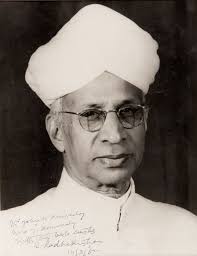
Dr. Sarvepalli Radhakrishnan’s birth anniversary on 5th September has been observed as Teachers’ Day in India since 1962 to recognise the contribution of teachers and their role in shaping society.
- Dr. Sarvepalli Radhakrishnan was born on 5th September 1888 in Tiruttani, present-day Tamil Nadu. He completed his education at Christian College, Madras, and developed a deep interest in philosophy and comparative religion.
- He served as a professor at prestigious institutions, including the University of Mysore and the University of Calcutta. He later became the first Indian to hold the Spalding Professorship of Eastern Religions and Ethics at the University of Oxford, reflecting his global recognition as a scholar of philosophy and religion.
- Through his writings on Indian philosophy, comparative religion and Hindu thought, Radhakrishnan played an important role in introducing Indian philosophical traditions to the Western world. His notable works include Indian Philosophy and The Hindu View of Life.
- He believed that education was a powerful tool for social transformation and emphasised the role of teachers in shaping the intellectual and moral foundation of society.
- He also chaired the University Education Commission (1948–49), which recommended reforms for improving higher education in independent India.
- He served as India’s Ambassador to the Soviet Union (1949–1952) and became the first Vice President of India (1952–1962). He later served as the second President of India from 13th May 1962 to 13th May 1967.
- As President, he was known for his wisdom, scholarship, dignity of office and commitment to parliamentary democracy and constitutional values
- For his contribution to the country, he was awarded the Bharat Ratna, India’s highest civilian honour, in 1954. He passed away on 17th April 1975, leaving behind a lasting legacy in education, philosophy and public life.
Birth Anniversary of V. O. Chidambaram Pillai:
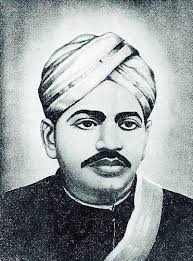
The birth anniversary of Vallinayagam Olaganathan Chidambaram Pillai (V.O.C.) was observed on 5th September. He was a renowned lawyer, Tamil scholar, entrepreneur and one of the prominent leaders of the Swadeshi Movement in Tamil Nadu.
- Vallinayagam Olaganathan Chidambaram Pillai (VOC) was born on 5 September 1872 in Ottapidaram, Tirunelveli district (Tamil Nadu). He later became a lawyer and developed an interest in social issues and public affairs.
- VOC entered active politics after the Partition of Bengal in 1905 and became closely associated with the Swadeshi Movement inspired by leaders like Bal Gangadhar Tilak and Lala Lajpat Rai.
- In 1906, VOC established the Swadeshi Steam Navigation Company (SSNCo.) at Tuticorin to challenge the monopoly of the British India Steam Navigation Company in maritime trade.
- The company operated indigenous steamship services between Tuticorin and Colombo, becoming a symbol of economic nationalism and self-reliance. This earned him the title “Kappalottiya Tamizhan” (The Tamil Helmsman).
- Beyond shipping, VOC promoted indigenous industries and nationalist consciousness through initiatives such as Swadeshi Prachar Sabha, National Godown, Desabimana Sangam and Dharmasanga Nesavu Salai.
- His efforts reflected the economic dimension of the freedom struggle by encouraging Indian enterprise and reducing dependence on colonial businesses.
- VOC played an important role in the Tuticorin Coral Mills Strike (1908), supporting workers’ rights and becoming one of the early leaders to connect the nationalist movement with labour issues.
- VOC worked closely with Tamil nationalist leaders such as Subramania Bharati and Subramania Siva, strengthening the Swadeshi movement in the Tirunelveli and Tuticorin regions.
- Due to his nationalist activities and support for labour movements, VOC was arrested by the British government in 1908 and charged with sedition. He was sentenced to two life imprisonments (later reduced) and subjected to harsh treatment in prison, including forced labour at the oil press, earning him the title “Sekkizuththa Semmal.”
- Apart from his political activities, VOC was a noted Tamil scholar and writer. His major works include Meyyaram (1914), Meyyarivu (1915) and his autobiography. He also contributed commentaries on classical Tamil works such as Thirukkural and Tholkappiam.
- The V.O. Chidambaranar Port Authority at Thoothukudi (Tuticorin) has been named in his honour. V. O. Chidambaram Pillai passed away on 18th November 1936 at Tuticorin, Tamil Nadu.
Autonomous Hill Development Councils:
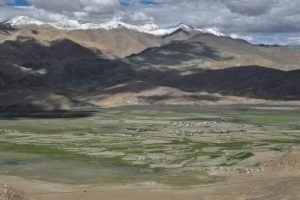
Ladakh Lieutenant Governor Vinai Kumar Saxena approved a notification extending Autonomous Hill Development Councils to all seven districts of the Union Territory.
- This move expands elected local self-governance from Leh and Kargil into the five newly carved districts: Sham, Nubra, Changthang, Zanskar, and Drass.
- Autonomous Hill Development Councils (LAHDCs) is decentralized, elected statutory district-level governance bodies established to provide local self-rule, plan socioeconomic development, and manage land and resources in Ladakh’s mountainous terrain.
- Conceived on the pattern of West Bengal’s Darjeeling Gorkha Hill Council following prolonged agitations by the people of Ladakh for regional autonomy.
- Formally enabled by the Ladakh Autonomous Hill Development Council Act, 1995 (later consolidated under the LAHDC Act, 1997).
- LAHDC Leh was established in 1995, followed by LAHDC Kargil in July 2003 under the J&K coalition government headed by Mufti Mohammad Sayeed.
- With the reorganization of Ladakh into a Union Territory in 2019 and the creation of five new districts in 2026, the governance framework was expanded to cover all seven districts.
Governance Structure:
- Typically consists of 30 members serving a five-year term: 26 directly elected through universal adult suffrage and 4 nominated by the Lieutenant Governor/administration to represent women and principal religious minorities.
- Led by a Chairman designated as the Chief Executive Councillor (CEC), holding the rank and status of a Cabinet Minister, assisted by four Executive Councillors with the rank of Deputy Ministers.
- The Deputy Commissioner of the district acts ex-officio as the Chief Executive Officer (CEO) of the council to direct administration, enforce law and order, and oversee the execution of development works.
Key Functions:
- Exercises executive control over the allotment, occupation, and use of land vested in the council, as well as the management of un-demarcated forests.
- Formulates annual budgets, prioritizes centrally sponsored schemes, and oversees local rural development programs tailored to high-altitude terrain.
- Administers primary and secondary education, vocational institutes, public health centers, sanitation, and local road networks (excluding national highways).
- Oversees agriculture, water canals, fisheries, pasture management, and veterinary care for regional livestock, such as pashmina goats and yaks.
- Designs regulations and initiatives to promote eco-tourism, safeguard indigenous languages, and preserve local traditions and monastic heritage.
The Northern Goshawk:
The Northern Goshawk (Baaj), Punjab’s state bird, has re-entered the political spotlight ahead of state assembly elections after rival political leaders claimed sightings of the bird, interpreting them as divine symbols of protection and blessing.A medium-to-large raptor in the family Accipitridae (historically classified as Accipiter gentilis, and recently reclassified as Astur gentilis for the Eurasian goshawk). Known as a “true hawk,” it is widely celebrated for its speed, maneuverability, and prowess in falconry.Primarily inhabits mature temperate and boreal woodlands, including mixed deciduous and coniferous forests. It is widely distributed across Eurasia and North America, ranging from Scandinavia, northern Russia, and the Mediterranean to the Himalayas, eastern China, and Canada. IUCN Status: Categorised as Least Concern (LC) on the IUCN Red List.



