
Moth Bean:
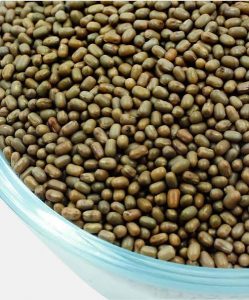
ICAR’s Central Arid Zone Research Institute (CAZRI), Jodhpur, has developed a new generation of moth bean varieties capable of withstanding highly variable weather conditions, including prolonged drought and excessive rainfall.
- Moth bean (Vigna aconitifolia), commonly called dew bean or matki, is one of the hardiest pulse crops cultivated in India.
- It is a creeping, annual herbaceous plant belonging to the Fabaceae family.
- Its fast-penetrating taproot system enables it to access moisture from lower soil layers, which is a key adaptation for survival in arid environments.
- It performs best at temperatures between 24-32°C but can tolerate daytime temperatures as high as 45°C.
- The ideal annual rainfall for production is 500-750 mm, the crop can sustain growth with just 200-300 mm.
- This legume thrives in well-drained sandy loam soils that are common across India’s western desert regions.
- It tolerates a remarkably wide pH range of 3.5 to 10 and can handle slight salinity.
- Grown primarily in the arid and semi-arid zones of Rajasthan, Maharashtra, Gujarat, and Haryana.
- It serves farmers as a source of protein-rich dal, nutritious fodder for livestock, and a natural green manure that enriches the soil.



