
Today’s Current Affairs: 16th Sep 2026 for UPSC IAS exams, State PSC exams, SSC CGL, State SSC, RRB, Railways, Banking Exam & IBPS, etc
Table of Contents
MDR on High-Value Merchant UPI Transactions:
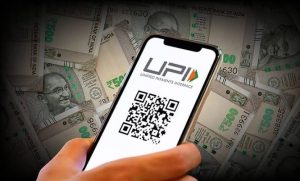
The National Payments Corporation of India (NPCI) has introduced a 0.4% Merchant Discount Rate (MDR) framework for eligible Person-to-Merchant (P2M) UPI transactions above ₹2,000, effective from 15th October 2026.
- Merchant Discount Rate (MDR) is a fee paid by merchants to banks and payment service providers for processing digital transactions. The fee is shared among participants involved in the payment ecosystem, including banks and payment service providers.
- The MDR will not apply to Person-to-Person (P2P) transactions, transactions involving small vendors, and P2M UPI transactions up to ₹2,000 (including payments through RuPay debit cards).
- Small merchants receiving up to ₹1 lakh per month through UPI QR codes under the P2PM category will remain exempt from MDR on all UPI transactions.
- Sectors such as railways, telecom, insurance, fuel and agricultural inputs will attract a flat MDR of ₹5 per transaction for payments above ₹2,000. For transactions of ₹75,000 and above, the MDR will be capped at ₹300 per transaction.
- Payments related to mutual funds, securities, stock brokers and dealers will attract a reduced MDR of 0.02%, capped at ₹300, to encourage participation in formal financial markets.
- According to the Ministry of Finance, only around 4% of merchant transactions will be impacted, as most transactions fall below the ₹2,000 threshold or qualify for exemptions. Banks have also been advised to ensure that merchants do not pass MDR costs to customers.
- A dedicated fund using 5% of MDR collections will be created to promote UPI adoption among small merchants and strengthen digital payment inclusion.
- The MDR framework aims to make the UPI ecosystem self-sustainable, support expansion in rural and semi-urban areas, and maintain competitiveness while keeping most UPI transactions free.
Birth Anniversary of Saratchandra Chattopadhyay:
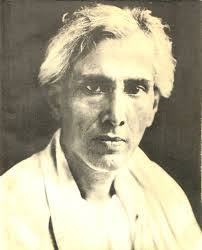
The Prime Minister paid tribute to renowned Bengali writer Saratchandra Chattopadhyay on his 150th birth anniversary, highlighting his contribution to Indian literature and his role in portraying the social realities of 19th-century India.
- Sarat Chandra Chattopadhyay was born on 15th September 1876 in Hooghly, Bengal Presidency. He passed away on 16th January 1938 in Kolkata.
- He emerged as one of the most influential Bengali novelists and short-story writers of the early 20th century. His writings provided a realistic portrayal of 19th-century Indian society, particularly rural Bengal, combining social realism, emotional depth and critique of social inequalities.
- His major works include Parineeta (1914), Devdas (1917), Srikanta (1917–1933), Choritrohin (1917) and Pather Dabi (1926).
- Through his novels and stories, he criticised patriarchy, caste discrimination, superstition and rigid social traditions, while highlighting the need for social justice and human dignity.
- He created strong female characters who challenged prevailing social norms and portrayed the sufferings and aspirations of women in colonial Indian society.
- His writings reflected the influence of the Indian freedom struggle, particularly through Pather Dabi, which depicted revolutionary activities against British colonial rule.
- He served as the President of the Howrah District Congress Committee from 1921 to 1936, linking his literary work with nationalist activities.
- His works have been translated into various Indian and foreign languages and adapted into numerous films, making him one of the most widely read Indian authors.
Ministry of Steel Launches Special Campaign 6.0:
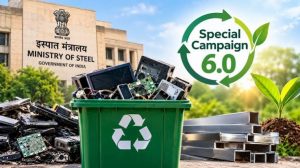
The Ministry of Steel and its Public Sector Undertakings are participating in Special Campaign 6.0, which runs from 2 October to 31 October 2026.
- The campaign includes a preparatory phase from 15 September to 30 September 2026 for target identification and groundwork. E-waste management is one of the priority areas under the campaign, along with mechanised cleaning, disposal of pending references, and public awareness.
- Special Campaign 6.0 focuses on effective collection, segregation, and disposal of e-waste in line with the E-waste (Management) Rules, 2022. The campaign also covers cleanliness drives, disposal of old records, and resolution of pending matters in government offices and public sector units.
- Special Campaign 6.0 follows Special Campaign 5.0, which ran from 2 October 2025 to 31 August 2026. During Special Campaign 5.0, the Ministry of Steel and its PSUs cleaned 83.92 lakh square feet of space and disposed of over 15,585 metric tonnes of scrap.
- The campaign generated Rs. 55.29 crore between November 2025 and August 2026.
PM Vishwakarma Scheme Completes Three Years:
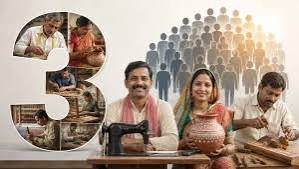
The PM Vishwakarma scheme was launched on 17 September 2023 for artisans and craftspeople engaged in 18 traditional trades. The scheme has a financial outlay of ₹13,000 crore for FY2023-24 to FY2027-28 and provides support through skill training, toolkits, credit, and market linkage measures.
- PM Vishwakarma is a Central Sector Scheme for traditional artisans and craftspeople. It covers 18 trades, including carpentry, boat making, blacksmithing, hammer and tool kit making, locksmithing, goldsmithing, pottery, sculpting, stone carving, and basket making.
- More than 24.37 lakh artisans had received basic skill training. The training period lasts 5 to 7 days and includes a daily stipend of ₹500. More than 18.16 lakh artisans had received modern toolkits, with an incentive of up to ₹15,000.
- More than 6.19 lakh collateral-free loans had been sanctioned under the scheme. The sanctioned loan amount was about ₹5,316 crore, and the interest rate was 5%.
- Over 8.11 lakh beneficiaries had received digital incentives, with more than ₹42 crore disbursed. The scheme provides ₹1 for each eligible digital transaction, up to 100 transactions per month.
- More than 12,000 artisans had been trained in the use of AI tools for branding, product design, packaging, and marketing. Over 30,000 beneficiaries had been onboarded on Government e-Marketplace, ONDC, Meesho, Amazon Fabindia, and Sulekha for market linkages.
India Launches Net Zero Portal and NAPCC Dashboard:
The Ministry of Environment, Forest and Climate Change launched the India Net Zero Portal and the National Action Plan on Climate Change Dashboard on 16 September 2026 in Mumbai. Union Minister of State for Environment, Forest and Climate Change Kirti Vardhan Singh launched the two digital platforms on World Ozone Day 2026.The India Net Zero Portal is a centralised digital platform for Indian entities to voluntarily register their Net Zero commitments and update progress. Organisations using the portal are encouraged to report Scope 1 and Scope 2 greenhouse gas emissions, while Scope 3 reporting remains voluntary.Entities that declare Net Zero targets on the portal receive an acknowledgement from the Ministry of Environment, Forest and Climate Change. The declarations are publicly accessible and form a consolidated repository of voluntary climate commitments.
US CENTCOM and Jordan Conduct Exercise Eager Lion 2026:
Exercise Eager Lion 2026 began on 15 September 2026 at Fort Carson in Colorado. The two-week drill is being conducted by the United States Central Command and the Jordanian Armed Forces, with more than 200 military personnel from Jordan and the United States taking part.Exercise Eager Lion is a biennial military exercise between the United States and Jordan. Eager Lion 2026 is the 12th iteration of the exercise, and it is the first time that the United States is hosting the drill.
UEFA Champions League:
The UEFA Executive Committee appointed Munich and Barcelona as host cities for future UEFA Champions League finals at a meeting in Thessaloniki, Greece, on 15 September 2026. The Munich Football Arena, also known as the Allianz Arena, will host the final in 2028, while Camp Nou in Barcelona will stage the final in 2029.The UEFA Champions League final is the last match of Europe’s premier club football competition, organised by the Union of European Football Associations (UEFA). The final is usually played at a neutral venue selected several years in advance by the UEFA Executive Committee.



