
Today’s Current Affairs: 17th Sep 2026 for UPSC IAS exams, State PSC exams, SSC CGL, State SSC, RRB, Railways, Banking Exam & IBPS, etc
Table of Contents
Diplodocus : Fossils of the long-necked dinosaur

Fossils of the long-necked dinosaur Diplodocus have been recently discovered in Spain, marking the first time remains of this iconic Jurassic-period dino have been found outside the U.S.
- Diplodocus belongs to a group of enormous dinosaurs called sauropods.
- The sauropods were large, plant-eating dinosaurs with long necks, massive bodies, and four pillar-like legs to support the body.
- It is the longest complete dinosaur that scientists have discovered.
- Diplodocus translates as ‘double beam’. It refers to the dinosaur’s tail bones.
- Diplodocus lived during the Late Jurassic, 155-145 million years ago.
- Remains of this dinosaur have been found in North America, especially in Colorado, Montana, Utah, and Wyoming.
Pangwala Tribe : In News
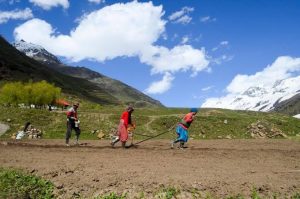
A detailed study on the gut microbiome of the Pangwala tribal community has found that members living in the remote Pangi valley and those who have migrated to urban areas retain a remarkably similar “core microbiome” despite having substantial differences in lifestyle, diet, and environment.
- The Pangwala are a Scheduled Tribe living primarily in the Pangi Valley in the Chamba district of Himachal Pradesh.
- Their culture reflects influences from both Himalayan tribal traditions and neighboring Hindu and Buddhist communities.
- The Pangwala speak Pangwali, an Indo-Aryan language connected to the western Himalayan linguistic family.
- Historically, their economy centered on mountain agriculture, animal husbandry, and trade through narrow Himalayan routes linking valleys and neighboring regions.
- Life among the Pangwala is heavily shaped by the Himalayan climate and mountainous geography.
- Families traditionally depend on terrace farming, livestock raising, and seasonal agricultural work
- Crops may include barley, wheat, maize, potatoes, and peas suited for cooler mountain conditions. Sheep and goat herding are important in some areas, especially where grazing land is available in higher elevations.
- Villages are often small and closely connected through kinship networks.
- Extended family relationships remain important, and cooperation between households is necessary for farming, livestock care, and surviving difficult winters.
- Homes are commonly constructed from stone and wood using designs adapted for cold weather and steep terrain.
- The Pangwala primarily follow Hindu religious traditions, though elements of folk religion and local Himalayan spiritual beliefs also influence everyday life.
- Religious practice commonly includes devotion to Hindu gods and goddesses, observance of village festivals, temple worship, and rituals connected to family and agricultural life.
- Music, folk dances, and seasonal festivals remain important parts of Pangwala cultural identity.
Ramjak Mountain:

A four-member team from Keralam recently scaled Ramjak, a 6,318-metre peak in the remote Lahaul region of Himachal Pradesh.
- It is a high-altitude mountain peak located in the remote Lahaul region of Himachal Pradesh.
- The peak is located near Shingo La, which is a popular trek route from Himachal to Zanskar.
- Ramjak is known for its sharp, icy summit and technically difficult climbing terrain.
- The climbing route involves glaciers, steep rock bands, snowfields, exposed slopes, crevasses, seracs, and cornices.
- First ascent: An expedition of the Indian Mountaineering Foundation (IMF) led by Sangay Dorjee Sherpa achieved the first ascent in 2002.
- Before the successful ascent, several expeditions had attempted the peak without success.
National Dam Safety Authority: In News
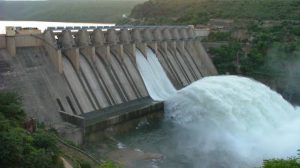
The National Dam Safety Authority (NDSA) has sought time-bound action in Jharkhand for comprehensive dam safety evaluation and rehabilitation of Category-II dams.
- It is a statutory body set up by the Central Government under the Dam Safety Act, 2021.
- It operates with a clear mandate to regulate, oversee, and inspect dams.
- It is headed by a chairman and assisted by five members to lead its five wings – policy and research, technical, regulation, disaster and resilience, and administration and finance.
- Headquarter: New Delhi.
- Functions of National Dam Safety Authority
- Implementing the policies formulated by the National Committee on Dam Safety;
- Resolving issues between State Dam Safety Organisations (SDSOs), or between a SDSO and any dam owner in that state;
- Specifying regulations for inspection and investigation of dams;
- Providing accreditation to agencies working on construction, design, and alteration of dams.
- These standards encompass various aspects, including structural integrity, environmental impact, and emergency response protocols.
- The NDSA actively engages in nationwide awareness programs to educate citizens about dam safety.
- In the face of natural calamities or unforeseen events, the NDSA ensures that comprehensive emergency response plans are in place.
Nuakhai Festival:
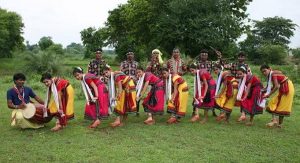
The Prime Minister of India extended greetings to people on the auspicious occasion of Nuakhai.
- Nuakhai Festival is a festival of Western Odisha and adjoining areas of Simdega in Jharkhand.
- The word nua means new and khai means food.
- It is an agricultural festival which is observed to welcome the new rice of the season.
- It is observed on the fifth day of the lunar fortnight of the month of Bhadrapada or Bhaadra (August–September).
- Nuakhai is understood to have nine colours and as a consequence nine sets of rituals are followed as a prelude to the actual day of celebration.
- People offer the newly harvested crop called Nabanha to their respective presiding deities.
- After offering the Nabanha, people relish different types of delicacies prepared from the newly harvested crop.
- The Nuakhai Juhar is a major ritual of the festival.
SPARSH Pension System:

Defence Accounts Department (DAD) has achieved a remarkable milestone in the normalization of discrepant pension cases on SPARSH (System for Pension Administration – Raksha) through a focused and concentrated approach.
- SPARSH Pension System is an initiative of the Ministry of Defence, Government of India.
- SPARSH is world’s largest pension system for defence personnel which aim to provide comprehensive solution to the defence pensioners
- Objective is Meeting the pension sanction and disbursement requirements for Armed Forces viz. Army, Navy, Air Force and Defence Civilians.
- It is administered by the Defence Accounts Department through the Principal Controller of Defence Accounts (Pensions), Prayagraj and shall cater to all the three Services and allied organisations.
- Without relying on a third-party intermediary, this web-based system handles pension claims, and deposits pension payments into the bank accounts of defence pensioners.
- It is a centralized sanction, claim and pension disbursement system with easy validation and rectification of data through self-verification.
- It uses a digital process for pensioner identification, removing the requirement of multiple visits by pensioners to the pension offices.
- The defence pensioner will be given a completely transparent view of his pension account through this platform.
- It will capture and maintain a complete history of events and entitlements the pensioner right from the date of commencement of pension to the date of cessation of pension due to his/her last eligible beneficiary.
Gucchi Mushroom : BRICS Summit 2026
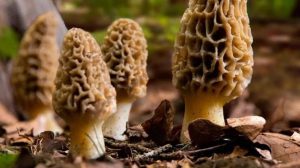
A rare Himalayan ingredient gucchi mushroom has found its way onto the BRICS Summit 2026.
- Gucchi is scientifically known as Morchella esculenta.
- These are recognisable by their honeycomb-like caps, which range from pale yellow to dark brown. Their stems are typically pale and hollow.
- It is found in parts of Jammu and Kashmir, Himachal Pradesh and Uttarakhand.
- The mushroom typically grows in mountainous coniferous forests, where a combination of soil conditions, moisture, temperature fluctuations and seasonal snowmelt creates a suitable environment.
- It cannot easily be mass-cultivated.
- Mountain communities collect gucchi by hand, often trekking through steep and rugged terrain.
- Fresh morels or mushrooms contain substantial moisture.
- They are commonly dried to preserve them and extend their shelf life, but the process significantly reduces their weight.
- They may or may not grow in the same spot the next season, which only makes the process of collection more tedious.
- It is known to be one of the most expensive mushrooms.
- Gucchi mushrooms contain protein, dietary fibre and various antioxidant compounds. They are also reported to contain vitamin D.
Nagarahole Tiger Reserve:

The Centre has issued a draft eco-sensitive zone (ESZ) notification for Nagarahole Tiger Reserve for the second time, identifying a 573.95 sqkm area around the reserve forest where some activities will be regulated.
- Nagarahole Tiger Reserve is situated in the districts of Mysore and Kodagu in Karnataka.
- It is situated at the tri-junction area of Karnataka, Tamil Nadu, and Kerala.
- Geographically, it is an “ecological confluence” of the Western and Eastern Ghats.
- It is named after a small river, ‘Nagarahole’(literally a snake stream in Kannada), which meanders within the habitat before joining the river Kabini.
- It is part of the larger Nilgiri Biosphere Reserve, which is recognized as a UNESCO World Heritage Site.
- It is flanked by the Bandipur Tiger Reserve on its southeastern side and the Wayanad Wildlife Sanctuary of Kerala on the
- It is surrounded by the River Kabini in its north and River Moyar in its south.
- The dry eastern limits of the reserve have dry deciduous forests.
- Towards the west, with the increase in rainfall, the vegetation changes to tropical moist and semi-evergreen forests.
- It includes rosewood, Indian kino tree, sandalwood, Indian laurel, clumping bamboo, giant clumping bamboo, etc.
- It comprises mammals such as Bengal tiger, gaur, sloth bear, golden jackal, dhole, four-horned antelope, etc
Paniya Tribe:
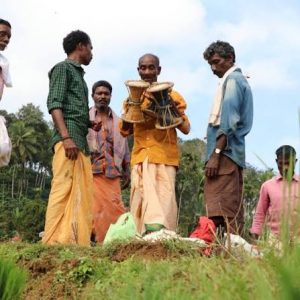
The Kerala State Human Rights Commission recently directed authorities to urgently rehabilitate Paniya tribal families living in makeshift tarpaulin shelters at Vaniyampuzha, across the Chaliyar River in Pothukal panchayat, Kerala.
- The Paniya (Paniyan) tribe is one of the major Scheduled Tribes of Kerala.
- They are predominantly found in Wayanad and also in parts of the Kannur, Kozhikode, and Malappuram districts of Kerala.
- Some are found in the Gudalur and Pandalur areas of the Nilgiris District of Tamil Nadu and in the southern part of the Kodagu District of Karnataka.
- The Paniya community is the largest single scheduled tribe population in Kerala.
- The word “Paniyan” is derived from “pani” which is a Malayalam word, meaning work.
- The Paniya speak the Paniya language, which belongs to the Dravidian family, closely related to Malayalam.
- They have developed a unique style of making their houses.
- A Paniyan village comprises rows of huts all constructed from bamboo with thatched roofs.
- These houses of Paniyan tribes are either single- or double-storied.
- The Paniyas worship a deity called Kali and banyan tree. They hesitate to cut banyan trees and believe that if anyone attempts to cut the tree, they will fall sick.
Hilsa Fish:

India has exported around 500 tonnes of hilsa to Bangladesh over the past two months, marking the first reversal of the traditional trade flow of the sought-after fish between the two countries.
- Hilsa Fish is a species of fish belonging to the Clupeidae family, which includes herring fish.
- Hilsa fish have a silvery body.
- They are quite flat and have a pointed head.
- They are known for their many small bones.
- Hilsa fish live in both saltwater and freshwater
- It is found in rivers and estuaries in Bangladesh, India, Pakistan, Myanmar, and the Persian Gulf area.
- They travel to rivers like the Padma River and Meghna River in Bangladesh.
- They also go to rivers in India, such as the Ganges River and Godavari River.
- Bangladesh produces around 70% of the world’s ilish.
- Conservation Status:
- IUCN Red List: Least Concern.
Cardiff Pact:

Political leaders from Scotland, Wales and Northern Ireland signed a Memorandum of Understanding (MoU) in Cardiff, calling for constitutional change and asserting the principle of self-determination for their nations.
- The agreement has renewed debate over the future of the United Kingdom’s devolution framework, as Scotland seeks another independence referendum, Northern Ireland seeks a possible reunification poll, and Wales demands greater constitutional powers.
- The Cardiff MoU reflects growing tensions within the UK’s devolution framework and renewed demands for regional autonomy and self-determination.
- For India, it highlights the importance of asymmetric federalism, fiscal equity, constitutional flexibility, and Centre-State dialogue in balancing regional aspirations with national unity.
Key Highlights of the Cardiff Memorandum of Understanding:
- The MoU demands that the British government prepare for, plan, and facilitate constitutional change, stating that “Westminster’s time is coming to an end” and that it has no right to block democratic mandates.
- A major driver uniting these devolved nations is a shared consensus that their economic and political future belongs within the European Union (EU) – a direct rebuttal to the UK-wide Brexit mandate.
- Beyond seeking referendums, the pact commits Scotland, Wales, and Northern Ireland to deepen practical cooperation in areas like the economy and energy resources.
- The UK rejected the pact, declaring referendums “off-limits” and relying on the landmark UK Supreme Court ruling in Reference by the Lord Advocate (2022), which unanimously affirmed parliamentary supremacy by holding that devolved legislatures lack the legal competence to unilaterally legislate for an independence referendum without Westminster’s consent.
- Under the 1998 Good Friday Agreement, the UK Secretary of State for Northern Ireland can order a border poll on Irish reunification when evidence indicates majority support for it.
- The UK Government has maintained that the required threshold for such a poll has not been met.
Hindi Diwas 2026:
Hindi Diwas was observed on 14th September, marking the historic decision of the Constituent Assembly on 14th September 1949, to adopt the Munshi–Ayyangar formula for resolving India’s contentious language question.
Hindi Diwas 2026 Highlights:
- The 6th All India Official Language Conference: Held alongside Hindi Diwas 2026 in Navi Mumbai, Maharashtra.
- It promotes Hindi as a functional link language while fostering synergy and co-existence with other scheduled Indian regional languages.
- Official Language Awards (2025–26):
- Rajbhasha Kirti Puraskar: It is the highest award given by the Department of Official Language (Ministry of Home Affairs) to honor ministries, departments, public sector undertakings (PSUs), and banks for their outstanding implementation, compliance, and correspondence in Hindi.
- Key Winners (2025–26):
- Ministry of Defence (MoD): Secured the First Prize in the category of ministries and departments with more than 300 personnel.
- Department of Financial Services (DFS): Won the First Prize in the category of ministries and departments with fewer than 300 personnel. The award recognized its effective implementation, wider use, and innovative promotion of Hindi in official work.
- Rajbhasha Utkrishtata Sammaan (Special Recognition): As per the guidelines of the Department of Official Language, any ministry or department that wins the first prize for two consecutive years becomes ineligible for the standard Rajbhasha Kirti Puraskar in the third year.
- The Department of Administrative Reforms and Public Grievances (DARPG) won the Rajbhasha Kirti Puraskar (First Prize) in 2023–24 and 2024–25, and received the special Rajbhasha Utkrishtata Sammaan for its sustained excellence in promoting Hindi in official work.
- Rajbhasha Gaurav Puraskar: Recognizes individual authors and government employees for writing original books, literature, and outstanding articles in Hindi.
- The occasion brings renewed attention to the language debate in the Constituent Assembly and how India balanced the promotion of Hindi with the linguistic diversity of the country.
- At the time of Independence, India was highly multilingual.
- The primary debate was whether English (the language of colonial administration spoken by less than 1% of Indians) should be replaced by an indigenous language, and which language should hold official status at the Centre.
- Representatives from Hindi-speaking areas (such as R.V. Dhulekar and Seth Govind Das) aggressively advocated for Hindi to become the sole “national language”.
- They argued that a multilingual society was incompatible with national unity and demanded the immediate replacement of English.
- Members from non-Hindi-speaking regions (especially the South) strongly rejected linguistic uniformity.
- Leaders like Shri Shankarrao Deo advocated for “unity in diversity,” warning against the cultural erasure and imposition of Hindi on linguistic minorities.
- Leaders like Jawaharlal Nehru and Maulana Abul Kalam Azad preferred Hindustani (a blend of Hindi and Urdu championed by Mahatma Gandhi) or advocated for a gradual, organic development of the official language, noting Hindi’s then-limited technical and administrative vocabulary.
India’s Bamboo Economy:

Bamboo has gained attention as a sustainable livelihood resource due to its growing role in rural entrepreneurship, handicrafts, construction and green industries.
- Bamboo has traditionally supported rural and tribal livelihoods through handicrafts, construction and small-scale enterprises. It has diverse applications ranging from traditional crafts and food products to furniture and modern construction materials.
- Under the British-era Indian Forest Act, 1927, bamboo was classified as a “tree”, which imposed regulatory restrictions on its harvesting and transportation.
- In 2017, bamboo grown outside forest areas was removed from the definition of “tree” under the Indian Forest Act, 1927, reducing regulatory barriers related to its harvesting and transportation and encouraging private cultivation, value addition and entrepreneurship.
- It helped create greater opportunities for farmers, artisans and enterprises, particularly in bamboo-rich regions such as Northeast India.
- Bamboo can provide farmers with a long-term livelihood asset while also allowing intercropping. Bamboo also supports renewable resource use, sustainable livelihoods, local value addition and reduced dependence on forests in certain regions.
- The North East Centre for Technology Application & Reach (NECTAR) has supported bamboo technologies across applications such as food and agro-processing, construction materials, manufacturing machinery, renewable energy and industrial products.
- These interventions have generated around 30 million man-days of employment annually.
- They have helped raise value addition in bamboo commodities from around 10% to as high as 70%.
- States such as Tripura, Nagaland, Mizoram and Sikkim are promoting bamboo-based handicrafts, furniture, food products and modern manufacturing, creating opportunities for tribal entrepreneurship, MSMEs and rural employment generation.
National Bamboo Mission (NBM):
- The National Bamboo Mission (NBM) was launched in 2006–07 and has been implemented as a Centrally Sponsored Scheme in a restructured form since 2018–19 to promote the holistic development of the bamboo sector.
- The Mission aims to develop the complete bamboo value chain through a cluster-based approach, connecting farmers with consumers and industries while adopting an area-based and regionally differentiated strategy.
- NBM focuses on increasing bamboo cultivation by improving the availability of quality planting material through the establishment of new nurseries and strengthening of existing nurseries.
- The Mission promotes the marketing of bamboo products, especially handicrafts, and aims to position bamboo as “Green Gold”—a sustainable resource supporting rural livelihoods and the green bioeconomy.
- Engineered bamboo is a composite material produced by binding and compressing raw bamboo fibres, strips or particles, expanding the use of bamboo in modern construction.
- More than 42 lakh sq ft of engineered bamboo structures have been developed for disaster relief and rehabilitation, including 576 bamboo-based classrooms in Chhattisgarh supporting around 20,000 children.
- Such applications demonstrate the potential of bamboo to move beyond conventional handicrafts into higher-value industrial and construction uses.



