
Today’s Current Affairs: 18th Sep 2026 for UPSC IAS exams, State PSC exams, SSC CGL, State SSC, RRB, Railways, Banking Exam & IBPS, etc
Table of Contents
Changthang Wildlife Sanctuary:

Authorities will undertake spatial mapping and field verification of military installations within the Changthang Cold Desert Wildlife Sanctuary in Ladakh in coordination with police and the defence establishment, officials said recently.
- It is located in the Ladakhi Changthang plateau in the Leh district of Jammu and Kashmir.
- It is home to the highest altitude water lakes, namely, Tso Moriri, Pangong Tso, and Tso Kar.
- The Changthang region is inhabited by nomadic pastoral communities, primarily the Changpa tribe, who lead a traditional way of life herding yaks, goats, and sheep across the vast grasslands.
- This region is steeped in Tibetan Buddhist culture and heritage.
- It includes one of the world’s highest villages, Korzok Village, which attracts tourists to the Korzok Monastery
- It is home to many species of wild plants that grow in the higher pastures and are food for the animals inside the sanctuary.
- The major attraction of this place is the Snow Leopard.
- Along with that, it is one of the few places in India which is the abode of the Kiang, or Tibetan wild ass, along with the dark-necked crane.
- It also houses a huge variety of animal species, which include the Tibetan Wolf, Wild Yak, Bharal, Brown Bear, Tibetan Argali, Tibetan Gazelle, and the Mormot.
- It also serves as the habitat for numerous species of avifauna, including Brahminy Ducks and Brown Headed Gulls, etc.
MQ-9 Reaper:
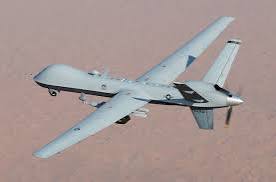
Iran’s Islamic Revolutionary Guard Corps claims it shot down a US MQ-9 Reaper drone over Qeshm Island in southern Iran using an advanced air defence system recently.
- The MQ-9 Reaper (Reaper MQ-9A) is an armed, multi-mission, medium-altitude, long-endurance unmanned aerial vehicle (UAV).
- It is developed by the American company General Atomics Aeronautical Systems (a United States-based aerospace and defence company), primarily for the United States Air Force (USAF).
- It is an upgraded version of the MQ-1 Predator and was first deployed in Afghanistan in October 2007.
- It is used for strategic and operational reconnaissance, battlefield surveillance, and can directly engage targets.
- It has a wingspan of 66 feet (20 meters) and endurance of more than 27 hours.
- It is equipped with a fault-tolerant flight control system and triple redundant avionics system architecture
- It is powered by a turboprop engine, integrated with Digital Electronic Engine Control (DEEC), which significantly improves engine performance and fuel efficiency, particularly at low altitudes.
- It cruises at roughly 322 to 370 kilometers per hour and can fly at altitudes up to 50,000 feet (15,240 meters), giving it reach across wide areas of operation.
- It can be armed with air-to-ground Hellfire missiles as well as laser-guided bombs.
- It is remotely operated by a two-person team consisting of a pilot and an aircrew member who operates sensors and guides weapons.
Taklamakan Desert:
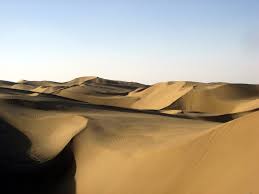
For decades, China has been planting trees and other vegetation around the edges of the Taklamakan Desert, one of the world’s largest and driest deserts, in an effort to stop desertification and hold back shifting sand.
- The Taklamakan Desert, located in southwest Xinjiang in northwest China, is one of the world’s largest sandy deserts.
- It sits right in the middle of the largest inland basin in China—the Tarim Basin.
- It is the world’s second-largest shifting-sand desert, and 85% of its total area is composed of crescent-shaped dunes.
- It is flanked by two towering mountain ranges-Tien Shan to the north and Kunlun mountain ranges to the south.
- It also has the Pamir Mountains and Tian Shan (ancient Mount Imeon) to the west and the famed Gobi Desert to the east.
- There is a gradual transition to the Lop Nur basin in the east; in the south and west, between the sandy desert and the mountains, lies a band of sloping desert lowland composed of pebble-detritus deposits.
- The place has a typical continental climate with strong gusts of wind, very little precipitation, and a significant shift in temperature from daytime to nighttime and vice versa.
- The continuously shifting nature of the sand in the desert has extended Taklamakan to about 100 km southward during the last thousand years.
- There are also small mountain ranges in the desert as well as the Tarim River that flows through its Northern edge.
Gallium Nitride Monolithic Microwave Integrated Circuit Technology:

The Defence Research and Development Organisation (DRDO) has successfully demonstrated and implemented indigenous Gallium Nitride Monolithic Microwave Integrated Circuit (GaN MMIC) Technology.
- Gallium Nitride Monolithic Microwave Integrated Circuit (GaN MMIC) Technology is a tiny, super-powerful computer chip built on a special chemical material that handles extremely high-frequency wireless signals without melting.
- It’s an all-in-one chip that combines tiny parts like transistors, resistors, and capacitors—onto a single piece of material to manage invisible wireless waves (microwaves).
- It is designed for applications up to the X-band frequency range.
- DRDO developed the GaN MMIC technology in 2024 and helped India quietly entered an elite club of seven countries: US, Russia, France, Germany, South Korea and China.
- GaN important is a material with exceptional thermal and electrical properties, making it critical for advanced defence applications such as sensors, radars, satellites, and missiles.
- A single indigenous GaN chip, measuring 3.5 x 3 mm can deliver up to 30 watts of power and operate at speeds 300 times faster than silicon.
- Gallium Nitride (GaN) is considered one of the most important semiconductor technologies for modern defence systems.
- It offer higher power output, Better energy efficiency, Faster signal processing, Reduced size and weight, Improved thermal performance, Greater reliability in harsh environments.
What is Ariosoma cmfriense?
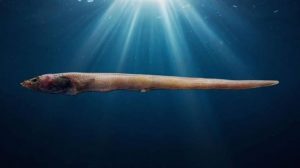
Scientists recently discovered a new species of conger eel named Ariosoma cmfriense from the deep waters of the Arabian Sea.
- Ariosoma cmfriense is a new species of conger eel.
- Conger eels are powerful fish with an elongated, snake-like body which is smooth and scaleless.
- It was found in the waters off Kollam, Kerala.
- The discovery was made by scientists from the ICAR-Central Marine Fisheries Research Institute, Kochi, as part of the research component under the Deep Ocean Mission (DOM), a national programme of the Ministry of Earth Sciences (MoES).
Dadasaheb Phalke Award for 2024:
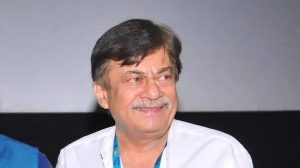
Legendary actor Anant Nag, known for his impressive work in Hindi and Kannada cinema will be honoured with the Dadasaheb Phalke Award for 2024.
- Dhundiraj Govind Phalke was born on April 30, 1870, in Trimbak, Maharashtra.
- He was a film director who is considered the father of Indian cinema.
- He directed India’s first full-length feature film, Raja Harishchandra in 1913.
Dadasaheb Phalke Award:
- It is given by the Indian government for lifetime contribution to Indian cinema.
- It was instituted in 1969 the birth centenary year of Dadasaheb Phalke.
- It is the highest award in the field of cinema in India.
- It was introduced by the Government of India to commemorate Dadasaheb Phalke’s contribution to Indian cinema.
- The award’s inaugural recipient was Devika Rani, aptly titled “the first lady of Indian cinema”.
- The recipients are recognized for their ‘outstanding contribution to the growth and development of Indian cinema’.
- The award comprises a Swarna Kamal (Golden Lotus) medallion, a shawl, and a cash prize of ₹10 lakh.
- It is presented by the President of India.
Indian Council of World Affairs:
The Vice-President of India addressed the 25th Anniversary celebrations of Indian Council of World Affairs (ICWA) at Sapru House, New Delhi.
- Indian Council of World Affairs was established in 1943 by a group of Indian intellectuals as a think tank.
- It was registered as a non-official, non-political and non-profit organisation under the Registration of Societies Act 1860.
- By an Act of Parliament in 2001, the Indian Council of World Affairs has been declared an institution of national importance.
- It was established by a group of eminent intellectuals led by Sir T.B. Sapru and Dr. H.N. Kunzru to create an Indian perspective on international relations and foreign policy issues.
- The Vice President of India is the ex-officio President of ICWA.
- It is funded by the Ministry of External Affairs and enjoys full autonomy.
- It is devoted exclusively for the study of international relations and foreign affairs.
India Electric Mobility Index 2025:
According to the index released by NITI Aayog, Delhi topped India’s states and Union territories in the India Electric Mobility Index (IEMI) 2025, scoring 84.
Highlights of the India Electric Mobility Index 2025:
- According to the index, the composite scores on performance across all 36 States and Union Territories (UTs) ranges from 10 to 84, and a median score of 40.
- Delhi bagged the highest score of 84, followed by Maharashtra (78), Karnataka (73), Chandigarh(71), and Goa (65).
- The index shows that eight large states — Tamil Nadu, Madhya Pradesh, Odisha, Andhra Pradesh, Telangana, Haryana, Rajasthan, and Uttar Pradesh — have qualified as frontrunners.
- The other seven large states such as Chhattisgarh, West Bengal, Bihar, Kerala, Jharkhand, Punjab, and Gujarat were emerging performers with a score of 35-49.
- Delhi, Chandigarh, and Maharashtra were the only UTs and states to qualify as top performers in transport electrification progress.
- In the Charging Infrastructure Readiness (30% weightage), Karnataka recorded the highest score nationwide at 97, Goa (92) and Maharashtra (91).
- Delhi also achieved the top score of 94 in the EV Research and Innovation Status (20% weightage) category.
India Electric Mobility Index:
- It is a composite Index, which assesses the policy framework and implementation outcomes for e-mobility at the state-level.
- It is developed by the NITI Aayog in collaboration with WRI India.
- It evaluates and scores all Indian States and UTs out of 100 across 16 indicators under three-core themes:
- Transport Electrification Progress to capture demand-side adoption
- Charging Infrastructure Readiness to track allied charging infrastructure development
- EV Research and Innovation Status: Covers supply-side ecosystem R&D efforts.
- Based on the score, each State or UT was classified into one of the following classes:
- Top Performers: score ≥65
- Frontrunners: score of 50–64
- Emerging Performers: score of 35–49
- Aspirants: score <35
Global Gender Gap Index 2026:

India has retained its 131st rank out of 145 countries in the Global Gender Gap Index 2026, released by the World Economic Forum (WEF).
- India ranked 131st in the Global Gender Gap Index 2026, with 64.5% gender parity. Despite strong performance in education and health, gaps persist in economic participation, political representation, leadership and technology.
- Bridging the gap requires addressing low female workforce participation, unpaid care work, safety and digital divides, while strengthening political representation, gender-responsive budgeting, care infrastructure, skilling and financial inclusion.
Key Highlights of the Global Gender Gap Index 2026:
- India achieved an overall gender parity score of 64.5%, retaining its 131st rank out of 145 countries. Although this marks a 4.3% point improvement since the inaugural 2006 edition, the country still lags behind the global average of 69.2%.
- India has achieved 24.5% gender equality in political representation. However, female representation at the ministerial level stands at just 5.9%, down sharply from a peak of 30% in 2019.
- A critical weak point, where women have achieved only 41.2% equality in the workforce compared to men.
- While female representation among professional and technical workers has doubled to 49.9% since 2006, women hold a dismally low 13.1% of senior leadership and managerial roles.
- India has achieved a high 96.6% equality score. The country maintains a complete balance between boys and girls in secondary and tertiary school enrollment, making this one of its most successful dimensions over the long term.
- India achieved a 95.6% equality score. Though overall health metrics have improved, India’s sex ratio at birth in 2026 remains nearly one percentage point lower than it was in 2006.
Global Gender Gap Report 2026:
- It is an annual flagship publication released by the WEF. First launched in 2006, it serves as a global benchmark to track how close countries are to achieving full gender equality.
Kishau Multipurpose Project:
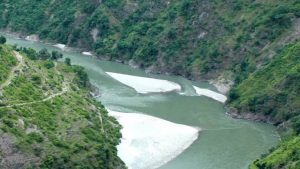
In a major push to resolve long-pending inter-state water disputes, six northern states Uttarakhand, Himachal Pradesh, Uttar Pradesh, Haryana, Rajasthan, and Delhi signed a historic Memorandum of Understanding (MoU) to pave the way for the Kishau Multipurpose Project.
- A MoU was signed in 1994, between the Yamuna basin states (undivided Uttar Pradesh, Haryana, Rajasthan, Himachal Pradesh, and Delhi) regarding the allocation of the river’s surface water.
- Because the Upper Yamuna (from its source at the Yamunotri glacier to the Okhla barrage in Delhi) lacked major storage facilities, the 1994 agreement mandated the creation of three major storage projects on the Yamuna and its tributaries:
- Lakhwar Project: On the Yamuna River (Uttarakhand).
- Renukaji Project: On the Giri River (Himachal Pradesh).
- Kishau Project: On the Tons River (Himachal Pradesh/Uttarakhand border).
Kishau Multipurpose Project: The Kishau Multipurpose Project entails the construction of a 232.6-metre-high concrete gravity dam on the Tons river (a major tributary of the Yamuna) situated along the Uttarakhand-Himachal Pradesh border.
- Designated as a National Project, the Centre funds 90% of the water component, with the remaining 10% shared among the basin states under the 1994 Yamuna framework.
- However, the dispute centered on the power component, where Himachal Pradesh refused to bear its estimated Rs 2,000-crore liability, arguing that it was unfair to impose this fiscal burden on the state when it was already shouldering the displacement and ecological costs while downstream states received most of the water and irrigation benefits.
- A consensus was reached through “cooperative federalism.” To relieve Himachal Pradesh’s financial constraints, the beneficiary downstream states agreed to cover its power-component liability.
- According to the agreement, Delhi (biggest beneficiary of the project) and Rajasthan will bear this expense in a 75:25 ratio, as they are major beneficiaries of the water supply.
- The 422-MW project is designed to generate 1,476 million units of hydropower and will create vast irrigation potential covering 97,000 hectares of agricultural land.
- Delhi stands to be the biggest beneficiary, receiving 110 million cubic metres (MCM) of water, which will provide critical, long-term support for the city’s drinking water needs.
- Correcting historical allocation flaws, 25% of the project’s water is strictly dedicated to maintaining the environmental flow of the Yamuna river.
- This is a crucial step toward the government’s target of achieving a completely clean Yamuna by 2029, which is linked to the National Mission for Clean Ganga (NMCG).
SEMICON India 2026:

Prime Minister Narendra Modi inaugurated SEMICON India 2026 at Yashobhoomi, Dwarka, bringing together global semiconductor companies, policymakers and investors to showcase India’s growing semiconductor ecosystem and technological capabilities.
- The event, centred around the theme “Silicon to Systems: Building the Ecosystem,” highlights India’s shift from developing chip manufacturing capabilities to building a complete semiconductor value chain, including design, fabrication, packaging and innovation.
- Semiconductors are the foundation of modern technology, powering sectors such as automobiles, healthcare, defence, aerospace, telecommunications and consumer electronics. Their availability influences the resilience of the broader digital and industrial ecosystem.
- Modern semiconductor chips contain billions of transistors packed into extremely small areas. Leading-edge processors manufactured using 3-nanometre technology can integrate tens of billions of transistors, enabling high-performance computing, artificial intelligence and advanced digital applications.
- The global electronics industry is valued at around USD 4.3 trillion, with semiconductors serving as a foundational component of this technology value chain.
- The pandemic accelerated global efforts to develop domestic semiconductor manufacturing capabilities and strengthen supply-chain resilience, as countries sought to reduce dependence on a limited number of semiconductor-producing regions.
SEMICON India 2026:
- SEMICON India is an annual flagship semiconductor conference and exhibition that serves as a premier platform for showcasing India’s semiconductor ecosystem.
- The first-ever edition was held in 2022 at Bengaluru, while the 2026 edition marks the fifth edition of the event.
- The event highlights India’s complete semiconductor value chain, including chip design, fabrication, packaging, talent development and innovation ecosystems, while attracting global participation and showcasing India’s semiconductor ambitions.
Hazard Perception Test:

Kerala will become the first State in India to introduce a mandatory computer-based Hazard Perception Test (HPT) for driving licence applicants from December 2026.
- A computer-based road-safety assessment that uses simulated traffic situations to test whether driving licence applicants can identify potential hazards at the appropriate time.
- The provision for such an assessment already exists under the Central Motor Vehicles Rules.
- Aim is to move driver testing beyond knowledge of traffic rules and vehicle handling towards real-world hazard recognition, anticipation and safer decision-making.
- Applicants must clear HPT within 30 days of passing the learner’s test before appearing for ground and road tests.The test consists of 10 one-minute videos, each depicting at least two potential road hazards.Candidates must identify hazards by pressing a button at the appropriate moment; delayed or missed identification leads to loss of marks.Each correct response carries 10 marks, with candidates required to score at least 60 out of 100 to qualify.
Sanjukta Parasor: 1st Woman Officer to Lead CRPF’s CoBRA Unit

Senior IPS officer Sanjukta Parasor has been appointed as the first woman Inspector General (IG) of the CRPF’s elite Commando Battalion for Resolute Action (CoBRA) unit, marking a significant milestone in India’s security forces. She will succeed 1996-batch IPS officer Danesh Rana.
- A 2006-batch IPS officer, she is known as the “Iron Lady of Assam” for her counter-insurgency work in the Northeast, involving field policing, national security operations and handling of insurgency-related challenges.
- She previously served as a Deputy Inspector General in the National Investigation Agency (NIA), working on terrorism and extremism-related investigations.
- Her appointment marks a milestone in women’s leadership in India’s security forces, particularly in specialised counter-insurgency and jungle warfare operations.
- The Commando Battalion for Resolute Action (CoBRA) is a specialised unit of the Central Reserve Police Force (CRPF) established to conduct jungle warfare and guerrilla operations, particularly against Maoist insurgency. Its personnel are selected from the CRPF and receive intensive training in commando tactics and jungle warfare.
- A total of 10 CoBRA units were raised between 2008 and 2011. These battalions are deployed in Left Wing Extremism (LWE)-affected and insurgency-prone areas across states such as Chhattisgarh, Odisha, Jharkhand, Maharashtra, Assam and Meghalaya.
- CoBRA specialises in anti-Naxal operations, intelligence-based missions, long-range patrols, ambush and counter-ambush operations in challenging terrains, making it one of the CRPF’s key specialised operational forces.
The Pakistan-China Boundary Joint Commission:
India unequivocally rejected the operationalisation of the so-called Pakistan-China Boundary Joint Commission following its inaugural meeting in Islamabad, stating that the bilateral mechanism lacks any legal basis.A bilateral institutional mechanism operationalised between Pakistan and China to oversee border affairs, frontier management, and cross-border facilitation along the geographical alignment separating Xinjiang and Pakistan-administered Kashmir (specifically Gilgit-Baltistan and the ceded Trans-Karakoram Tract).Co-chaired by senior diplomatic officials—Li Ya (Deputy Director General, Department of Boundary and Ocean Affairs, Chinese MFA) and Bilal Mahmood Chaudhary (Director General for China, Pakistan MFA).
Gegeneophis chandgadi : New Species Of Limbless Amphibian
Scientists from the Zoological Survey of India (ZSI) and Savitribai Phule Pune University described a new species of limbless amphibian, Gegeneophis chandgadi, discovered in backyard leaf litter in Buzawade village in Maharashtra’s Western Ghats.A newly identified subterranean, limbless amphibian (caecilian) belonging to the family Grandisoniidae and the genus Gegeneophis (commonly called blind caecilians). It is an annulocylix caecilian characterized by a slender, ringed, and cylindrical body without a tail.Discovered in Buzawade village, Chandgad taluka, Kolhapur district, located in the northern Western Ghats of Maharashtra, India.



