
Today’s Current Affairs: 21st Sep 2026 for UPSC IAS exams, State PSC exams, SSC CGL, State SSC, RRB, Railways, Banking Exam & IBPS, etc
Table of Contents
Kavach Version 4.0:
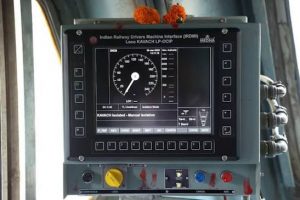
Indian Railways has approved the provision of Kavach Version 4.0 on over six hundred Route Kilometres of the Lucknow Division of North Eastern Railway.
- Kavach System is an indigenously developed Automatic Train Protection (ATP) system that provides Train Protection as well as Collision Prevention capabilities for trains.
- It was adopted as National ATP system in July 2020.
- It has been developed by the Research Design and Standards Organisation (RDSO).
- It operates through continuous real-time communication between trackside systems and locomotives using secure Ultra High Frequency (UHF) radio antenna and track-mounted Radio Frequency Identification (RFID) tags.
- These tags provide precise train location, while wayside (stationary) units collect live data from station interlocking systems, including signal aspects, point positions, track occupancy, and route status.
- Key safety features:
- Detection and prevention of Signal Passing at Danger (SPAD): It automatically stops the train before the signal.
- Cab signaling with display of movement authority, target distance, speed, and signal aspects.
- Prevention of all types of train collisions: head-on, rear-end, and side-on.
- Continuous real-time updates to the locomotive.
- Automatic horn activation when approaching Level Crossing Gates.
- Emergency Stop (SoS) messages in critical situations.
- Centralized live monitoring of train movements through the Network Management System (NMS).
INS Trishul made a port call at Alexandria, Egypt:

Indian Navy’s INS Trishul made a port call at Alexandria, Egypt.
- INS Trishul is a front-line Talwar-class guided missile frigate of the Indian Navy,
- It joined the arsenal of the Indian Navy in 2003.
- It is equipped for multi-dimensional maritime operations.
- It has carrying capacity of 3,700-tonne.
- It has a top speed in excess of 30 knots and an endurance of 30 days at sea.
- Trishul became the second Indian warship to incorporate an eight cell KBSM 3S-14NE Vertical Launcher.
- It was the first to upload the new Indian/Russian designed missile, the supersonic BrahMos PJ-10 AShCM (anti-sub/ship/surface cruise missile).
Talwar class of frigates:
- These have been built in Russia under an Indo-Russian joint production.
- These missile frigates are modified Krivak III class frigates from Russia.
- It has a displacement capacity of 4,000 tons and a speed of 30 knots and is capable of accomplishing a wide variety of naval missions, primarily, finding and eliminating enemy submarines and large surface ships.
Bhil Tribe : In News
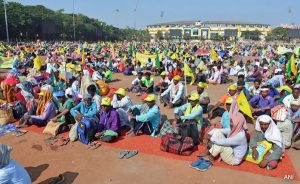
The Rajasthan High Court recently issued notices to the State government and other authorities on a petition seeking a 9% sub-quota for the Bhil community within the existing 12% reservation for the Scheduled Tribe (ST) category
- The Bhils are considered one of the oldest tribes in India and are identified as one of the Dravidian racial tribes of Western India and belong to the Australoid group of tribes.
- According to the 2011 census, Bhil is the largest tribal group in India, constituting approximately 38% of the total scheduled tribal population of India.
- The name ‘Bhil’ is derived from the word “villu” or “billu”, which, according to the Dravidian language, is known as Bow.
- Their reference is in old literature, Ramayana and Mahabharata.
- They are the most widely distributed tribal groups in India.
- They mainly reside in Rajasthan, western Madhya Pradesh, Gujarat and northern Maharashtra. Some families have migrated to other states like Tripura for jobs in tea gardens.
- Bhil populations are concentrated in the southernmost hills of the Aravalli Range, the western uplands of the Vindhya and Satpura ranges, and the northernmost hills of the Western Ghats.
- Some Bhil groups occupy the nearby river valleys and coastal plains.
- Nearly all of the Bhil engage in agriculture, some using the slash-and-burn (jhum) method but most employing the plow.
- They speak Bhili, which is an Indo-Aryan language.
- Bhili dialects show varying degrees of influence of regional languages such as Rajasthani and Marathi, but they all appear to have their origins in Gujarati.
- Almost all Bhils practice ethnic religions that have been highly influenced by Hinduism.
- Most of them worship local deities like Khandoba, Kanhoba, Bahiroba, and Sitalmata. Some worship the Tiger God called ‘vaghdev’.
- The Baneshwar fair is the main festival celebrated among the Bhils. This fair is held during the period of Shivaratri in the months of January or February.
- The Hindu festivals of Holi and Dusshera are the other major festivals celebrated among the Bhil Tribes in India.
- The Ghoomar dance, which is a traditional folk dance symbolising womanhood, is one of the popular aspects of Bhil culture.\
- Bhil painting is characterised by the use of multi-coloured dots as in-filling.
Next-Generation Missile Vessels:

The Cochin Shipyard Limited recently laid the keel for the first of six Next Generation Missile Vessels (NGMVs) being built for the Indian Navy, marking the shipbuilder’s entry into construction of advanced weapon-intensive platforms.
- The NGMVs are envisaged as high-speed vessels equipped with an array of weapons and sensors, being built for the Indian Navy.
- Six NGMVs are being built by government-run Cochin Shipyard Limited (CSL) at a cost of Rs 9,805 crore.
- Delivery of the vessels is scheduled to commence from March 2027.
- The primary role of the ships would be to provide offensive capability against enemy warships, merchantmen, and land targets.
- The vessels are intended for maritime strike and anti-surface warfare operations and will also provide the Navy with sea-denial capability, particularly around strategically important maritime choke points.
- In defensive operations, the ships are expected to support local naval defence and the protection of offshore development areas.
- The core of the NGMV propulsion system is the LM2500, a marine gas turbine, manufactured by the American engine manufacturer General Electric. LM2500 is engineered to unleash superior power while meeting stealth requirements.
- Each vessel will have a complement of around 80 personnel and a maximum speed of approximately 33 knots (61 kmph).
- These corvettes can remain at sea for 10 consecutive days and extend their stay by refueling from tankers.
- They will be equipped with surface-to-surface missile systems, anti-missile defence systems, air-surveillance radars, and fire-control radars.
- The NGMVs’ primary weapon will be the BrahMos supersonic cruise missile, capable of striking targets at long ranges.
- The vessels will also be equipped with advanced integrated platform management systems, propulsion and auxiliary machinery, power generation and distribution systems and damage-control machinery.
Sohar Port:
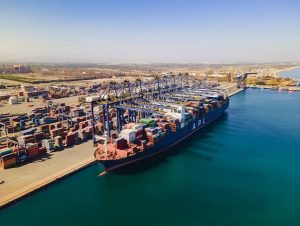
With the Strait of Hormuz in a chokehold due to Iran-U.S. hostilities, Oman has pitched investment opportunities in Sohar Port to India that could provide uninterrupted access to energy resources from the Persian Gulf.
- Sohar Port is a deep-sea port situated in northern Oman, on the Gulf of Oman.
- It is one of the largest and most strategically located deep-sea ports in the Middle East.
- It lies approximately 160 km south of the Strait of Hormuz, midway between Dubai and Muscat (capital of Oman).
- The port serves as a vital commercial hub connecting the markets of the Gulf region, the Indian subcontinent, and East Africa.
- Sohar Port handles various cargo, including dry, break, and liquid bulk, as well as container shipping.
- The port is managed by Sohar Industrial Port Company (SIPC), a joint venture between the Omani Government and the Port of Rotterdam.
- The Sohar Freezone adjacent to the port supports industrial activities such as petrochemicals, metals, and the energy sectors.
Fitzroy River:
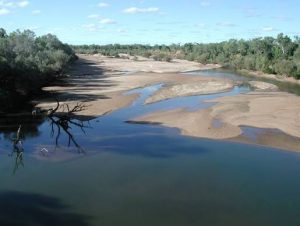
The Fitzroy River, home to about 500 saltwater crocodiles, has recently been approved to host rowing and canoeing at the Brisbane 2032 Olympics and Paralympics.
- Fitzroy River is a major river located in Queensland, Australia.
- It is formed by the confluence of the Dawson and Mackenzie rivers on the slopes of the Great Dividing Range.
- The united stream flows northeast across the Broadsound Range and then southeast through distributaries to enter Keppel Bay of the Coral Sea of the Pacific Ocean after a course of 480 km.
- Its catchment area with its main tributary, the 160-km Margaret River, is 142,000 sq.km.
- The river flows through different types of land. It passes through farming areas, towns, and natural landscapes.
- The main city along the river is Rockhampton, which is an important centre for the region.
- The Fitzroy is navigable from Port Alma, at the mouth, 56 km upstream to Rockhampton.
Pneumocystis jirovecii: Fungus
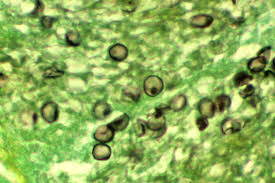
According to a recent study, Pneumocystis jirovecii, a fungus that causes severe pneumonia in people with weakened immune systems, may have developed resistance to a drug not originally designed to kill it.
- Pneumocystis jirovecii is an opportunistic fungal pathogen.
- It can cause pneumonia in patients with impaired immune systems, such as those with AIDS or who are receiving immunosuppressive drugs.
- It is a ubiquitous organism transmitted by aerosol route and causes no disease in immunocompetent patients.
- Initially classified as a protozoan, it has been considered a fungus since the 1990s based on molecular analyses.
- Its life cycle primarily consists of trophic (eg, trophozoites) and cystic forms.
Pneumocystis pneumonia (PCP):
- It is a lung infection that mainly affects people with weakened immune systems. The fungus Pneumocystis jirovecii causes it.
- Signs and symptoms of Pneumocystis pneumonia: Fever, Chills, Cough, Shortness of breath (dyspnea), Fatigue etc.
- Transmission: jirovecii is transmitted from one person to another through the air when someone coughs, sneezes or talks.
- Treatment: It is treated with high doses of the antibiotic trimethoprim-sulfamethoxazole (TMP-SMX).
Himalayan Monal : In News
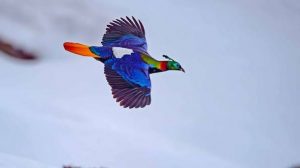
A study in Uttarakhand found that Himalayan monals exposed to roads, tourists and pilgrimage traffic use higher-frequency calls, which are impacting this species calling behaviour.
- The Himalayan Monal (Lophophorus impejanus) is also known as the Impeyan Monal or Danphe.
- They are among the larger birds in the Phasianidae family.
- It exhibits high sexual dimorphism—the males are decked head to toe in multicoloured plumage and exhibit a long green metallic crest, while the females have a pale blue eye patch, white throat, and a streaky brown body.
- It occupies the upper temperate forests of conifers and oak with open grasslands.
- It typically inhabits altitudes between 2,500 and 4,000 meters in Great Himalayan National Park (GHNP).
- It is commonly sighted in Tirthan Valley, especially during the spring and post-monsoon seasons.
- It is found across the Himalayan mountains, including in Jammu and Kashmir, Himachal Pradesh, Uttarakhand and Sikkim.
- It is a ground-dwelling bird, often seen digging through leaf litter or soft soil with its powerful beak in search of roots, tubers, seeds, insects, and grubs.
- It exhibits a clear altitudinal migration, descending as low as 2,000m in winter.
- However, it also shows tolerance to snow and has been observed digging through snowfall for roots, tubers and invertebrates.
- It faces threats from habitat loss, hunting, and disturbance from tourism.
- Conservation Status:
- IUCN Red List: Least Concern
- Wildlife Protection Act, 1972: Schedule I.
Elias 2-24 b:

Astronomers have discovered the youngest exoplanet on record and named it Elias 2-24 b.
- Elias 2-24 b is an exoplanet which is still whirling in its natal disk of dust and gas.
- It is the youngest known planet discovered so far and is located roughly 450 light-years from Earth.
- It is orbiting the star Elias 2-24, and its size is somewhere between two and four times that of Jupiter.
- The planet is still in the process of forming within its native gas-and-dust disk.
- It is less than 1 million years old, making it much younger than previously known youngest planets (over 5 million years old), including planets around PDS 70 and WISPIT 2.
- It orbits its young star at about 55 times the Earth–Sun distance.
Exoplanets:
- These are planets that orbit other stars and are beyond our solar system.
- Exoplanets come in a host of different sizes.
- They can be gas giants bigger than Jupiter or as small and rocky as Earth. They are also known to have different kinds of temperatures; boiling to cold.
Patriot Missile System:

Lockheed Martin recently announced it received a shipment of critical components from General Motors for Patriot interceptors, emphasizing the urgency to ramp up production amid ongoing international conflicts.
- Patriot, short for Phased Array Tracking Radar for Intercept on Target, is a mobile surface-to-air missile defense system.
- It was originally developed byS. weapons maker Raytheon Technologies.
- The system can intercept aircraft, tactical ballistic missiles, and cruise missiles, depending on the interceptor used.
- It is the United States Army’s most advanced air defense system.
- The system was first used in combat during the 1991 Gulf War, with batteries protecting Saudi Arabia, Kuwait, and Israel, and later used during the U.S. invasion of Iraq in 2003.
- Nineteen countries now operate the Patriot system, including the S., Germany, Poland, Ukraine, Japan, Qatar, Saudi Arabia, and Egypt.
- A Patriot battery (i.e., the basic firing unit) consists of a phased array radar, an engagement control station, computers, power generating equipment, and launchers, each of which holds four ready-to-fire missiles.
- It is equipped with a track-via-missile (TVM) guidance system. Midcourse correction commands are transmitted to the guidance system from the mobile engagement control centre.
- The system’s radar has a range of over 150 km and can simultaneously track up to 100 potential targets.
- The system has different capabilities depending on the type of interceptor used.
- The PAC-2 interceptor uses a blast-fragmentation warhead, while the newer PAC-3 missile uses more advanced hit-to-kill technology.
- Depending on the version in use, the interceptor missiles can reach an altitude of more than 24 kilometers.
Sanjay Gandhi National Park (SGNP):

Bijalee, an 18-year-old tigress and one of the major crowd-pullers at Mumbai’s Sanjay Gandhi National Park (SGNP), has died due to age-related health issues recently, taking the tiger count in the national park to 11.
- Sanjay Gandhi National Park (SGNP) is located near Borivali in the northern part of Mumbai, Maharashtra.
- In the early days, the park was known as Krishnagiri National Park. However, in 1974 the name of this park was changed to ‘Borivali National Park’ and in 1981 to ‘Sanjay Gandhi National Park’.
- The Kanheri Caves in the center of the park were an important Buddhist learning center and pilgrimage site sculpted by Buddhist monks between the 9th and the 1st centuries BCE.
- They were chiseled out of a massive basaltic rock outcropping.
- Caves feature viharas, stupas, prayer halls, and other structures of old-style Buddhist architecture.
- There is a Jain Temple with three huge carved idols situated on the way to the caves.
- Besides, the park also has two lakes, namely Tulsi Lake and Vihar Lake, the deer park, the lion safari, and the Samadhi of Mahatma Gandhi.
- Kadamba, teak, karanj, shisam, and species of acacia, ziziphus, euphorbia, flame of the forest, red silk cotton and a number of other varieties of flowers.
- Karvi, or karvy, a flowering plant that flowers once in seven years, can be found in the park.
- Fauna: Leopard, sambar, chital, barking deer, rusty spotted cat, hyena, common palm civet, small Indian civet, Indian crested porcupine, Indian hare, Indian flying fox, common langur, and bonnet macaque.
Pradhan Mantri Khanij Kshetra Kalyan Yojana (PMKKKY):
The Pradhan Mantri Khanij Kshetra Kalyan Yojana (PMKKKY) completed significant progress in improving the welfare of mining-affected communities by utilising funds collected through District Mineral Foundations (DMFs).
- It was launched on 17th September 2015 to ensure that mining-affected communities receive benefits from mineral extraction through welfare and development projects.
- The scheme is implemented through District Mineral Foundations (DMFs), which utilise funds collected from mining lease holders.
- PMKKKY aims to improve the quality of life in mining-affected areas by developing social infrastructure, reducing the adverse impacts of mining on the environment, health and livelihoods, and promoting sustainable income opportunities for affected communitie.
- District Mineral Foundation (DMF) are non-profit trusts established under the 2015 amendment to the Mines and Minerals (Development and Regulation) Act, 1957 to work for the welfare of people and areas affected by mining operations.
- They function under State Governments and have been established in 656 districts across 23 States.
- The Mines and Minerals (Development and Regulation) Act, 1957 requires States to incorporate PMKKKY provisions into their DMF rules. Revised PMKKKY guidelines issued in January 2024 provide an updated framework for planning and implementing projects funded through DMFs.
- Since mining activities often affect remote and tribal regions, DMF rules must consider constitutional safeguards for Scheduled Areas and Scheduled Tribes, along with provisions of the Panchayats (Extension to Scheduled Areas) Act, 1996 (PESA) and Forest Rights Act, 2006.
Advisory on Regulation of Stem Cell Therapy:
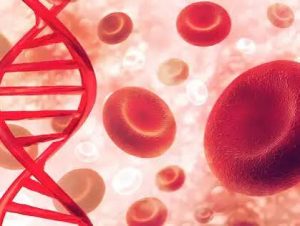
The Union Ministry of Health and Family Welfare issued a comprehensive advisory to all States and Union Territories to strictly regulate stem cell therapy, mandating that it can be offered as a standard clinical care only for specific disease conditions approved by the Ministry.
- The advisory was issued in compliance with the Supreme Court’s January 2026 judgment in the Yash Charitable Trust & Ors. v. Union of India case, which underscored the need to penalize the unauthorized and unscientific use of stem cell therapies.
- Stem cell therapy can be offered as standard care in routine clinical practice only for disease conditions and indications included in the Ministry-approved list (e.g., specific blood cancers and haematologic disorders).
- Restrictions on Autism Spectrum Disorder (ASD) The therapeutic use of any type of stem cell for ASD is explicitly restricted to approved clinical trials.
- Unproven stem cell interventions for ASD must not be marketed as standard commercial treatments.
- Any clinical trial involving stem cells must strictly adhere to the National Guidelines for Stem Cell Research, 2017, jointly issued by the Indian Council of Medical Research (ICMR) and the Department of Biotechnology (DBT).
India’s 1st Soil Carbon Payments Initiative:
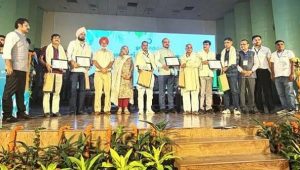
India’s agricultural carbon market reached the farm level as more than 2,500 smallholder farmers in Punjab and Haryana received digital payments for adopting regenerative agricultural practices under the ‘Aadi’ farmer carbon programme.
- The ‘Aadi’ programme was launched in 2019 by Grow Indigo with technical guidance from Indian Council of Agricultural Research (ICAR) to link sustainable farming practices with additional farmer income.
- Farmers adopted regenerative practices such as Direct Seeded Rice (DSR), reduced tillage, and crop residue management between 2019 and 2022 to improve soil health and reduce greenhouse-gas emissions.
- Farmers received payments based on their share of carbon credits generated from their fields, with the first payments ranging between ₹3,000 and ₹15,000.
- The greenhouse-gas reductions and increases in soil carbon were scientifically measured and independently verified before carbon credits were issued under the Verra VM0042 methodology.
- The initiative covers over two million acres and more than 100,000 farmers across seven states, making it one of India’s major agricultural carbon programmes.
- The programme estimates that regenerative practices helped save 45 billion litres of water, prevented more than two lakh tonnes of crop residue burning, and avoided around 1,000 tonnes of PM2.5 emissions.
- The initiative connects scientific research, carbon markets, and farmer incentives, showing how regenerative agriculture can support higher farmer incomes, soil improvement, resource conservation, and climate-resilient farming.
Sumatran Elephants:
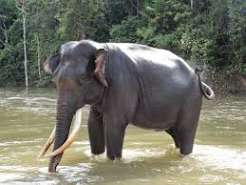
Large-scale wildfires in Sumatra have increased threats to Sumatran elephants, with hundreds of thousands of hectares of their habitat affected by fires. The fires are worsening habitat fragmentation and increasing extinction risks for the species.
- The Sumatran elephant (Elephas maximus sumatranus) is a subspecies of Asian elephant classified as Critically Endangered. Only around 1,320–1,635 individuals are estimated to survive in the wild, with populations declining significantly over recent decades.
- It is endemic to the Indonesian island of Sumatra, making its conservation highly dependent on protecting fragmented forest habitats and wildlife corridors.
- It acts as an important seed disperser, supporting forest regeneration and ecosystem stability.
- Its conservation also benefits other threatened species such as the Sumatran rhinoceros, Sumatran tiger and Sumatran orangutan.
- The species faces severe threats from deforestation, conversion of forests for palm oil and pulpwood plantations, habitat fragmentation, human-elephant conflict, wildfires and illegal ivory trade.
- Conservation efforts focus on protecting elephant corridors, reducing human-elephant conflict, strengthening anti-poaching measures, and preserving forest landscapes that support multiple endangered species.
Real-World Asset Tokenisation:
The Government of Maharashtra has proposed the Digitisation and Exchange of Land Token Assets (DELTA) Act to establish a state-backed legal framework for Real-World Asset (RWA) tokenisation. The Act aims to make Maharashtra India’s first “tokenised State” by converting physical assets such as land into secure and tradable digital tokens.With land serving as one of India’s largest yet most illiquid repositories of wealth, the initiative marks a major milestone in linking physical property to formal financial markets.The proposed DELTA Act aims to make Maharashtra India’s first “tokenised State” by using blockchain/DLT to convert physical assets like land into Real-World Asset (RWA) tokens, enabling fractional ownership and greater liquidity.However, legal, regulatory, taxation, title, cybersecurity and investor-protection challenges remain. India needs a unified regulatory framework, verified land titles and integration with Digital Public Infrastructure for safe adoption.RWA Tokenisation uses blockchain and distributed ledger technology (DLT) to convert the ownership, rights, or economic value of physical assets (like real estate) into secure, verifiable digital tokens.
Vaitarna River : Two teenagers Drowned
Two teenagers recently drowned in the Vaitarna River in Maharashtra’s Palghar district while attempting a reel during the Ganeshotsav holiday.Vaitarna River is one of the west-flowing rivers in the region north of Mumbai and south of the Tapi River.It originates from the southern slopes of the Triambak-Anjaneri hills near Trimbakeshwar in the Nashik district.These hills are part of the Sahyadri ranges (Western Ghats) and are also the origin point of the Godavari River.The river drains into the Arabian Sea.
Jhow and Wadhiv islands lie in its estuary. Arnala Island lies off its mouth.It receives most of the rainfall from the Southwest monsoon during June to October. Almost 98% of the annual rainfall of the basin is received during this period, making it a highly seasonal river in terms of water volume.
Vasai Fort:
Several Ganesh idols immersed in an artificial pond were allegedly found dumped near the jetty at Vasai Fort recently, sparking outrage among residents.Vasai Fort, also known as the Bassein Fort, is an ancient fort located at Vasai in the suburbs of North Mumbai, Maharashtra.It overlooks the confluence of the Ulhas River.Surrounded by the sea on three sides and protected by a strategically designed moat on the landward side, its defenses were nearly impenetrable.Within its expanse, remnants of once-majestic churches, intricate archways, and Portuguese-style facades still stand, albeit weathered by time.



