
Today’s Current Affairs: 22nd Sep 2026 for UPSC IAS exams, State PSC exams, SSC CGL, State SSC, RRB, Railways, Banking Exam & IBPS, etc
Table of Contents
State of Global Water Resources 2025:
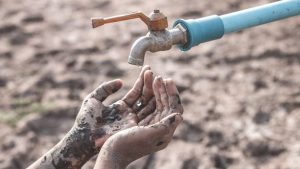
India’s groundwater levels are declining persistently, according to the State of Global Water Resources 2025 report published by the World Meteorological Organization (WMO) recently.
- It is annually published by the World Meteorological Organization (WMO).
- It provides a comprehensive quantitative overview of global water resources, with a focus on hydrological variability and trends.
SGWR 2025 Highlights:
- Satellite observations and hydrological models showed that 42% of global land area had below-normal water storage in 2025.
- The measure covers water in rivers, streams and lakes, groundwater, soil moisture, snow and ice.
- Global terrestrial water storage has shown a declining trend since 2014–2016 — a persistent, decade-long signal.
- For the fourth consecutive year, every major glaciated region on Earth lost ice mass.
- The estimated loss during the 2025 hydrological year was about 408 gigatonnes, equivalent to roughly 1 millimetres of global sea-level rise.
- Central Asia, western Canada and the United States were among the regions recording particularly severe glacier losses.
- 2025 was one of the driest years for the world’s rivers in 35 years, with normal flows recorded across just 36% of global river basin area.
- Another 36% recorded below-normal or much-below-normal flows, while 21% had above-normal or much-above-normal flows. The remaining 7% was classified as having no data.
- The WMO found that the seven years from 2019 to 2025 had the smallest shares of river basins with normal flows since 1991. Those shares ranged from 34% to 38%, compared with an average of 46% over 1991–2020.
- Persistent groundwater deficits were observed during 2022–2025 in parts of the Americas, Europe, the Middle East, India, southern Africa and Australia, with over-abstraction identified as an important driver in several regions.
- Nearly two-thirds of monitored wells worldwide showed conditions outside the historical norm in 2025, and the balance shifted further toward deficit compared with 2024, not toward recovery.
- Globally, 34 percent of groundwater observation stations reported below-normal to much-below-normal levels in 2025, compared with 25 per cent in 2024.
- Around 31 percent of observation stations reported above-normal to much-above-normal groundwater levels in 2025.
- Asia and Africa together accounted for at least half of all recorded water-related extreme events and more than 80% of reported associated deaths over the past five years
- India recorded below-normal terrestrial water storage in 2025, particularly across the northern part of the country.
- The report also found above- to much-above-normal reservoir inflows across India, while soil moisture was above or much above normal during both the December-February and June-August assessment periods.
- Among India’s major river systems, the Ganges, Godavari, Krishna and Indus recorded above-normal to much-above-normal discharge in 2025.
- However, the higher river flows did not translate into a broad recovery of India’s deeper water reserves.
- The WMO found persistent groundwater deficits in India during 2022-2025, with widespread below-normal to much-below-normal groundwater levels, particularly in northwestern India.
What is the Outer Space Treaty?
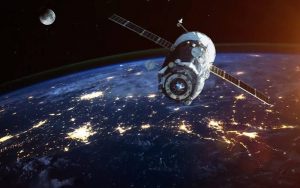
US President Donald Trump recently posted ‘The Moon Is Ours’ on Truth Social, but the 1967 Outer Space Treaty rules out any country owning lunar territory.
- Outer Space Treaty is an international agreement that governs how nations act in space.
- Formally known as the “Treaty on Principles Governing the Activities of States in the Exploration and Use of Outer Space, including the Moon and Other Celestial Bodies,” it is one of international space law’s foundational documents.
- Born out of the geopolitical tensions of the Cold War and the competitive spirit of the space race, the treaty emerged as a response to the potential militarization of space.
- The overall purpose of the Outer Space Treaty is to keep space peaceful.
- The treaty was adopted by the United Nations in 1967.
- Its first signatories were the United States, the United Kingdom, and the Soviet Union.
- 115 countries are parties to the treaty, including all major spacefaring nations, including India and China. Another 22 countries are signatories.
- It includes several important principles that guide space exploration and use to this day.
- According to the U.N. Office of Outer Space Affairs, the treaty’s key principles are:
- That the exploration and use of outer space shall be carried out for the benefit and in the interests of all countries and shall be the province of all mankind
- That outer space shall be free for exploration and use by all states
- That outer space is not subject to national appropriation by claim of sovereignty, by means of use or occupation, or by any other means
- That states shall not place nuclear weapons or other weapons of mass destruction in orbit or on celestial bodies or station them in outer space in any other manner;
- That the Moon and other celestial bodies shall be used exclusively for peaceful purposes; prohibits their use for testing weapons of any kind, conducting military maneuvers, or establishing military bases, installations, and fortifications
- That astronauts shall be regarded as the envoys of mankind
- That states shall be responsible for national space activities whether carried out by governmental or non-governmental entities
- That states shall be liable for damage caused by their space objects
- That states shall avoid harmful contamination of space and celestial bodies.
- States Parties agree to inform the UN Secretary-General as well as the public and the international scientific community, to the greatest extent feasible and practicable, of the nature, conduct, locations, and results of activities covered in this treaty.
- The Treaty sets forth that all stations, installations, equipment, and space vehicles on the Moon and other celestial bodies shall be open to representatives of other States Parties on a reciprocal basis
What are Dermatophytes?
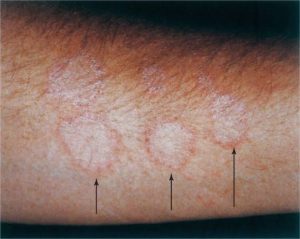
For a long time, fungal infections have meant itchy skin, discoloured nails and sometimes hair loss, a group of symptoms collectively called dermatophytosis, and are caused by a group of fungi called dermatophytes.
- Dermatophytes are a group of fungi that live off keratin, a substance in hair, nails and the outer layer of the skin.
- They don’t infect living tissue.
- They can cause skin lesions in humans and animals.
- Infections caused by dermatophytes are called dermatophytosis.
- The fungi use keratin as a carbon source and colonise keratinised tissue, such as hair, skin or nails.
- Major genera of dermatophytes include Trichophyton, Microsporum and Epidermophyton.
- Dermatophytes are highly contagious.
- Some dermatophytes are spread directly from one person to another (anthropophilic organisms).
- Others live in and are transmitted to humans from soil (geophilic organisms), and still others spread to humans from animal hosts (zoophilic organisms).
- Transmission of dermatophytes also can occur indirectly from fomites (e.g., upholstery, hairbrushes, hats).
- Anthropophilic organisms are responsible for most fungal skin infections.
- All dermatophytes infect host surfaces containing keratin, including skin, hair, and nails.
- As such, the same infecting organism could cause disease in the foot, fingernail, body, or head.
- Both climate and lifestyle contribute to the prevalence of dermatophyte infections.
- Tropical climates and overcrowding predispose populations to dermatophyte infections.
- Increased urbanization, including the use of occlusive footwear, community showers, and participation in sports, has been linked to higher prevalence of Tinea pedis and onychomycosis (nail infections).
- It is very rare for a dermatophyte to cause an invasive or disseminated infection, although cases in immunocompromised patients have been reported.
- Disease severity correlates with the ecological niche of the infecting dermatophyte.
Sea of Japan: In News
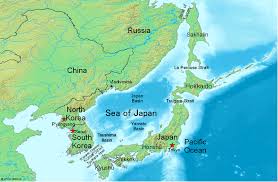
It was reported that North Korea fired two missiles into the Sea of Japan with the launches taking place within hours of each other.
- The Sea of Japan, or East Sea, is a marginal sea of the western Pacific Ocean.
- It is bounded by Russia and Sakhalin Island in the north, by North Korea in the west, South Korea in the southwest, and by the Japanese archipelago (Hokkaidō, Honshū, and Kyūshū islands) in the east and south.
- It is connected with the East China Sea via the Tsushima and Korea straits and with the Okhotsk Sea in the north by the La Perouse and Tatar straits.
- In the east, it is connected with the Inland Sea of Japan via the Kanmon Strait and the Pacific Ocean by the Tsugaru Strait.
- Deepest Point: Dohoku Seamount, an underwater volcano, is its deepest point.
- Its relatively warm waters contribute greatly to the mild climate of Japan.
- Like the Mediterranean Sea, it has almost no tides due to its nearly complete enclosure from the Pacific Ocean.
- The sea is known for its high concentration of oxygen (dissolved in the seawater), which results in high biological productivity.
- Major Ports:
- Russia: Vladivostok, Sovetskaya Gavan, Nakhodka, Alexandrovsk-Sakhalinsky, and Kholmsk.
- North Korea: Hamhung, Chongjin, and Wonsan.
- Japan: Niigata, Tsuruta, and Maizuru.
Visegrád Group:
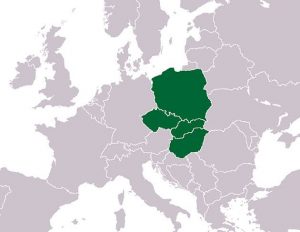
The four members of the Visegrád Group backed India’s bid for a permanent seat on the UN Security Council at their first foreign ministers’ meeting with India.
- The Visegrad Group is also known as the “Visegrad Four” or simply “V4”.
- It is a cultural and political alliance which was created in 1991.
- It aims to advance cooperation in military, economic, cultural, and energy affairs
- Member Countries: Czech Republic, Hungary, Poland, and Slovakia
- It was created when Polish, Czechoslovakian and Hungarian leaders met in the Hungarian town of Visegrád to promote cooperation between the three States following the Warsaw Pact.
- In 1993, Slovakia separated from the Czech Republic and the Group became the “V4”.
- The V4 is an informal intergovernmental forum and makes its decisions by consensus.
- It does not have any permanent structures.
- The group’s work is centred around a presidency which rotates on an annual basis.
- It conducts regular meetings at various levels: Heads of State, Prime Ministers, Ministers of Foreign Affairs, Ministers for European Affairs, technical ministries, etc.
- The V4 occasionally extends works with other States, both EU and non-EU members, in formats known as “V4+”.
National Formulary of India:

The Union Minister of State for Health and Family Welfare launched the 7th Edition of the National Formulary of India (NFI) and also announced that the Biovigilance Programme of India has been approved by the Government of India.
National Formulary of India 2026:
- It comprises chapters, appendices and drugs, including fixed-dose combinations.
- Drug monographs have been revised to align with the National List of Essential Medicines (NLEM) and National Health Programmes.
- It provides access to links relating to National Health Programmes, immunisation schedules, Jan Aushadhi, safe disposal of unused or expired pharmaceutical products and other authoritative regulatory resources.
Biovigilance Programme of India:
- It is aimed at expanding the country’s patient-safety framework.
- Under the programme, the Indian Pharmacopoeia Commission will monitor and prevent adverse events linked to medicines and biological products used in organ and tissue transplantation.
- The new programme will complement existing pharmacovigilance and materiovigilance mechanisms, creating a broader safety-monitoring framework covering medicines, medical devices and transplant-related procedures.
National Formulary of India:
- It is published periodically by the Indian Pharmacopoeia Commission (IPC) since 2009.
- The first edition of NFI was published in 1960.
- It is a guidance document for healthcare professionals aimed at promoting the rational and safe use of medicines.
Scrub Typhus: Recent Death

Recent death of an Anna University student at Government Kilpauk Medical College Hospital (KMCH) due to scrub typhus, has once again brought this bacterial infection to the fore.
- Scrub Typhusn is a bacterial infection caused by the bacterium Orientia tsutsugamushi.
- It is spread by the bite of infected larval mites or chiggers
- Timely treatment is critical for this disease. If left untreated, severe illness from scrub typhus infection can lead to acute respiratory distress syndrome (ARDS), shock, meningitis and kidney failure, which can be fatal
- It is not contagious disease.
- There is no vaccine as yet for scrub typhus.
- It should be treated with the antibiotics doxycycline or azithromycin.
Typhus Fever:
- Typhus (or typhus fever) is the name used for several different types of bacterial infections spread by bug bites that cause similar symptoms, like high fever and rash.
- There are three types of illnesses commonly called typhus:
- Epidemic Typhus: It is caused by Rickettsia prowazeki and it is spread to people through contact with infected body lice.
- Scrub Typhus: It is caused by Orientia tsutsugamushi and spread by chiggers.
- Murine Typhus: It is caused by Rickettsia typhi spread by fleas. It occurs in tropical and subtropical climates around the world.
Exercise Nomadic Elephant 2026:
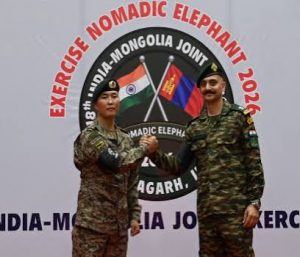
The 18th edition of the Exercise Nomadic Elephant 2026 commenced at the Foreign Training Node in Pithoragarh, Uttarakhand.
- Exercise Nomadic Elephant is an annual joint military exercise conducted alternatively in India and Mongolia.
- The last edition of the exercise was conducted at Ulaanbaatar, Mongolia.
- Aim is to enhance the joint military capability of both sides to undertake Counter-Insurgency Operations in semi-urban and mountainous terrain under the United Nations Mandate.
- It focuses on tactical-level operations, exchange of best practices, refinement of operational drills and enhancement of interoperability between the two armies.
- The training curriculum will include Cordon and Search Operations, Room Intervention Drills, Special Heliborne Operations, Cyber Security Training and employment of drones and counter-drone systems, among other activities.
- These drills will provide troops of both Armies an opportunity to train together in realistic operational scenarios and strengthen their ability to operate jointly.



