
Today’s Current Affairs: 28th Sep 2026 for UPSC IAS exams, State PSC exams, SSC CGL, State SSC, RRB, Railways, Banking Exam & IBPS, etc
Table of Contents
What is PFOS?
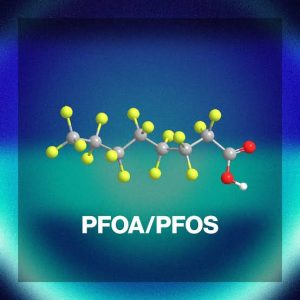
PFOS, a widespread industrial ‘forever chemical’, weakens the body’s ability to fight viral infections, a study has found recently.
- PFOS (Perfluorooctane Sulfonate or Perfluorooctane Sulfonic Acid) is a synthetic chemical used to make products resistant to stains, grease, soil, and water.
- It is an organic perfluorinated compound, consisting of an eight-carbon backbone and a sulfonate functional group.
- It is part of a class of chemicals called per- and polyfluoroalkyl substances (PFASs).
- PFAS, also known as the Forever Chemicals, are a large chemical family of over 10,000 highly persistent chemicals that don’t occur in nature.
- PFOS is very stable in the environment and hard to break down. PFOS also moves easily through groundwater.
- PFOS is of particular concern because it can accumulate up the food chain in aquatic systems and can lead to high concentrations in predatory fish consumed by anglers.
- It can cause serious health effects, including cancer, endocrine disruption, accelerated puberty, liver and immune system damage, and thyroid changes.
- Starting in the 1940s, PFOS was used in many consumer and industrial products, including carpets, rugs, upholstered furniture, non-stick cookware, and leather products.
- PFOS has also been present in some firefighting foams used at airports, firefighter training facilities, and military airfields.
- PFOS is listed under the Stockholm Convention on Persistent Organic Pollutants (POPs), subject to international restrictions and exemptions.
Wayanad Wildlife Sanctuary : Two-day vulture survey

A two-day vulture survey has begun across the Wayanad Wildlife Sanctuary ahead of the upcoming Wildlife Week celebrations in Keralam.
- Wayanad Wildlife Sanctuary is located in Wayanad, Kerala, in the southern trenches of the Western Ghats.
- It is also known as Muthanga Wildlife Sanctuary.
- It forms an integral part of the Nilgiri Biosphere Reserve, a UNESCO World Heritage Site.
- It is bordered by the protected areas of Nagarhole and Bandipur in Karnataka on the northeastern side and Mudumalai in Tamil Nadu on the southeastern side.
- Rivers like the Kabini, Cherupuzha, and Bavali flow through the sanctuary.
- Tribes living in these forests include some scheduled adivasis, such as Paniyas, Kattunaikkans, Kurumas, Ooralis, Adiyans, and Kurichiyas.
- It is a mosaic of the Western Ghats’ significant vegetation types, ranging from moist deciduous to dry deciduous and semi-evergreen patches.
- About one-third of the sanctuary is covered by plantations of teak, rosewood, eucalyptus, and silver oak.
- It boasts one of the largest populations of Asian elephants and tigers, which are considered its flagship species.
- Other mammals include leopards, gaur (Indian bison), sambar deer, wild boars, sloth bears, and jungle cats.
Cool Leaders Award:
Inaugural Cool Leaders Award was announced at the Global Cooling Pledge Assembly 2026 held in Singapore.
- Cool Leaders Award is a global recognition initiative launched by the UNEP Cool Coalition.
- It recognizes outstanding leadership in advancing sustainable cooling and protecting people from extreme heat.
- The first Cool Leaders are:
- Singapore: For leadership in passive cooling and heat resilience.
- United Arab Emirates: For leadership in district cooling and advancing cooling in global climate and development policy.
- Dong Mingzhu: Chairwoman of Gree Electric Appliances, for spearheading of the development ultra-efficient, low-carbon cooling technologies, including the Zero Carbon Source air-conditioning system.
UNEP Cool Coalition:
- It is a global platform driving system-level change on sustainable cooling.
- It was launched in 2019 as a flagship initiative of the UN Secretary-General’s Climate Action Summit.
- It brings together over 250 actors—including governments, businesses, cities, and financial institutions—to deliver efficient, climate-friendly cooling solutions aligned with the Paris Agreement, the Kigali Amendment, and the 2030 Agenda.
Forum for India-Pacific Islands Cooperation: In News
The External Affairs Minister chaired a meeting of the Foreign Ministers of the Forum for India-Pacific Islands Cooperation (FIPIC), on the sidelines of the 81st United Nations General Assembly in New York.
- It is a multilateral platform established by India to enhance cooperation with the Pacific Island countries.
- It was established in 2014 during the Prime Minister of India’s visit to Fiji.
- Member countries: It includes 14 of the island countries – Cook Islands, Fiji, Kiribati, Marshall Islands, Micronesia, Nauru, Niue, Palau, Papua New Guinea, Samoa, Solomon Islands, Tonga, Tuvalu, and Vanuatu.
- In line with the “Act East Policy”, through FIPIC, India has primarily focused its efforts on the Pacific Islands.
- At this moment, total annual trade of about $300 million between the Indian and Pacific Island countries, whereas exports are around $200 million and imports are around $100 million.
- FIPIC Summits held: Since 2014 three FIPIC summits have been held, 1st 2014 (Suva, Fiji), 2nd 2015 (Jaipur, India), 3rd 2023 (Port Moresby, Papua New Guinea).
Incendiamoeba cascadensis: New Species Of Amoeba
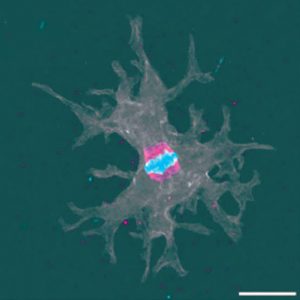
Scientists recently discovered an amoeba named Incendiamoeba cascadensis that can reproduce at temperatures previously considered too extreme for complex life, setting a new record for eukaryotes.
- Incendiamoeba cascadensis is a new species of amoeba.
- It was discovered in the geothermal streams of Lassen Volcanic National Park, California, United States.
- The name Incendiamoeba cascadensis translates to “fire amoeba from the Cascade mountain range”.
- It can reproduce at temperatures reaching 145°F (63°C), breaking the record for the most heat-tolerant eukaryote.
- While some thermophilic bacteria and archaea have been found to grow at temperatures exceeding 100°C, the limit for eukaryotic survival has been estimated at 60°C based on previous sampling.
- Archaea and bacteria have different cellular organization from eukaryotes.
- Eukaryotic organisms, including animals, plants, fungi, amoebae, and many other microorganisms, contain a nucleus and other specialized cellular structures.
- cascadensis divides through mitosis, the process in which one eukaryotic cell produces two daughter cells.
- It can remain mobile at around 147°F (64°C) and recover after brief exposure to temperatures of approximately 158°F (70°C), although it does not reproduce normally at that temperature.
- It had an elongated, worm-like form and a compact, amoeboid shape with pseudopodia.
- Extreme heat can damage proteins and destabilise cell membranes.
- The findings suggest that the organism has adaptations that help protect its proteins and membranes.
- It can also change its shape and movement patterns in response to rising temperatures.
- At higher temperatures, the amoeba forms a protective structure that helps it withstand short periods of extreme heat.
- However, scientists have not yet identified the precise mechanisms responsible for its heat tolerance.
OneSCD:
India co-hosted the launch of OneSCD on the sidelines of the 81st session of the United Nations General Assembly (UNGA 81) in New York.
- OneSCD is a global partnership to advance equity and transform Sickle Cell Care.
- It is a multilateral coordination mechanism designed to strengthen and support existing country led Sickle Cell Disease (SCD) programs and help scale proven approaches to care.
- It was hosted the Government of the Federal Republic of Nigeria and co-organized with UNICEF, WHO, Africa CDC, the World Coalition on Sickle Cell Disease, and St. Jude Children’s Research Hospital.
- It will bring together government leaders, UN agencies, health experts, civil society, and people with lived experience.
- The partnership focuses on strengthening international cooperation and improving access to prevention, diagnosis, treatment and continuing care for people affected by Sickle Cell Disease.
- Sickle Cell Disease is a group of inherited blood cell disorders that affect hemoglobin, the molecule in red blood cells (RBCs) that delivers oxygen to cells throughout the body.
- The most common and severe type of SCD is sickle cell anemia.
- Normally, RBCs are disc-shaped and flexible enough to move easily through the blood vessels.
- People with SCD have atypical hemoglobin molecules called hemoglobin S, which can distort RBCs into a sickle, or crescent, shape.
- When RBCs sickle, they do not bend or move easily and can block blood flow to the rest of the body.
- The sickle-shaped cells can also stick to vessel walls, causing a blockage that slows or stops the flow of blood.
- The cause of SCD is a defective gene, called a sickle cell gene.
- A bone marrow transplant (stem cell transplant) can cure SCD.
- Gene therapy is also being explored as another potential cure.
Gulbarga Tur Dal:
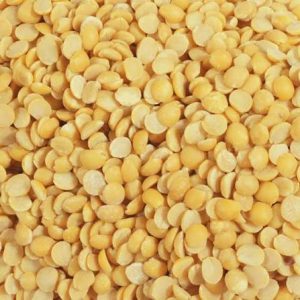
The Agricultural and Processed Food Products Export Development Authority (APEDA) flagged off a shipment of 1 metric tonne of Geographical Indication (GI)-tagged Gulbarga Tur Dal to the Maldives.
- Gulbarga Tur Dal, associated with the Kalaburagi region of Karnataka.
- It has received the Geographical Indication (GI) registration in 2019.
- The product is recognised for its distinctive taste and quality and forms an important part of the agricultural economy of the region.
- Tur Dal is one of India’s most important pulse crops and a major source of dietary protein.
- It is a legume crop and protein-rich food which is primarily consumed as dal in India.
- It is predominantly a crop of tropical areas mainly cultivated in semi-arid regions of India.
- It requires 600-650mm of annual rainfall along with moist conditions for the initial eight weeks and dry conditions during its flowering and pod development phase.
- It can be grown with a temperature ranging from 26 to 30 degree Celsius in the rainy season and 17 to 22 degree Celsius in the post rainy (November to March) season.
- It can be grown on all types of soil, however, sandy loam or loam soil is most suitable for its cultivation.
- It is very sensitive to low radiation at pod development, therefore flowering during the monsoon and cloudy weather, leads to poor pod formation.
- It is commonly intercropped with a wide range of crops.
- The important diseases of Pigeon pea are Wilt, Sterility mosaic disease, Phytophthora blight, Alternaria blight and Powdery mildew etc.
- It has low glycaemic index and is rich in thiamine, riboflavin, niacin, vitamin B-6, folate, vitamin A, calcium, zinc, iron and magnesium
- Major Pigeon pea producing states: Uttar Pradesh, Madhya Pradesh, West Bengal, Bihar and Jharkhand.
E-Methanol:
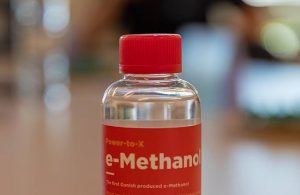
The government laid the foundation stone for its first port-based e-methanol production facility at Kandla, involving an investment of ₹2,300 crore.
- E-Methanol is a low-carbon fuel produced with renewable energy and recycled CO₂.
- E-methanol production typically involves three key steps:
- Green hydrogen generation:Renewable energy-powered water electrolysis creates the hydrogen feedstock. (Here water (H₂O) molecules are split into oxygen and hydrogen.)
- CO2 capture:Carbon dioxide is captured from industrial flue gases (e.g. steel mills or cement plants) or directly from the air, reducing overall emissions at the source.
- Methanol synthesis:The hydrogen and CO2 are combined in a catalytic reactor under pressure, yielding methanol with minimal byproducts.
- It can be used in shipping, heavy industry, and chemical manufacturing.
- Benefits of E-methanol:
- Lower Carbon Emissions: It can significantly reduce lifecycle greenhouse gas emissions when produced using renewable electricity and captured carbon dioxide.
- Reduced Sulfur Emissions:Compared to many conventional fuels, e-methanol produces little to no sulfur emissions during combustion.
- Lower Particulate Matter:Cleaner combustion characteristics can reduce particulate emissions and improve environmental performance.
- Renewable Production Cycle:The use of green hydrogen and renewable energy creates a more sustainable production pathway.
81st Session of the United Nations General Assembly (UNGA) in New York:
At the 81st Session of the United Nations General Assembly (UNGA) in New York, French President Emmanuel Macron renewed the push to regulate the use of the veto in the UN Security Council (UNSC) during humanitarian crises and mass atrocities.
- The United Nations Security Council (UNSC) is one of the six principal organs of the United Nations, established under the UN Charter in 1945. It has primary responsibility for maintaining international peace and security.
- The word veto does not appear in the United Nations Charter. Instead, it is established under Article 27(3), which requires that decisions of the Security Council on non-procedural matters be made by an affirmative vote of nine members, including the concurring votes of the permanent members.
- The French-Mexican Initiative (2015): Originally floated in 2013 and formally launched in 2015 by France and Mexico, the initiative calls on the P5 to voluntarily refrain from exercising their veto in situations involving genocide, crimes against humanity, and large-scale war crimes.
- The initiative frames the veto not as an unconditional privilege of great-power status, but as a responsibility tied to maintaining collective peace and security.
- Backing has reached 128 UN Member States (with 21 countries joining in mid-2026), marking the first time two permanent members (France and the UK) have formally committed to the principle.
The Anti-Goonda Bill, 2026:
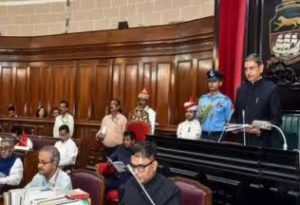
President has returned the West Bengal Public Safety and Control of Anti-Social Activities Bill, 2026 for reconsideration over its potential overlap with Central preventive-detention legislation.
The Anti-Goonda Bill, 2026:
- A preventive-detention Bill passed by the West Bengal Legislative Assembly on June 29, 2026, to address habitual offenders and activities threatening public order. It provides for detention without trial and restrictions on entry into specified areas.
- Aim to prevent habitual criminal activity, maintain public order and protect citizens from violence, intimidation, unlawful dispossession and other anti-social activities.
Key Features:
- Preventive Detention: Permits detention of individuals classified as goondas for up to 12 months without trial to prevent activities threatening public order.
- Externment Provisions: Allows authorities to prohibit individuals from entering specified areas or districts for up to one year.
- Broad Definition of Anti-Social Activities: Covers habitual offences, public intimidation, unlawful dispossession, illegal mining and activities endangering life or property.
- Search andEnforcement Powers: Authorises search and seizure, penalises harbouring detained or externed persons and makes offences cognizable and non-bailable.
- Protection for Officials: Grants legal immunity to officials for actions undertaken in good faith while implementing the proposed legislation.
The SWIFT Payment System:
Amid the weaponisation of the U.S. dollar and Western financial sanctions, member nations of BRICS and the Global South are accelerating efforts to bypass the Belgium-based SWIFT messaging network.
- The Society for Worldwide Interbank Financial Telecommunication (SWIFT) is a standardized, secure messaging network that financial institutions use to transmit instructions and information—such as money transfers—via standardized codes (SWIFT/BIC codes). It is a messaging platform, not a settlement or fund-holding bank.
- Organisation: Founded in 1973 and headquartered in La Hulpe, Belgium, it operates as a member-owned cooperative under Belgian law, collectively supervised by the G10 central banks.
- Aim is to provide a unified, highly secure, reliable, and standardized communications network for cross-border financial transactions, replacing error-prone telex technology with automated messaging.
Key Features:
- Pure Messaging Architecture: Transmits payment orders, letters of credit, and securities instructions between institutions, while the actual movement of money relies on bilateral correspondent banking accounts (Nostro/Vostro).
- Standardized BIC/ISO Protocol: Uses standardized 8- or 11-character Business Identifier Codes (BIC) and the ISO 20022 messaging framework to ensure error-free global transaction routing.
- Global Scale & Reach: Connects over 11,000 banking and securities organizations across more than 200 countries and territories, processing dozens of millions of financial messages daily.
- Belgian/EU Legal Jurisdiction: Governed under Belgian and European Union law, which obligates it to comply with EU sanctions and sanction orders.
- High Security & Redundancy: Employs end-to-end hardware encryption, dedicated secure network lines, and geographically distributed operations centers to prevent outages and cyber manipulation.
Analogue Paneer:

The Food Safety and Standards Authority of India (FSSAI) proposed a draft amendment to the Food Safety and Standards (Prohibition and Restrictions on Sales) Regulations, 2011, to prohibit the manufacture, marketing, and sale of non-dairy analogue products under the name Paneer.
- Analogue Paneer is a formulated, imitation food product designed to replicate the appearance, taste, texture, and culinary functionality of traditional dairy paneer, in which milk constituents (primarily milk fat and milk protein) are partially or completely replaced by non-dairy ingredients such as vegetable oils, hydrogenated fats, starches, and plant proteins.
- Replaces natural milk fat with low-cost vegetable fats and pairs them with skimmed milk powder (SMP), soy protein isolates, or caseinates.
- Modified food starches (like potato, maize, or tapioca starch), emulsifiers, and stabilisers are blended under controlled thermal processing to achieve the characteristic firmness and water-binding capacity of cottage cheese.
- Acidulants are introduced to precipitate the blend, followed by mechanical pressing into solid blocks that slice and fry identically to conventional dairy paneer.
Operation Drishti:
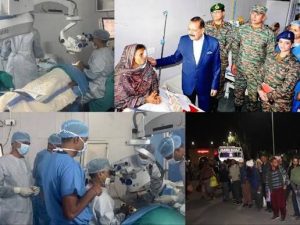
Under Operation Drishti, AFMS surgeons performed 220 sight-restoring surgeries at an underground surgical centre in Tangdhar, Kupwara, along the LoC during the 10th Mega Eye Surgical Camp.
- A flagship humanitarian medical outreach initiative launched by the Indian Armed Forces to deliver free, high-tier super-specialty ophthalmic interventions, diagnostics, and sight-restoring micro-surgeries to underprivileged populations and military veterans living in remote, inaccessible, and border areas.
- Organisation: Led by the Armed Forces Medical Services (AFMS) in coordination with the Indian Army’s Chinar Corps.
- Conducted at an underground surgical centre in Tangdhar, Kupwara, along the LoC, serving remote border villages, with follow-up care in Srinagar.
- Aim is to prevent avoidable blindness by delivering advanced eye care to remote border communities facing geographical, financial and logistical barriers to healthcare.
Key Features:
- Underground Surgical Facility: Reinforced underground operation theatres enabled safe, sterile eye surgeries in a sensitive border region exposed to cross-border firing.
- Advanced Surgical Equipment: Portable phacoemulsification systems, vitreoretinal units, intraocular lenses and glaucoma equipment enabled specialised eye surgeries in remote mountainous terrain.
- Community Outreach: Patients were mobilised through local screening and Radio Rooh-e-Karnah, with the Army providing transport, accommodation, medicines and postoperative care.
- NationwideHealthcare Outreach: Across 10 editions, the initiative has screened over 1.5 lakh people and performed more than 3,500 ophthalmic surgeries in underserved regions.
12 Years of Make in India:
The Government of India’s flagship ‘Make in India’ initiative completed exactly 12 years since its launch. While official government data highlights massive production gains in sectors like electronics and defence, economic analysts and recent reports point to a “patchy performance” regarding the broader manufacturing share of the economy, private investment, and job creation. Make in India has significantly expanded India’s manufacturing base, especially in electronics, mobile phones, defence, automobiles, steel and pharmaceuticals, while strengthening exports and global value-chain integration.
However, challenges remain in manufacturing’s GVA share, private investment, employment, domestic value addition and R&D; strengthening component localisation, logistics, innovation and MSMEs is essential for sustained manufacturing growth.
‘Make in India’ Initiative:
- It was launched on 25th September 2014, with the ambition of transforming India into a global hub for manufacturing, design, and innovation.
- The initiative is guided by the principle of ‘Minimum Government, Maximum Governance’ to facilitate investment, foster innovation, and build world-class infrastructure.
- Evolution (Make in India 2.0): Launched in February 2021, the initiative was subsequently expanded under Make in India 2.0.
- It now focuses on a broader and deeper sectoral coverage of 27 priority sectors, which include 15 in manufacturing and 12 in services.
Issues with River-Linking Projects:
At the Southern Zonal Council meeting in Mamallapuram, the Union Home Minister emphasised the need to resolve water disputes in southern India and proposed river interlinking from the Brahmaputra to the Godavari and Cauvery as a long-term water security measure.The issue gains importance amid disputes like Pennaiyar and Mekedatu, highlighting challenges in inter-State water management and the debate between large-scale water projects and demand-side conservation measures.River interlinking aims to transfer water from supposedly surplus river basins to water-deficient regions through canals, reservoirs and diversion structures.While projects such as the Mullaperiyar Dam, Parambikulam-Aliyar Project, Krishna Water Supply Project and Indira Gandhi Canal Project demonstrate benefits of inter-basin transfers, large-scale river linking faces complex environmental, social and federal challenges.Experts argue that India’s water crisis cannot be solved only through supply augmentation. Greater emphasis is required on water conservation, demand-side management, groundwater regulation and efficient agricultural practices.
The Digital Connectivity Rating (DCR) Platform:
The Telecom Regulatory Authority of India (TRAI) launched the Digital Connectivity Rating (DCR) Platform and mobile app to assess and rate indoor digital connectivity across properties in India.An integrated web portal and mobile application ecosystem that standardizes, manages, and digitizes the entire assessment workflow—from property registration and physical signal testing to certification and public rating disclosure—for in-building digital connectivity. Launched and administered by the Telecom Regulatory Authority of India (TRAI) under the Ministry of Communications, operationalizing the TRAI (Rating of Properties for Digital Connectivity) Regulations, 2024 (amended in May 2026) and the Rating Manual 2026.Aim is to make indoor digital connectivity a measurable real-estate feature, encouraging developers to integrate Digital Connectivity Infrastructure (DCI) during building design and construction.
Typhoon Dujuan:
Typhoon Dujuan battered Tokyo and eastern Japan with torrential rainfall and damaging winds, dumping a record-breaking 832 mm of rain on Izu Oshima island within 48 hours and triggering all-time high rainfall in Tokyo’s Edogawa ward.A powerful tropical cyclone that formed over the Northwestern Pacific Ocean—designated as Japan’s 25th named storm of the season—characterized by maximum sustained winds of 130 km/h and peak gusts reaching 194 km/h. The name Dujuan was contributed by China and refers to the azalea flower.Originated over the warm waters of the Northwestern Pacific and tracked northwest towards eastern Honshu, affecting Tokyo and the Boso Peninsula.
Political Funding in India: The RUPP Conundrum
Former Election Commissioner Ashok Lavasa, highlighted unaccounted political funding following a BBC investigation into suspicious RUPP donations. He called for action against shell parties, independent audits and tax-exemption reforms.A Registered Unrecognised Political Party (RUPP) is a political party registered with the Election Commission of India (ECI) under Section 29A of the Representation of the People Act, 1951, but which has not fulfilled the electoral performance criteria required for recognition as a national or state party.



