
Today’s Current Affairs: 3rd Oct 2026 for UPSC IAS exams, State PSC exams, SSC CGL, State SSC, RRB, Railways, Banking Exam & IBPS, etc
Table of Contents
What is Permafrost?
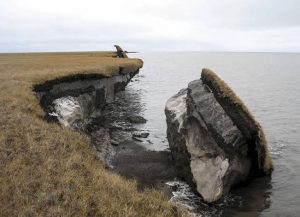
Alaska’s thawing permafrost is releasing acid and metals that turn rivers orange, changing water chemistry for dozens of miles.
- Permafrost is any ground that remains completely frozen—32°F (0°C) or colder—for at least two years straight.
- While two years is the minimum for permafrost consideration, some regions have had frozen ground for hundreds of thousands of years.
- These permanently frozen grounds are most common in regions with high mountains and in Earth’s higher latitudes—near the North and South Poles.
- It can be found on land and below the ocean floor.
- Its thickness can range from one meter to more than 1,000 meters, covering entire regions, such as the Arctic tundra, or a single, isolated spot, such as a mountain top of alpine permafrost.
- Permafrost covers large regions of the Earth. Almost a quarter of the land area in the Northern Hemisphere has permafrost underneath.
- It occurs in 85 percent of Alaska and 55 percent of Russia and Canada, and covers probably all of Antarctica.
- Permafrost is made of a combination of soil, rocks, and sand that are held together by ice.
- The soil and ice in permafrost stay frozen all year long.
- Although the ground is frozen, permafrost regions can be snow-free in summer.
- Near the surface, permafrost soils also contain large quantities of organic carbon—a material leftover from dead plants that couldn’t decompose, or rot away due to the cold.
- Lower permafrost layers contain soils made mostly of minerals.
- Permafrost loss, also known as permafrost thaw, is the progressive loss of ground ice in permafrost, usually due to input of heat.
- A layer of soil on top of permafrost does not stay frozen all year. This layer, called the active layer, thaws during the warm summer months and freezes again in the fall.
- In colder regions, the ground rarely thaws—even in the summer. There, the active layer is very thin—only 4 to 6 inches (10 to 15 centimeters).
- A thawing permafrost layer can lead to severe impacts on people and the environment.
- When permafrost melts, it raises water levels in Earth’s oceans.
- Melting permafrost and warming global temperatures have a positive feedback loop.
- Organic matter currently frozen in the permafrost will start to decompose when the ground thaws, resulting in the emission of methane and carbon dioxide into the atmosphere.
- As ice-filled permafrost thaws, it can turn into a muddy slurry that cannot support the weight of the soil and vegetation above it.
- Infrastructure such as roads, buildings, and pipes could be damaged as permafrost thaws.
- Melting permafrost also releases heavy metals, such as mercury, and other toxins.
- As it melts, the contaminated permafrost can pollute water sources for local people.
- It is even possible that thawing permafrost may release dormant, disease-causing microbes that are harmful to animals and humans.
What is the Misagh-2?

Russian forces have begun using an Iranian Misagh-2 man-portable surface-to-air missile system to intercept Ukrainian unmanned aircraft, according to Ukrainian reporting and imagery.
- Misagh-2 is an Iranian man-portable infrared-guided surface-to-air missile system.
- It is a variant of the Chinese QW-2 Vanguard missile system.
- Its main mission is to strike tactical targets such as fighters, attackers, and armed helicopters at low and very low altitudes
- It can also supply effective air defense for military bases, political and industrial centers, and other important facilities.
- It can engage approaching targets out to 6 km and receding targets out to 5.2 km.
- The maximum effective altitude against jet fighters is about 5 km, and helicopters and subsonic aircraft about 3.5 km.
- It uses a passive infrared (IR) seeker and is designed as a fire-and-forget weapon.
- Once launched, the missile can track the infrared signature of its target without requiring continued guidance from the operator, allowing the firing team to immediately leave its position.
- Its dual-band passive IR seeker has strong resistance to heat flares dispensed by the target and solar/ground heat, thus improving the missile’s performance in day/night, all-weather conditions
Schokari Sand Racer:
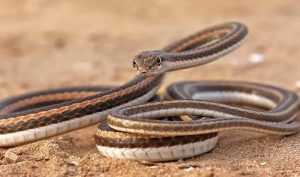
A routine forest patrol in Gujarat’s Kutch recently led to an unusual wildlife discovery: an elusive snake named Schokari Sand Racer that had not been conclusively recorded in the region for more than 150 years.
- The Schokari Sand Racer, also known as the Afro-Asian sand snake, is an extremely fast diurnal snake well adapted to arid and desert environments.
- Scientific Name: Psammophis schokari
- It inhabits desert regions with sparse vegetation, especially sand deserts, wadis, and oasis margins.
- Its distribution stretches from North Africa (Libya, Egypt) across the Arabian Peninsula and the Near East to Pakistan, including southern Turkmenistan and northwestern India.
- From India, it has been reported only from the deserts of Rajasthan and Kutch of Gujarat.
- Conservation Status:
- IUCN Red List: Least Concern
Bandhavgarh Tiger Reserve : Five-day Elephant Festival and Rejuvenation Camp
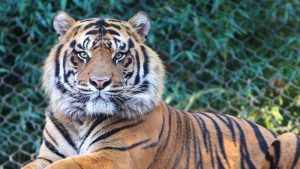
A five-day Elephant Festival and Rejuvenation Camp is being held at Bandhavgarh Tiger Reserve in Umaria district of Madhya Pradesh.
- Bandhavgarh Tiger Reserve is located between the Vindhyan and Satpura ranges in the Umaria district of Madhya Pradesh.
- It was declared a National Park in 1968 and a Tiger Reserve in 1972.
- It also contains ancient structures, including stupas and statues from the 1st century BCE.
- Main vegetation in the reserve consists of Sal trees along with huge expanses of grasslands and bamboo forests.
- Other kinds of trees which are found here are Saja, Dhauda, Tendu, Arjun, Aonla, Pals, Salai, Bhirra, Khamer, Dhaman, Mango, Jamun, Dhobin, etc.
- It is known to have one of the highest density of tigers in the world. It is also considered the origin of all the white tigers in the world.
- It also hosts other notable mammals such as leopards, Indian bison (gaur), sambar deer, spotted deer, nilgai, wild boar, sloth bears, Indian wolves, jackals, and both langur and rhesus macaque monkeys.
- It has bird species, including the crested serpent eagle, Malabar pied hornbill, white-rumped vulture, and Indian roller.
Bathymyrus perplexus:
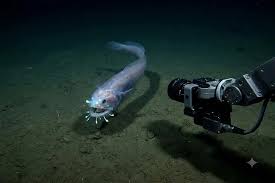
Scientists recently identified a new fish species in the Bay of Bengal, Bathymyrus Perplexus, almost four years after it was first discovered off the coast of Paradip.
- Bathymyrus perplexus is a new species of fish.
- It was identified in the Bay of Bengal, almost four years after it was first discovered off the coast of Paradip,
- The fish has a long, cylindrical body. It possesses a distinctive head and snout structure.
- Its body colour ranges from pink to a cloudy pink hue.
- There is heavy black pigmentation on the upper part of the head, and a black mark extends from the eye to the snout.
- Its mouth features teeth on both the upper and lower jaws, as well as on the head region.
ASEAN-India Maritime Exercise 2026:
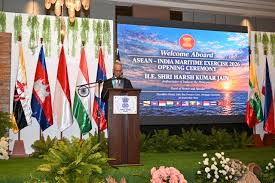
Indian Naval Ships Sahyadri and Kulish, are participating in the second ASEAN-India Maritime Exercise (AIME) in the Philippines.
- ASEAN-India Maritime Exercise 2026 is the second edition of the ASEAN-India Maritime Exercise (AIME-2026) conducted in Subic Bay, Philippines.
- Participating Ships: Indian Naval Ships Sahyadri and Kulish along with maritime forces from ASEAN Member States.
- Theme: It is conducted under the theme “Anchored in Trust, United at Sea”,
- It is aimed at enhancing mutual understanding, cooperation and interoperability.
- Harbour Phase: It will comprise a series of professional, operational and social engagements, including Subject Matter Expert Exchanges, sporting and cultural activities, community engagement and Operational Synchronisation.
- Sea Phase: Here participating maritime forces will undertake coordinated maritime exercises and operational serials.
- It will strengthen maritime partnerships and promoting practical cooperation with ASEAN maritime forces.
- The exercise is being conducted in furtherance of India’s Act East Policy and the vision of MAHASAGAR (Mutual and Holistic Advancement for Security and Growth Across Regions).
Swyer Syndrome:

Swyer syndrome is a rare condition which is estimated to occur in about one in 80,000 people.
- Swyer Syndrome is a rare difference of sex development, medically known as 46, XY complete gonadal dysgenesis.
- It is a rare genetic condition where individuals have one X and one Y chromosome in each cell (typically associated with males) but develop female reproductive structures.
- It is characterized by the failure of the sex glands (i.e., testicles or ovaries) to develop.
- It results from disruption of the genetic pathway involved in testicular development during early embryonic development.
- This syndrome is one of many “Disorders of Sex Development”, or DSDs.
- People with Swyer syndrome are genetically male but phenotypically female, meaning they have a female appearance and female external genitalia.
- There is currently no treatment that can change the 46, XY chromosome pattern or turn the streak gonads into functioning ovaries.
- However, the effects of Swyer syndrome can be effectively managed through hormone replacement therapy.
PM-DHARA Scheme:
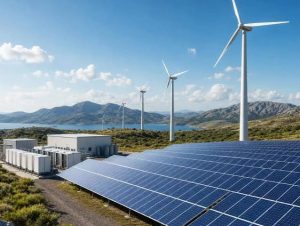
The Union Cabinet approved the ₹1.86 lakh crore PM-DHARA scheme.
- The PM-DHARA stands for PM-Developing Harmonized and Accelerated Renewable-energy Access.
- It will strengthen India’s Intra-State Transmission System (InSTS) to enable evacuation of up to 135 Gigawatt (GW) of renewable energy across States/ Union Territories.
- It has provided for the deployment of 50 GWh of Battery Energy Storage Systems (BESS) at generator ends or other locations that are crucial for grid flexibility.
- Time Period: The scheme is targeted for implementation by FY 2032-33.
- All Greenfield projects under the InSTS component will be implemented through Tariff Based Competitive Bidding (TBCB) mode,
- Brownfield upgradation and network strengthening works will be executed under Cost Plus Basis (CPB).
- The State Transmission Utilities will be the overall implementing agency, and Transmission Service Providers (TSPs) will participate under TBCB on a Build-Own-Operate-Maintain (BOOM) model.
CHIME Telescope:
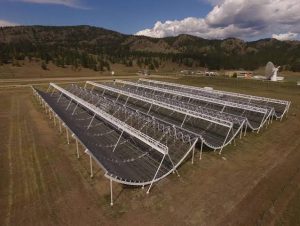
An international team, including researchers from the Raman Research Institute (RRI) in Bengaluru, has detected the faint radio glow of hydrogen from 9 billion years ago by using CHIME radio telescope.
- The CHIME (Canadian Hydrogen Intensity Mapping Experiment) is a radio telescope located in British Columbia, Canada which was built in 2017.
- It was built to map the distribution of hydrogen gas in the early universe.
- It is capable of mapping the sky with unprecedented sensitivity and speed.
- It delivers a snapshot of what our sky looks like at radio wavelengths every day.
- CHIME comprises four massive parabolic radio antennas that collect radio waves in the 400 to 800 MHz range.
- It has no moving parts and instead uses signal processing techniques to combine the information from over a thousand antennas to focus and point the telescope digitally.
- The telescope receives radio signals each day from half of the sky as the Earth rotates.
- CHIME focuses incoming signals using a correlator—a powerful digital signaling processor that can work through huge amounts of data, at a rate of about 7 terabits per second.
- It has capability to detect and study Fast Radio Bursts (FRBs), transient flashes of radio waves originating from distant galaxies.
National Coastal Mission 2.0:
The Union Minister for Environment, Forest and Climate Change launched the Guidelines for implementation of National Coastal Mission (NCM 2.0), in New Delhi.
- National Coastal Mission 2.0 is a Central Sector Scheme.
- It will subsume the previous version National Coastal Mission (NCM 1.0) which was implemented from 2021-22 to 2025-26.
- NCM 2.0 aims at strengthening the resilience and sustainability of India’s coastal regions and unlocking the potential of Blue economy.
- It would be implemented for the period from 2025-26 to 2030-31.
- Nodal Ministry: Ministry for Environment, Forest and Climate Change
- The Mission activities will be implemented in the Coastal States and UTs.
- 9 Coastal States: Gujarat, Maharashtra, Goa, Karnataka, Kerala, Tamil Nadu, Andhra Pradesh, Odisha, and West Bengal.
- 4 Union Territories: Dadra and Nagar Haveli and Daman & Diu, Andaman & Nicobar Islands, Puducherry, and Lakshadweep.
- Objectives:
- Promote adaptation and mitigation measures to address climate change impacts on coastal communities and ecosystems
- Conserve, protect, and manage fragile coastal and marine ecosystems including mangroves, brackish water wetlands, coral reefs, etc.
- Develop Integrated Coastal Zone Management Plans (ICZMP) and Coastal Marine Spatial Plans (CMSP) to facilitate environmentally sound, climate-resilient Blue Economy development, including green and sustainable shoreline infrastructure.
- Support the development of diversified and resilient livelihood options for coastal communities.
- Prevent, abate, and control pollution of coastal and territorial marine waters
- Promote the objectives of Atmanirbhar Bharat and fulfil obligations arising from international treaties and conventions related to ocean and coastal environmental management.
Gandak River Floods in Bihar:
Heavy rainfall in Nepal’s catchment areas caused the Gandak River to swell and breach embankments in parts of Bihar, particularly West Champaran.The Gandak River, known as the Narayani in Nepal, is an important transboundary Himalayan river and a tributary of the Ganga. It originates near the Tibet–Nepal border, flows through Nepal’s Mustang region, crosses the Indo-Nepal border near Triveni Dham, and enters Bihar near Valmikinagar.From Valmikinagar, the Gandak flows through the plains of Bihar and Uttar Pradesh, passing through areas such as West Champaran and other north Bihar districts before joining the Ganga near Hajipur–Sonepur (Harihar Kshetra) in Bihar.Major rivers of the Gandaki system include the Kali Gandaki, Trishuli, Budhi Gandaki, Marsyangdi, Seti, Madi and Daraudi.Valmikinagar Barrage: Located near the Indo-Nepal border, the barrage is an important structure for irrigation and regulation of Gandak waters. Heavy inflows from Nepal can lead to very high downstream discharge during intense monsoon rainfall.The Gandak ecosystem supports species such as the gharial, Gangetic dolphin and turtles, while also sustaining agriculture, settlements and cultural landscapes along its course.
Niyamgiri Hills:
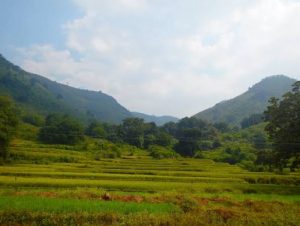
Recent calls to revive bauxite mining in Odisha’s Niyamgiri Hills have renewed concerns among tribal groups and environmental activists over indigenous rights and ecological protection.
- Niyamgiri is a forested hill range of the Eastern Ghats, spread across Rayagada and Kalahandi districts of Odisha, with elevations of roughly 700–1,400 metres.
- The hills are home to the Dongria Kondh, a Particularly Vulnerable Tribal Group (PVTG) that depends on the forests, streams and traditional agriculture for its livelihood.
- The Dongria Kondh regard Niyamgiri as the abode of their supreme deity Niyam Raja, making the hills central to their cultural and religious identity.
- Niyamgiri supports rich biodiversity, perennial streams, forests and climate-resilient agro-ecosystems and performs important functions such as water conservation, carbon sequestration and regulation of local climate.
- It supports river systems including the Vamsadhara (Bansadhara) and Nagavali and has wider ecological significance.
- It hosts a rich variety of wildlife, including the leopards, sloth bears, and giant squirrels.
- In 2013, following the Supreme Court’s direction, 12 Gram Sabhas in Rayagada and Kalahandi unanimously rejected the proposed mining project, making Niyamgiri a landmark case in the recognition of Forest Rights Act, 2006-based community, cultural and religious rights.
Green Energy Corridor Phase-III:
The Union Cabinet recently approved the Green Energy Corridor Phase-III (GEC-III) scheme with a massive outlay of Rs 1.86 lakh crore. The initiative aims to build a robust Intra-State Transmission System (InSTS) to evacuate up to 135 GW of renewable energy across various States and Union Territories by FY 2032-33.The GEC is a critical national infrastructure initiative implemented by the Ministry of New and Renewable Energy (MNRE) to efficiently integrate renewable electricity with conventional power stations, ensuring grid stability and helping India meet its climate change commitments.Stemming from a 2012 Power Grid Corporation of India Limited (PGCIL) study, the project was launched in 2015 to upgrade existing power grids that were incapable of handling the erratic and geographically dispersed nature of large-scale renewable generation.
Bharat Maritime Insurance Pool (BMIP):
World Maritime Day 2026 was observed on 24th September 2026 under the theme “From Policy to Practice: Powering Maritime Excellence,” highlighting the need for resilient and effective maritime systems.Maritime routes are central to India’s trade, energy security and economic growth, carrying crude oil imports, merchandise exports and other critical cargo. In this context, India’s Bharat Maritime Insurance Pool (BMIP) has gained significance as part of the country’s efforts to strengthen maritime resilience and reduce external dependence on maritime insurance.India operates 12 Major Ports and 217 Non-Major Ports that handle diverse cargo across the country. During 2025–26, these ports handled around 1,668 million metric tonnes of cargo, reflecting the growing role of maritime trade in economic development.
Bharat Maritime Insurance Pool (BMIP)
- BMIP is India’s first domestic maritime insurance pool, approved on 18th April 2026 and formally launched on 12th May 2026, with coverage capacity of ₹13,906.50 crore (USD 1.5 billion) and sovereign backing of ₹12,980 crore (USD 1.4 billion).
- It aims to reduce dependence on foreign insurers, strengthen domestic maritime insurance capacity and ensure affordable and uninterrupted insurance coverage during global disruptions.
- It covers Hull & Machinery, Cargo, Protection & Indemnity (P&I) and War risks for Indian-flagged vessels, vessels owned, managed or controlled by Indian entities, and cargo vessels originating from or destined for India.
- BMIP enables Indian insurers to independently cover higher-value Indian vessels, strengthening domestic capability in maritime risk insurance. BMIP has an initial tenure of 10 years, extendable up to 15 years.



