
The Special Intensive Revision (SIR) of Electoral Rolls:
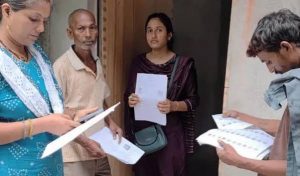
A recent critique of the nationwide Special Intensive Revision (SIR) of electoral rolls has raised concerns over the reported deletion of 13–14 crore voter entries and its potential impact on marginalised and vulnerable groups.
- SIR is an intensive voter roll verification and re-enumeration drive initiated by the Election Commission of India (ECI) to build fresh electoral rolls by purging deceased, shifted, duplicate, and ineligible voters through house-to-house enumeration.
- Executed under Section 21 of the Representation of the People Act, 1950 and the Registration of Electors Rules, 1960, resting on the ECI’s plenary constitutional powers under Article 324.
- While the ECI framed the exercise as a periodic repeat of the 2002 revision, critics note that the 2002 exercise was a Special Revision of an intensive nature vetted against baseline mother lists in open Gram Sabhas and ward committees, whereas SIR relies heavily on centralized legacy mapping and automated software.
Key Data & Findings
- An estimated 13 crore voters have already been struck off, with cumulative deletions projected to reach approximately 14 crore upon completion of ongoing phases.
- The percentage of purged entries grew with every consecutive phase—rising from ~8% in Bihar (Phase I) to over 13% in Phase II, and crossing 15% in Phase III.
Constituency-Level Anomalies: - Hyderabad: In Malakpet, 1,47,799 names were deleted—exceeding the total 1,32,024 votes polled in the 2023 Assembly election; Yakutpura saw 1,54,982 deletions against 1,40,434 votes polled in 2023.
- Chandni Chowk (Delhi): In Polling Booth 33, 908 out of 909 total voters were removed.
Critique:
- Deletions disproportionately affect religious minorities (Muslims and Christians), Dalits, Adivasis, De-notified and Nomadic Tribes (where 98% of an estimated 15-crore population is already excluded), migrant laborers, and women.
- Striking a citizen from the roll strips them of political voice; without the right to vote, their priorities, grievances, and economic interests cease to matter to political parties, effectively creating two tiers of citizens: those with franchise and those without.
- In Bihar, of 1,087 objections raised against suspected foreign infiltrators, only 390 were accepted for formal verification, with just three individuals ultimately identified as non-citizens.



