
Today’s Current Affairs: 5th Oct 2026 for UPSC IAS exams, State PSC exams, SSC CGL, State SSC, RRB, Railways, Banking Exam & IBPS, etc
Table of Contents
What is Rapunzel Syndrome?
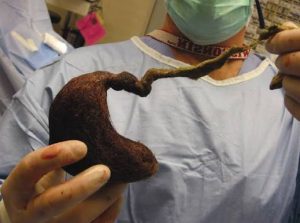
Kerala doctors recently removed a one-kg hair mass from a nine-year-old girl’s stomach and small intestine in a rare Rapunzel syndrome surgery.
- Rapunzel syndrome is a very rare condition in which a large hair ball (trichobezoar) gets lodged in stomach and extends into small intestine.
- The condition was first described in 1968. It’s named after a fairy-tale character, Rapunzel, who was known for her long hair.
- This condition is much more common among women than men.
- Rapunzel Syndrome is strongly linked to trichotillomania and trichophagia.
- Trichotillomania is a disorder wherein a person repeatedly feels the urge to pull out their own hair, and trichophagia is a condition wherein the pulled or loose hair is swallowed.
- Endoscopy can sometimes be used to remove smaller hairballs, but very large masses or those causing obstruction generally require surgery.
Surgery involves removing the hair mass from the stomach and, when necessary, the intestine.
Sewa-II Hydroelectric Project:
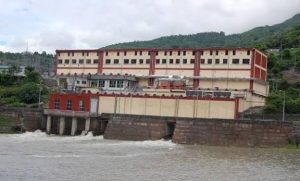
Four CISF personnel, posted at the Sewa-II Hydroelectric Project unit in J&K’s Kathua district, were allegedly shot dead by a colleague in an apparent case of fratricidal violence recently.
- It is a 120 MW run-of-the-river hydro power project located in the Kathua district of Jammu and Kashmir.
- It is located on the Sewa River, a tributary of the Ravi
- It is a concrete gravity-type dam.
- It is being operated and maintained by National Hydroelectric Power Corporation Limited (NHPC).
Coppersmith barbet : Bird
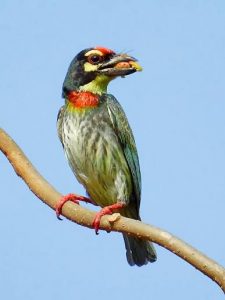
A rare colour variant of the coppersmith barbet, a commonly seen green bird, has been recently photographed on the outskirts of Hyderabad.
- The coppersmith barbet, also called the crimson-breasted barbet, is a small, brightly coloured Asian bird belonging to the barbet family (Megalaimidae).
- It is known for its metronomic call that sounds similar to a coppersmith striking metal with a hammer.
- Scientific Name: Psilopogon haemacephalus
- It is a resident bird in the Indian subcontinent and parts of Southeast Asia.
- They inhabit gardens, groves, and sparse woodland.
- In northern India, they occur in the valleys of the outer Himalayas and are rare in northwestern Indian states and in wet forests in Assam.
- It carves out holes inside a tree to build its nest.
- Conservation Status:
- IUCN Red List: Least Concern
What is the NMESIS ?
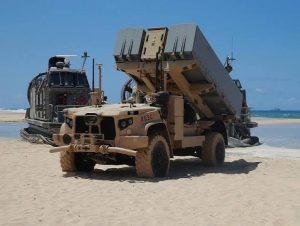
The U.S. military will deploy its NMESIS anti-ship missile launcher to Yonaguni, Japan’s westernmost inhabited island and about 107 km from Taiwan, during a major U.S.-Japanese exercise this month.
- NMESIS (Navy Marine Expeditionary Ship Interdiction System) is a ground-based anti-ship missile system developed for the US Marine Corps (USMC) to support land-to-sea attacks performed by the US Navy.
- It entered service in 2021, providing the Marine Corps with a critical tool for anti-ship warfare in remote and distributed operational environments.
- It features the US Navy’s latest anti-ship missile, the Naval Strike Missile (NSM), mounted atop the chassis of an unmanned variant of the Oshkosh Joint Light Tactical Vehicle (JLTV).
- The ground vehicle platform, known as the Remotely Operated Ground Unit for Expeditionary (ROGUE) Fires vehicle, is supplied by Oshkosh Defense, United States, while the NSM is jointly manufactured by Raytheon Missiles & Defense (Raytheon), United States, and Norwegian company Kongsberg Defence & Aerospace.
- NMESIS is not considered an autonomous launcher, as its fire control system is not controlled by the self-driving system and autonomy technology.
- The system is operated by a marine who is responsible for mission planning and firing of the missile.
- Features of ROGUE Fires:
- It incorporates advanced autonomous vehicle technologies, off-road mobility, and high payload carrying capacity.
- The vehicle is remotely operated using the teleoperator or leader-follower modes.
- The vehicle lacks a crew cab/body. It is integrated with sensors and cameras, with a launcher mounted atop the vehicle.
- The vehicle has a range of 480-640 km depending on terrain and operational conditions, allowing it to cover large areas in a single mission.
- The flexible design of the platform allows it to be configured to meet different mission requirements.
- Features of NSM:
- It is a multi-mission cruise missile that can ably neutralise highly secure maritime and land targets.
- It has a firing range of approximately 185 km (100 nautical miles), and flies at a subsonic speed of around 0.9 Mach.
- Its multi-mode guidance system incorporates inertial navigation, GPS, and active radar homing.
- The missile’s low radar cross-section makes it difficult to detect, and its sea-skimming flight profile allows it to avoid detection by enemy radar systems.
- It carries a 226.79 kg-class warhead and programmable fuse.
Jawahar Dweep:
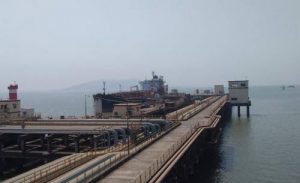
The Jawahar Dweep Marine Oil Terminal has been declared plastic-free by the Mumbai Port Authority, becoming the first in India to eliminate single-use plastics.
- Jawahar Dweep, or the Butcher Island, is an island off the coast of Mumbai in the Indian state of Maharashtra.
- It is a restricted area, and most of the island is covered with thick vegetation.
- A hillock rises from the center of the Butcher Island.
- It is one of Mumbai Port’s key marine oil terminals and handles crude oil and petroleum The terminal currently has five jetties.
- The terminal is also supported by automated systems for liquid bulk handling.
- The crude oil is stored in oil containers on the island. From there they are piped to Wadala, in Mumbai, where they are refined.
- It is the first oil terminal in India to eliminate single-use plastics.
3D Concrete Printing Technology:

Andhra Pradesh Government is set to use 3D Concrete Printing (3DCP) technology to construct houses for beneficiaries under the Pradhan Mantri Awas Yojana-Gramin (PMAY-G) scheme.
- 3D Concrete Printing Technology is an innovative construction technique that enables the creation of complex and customized structures.
- It is a construction-scale additive manufacturing—commonly called 3D Concrete Printing—replaces traditional masonry and sequential manual labour with a computer-controlled technique.
- A robotic printer directly translates a digital Building Information Modelling (BIM) design into a physical structure by extruding specially formulated cementitious materials through a nozzle in successive horizontal layers.
- It heavily relies on material science and automation to ensure that the wet mix maintains precise extrudability, buildability, and rapid setting times without collapsing under its own weight.
- The primary advantages of 3D printing lie in its unprecedented speed, reduced material waste, and elimination of traditional timber or steel formwork.
- Low-carbon inks and materials reuse are being developed to mitigate the environmental impact associated with increased cement usage.
- In India, the technology is tailored for affordable housing missions, disaster-relief shelters, remote-area deployments, defense fortifications, and rapidly erected public facilities.
Inter-Parliamentary Union:

The Indian Parliamentary Delegation, led by the Hon’ble Deputy Chairman, Rajya Sabha has departed for Arusha, United Republic of Tanzania, to participate in the 153rd Assembly of the Inter-Parliamentary Union (IPU).
- It is the international organization of Parliaments which was established in 1889 in Paris to promote representative democracy and world peace.
- The IPU promotes democratic governance, institutions and values, working with parliaments and parliamentarians to articulate and respond to the needs and aspirations of the people.
- It works for peace, democracy, human rights, gender equality, youth empowerment, climate action and sustainable development through political dialogue, cooperation and parliamentary action.
- The IPU moved its headquarters to Geneva in 1921.
- It is financed primarily by its members out of public funds.
- Governance Structure
- IPU Assembly: It is the principal statutory body that expresses the views of the IPU on political issues. It brings together parliamentarians to study international problems and make recommendations for action.
- Governing Council: It is the plenary policymaking body of the IPU. It is composed of three representatives from each member parliament. The President of the IPU is ex-officio President of the Governing Council.
- The Council establishes the annual programme and budget of the IPU.
- Executive Committees:
- It is made up of President, elected members from different geopolitical groups, the President of the Bureau of Women Parliamentarians and the President of the Board of the Forum of Young Parliamentarians.
- The members of the Executive Committee are elected by the Council for a four-year term.
- The President of the IPU is an ex officio member and President of the Committee.
- Standing Committees: There are three Standing Committees set up by the IPU Governing Council to assist the Assembly in its work.
Hebbal Lake:
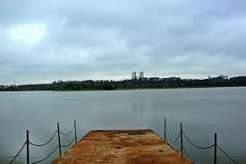
Amid the concern raised by environmentalists and opposition on the impact of tunnel road on Hebbal Lake and 1,000-plus trees on the tank bed and surroundings, the Bangalore Development Authority (BDA) is all set to begin work on the 2.28-km short tunnel project.
- Hebbal Lake is a man-made lake situated in the northern part of Bengaluru in Karnataka.
- It is one of the oldest, largest, and most ecologically prominent urban waterbodies in Bengaluru.
- The lake was created by Kempe Gowda, the founder of Bangalore, in 1537.
- It is one of the three lakes that were created by him.
- It was formed by damming natural valley systems through the construction of bunds, just as most other lakes and tanks were created within the Bangalore region.
- Over the years, Hebbal Lake had lost its splendor owing to water pollution, poor maintenance, and lack of mass awareness.
- It was restored at a great budget in the late 1900s, and two artificial islands were also created to develop a sustainable ecosystem.
- It is a seasonal lake that dries up in the summer and regains its glory along with the monsoon rains every year.
- It is home to several birds, including migratory birds, like, Baillon’s Crake, Crested Serpent Eagle, River Tern, Spot-billed pelican, Eurasian spoonbill, Shoveller, Pintail, Little grebe, Coot, Indian Spot-billed duck, etc.
Drawida Incomparabilis : New Earthworm Species
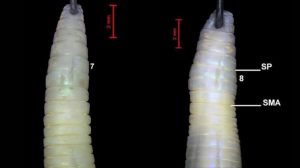
Researchers have announced the discovery of a new earthworm species, Drawida incomparabilis.
- It is a new earthworm species.
- It was found deep within the evergreen and deciduous forests of the Western Ghats mountain chain across the southern states of Keralam and Tamil Nadu.
- The species belongs to the family Moniligastridae.
- Moniligastridae is a diverse group of terrestrial megadrile earthworms that currently contains 194 valid species distributed across five genera.
- Among them, the genus Drawida is the most species-rich and a prominent component of Asian subterranean ecosystems.
What is the FP-7 Missile?
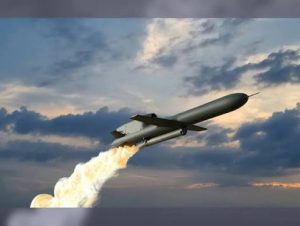
Ukraine has deployed its FP-7 tactical ballistic missile in combat for the first time, President Volodymyr Zelenskiy said recently.
- The FP-7 Missile, nicknamed the Pelican, is a ground-launched tactical ballistic missile developed by Ukrainian defence company Fire Point.
- It is designed for shorter-range strikes against targets such as logistics hubs, air-defence sites, and drone bases, rather than deep strikes far behind the frontline.
- It is also being reworked to be used in air defense systems. It is a key part of Europe’s first common anti-ballistic system project, called Freyja.
- It has a solid-fuel rocket motor.
- It has a reported range of around 200 km
- Its payload is 150 kg while its maximum flight duration is 250 seconds.
- It has a circular error probability (CEP) of 14 meters.
Dnipro River:
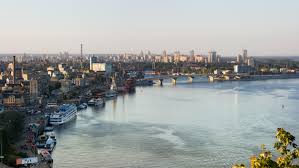
Russian drone strikes damaged key bridges across the Dnipro River in Kyiv recently.
- The Dnipro (Dnieper) River is one of the major transboundary rivers of Europe.
- It is the fourth-longest river in Europe (after the Volga, the Danube, and the Ural).
- Located in Eastern Europe, the Dnipro River and its many tributaries drain much of Belarus and Ukraine.
- It is the longest river in Ukraine.
- Historically, the river was an important barrier dividing Ukraine into right and left banks.
- It passes through numerous urban centers such as the Russian cities of Smolensk and Dorogobuzh, as well as Mogilev in Belarus and Kiev, Cherkasy, Dnipro, and Zaporizhia in Ukraine.
- It is a typical river of the plains, sloping gently and flowing slowly. The water level varies considerably, and the riverbed is unstable.
- It is an important navigable waterway for the economy of Ukraine and is connected by the Dnieper–Bug Canal to other waterways in Europe.
- Tributaries: Sozh, Desna, Trubizh, Bilozerka, Drut, Berezina, and Prypiat.
The Special Intensive Revision (SIR) of Electoral Rolls:

A recent critique of the nationwide Special Intensive Revision (SIR) of electoral rolls has raised concerns over the reported deletion of 13–14 crore voter entries and its potential impact on marginalised and vulnerable groups.
- SIR is an intensive voter roll verification and re-enumeration drive initiated by the Election Commission of India (ECI) to build fresh electoral rolls by purging deceased, shifted, duplicate, and ineligible voters through house-to-house enumeration.
- Executed under Section 21 of the Representation of the People Act, 1950 and the Registration of Electors Rules, 1960, resting on the ECI’s plenary constitutional powers under Article 324.
- While the ECI framed the exercise as a periodic repeat of the 2002 revision, critics note that the 2002 exercise was a Special Revision of an intensive nature vetted against baseline mother lists in open Gram Sabhas and ward committees, whereas SIR relies heavily on centralized legacy mapping and automated software.
Key Data & Findings
- An estimated 13 crore voters have already been struck off, with cumulative deletions projected to reach approximately 14 crore upon completion of ongoing phases.
- The percentage of purged entries grew with every consecutive phase—rising from ~8% in Bihar (Phase I) to over 13% in Phase II, and crossing 15% in Phase III.
Constituency-Level Anomalies: - Hyderabad: In Malakpet, 1,47,799 names were deleted—exceeding the total 1,32,024 votes polled in the 2023 Assembly election; Yakutpura saw 1,54,982 deletions against 1,40,434 votes polled in 2023.
- Chandni Chowk (Delhi): In Polling Booth 33, 908 out of 909 total voters were removed.
Critique:
- Deletions disproportionately affect religious minorities (Muslims and Christians), Dalits, Adivasis, De-notified and Nomadic Tribes (where 98% of an estimated 15-crore population is already excluded), migrant laborers, and women.
- Striking a citizen from the roll strips them of political voice; without the right to vote, their priorities, grievances, and economic interests cease to matter to political parties, effectively creating two tiers of citizens: those with franchise and those without.
- In Bihar, of 1,087 objections raised against suspected foreign infiltrators, only 390 were accepted for formal verification, with just three individuals ultimately identified as non-citizens.
Samudra Manthan Mission: India’s ₹84,084-Crore Push for Deep-Sea Hydrocarbon:
The operationalisation of the ₹84,084-crore Samudra Manthan (National Offshore Exploration Scheme) to expand India’s hydrocarbon exploration into deep and ultra-deep offshore frontier waters.The initiative targets the Mahanadi, Andaman-Nicobar, Krishna-Godavari, Cauvery and Kutch basins to strengthen domestic energy exploration.The Samudra Manthan Mission (National Offshore Exploration Scheme) is a Central Sector initiative of the Ministry of Petroleum and Natural Gas with an outlay of ₹84,084 crore till FY 2030–31 to explore hydrocarbons in India’s deep and ultra-deep offshore basins.Aim is to de-risk and accelerate offshore hydrocarbon exploration, add over 600 MMTOE of recoverable reserves, raise domestic production to 80 MMTOE annually, and reduce India’s crude oil import dependence.
Haryana plans IoT-based waste management:
The Haryana Government has planned an IoT-based waste management system for high-footfall pilgrimage sites, religious places, fairs and festivals.A technology-driven solid waste management system that combines IoT-enabled smart bins, four-stream waste segregation, geo-tagging and real-time monitoring to manage waste at high-footfall religious and pilgrimage sites.Aim is to ensure scientific waste segregation, collection and disposal, prevent littering and improve cleanliness at pilgrimage sites, particularly during periods of high visitor footfall.
Key Features:
- IoT-Enabled Smart Bins: Sensor-equipped bins will provide real-time fill-level data and automatically open their lids, enabling timely waste collection.
- Four-Stream Segregation: Sites will have dedicated four-stream waste stations, with covered storage facilities for systematic segregation and handling.
- 500-Metre Clean Zone: No open waste collection points will be permitted within a 500-metre buffer, covering approach roads, parking areas and vendor zones.
- Waste Audits & Geo-Tagging: A minimum seven-day waste audit will assess waste generation, while littering hotspots will be geo-tagged for targeted intervention.
- Bulk Waste Generator Regulation: Bhandaras, hotels, dharamshalas, prasad and flower shops within the buffer will be registered as bulk waste generators with CPCB.



