
Today’s Current Affairs: 8th Oct 2026 for UPSC IAS exams, State PSC exams, SSC CGL, State SSC, RRB, Railways, Banking Exam & IBPS, etc
Table of Contents
Panama:

An earthquake with a preliminary magnitude of 7.7 hit Panama causing structures to collapse and shaking the capital of the Central American country.
- Panama is a country of Central America located on the Isthmus of Panama.
- It is bordered by Costa Rica and Colombia.
- It is bounded by the Caribbean Sea to the north and by the Pacific Ocean to the south.
- Capital City: Panama City.
- Geographical Features of Panama:
- Panama has a moist tropical and subtropical climate.
- Lake Gatun which also plays a vital role in the operation of the Panama Canal.
- Tuira River is the longest river of Panama.
- The Cordillera Central, or Central Mountain Range, runs down the middle of Panama.
- It mainly consists of gold, copper, manganese, and iron.
Bathukamma Festival:
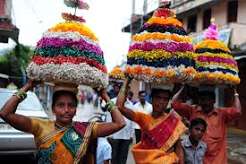
Telangana’s special festival of flowers Bathukamma, began with Engilipula Bathukamma.
- Bathukamma Festival is a floral festival celebrated by the women folk of Telangana.
- The term “Bathukamma” translates to “Mother Goddess Come Alive”, reflecting the divine feminine energy and protection.
- Folklore connects the festival to legends of Goddess Gauri and her miraculous survival as well as King Dhramangada and Queen Satyavati of the Chola dynasty.
- Historically, the Kakatiya dynasty emphasized Bathukamma as a celebration of feminine strength and agricultural prosperity.
- Every year this festival is celebrated usually in September–October of the Gregorian calendar.
- It is celebrated for nine days during Durga Navratri and the 9-day festivities will culminate on “Saddula Bathukamma” or “Pedda Bathukamma” festival.
- Bathukamma is followed by Boddemma, which is a 7-day festival.
- It has been declared as the Telangana State Festival.
Khadi and Village Industries Commission: In News
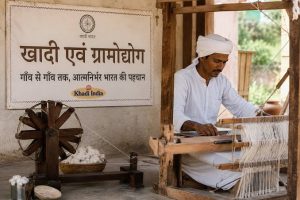
Khadi and Village Industries (KVI) commission has continued to play a significant role in promoting rural livelihoods, generating employment and strengthening the vision of an Atmanirbhar Bharat.
- Khadi and Village Industries Commission is a statutory body established under the Khadi and Village Industries Commission Act of 1956.
- It is an apex organization under the Ministry of Micro, Small, and Medium Enterprises.
- It is charged with the planning, promotion, organisation and implementation of programmes for the development of Khadi and other village industries in rural areas.
- At the state level, Khadi & Village Industries Boards were set up to effectively implement the schemes of KVIC in their respective states.
- Objectives of the KVIC are:
- Social Objective: To provide employment in rural areas
- Economic Objective: To produce a saleable product
- Wider Objective: To create self-reliance among the economically weaker section
- Functions of the KVIC
- Strategic Reserve: To build a strategic reserve of raw materials and implements for supply to producers.
- Processing: To create common service facilities for processing raw materials as semi-finished goods and provisions for facilities for marketing KVI products.
- Marketing: To enhance the sale and marketing of Khadi and other products of village industries or handicrafts.
- Research: To be responsible for encouraging and promoting research in the production techniques.
- Standards: To assure the genuineness of the products and to set standards for the quality of products from Khadi and Village Industries.
Project Seabird: In News
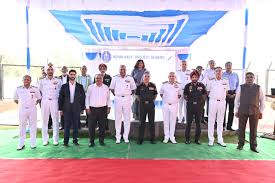
The Chief of the Defence Staff inaugurated critical trunk utility and amenity infrastructure for Indian Navy as part of Project Seabird Phase IIA at the naval base in Karnataka’s Karwar.
- Project Seabird is the largest naval infrastructure project for India.
- It involves creation of a naval base at Karwar, Karnataka, on the west coast of India.
- Phases of Project Seabird:
- Phase 1: Its first phase, which included the construction of a deep-sea harbour, breakwaters dredging, a township, a naval hospital, a dockyard uplift centre and a ship lift, was commissioned in 2005.
- Phase 2: The development of phase 2 of INS Kadamba commenced in 2011.
- This phase is further divided into 2A and 2B. It was planned to expand the facilities to dock additional warships and a new Naval Air Station, among other projects.
Epstein-Barr Virus: In News
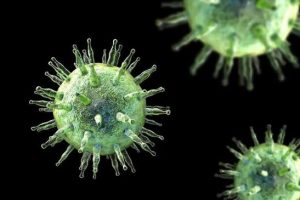
According to the World Health Organization’s International Agency for Research on Cancer analysis, Epstein-Barr virus (EBV) is one of the causative agents responsible for a substantial cancer burden worldwide in 2024.
- EBV, also known as human herpesvirus 4, belongs to the herpesvirus family.
- It spreads mainly through EBV is classified by IARC as a Group 1 carcinogen.
- It usually does not cause any harm, but the virus gets reactivated inside the body in some unusual conditions like immunological stress or immunocompetence.
- This may further lead to various complications like a type of blood cancer called Burkitt’s lymphoma, stomach cancer, multiple sclerosis.
- There is no specific treatment for EBV. However, some things like drinking fluids to stay hydrated, getting plenty of rest can be done to help relieve symptoms.
Prime Minister Dhan-Dhaanya Krishi Yojana: In News
The Prime Minister Dhan-Dhaanya Krishi Yojana (PMDDKY) completed its first year marking a year of focused district-level action.
- Prime Minister Dhan-Dhaanya Krishi Yojana was launched in 2025 to support farmers.
- The objective of the scheme is to:
- Enhance agricultural productivity
- Increase adoption of crop diversification and sustainable agricultural practices
- Augment post-harvest storage at the panchayat and block levels
- Improve irrigation facilities
- Facilitate availability of long-term and short-term credit.
- It bridges developmental gaps by integrating schemes from different departments, ensuring convergence in efforts and efficient resource utilisation.
- It focuses on transforming agriculture and allied activities across 100 Aspirational Agricultural Districts.
- These districts were identified using three key indicators: low productivity, low cropping intensity, and less agricultural credit disbursement.
- The selection also considered the share of net cropped area and operational holdings in each State and Union Territory. Each State has at least one selected district.
- Administrative Structure for Implementation
- The PMDDKY scheme follows a three-tier implementation structure-
- District Level: The District Dhan Dhaanya Krishi Yojana Samiti, headed by the District Collector/DM, prepares and implements the District Action Plan.
- State Level: The State Dhan Dhaanya Krishi Yojana Samiti, headed by the Chief Secretary of the State, reviews and monitors the District Plans.
- National Level: Two committees oversee the scheme. The National Executive Committee is headed by the Union Minister for Agriculture and Farmers Welfare. The National Monitoring Committee is headed by the Secretary, DA&FW.