
Today’s Current Affairs: 9th Oct 2026 for UPSC IAS exams, State PSC exams, SSC CGL, State SSC, RRB, Railways, Banking Exam & IBPS, etc
Table of Contents
Nanda Devi Biosphere Reserve:
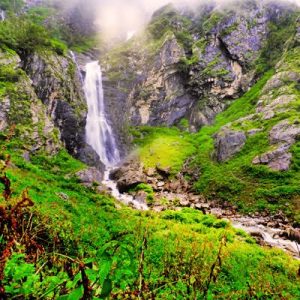
A new report “Nanda Devi Biosphere Decadal Monitoring Campaign 2026”, has found that landslide-prone zones in the core have nearly doubled over the past decade.
- Nanda Devi Biosphere Reserve is one of India’s most important protected mountain ecosystems located in the Western Himalayas of Uttarakhand.
- It includes the Nanda Devi National Park and the Valley of Flowers National Park, both of which are designated as UNESCO World Heritage Sites.
- The reserve is recognised under UNESCO’s Man and the Biosphere (MAB) Programme.
- It consists of rugged mountain ranges, deep gorges, glaciers and snow-covered peaks.
- Glaciers: Numerous glaciers, including the Uttari Rishi, Dakshini Rishi, Trisul and Ramani
- Vegetation: Alpine meadows (Bugyals), temperate forests and sub-alpine vegetation dominate the landscape.
- Rivers: The Rishi Ganga River originates from the glaciers within the Nanda Devi Sanctuary. It joins the Dhauliganga River, which is a tributary of the Alaknanda River.
- Flora: Temperate forests contain oak, deodar, blue pine, fir, spruce and rhododendron.
- Fauna: Snow Leopard, Himalayan Musk Deer, Himalayan Tahr, Bharal (Blue Sheep), Asiatic Black Bear and Common Leopard.
Central Asian Flyway Digital Hub:
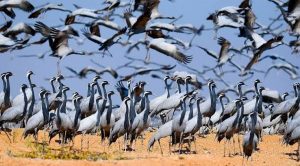
The Central Asian Conservation Network (CACN) has launched a new Central Asian Flyway Digital Hub, according to a recent statement by the organisation.
- Central Asian Flyway Digital Hub is developed by the Central Asian Conservation Network (CACN).
- It aim is to strengthen the sharing of knowledge and information for the conservation of migratory birds across one of the world’s major migration routes.
- It brings together information on bird species, important flyway sites, conservation initiatives, educational resources and participation opportunities across the flyway.
- It will also provide dedicated portals for recording bird collisions and sightings of marked birds.
- Features:
- Collection of educational and awareness materials: These are designed to make the story of migratory birds accessible to children, teachers, communities, birdwatchers and the wider public.
- Bird Collision Reporting Portal: It is for documenting bird deaths and injuries caused by infrastructure, and a
- Ringing and Resighting Portal: It is for recording observations of marked birds and understanding migration routes.
- It will continue to expand with new species information, educational resources, conservation projects and monitoring data.
Red-Headed Vulture: In News
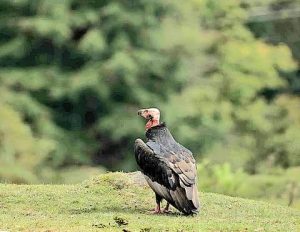
A rare red-headed vulture sighted at an altitude of about 2,650 metres in Uttarakhand’s Munsiyari.
- The Red-headed vulture (Sarcogyps calvus) is an Old World vulture.
- It is also known as the Asian king vulture, Indian black vulture, or Pondicherry vulture.
- They are usually found in open country and in cultivated and semi-desert areas, deciduous forests foothills, river valleys and also in mountainous
- It is mainly found in South Asia with small disjunct populations in some parts of Southeast Asia.
- Typically found in Central India, Nepal, Myanmar, Thailand, Vietnam, and parts of Kerala, Karnataka, and Tamil Nadu.
- Breeding: Breeding typically takes place between November and January.
- Diet: These are scavenging birds, feeding mostly on carcasses of dead animals which they find by sight.
- Threats: It was extensively found in India but its numbers drastically reduced after diclofenac poisoning
- Conservation Status
- IUCN Red List: Critically Endangered
- Wildlife Protection Act, 1972: Schedule 1
INS Shreyas:

The INS Shreyas was launched by the Garden Reach Shipbuilders and Engineers Ltd.
- INS Shreyas is the third of four next-generation offshore patrol vessels.
- These ships derive their names from India’s rich heritage, with this ship being named as ‘Shreyas’, meaning ‘Best’ or ‘Most Excellent’ in Sanskrit.
- It is being built by defence PSU Garden Reach Shipbuilders and Engineers (GRSE) Ltd for the Indian Navy.
- Features of INS Shreyas:
- Speed and Capacity: It will be capable of achieving speeds of up to 23 knots and have an endurance of 8,500 nautical miles.
- Operations: It is designed for a wide range of maritime operations, the NGOPVs will undertake coastal and offshore asset protection, maritime interdiction, surveillance, mine warfare and special operations.
Plan Bee System:

The Northeast Frontier Railway (NFR) has used AI-based alerts, speed restrictions, enhanced patrolling and its ‘Plan Bee’ system to prevent train-elephant collisions.
- Plan Bee System is an innovative acoustic deterrent system developed by the Northeast Frontier Railway (NFR).
- It is developed to prevent wild elephants from straying onto railway tracks and being hit by trains.
- The system uses amplified honeybee sounds to discourage elephants from approaching railway tracks.
- The NFR has deployed an AI-based Intrusion Detection System (IDS) using Distributed Acoustic System (DAS) technology, which provides real-time alerts about elephant movement near railway tracks in vulnerable areas.
- Northeast Frontier Railway is headquartered at Maligaon near Guwahati, Assam.
- It operates across the Northeastern states, as well as seven districts of West Bengal and five districts of north Bihar.
Trade and Development Report 2026:

India’s share in global greenfield investments during 2020-25, at 5.7%, is more than double China’s share in such investments during the same period, according to the latest Trade and Development Report 2026 report by UNCTAD.
- First launched in 1981, it is issued every year by the UN Trade and Development (UNCTAD).
- The report analyses current economic trends and major policy issues of international concern and makes suggestions for addressing these issues at various levels.
- TDR 2026 Highlights:
- Global trade is projected to grow by 4% in 2026, slower than the previous year’s 4%, but well above what was anticipated when the conflict in the Middle East began.
- Global trade reached a record $35 trillion in 2025.
- The report indicates higher trade values resulting from energy price increases and export controls.
- While trade between China and the US has fallen by more than 20% since 2024, East Asia has expanded trade with both China and North America.
- Developing economies, particularly India, are expected to drive notable growth despite overall global economic slowdowns.
- Global economic growth will likely slow to 2.6% in 2026, down from 2.9% last year, but developing economies are projected to grow 4% this year, down from 4.7% in 2025.
- Asia is projected to contribute 59% of global growth in 2026.
- The report showed that governments increasingly use industrial, trade, financial, and technology policies to pursue economic and national security objectives.
- Artificial intelligence products, comprising advanced computing equipment deployed primarily in new data centres, have become the main driver of merchandise trade; 82% of value added accrues to four supplier segments in this category.
- From 2020 to 2025, strategic sectors grew from 16% to 44% of global greenfield investment.
- Among these strategic sectors, artificial intelligence (AI) infrastructure and related technologies attracted the largest share of 12.4% of the $845.7 billion of overall global greenfield investment that took place within this period.
- AI infrastructure was followed by the semiconductor value chain (8.1%) and energy transition technologies and services (7.8%).
- Strategic investment is concentrated in Europe (28.4%) and North America (28%). Even among developing economies, capital is primarily funnelled into developing Asia (26.5%) with China, India, Indonesia, Malaysia, and Singapore as leading jurisdictions for new investments.
- India Specific Findings:
- India accounted for 7% of global greenfield investments during 2020 to 2025, followed by Malaysia (4%), Indonesia (3.8%), and China (2.8%).
- India ranks high in terms of the number of industrial policies it has implemented over the last two decades or so.
- India is the fastest-growing major economy, with GDP projected to expand by 7.3% in 2026 and 8% in 2027 due to robust domestic demand, increasing manufacturing capacity, and public infrastructure programmes.
- It added that these factors are together sustaining growth despite India’s heavy reliance on oil imports.
- India continues to post dynamic growth in household consumption, estimated at 9% this year and 5.6% next.
Snow Leopard Wildlife Safari:
India’s first high-altitude snow leopard wildlife safari was launched in the cold desert of Ladakh recently.Snow Leopard is a large wild cat native to the high-altitude mountain ranges of Central and South Asia.It is popularly known as the “Ghost of the Mountains” because of its elusive nature and excellent camouflage.
Scientific Name: Panthera uncia.Formerly classified as Leo uncia, the snow leopard has been placed with the lion, tiger, and other big cats, in the genus Panthera.
What is the Green Keelback?
A snake, identified as ‘Green Keelback’, that is usually found in Central Asia, Sri Lanka and Eastern India, was recently found near Gangawadi village, on the fringes of Biligiri Rangana Betta (BR Hills), in Yelandur taluk, Chamarajanagar district, Karnataka.Green Keelback:It is a non-venomous, semi-aquatic snake that is native to South and Southeast Asia.Scientific Name: Macropisthodon plumbicolor. Keels: The term “keelback” comes from the pronounced ridges or “keels” along the scales of their bodies. These keels provide texture and grip, assisting the snake in climbing and swimming.Conservation Status:IUCN Red List: Least Concern.



